
Last Updated on April 10, 2026
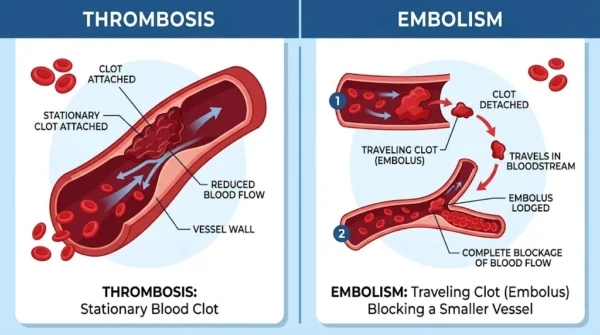
Embolism vs thrombosis describes two related medical conditions involving blood clots. Thrombosis happens when a clot forms and stays in one blood vessel, while an embolism occurs when a clot or other material travels through the bloodstream and blocks another vessel. Both can interrupt blood flow and may cause serious health problems.
Problems with blood clots can be serious. Two terms doctors often use are embolism and thrombosis. Many people hear these words during medical discussions but are not sure what they mean.
Both conditions involve clots in blood vessels. However, they are not exactly the same. A clot that forms and stays in one place is called thrombosis. When something travels through the blood and blocks a vessel somewhere else, it is called an embolism.
Understanding embolism vs thrombosis is important because both can affect vital organs like the lungs, brain, or heart. These conditions can sometimes lead to emergencies such as stroke, heart attack, or breathing problems.
In this guide, we will explain the differences in simple language. You will learn how these conditions happen, how doctors diagnose them, and why early treatment matters.
Quick Answer / Overview
Here is the simplest way to understand embolism vs thrombosis:
| Feature | Thrombosis | Embolism |
|---|---|---|
| What happens | Blood clot forms in a vessel | A clot travels and blocks another vessel |
| Movement | Clot stays in one place | Clot moves through bloodstream |
| Risk | Blocks local blood flow | Can block critical organs |
| Example | Deep vein thrombosis | Pulmonary embolism |
Short explanation:
- Thrombosis = clot forms and stays
- Embolism = clot travels and blocks elsewhere
Definition / Explanation
What Is Thrombosis?
Thrombosis happens when a blood clot forms inside a blood vessel and remains there. This clot can slow down or completely stop blood flow.
Blood clots normally help stop bleeding after an injury. But sometimes they form when they are not needed.
A common example is Deep Vein Thrombosis, often called DVT. This usually happens in the legs.
Possible causes include:
- Long periods of sitting or immobility
- Surgery or injury
- Smoking
- Certain medical conditions
When blood flow is blocked, tissues may not receive enough oxygen.
What Is an Embolism?
An embolism occurs when something travels through the bloodstream and blocks a vessel somewhere else in the body.
Most embolisms are caused by a clot that originally formed elsewhere.
For example, a clot from the leg may travel to the lungs and cause Pulmonary Embolism.
Other substances can also cause embolism, including:
- Fat droplets
- Air bubbles
- Cholesterol particles
Because embolisms move through the body, they can affect critical organs quickly.
Advantages and Disadvantages of Early Detection
While neither condition has “advantages,” understanding their characteristics helps doctors diagnose and treat them early.
Thrombosis Detection
Benefits of early diagnosis
- Prevents clot from growing
- Reduces risk of embolism
- Protects organs from damage
Challenges
- Symptoms may be mild at first
- Some clots are difficult to detect
Embolism Detection
Benefits of early diagnosis
- Life-saving treatment can begin quickly
- Prevents severe complications
Challenges
- Symptoms often appear suddenly
- Requires rapid imaging tests
Real-World Examples
Example 1: Long Flight Travel
Someone sits for many hours during a long flight.
- Blood flow in the legs slows down
- A clot forms in the leg vein
This is thrombosis.
If that clot breaks off and travels to the lungs, it becomes an embolism.
Example 2: Hospital Surgery Patient
After surgery, patients may lie in bed for long periods.
This increases the risk of:
- Blood clot formation
- Reduced circulation
Doctors often give medications to prevent thrombosis.
Example 3: Stroke Caused by Embolism
A clot from the heart can travel to the brain and block an artery.
This can lead to Ischemic Stroke, where brain tissue loses oxygen.
Regional and Global Perspective
Blood clot disorders affect people worldwide.
Developed Healthcare Systems
Countries with advanced healthcare systems often use:
- Preventive medications
- Early screening
- Rapid imaging technology
These measures reduce severe complications.
Developing Regions
In some areas, limited healthcare access may delay diagnosis.
However, awareness campaigns about conditions like Deep Vein Thrombosis have improved prevention strategies globally.
Common Mistakes
Thinking embolism and thrombosis are identical
Many people assume both terms mean the same thing.
Correction:
Thrombosis is the formation of a clot, while embolism is the movement of a clot or other material.
Ignoring early symptoms
Signs such as leg swelling or pain may indicate thrombosis.
Correction:
Seek medical advice if symptoms appear.
Believing only older adults are at risk
While age increases risk, younger individuals may also develop clots due to lifestyle factors.
Correction:
Risk factors include immobility, injury, and genetics.
Assuming embolism always starts in the lungs
Many embolisms actually start elsewhere in the body.
Correction:
A clot may begin in the legs and travel to the lungs or brain.
Exercises With Answers
Question 1
A clot forms in a leg vein and stays there. What is this condition?
Answer: Thrombosis.
Question 2
A clot travels from the leg to the lungs. What is this called?
Answer: Embolism.
Question 3
Which condition involves movement through the bloodstream?
Answer: Embolism.
Question 4
Which condition forms directly in a blood vessel?
Answer: Thrombosis.
Question 5
Name one disease caused by embolism.
Answer: Pulmonary Embolism.
Related Concepts and Comparisons
Thrombosis vs Embolism vs Stroke
| Condition | Main Cause | Effect |
|---|---|---|
| Thrombosis | Local clot formation | Blocks blood flow in same vessel |
| Embolism | Traveling clot or particle | Blocks distant vessel |
| Stroke | Blocked brain blood supply | Brain cell damage |
Many strokes are caused by embolisms that reach the brain.
Blood Clot Formation Process
Clot formation involves three main factors known as Virchow’s Triad:
- Slowed blood flow
- Vessel wall injury
- Increased blood clotting tendency
These factors increase the risk of thrombosis.
FAQs
What is the main difference between embolism vs thrombosis?
Thrombosis occurs when a clot forms and stays in one vessel, while embolism occurs when a clot travels and blocks another vessel.
Can thrombosis lead to embolism?
Yes. A clot formed during Deep Vein Thrombosis can break loose and cause Pulmonary Embolism.
Is embolism more dangerous than thrombosis?
Both can be serious, but embolism may affect vital organs quickly because the blockage occurs in critical blood vessels.
What are common symptoms of thrombosis?
Swelling, pain, redness, and warmth in the affected area are common signs.
What symptoms suggest pulmonary embolism?
Sudden shortness of breath, chest pain, and rapid heartbeat may indicate Pulmonary Embolism.
Can thrombosis be prevented?
Yes. Regular movement, hydration, and medical treatment can lower the risk.
Do embolisms only involve blood clots?
No. Fat, air, or other particles can also cause embolism.
How do doctors diagnose these conditions?
Doctors use imaging tests such as ultrasound, CT scans, and blood tests.
Is stroke related to embolism?
Yes. Many cases of Ischemic Stroke occur when a clot travels to the brain.
Who is at higher risk for thrombosis?
People with prolonged immobility, surgery, smoking habits, or certain genetic conditions have higher risk.
Conclusion
Understanding embolism vs thrombosis helps explain how blood clots affect the body. Although both conditions involve blockages in blood vessels, the key difference lies in movement.
Thrombosis occurs when a clot forms and remains in one place, blocking local blood flow. Embolism happens when that clot or another substance travels through the bloodstream and blocks a vessel somewhere else.
Both conditions can be dangerous because they reduce oxygen supply to organs. For example, a clot in the leg may lead to lung blockage, while a clot traveling to the brain can cause stroke.
The good news is that many cases can be prevented or treated when detected early. Staying active, following medical advice after surgery, and recognizing warning signs can reduce the risk.
If symptoms such as sudden chest pain, breathing difficulty, or severe swelling appear, immediate medical attention is essential.

Justin Powell is a writer at GramBrix.com who focuses on grammar, clarity and effective communication, helping readers strengthen their language skills.