
Last Updated on April 8, 2026
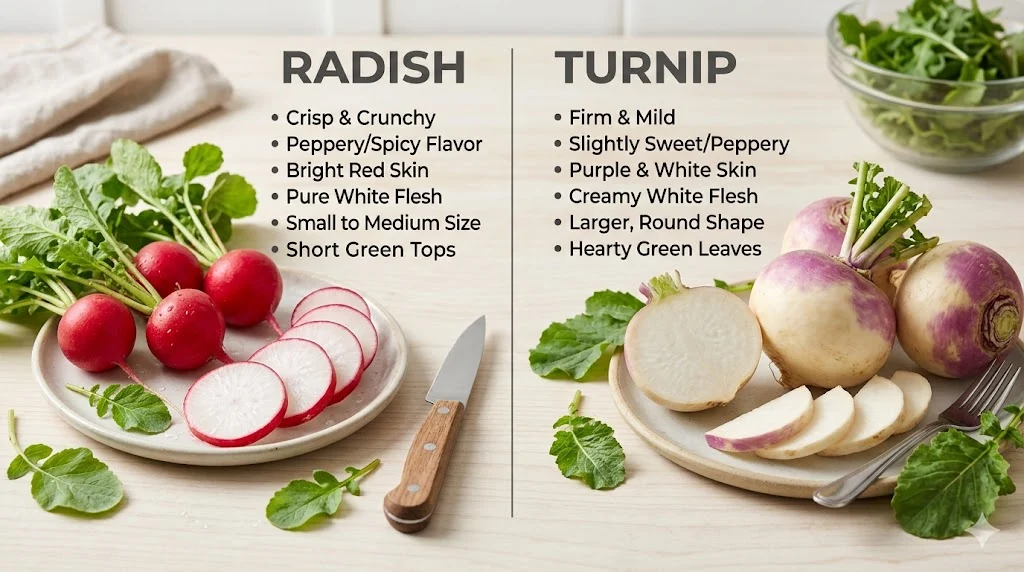
Radish vs turnip compares two root vegetables that look similar but taste and cook differently. Radishes are crisp, spicy and usually eaten raw, while turnips are milder, slightly sweet and often cooked in meals. Both are healthy, but they serve different purposes in the kitchen.
Many people confuse radish and turnip. At first glance, they look almost the same. Both grow underground. Both are round. Both are used in salads and cooking.
But once you taste them, the difference becomes clear.
Radishes are sharp and peppery. Turnips are softer and slightly sweet. One is often eaten raw, while the other is usually cooked.
Understanding the difference between radish vs turnip is useful in everyday life. It helps you cook better meals. It also helps you choose the right vegetable for your health needs.
For example, if you want something crunchy for a salad, radish works best. If you want something warm and filling, turnip is the better option.
In this guide, we’ll break everything down in simple words. You’ll learn how they differ, when to use each, and how to avoid common mistakes.
Quick Answer / Overview
Let’s keep it simple:
- Radish = crunchy and spicy
- Turnip = soft and mild
Here’s a quick comparison:
| Feature | Radish | Turnip |
|---|---|---|
| Taste | Peppery, sharp | Mild, slightly sweet |
| Texture | Crunchy | Soft when cooked |
| Color | Red, white | White with purple top |
| Size | Small | Larger |
| Use | Salads, raw | Cooking, soups |
| Calories | Very low | Low |
Quick takeaway:
Use radish for freshness.
Use turnip for cooking.
What is a Radish?
A radish is a small root vegetable known for its strong, peppery taste. It is usually red on the outside and white inside, though other varieties exist.
People often eat radishes raw because they add crunch and flavor.
Common uses:
- Salads
- Sandwiches
- Garnishes
Radishes grow quickly and are easy to farm. That’s why they are widely available and affordable.
What is a Turnip?
A turnip is a larger root vegetable with a mild flavor. It is usually white with a purple top.
Unlike radish, turnip is mostly eaten cooked.
Common uses:
- Soups
- Stews
- Curries
When cooked, turnips become soft and slightly sweet, making them perfect for warm dishes.
Advantages and Disadvantages
Radish: Pros and Cons
Advantages:
- Low in calories
- Rich in vitamin C
- Good for digestion
- Adds crunch to meals
Disadvantages:
- Strong taste may not suit everyone
- Can be too spicy when raw
- Limited cooking use
Turnip: Pros and Cons
Advantages:
- Mild and versatile
- Good for cooking
- Contains fiber and nutrients
- Filling and satisfying
Disadvantages:
- Takes time to cook
- Can taste bland if not seasoned
- Less appealing when raw
Real-World Examples
Salad Preparation
You are making a fresh salad.
- Add radish for crunch and spice
- Avoid turnip unless sliced very thin
Winter Soup
You are cooking soup on a cold day.
- Turnip works well
- It becomes soft and flavorful
Radish would not give the same comfort.
Quick Snack
You want a quick healthy snack.
- Radish slices with salt
- Easy and refreshing
Turnip would require cooking first.
Regional / Global Usage
In South Asia
- Radish is used in salads and parathas
- Turnip is used in curries and mixed vegetables
In Western Countries
- Radish is common in salads
- Turnip is used in soups and roasted dishes
Seasonal Use
- Radish grows quickly and is available year-round
- Turnip is more common in colder seasons
Common Mistakes
Using turnip in place of radish in salads
Turnip is not as crunchy or spicy.
Fix:
Use radish for raw dishes.
Expecting radish to taste mild
Radish can be quite strong.
Fix:
Slice thin or mix with other vegetables.
Overcooking turnip
Turnip can become too soft and lose flavor.
Fix:
Cook until just tender.
Ignoring size difference
Turnips are larger and need more prep time.
Exercises with Answers
Question 1
Which vegetable is best for salads?
Answer: Radish
Question 2
Which one is usually cooked?
Answer: Turnip
Question 3
Which has a spicy taste?
Answer: Radish
Question 4
Which is sweeter when cooked?
Answer: Turnip
Question 5
Which is quicker to prepare?
Answer: Radish
Related Concepts
Radish vs Turnip vs Carrot
| Feature | Radish | Turnip | Carrot |
|---|---|---|---|
| Taste | Spicy | Mild | Sweet |
| Texture | Crunchy | Soft | Crunchy |
| Use | Raw | Cooked | Both |
| Color | Red/white | White/purple | Orange |
Cooking vs Raw Use
- Radish is best raw
- Turnip is best cooked
Simple rule:
- Crunch → radish
- Comfort food → turnip
FAQs
What is the main difference between radish vs turnip?
Radish is spicy and eaten raw, while turnip is mild and usually cooked.
Can I use turnip instead of radish?
Not always. Turnip lacks the crunch and sharp flavor of radish.
Is radish healthier than turnip?
Both are healthy. Radish is lower in calories, while turnip provides more fiber.
Why does radish taste spicy?
Radish contains natural compounds that give it a peppery flavor.
Can turnip be eaten raw?
Yes, but it is not very popular because the taste is mild and texture is firm.
Which is better for weight loss, radish vs turnip?
Both are low in calories, but radish is slightly lighter and better for raw snacking.
Do radish and turnip belong to the same family?
Yes, both belong to the same plant family, which is why they look similar.
Which cooks faster, radish or turnip?
Radish cooks faster, but it is usually eaten raw.
Why is turnip used in soups?
Because it becomes soft and absorbs flavors well.
Can I mix radish and turnip in one dish?
Yes, but balance the flavors so the radish does not overpower the dish.
Conclusion
Understanding the difference between radish vs turnip can make your cooking much easier. While they may look similar, they serve very different purposes.
Radishes are all about freshness. They are crisp, sharp, and perfect for salads or quick snacks. Turnips, on the other hand, are better suited for cooking. They become soft, slightly sweet, and comforting when added to warm dishes.
The key is knowing when to use each one.
If you want something light and crunchy, go with radish. If you’re preparing a hearty meal, turnip is the better choice.
Both vegetables are healthy, affordable, and easy to find. Adding them to your diet can improve your nutrition and give variety to your meals.
In simple terms:
- Radish for raw and fresh
- Turnip for cooked and filling
Once you understand this, you’ll never confuse them again.

Justin Powell is a writer at GramBrix.com who focuses on grammar, clarity and effective communication, helping readers strengthen their language skills.