Last Updated on April 9, 2026
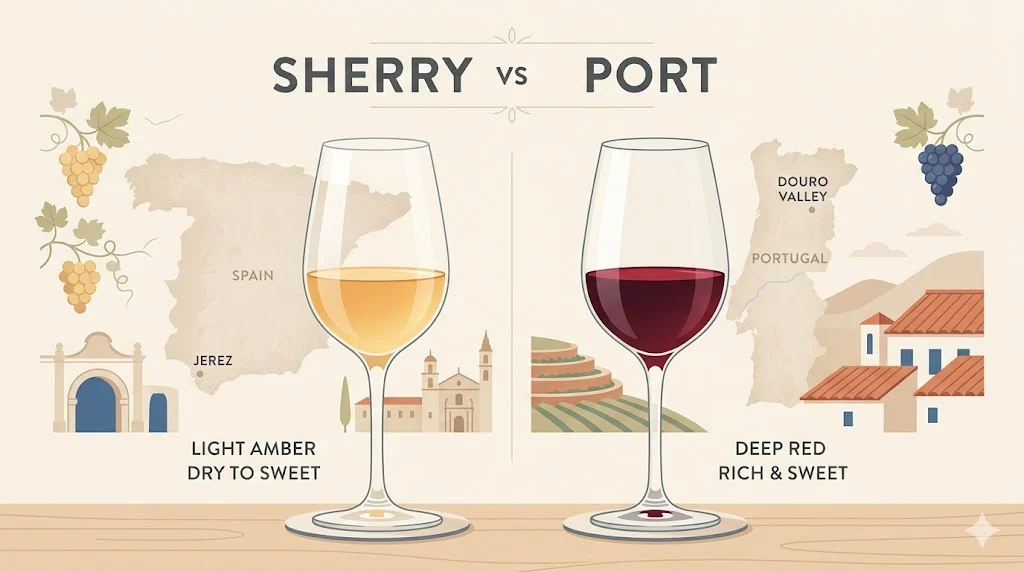
Sherry vs port compares two popular fortified wines, but they differ in taste, origin, and production. Sherry is usually dry and lighter, made in Spain, while port is sweet, rich, and produced in Portugal. Both are unique, but the choice depends on your taste and occasion.
If you’ve ever explored wine, you’ve likely come across the terms sherry and port. At first glance, they might seem similar. Both are fortified wines. Both are often enjoyed after meals. And both have a long history.
But here’s where many people get confused.
Sherry and port taste very different. They are made in different ways. Even the way you drink them can change the experience completely.
For beginners, this confusion can make choosing the right drink difficult. Should you go for something sweet? Something dry? Something light or rich?
Understanding the difference between sherry vs port can help you make better choices, whether you are hosting guests, pairing food, or simply trying something new.
In this guide, we’ll break everything down in simple terms. No complicated wine jargon. Just clear, practical explanations so you can confidently understand and enjoy both.
Quick Answer / Overview
Let’s simplify it.
- Sherry = dry to slightly sweet, lighter, nutty flavors
- Port = sweet, rich, fruity, dessert-style wine
Here’s a quick comparison:
| Feature | Sherry | Port |
|---|---|---|
| Origin | Spain | Portugal |
| Taste | Dry to sweet | Mostly sweet |
| Texture | Light to medium | Rich and heavy |
| Alcohol | Moderate | Higher |
| Best For | Appetizers | Desserts |
In short:
Choose sherry for light sipping or starters.
Choose port for sweet endings and desserts.
What is Sherry?
Sherry is a fortified wine made in southern Spain, mainly in a region called Jerez.
It comes in different styles, but most traditional sherries are dry.
What makes sherry special is how it ages. Some types are aged under a layer of yeast, which gives it a unique flavor.
Common flavors include:
- Nutty
- Salty
- Slightly tangy
Types of sherry include:
- Fino (very dry and light)
- Amontillado (medium, nutty)
- Oloroso (darker and richer)
Sherry is often served:
- Slightly chilled
- In small glasses
- Before meals
What is Port?
Port is a fortified wine from Portugal, specifically the Douro Valley.
Unlike sherry, port is usually sweet.
It is made by adding grape spirit during fermentation. This stops the process early and keeps natural sugars in the wine.
That’s why port tastes:
- Sweet
- Rich
- Fruity
Common types of port:
- Ruby Port (young and fruity)
- Tawny Port (aged and nutty)
- Vintage Port (high quality, long aging)
Port is often served:
- At room temperature
- After meals
- With desserts or cheese
Advantages and Disadvantages
Sherry: Pros and Cons
Advantages:
- Wide range from dry to sweet
- Lower sugar options available
- Great for food pairing
- Unique flavor profile
Disadvantages:
- Can taste too sharp for beginners
- Less popular in some regions
- Needs proper storage after opening
Port: Pros and Cons
Advantages:
- Naturally sweet and easy to enjoy
- Great with desserts
- Smooth and rich texture
- Long shelf life (some types)
Disadvantages:
- High sugar content
- Can feel heavy
- Higher alcohol level
- Not ideal for light meals
Real-World Examples
Dinner Party Starter
You’re hosting a dinner.
- Serve sherry before the meal
- It prepares the palate
Dessert Time
After dinner, guests want something sweet.
- Serve port with chocolate cake
- It enhances the flavor
Casual Evening Drink
You want something light.
- Choose dry sherry
For something richer:
- Choose port
Regional / Global Usage
Spain
Sherry is deeply rooted in Spanish culture. It is often served with tapas and social gatherings.
Portugal
Port is a symbol of Portuguese wine tradition. It is widely exported and enjoyed worldwide.
Global Trends
- Sherry is becoming popular again among wine enthusiasts
- Port remains a classic dessert wine globally
Common Mistakes
Thinking sherry is always sweet
Many people assume all sherry is sweet.
Correction:
Most traditional sherries are actually dry.
Drinking port like regular wine
Port is stronger and sweeter.
Correction:
Serve in smaller portions.
Serving at the wrong temperature
Temperature affects taste.
Correction:
- Chill sherry slightly
- Serve port at room temperature
Ignoring food pairing
Both wines shine with the right food.
Exercises with Answers
Question 1
Which wine is usually sweeter?
Answer: Port
Question 2
Which wine comes from Spain?
Answer: Sherry
Question 3
Which is better for desserts?
Answer: Port
Question 4
Which can be dry?
Answer: Sherry
Question 5
Which is richer in texture?
Answer: Port
Related Concepts or Comparisons
Sherry vs Port vs Madeira
| Feature | Sherry | Port | Madeira |
|---|---|---|---|
| Taste | Dry to medium | Sweet | Varies |
| Origin | Spain | Portugal | Portugal |
| Style | Light to medium | Rich | Complex |
Simple Analogy
- Sherry = light snack
- Port = rich dessert
FAQs
What is the main difference between sherry vs port?
Sherry can be dry or slightly sweet, while port is usually sweet and richer.
Is port stronger than sherry?
Yes, port generally has higher alcohol content than most sherry styles.
Which is better for beginners, sherry vs port?
Port is easier for beginners because of its sweet taste.
Can sherry be used in cooking?
Yes, sherry is commonly used in cooking for sauces and flavor.
Is port only for desserts?
Mostly yes, but it can also pair with cheese.
Do you chill sherry or port?
Sherry is usually chilled. Port is served at room temperature.
Which lasts longer after opening?
Port usually lasts longer than sherry.
Can I drink sherry every day?
Yes, in moderation, like any wine.
Is sherry healthier than port?
Sherry may have less sugar, but both should be consumed in moderation.
Why is port sweeter than sherry?
Because fermentation is stopped early, preserving natural sugar.
Conclusion
Understanding sherry vs port helps you enjoy wine in a smarter way. While both are fortified wines, they offer very different experiences.
Sherry is lighter, often dry, and works well before meals or with savory foods. Port is rich, sweet, and perfect for desserts or relaxing after dinner.
There is no “better” option. It depends on your taste and the occasion.
If you prefer something light and crisp, go for sherry. If you enjoy sweet and smooth flavors, port is the better choice.
The key is to try both and see what suits you. Wine is personal. The more you explore, the better your choices become.

Kevin Brooks is a grammar specialist at GramBrix.com, dedicated to helping readers understand language rules with clarity and confidence. He simplifies complex grammar concepts through practical examples and easy explanations.