Last Updated on April 10, 2026
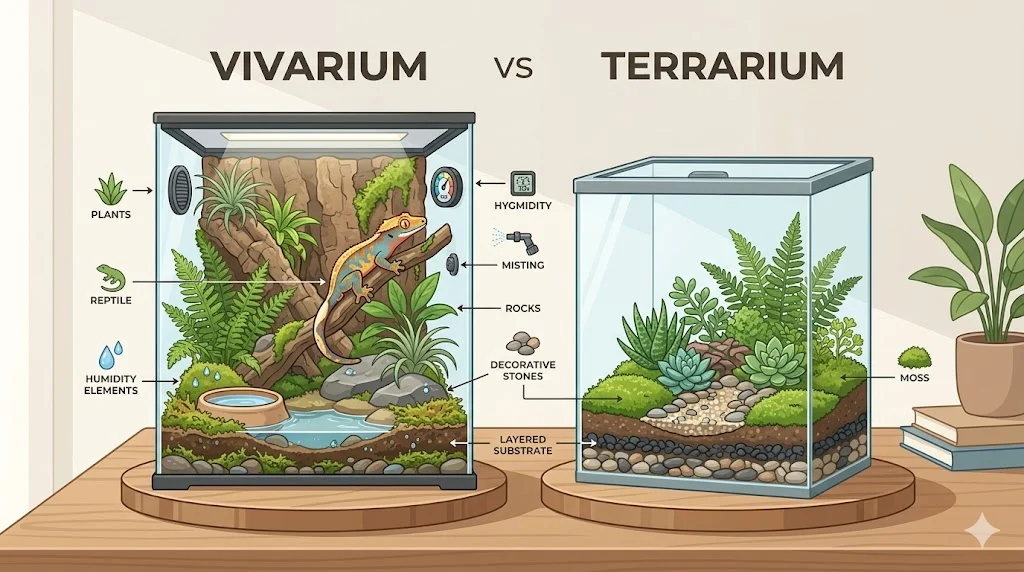
Vivarium vs terrarium refers to two types of enclosed habitats used to grow plants or house small animals. A terrarium is mainly designed for plants, while a vivarium is a broader term that includes habitats for animals, plants, or both. In simple terms, every terrarium is a vivarium, but not every vivarium is a terrarium.
Small indoor ecosystems have become very popular. People love keeping plants, reptiles, insects, or tiny landscapes inside glass containers. Two common terms you might hear are vivarium and terrarium.
At first glance, they seem identical. Both are glass containers filled with soil, plants, and sometimes decorations. But in reality, they serve slightly different purposes.
A terrarium is usually created for plants. It acts like a miniature garden inside a container. A vivarium, however, is designed to support living organisms such as reptiles, amphibians, insects, and plants together.
Understanding the difference between vivarium vs terrarium is important for hobbyists, plant lovers, and pet owners. Choosing the right type of enclosure ensures that plants grow well and animals stay healthy.
In this guide, we’ll explain the differences in simple terms, including how each setup works, when to use them, and common mistakes beginners often make.
Quick Answer / Overview
Here’s the easiest way to understand vivarium vs terrarium:
| Feature | Vivarium | Terrarium |
|---|---|---|
| Meaning | Habitat for plants and animals | Container mainly for plants |
| Scope | Broad category | Specific type |
| Purpose | Supports living ecosystem | Decorative plant display |
| Animals Included | Yes (often) | Usually no |
| Complexity | More complex | Simpler setup |
Simple rule:
- Vivarium = ecosystem for living creatures
- Terrarium = plant-focused mini garden
Definition / Explanation
What Is a Vivarium?
A vivarium is a controlled enclosure designed to recreate a natural environment for living organisms. It may contain plants, animals, soil, water, and lighting systems.
Vivariums are commonly used for creatures such as:
- Poison Dart Frog
- Leopard Gecko
- Praying Mantis
These habitats simulate natural conditions like humidity, temperature, and lighting.
Some vivariums include:
- Water features
- Live plants
- Artificial rocks
- Heating lamps
The goal is to replicate a small ecosystem that keeps animals comfortable.
What Is a Terrarium?
A terrarium is a sealed or partially closed glass container used to grow plants. It works like a mini greenhouse.
Inside a terrarium you may find:
- Soil layers
- Decorative stones
- Moss
- Small plants
Common plants used in terrariums include:
- Moss
- Fittonia
- Succulent
Terrariums are popular because they require little maintenance and look attractive indoors.
Advantages and Disadvantages
Vivarium Pros and Cons
Advantages
- Supports animals and plants together
- Creates a realistic ecosystem
- Educational for studying nature
Disadvantages
- Requires careful monitoring
- Higher setup cost
- Needs temperature and humidity control
Terrarium Pros and Cons
Advantages
- Easy to create
- Low maintenance
- Ideal for home decoration
Disadvantages
- Limited ecosystem
- Usually supports only plants
- Less interactive than vivariums
Real-World Examples
Example 1: Reptile Habitat
A reptile owner wants to keep a Leopard Gecko.
They create a vivarium with:
- Heating lamp
- Substrate soil
- Hiding rocks
- Live plants
This setup supports the animal’s natural environment.
Example 2: Decorative Indoor Garden
Someone wants a small plant display for their living room.
They create a glass jar terrarium with:
- Pebbles
- Moss
- Small tropical plants
This setup focuses only on plant growth.
Example 3: Educational Classroom Setup
A science teacher creates a vivarium containing plants and insects like a Praying Mantis.
Students observe behavior and ecosystem balance.
Regional / Global Usage
Hobbyists and Pet Owners
Vivariums are widely used by reptile and amphibian enthusiasts. These setups mimic rainforest or desert environments.
Home Decor Enthusiasts
Terrariums are extremely popular for interior decoration and plant collections. Many people place them on desks, coffee tables, or shelves.
Educational Institutions
Schools and research labs sometimes use vivariums to study small animals and ecosystems.
Common Mistakes
Thinking vivarium and terrarium are identical
Many beginners assume both terms mean the same thing.
Correction:
Terrariums focus on plants, while vivariums support living animals and plants.
Putting animals in a basic terrarium
Animals often require special conditions.
Correction:
Use a proper vivarium with heating, humidity, and ventilation.
Overcrowding plants in terrariums
Too many plants can cause moisture imbalance.
Correction:
Choose a few small plants suitable for enclosed environments.
Ignoring lighting requirements
Both plants and animals may need proper lighting.
Correction:
Use natural light or specialized lamps when necessary.
Exercises With Answers
Question 1
Which habitat mainly supports plants?
Answer: Terrarium.
Question 2
Which enclosure can house animals and plants together?
Answer: Vivarium.
Question 3
Is every terrarium a vivarium?
Answer: Yes.
Question 4
Can reptiles live in a terrarium?
Answer: Usually no; they require a vivarium.
Question 5
Which setup is easier for beginners?
Answer: Terrarium.
Related Concepts and Comparisons
Vivarium vs Aquarium
| Feature | Vivarium | Aquarium |
|---|---|---|
| Environment | Land ecosystem | Water ecosystem |
| Organisms | Plants and animals | Fish and aquatic life |
| Water Level | Partial or minimal | Fully aquatic |
Aquariums are designed mainly for fish and aquatic plants.
Vivarium Types
Different types of vivariums include:
- Paludarium – mix of land and water habitats
- Riparium – shoreline ecosystem
- Desert vivarium – dry habitats for reptiles
These variations replicate different natural environments.
FAQs
What is the main difference between vivarium vs terrarium?
A vivarium houses animals and plants in a controlled habitat, while a terrarium mainly contains plants.
Is a terrarium considered a vivarium?
Yes. A terrarium is a type of vivarium designed specifically for plants.
Can animals live in a terrarium?
Most animals require special conditions, so a properly designed vivarium is usually necessary.
Which is easier to maintain, vivarium or terrarium?
Terrariums are easier because they only support plants.
What animals are commonly kept in vivariums?
Animals such as Poison Dart Frog and Leopard Gecko are often kept in vivariums.
Do terrariums need sunlight?
Yes, plants inside terrariums need natural or artificial light to grow.
Are terrariums good for beginners?
Yes. They are simple, decorative, and require minimal maintenance.
Do vivariums require special equipment?
Often yes. Heating lamps, humidity control, and ventilation may be required.
Can terrariums be closed containers?
Yes. Closed terrariums recycle moisture and create a self-sustaining environment.
Why are vivariums popular among reptile owners?
They replicate natural habitats, helping animals stay healthy.
Conclusion
The difference between vivarium vs terrarium becomes clear once you understand their purpose. A terrarium is a plant-focused miniature garden, while a vivarium is a broader ecosystem that can support both plants and animals.
Terrariums are simple, decorative, and ideal for beginners who want a low-maintenance indoor garden. Vivariums, on the other hand, are more complex but provide a realistic environment for reptiles, amphibians, and insects.
Choosing the right setup depends on your goal. If you want a beautiful plant display, a terrarium is perfect. If you want to create a habitat for animals and plants together, a vivarium is the better choice.
Both systems offer a fascinating way to bring nature indoors and observe miniature ecosystems up close.

Kevin Brooks is a grammar specialist at GramBrix.com, dedicated to helping readers understand language rules with clarity and confidence. He simplifies complex grammar concepts through practical examples and easy explanations.