Last Updated on March 8, 2026
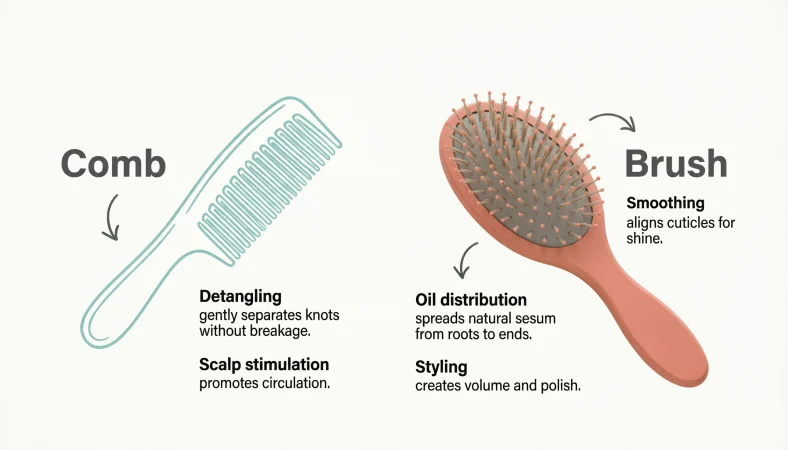
A comb and a brush are both hair grooming tools, but they serve different purposes. A comb is best for detangling, precise styling, and parting hair, while a brush is ideal for smoothing, adding volume, and distributing natural oils through the hair. Choosing between a comb vs brush depends on your hair type, styling goal, and grooming routine.
Most people use a comb or brush every day, but many do not know the difference between them. Both tools help manage hair. Both remove tangles. Both help with styling. Yet they work in different ways.
The debate around comb vs brush often comes down to hair type, hair health, and styling needs. A comb has teeth that glide through hair. A brush has bristles that spread and smooth hair. Because of this, each tool performs better in certain situations.
Using the wrong tool can cause problems. Hair may break. Frizz may increase. Styling may become harder.
Understanding the difference helps you take better care of your hair. It also helps you choose the right tool for daily grooming.
In this complete guide, you will learn:
- The real difference between comb vs brush
- When to use each tool
- Pros and cons of both
- Real life examples
- Common mistakes people make
- Helpful exercises to test your understanding
By the end, you will know exactly when to use a comb and when to use a brush.
Quick Answer: Comb vs Brush
| Feature | Comb | Brush |
|---|---|---|
| Structure | Straight teeth | Bristles attached to base |
| Best Use | Detangling, parting hair | Smoothing and styling |
| Hair Type | Curly, wet, fragile hair | Straight or thick hair |
| Control | High precision | Broad smoothing |
| Hair Health | Less pulling when used correctly | Distributes scalp oils |
Simple rule
- Use a comb for detangling and precision
- Use a brush for smoothing and styling
Both tools can be part of a healthy hair routine.
What Is a Comb?
A comb is a flat grooming tool with rows of teeth used to separate, detangle, and arrange hair strands.
Combs are one of the oldest grooming tools in human history. Ancient civilizations used combs made of bone, wood, or ivory.
Today, combs come in many materials:
- Plastic
- Carbon fiber
- Wood
- Metal
Common Types of Combs
Wide Tooth Comb
Best for:
- Wet hair
- Curly hair
- Detangling
Fine Tooth Comb
Best for:
- Precise styling
- Straight hair
- Removing lice or debris
Tail Comb
Best for:
- Creating hair parts
- Sectioning hair for styling
Afro Comb
Best for:
- Thick curly hair
- Adding volume
What Is a Hair Brush?
A hair brush is a grooming tool with bristles attached to a base. It is used to smooth hair and distribute oils from the scalp.
Hair brushes cover more surface area than combs. This makes them useful for smoothing large sections of hair quickly.
Common Types of Brushes
Paddle Brush
- Wide and flat
- Good for long straight hair
Round Brush
- Used during blow drying
- Adds volume and curls
Vent Brush
- Allows airflow
- Helps with quick drying
Boar Bristle Brush
- Spreads natural oils
- Adds shine
Comb vs Brush: Core Differences
Understanding the difference between comb vs brush helps prevent hair damage.
| Feature | Comb | Brush |
|---|---|---|
| Design | Teeth | Bristles |
| Hair Control | Precise | Broad |
| Best for Wet Hair | Yes | Usually no |
| Styling Precision | High | Medium |
| Oil Distribution | Low | High |
| Detangling | Very effective | Moderate |
Simple Analogy
Think of it like tools for painting.
- A comb is like a fine brush for detail work
- A brush is like a roller for smooth coverage
Both tools have different roles.
Advantages of Using a Comb
Using a comb has several benefits for hair health.
Gentle Detangling
Wide tooth combs reduce pulling and breakage.
This is important for:
- Curly hair
- Wet hair
- Fragile hair
Better Precision
Combs allow controlled styling.
Examples:
- Parting hair
- Sectioning hair for braids
- Trimming hair
Works Well on Wet Hair
Hair is weakest when wet.
A comb moves through wet hair more gently than most brushes.
Portable and Simple
Combs are:
- Small
- Lightweight
- Easy to carry
Disadvantages of Using a Comb
Even though combs are useful, they have limitations.
Slower for Long Hair
Detangling long hair with a comb can take time.
Less Effective for Smoothing
Combs separate strands but do not smooth them as well as brushes.
Limited Volume
Combs rarely add lift or body to hair.
Advantages of Using a Hair Brush
Hair brushes offer benefits that combs cannot provide.
Distributes Natural Oils
Brush bristles pull oils from the scalp down the hair shaft.
This helps:
- Reduce dryness
- Improve shine
- Condition hair naturally
Faster Styling
Brushes handle larger sections of hair.
This makes them ideal for:
- Quick grooming
- Long hair
Better for Blow Drying
Round brushes create:
- Volume
- Waves
- Smooth finishes
Improves Hair Shine
Brushing smooths hair cuticles, making hair reflect light better.
Disadvantages of Using a Hair Brush
Brushes can also cause issues when used incorrectly.
Can Damage Wet Hair
Brushing wet hair may cause breakage.
May Create Static
Plastic brushes sometimes increase frizz.
Not Ideal for Curly Hair
Curly hair often becomes frizzy when brushed.
Comb vs Brush for Different Hair Types
Hair type strongly affects which tool works best.
| Hair Type | Best Tool | Reason |
|---|---|---|
| Curly Hair | Comb | Maintains curl pattern |
| Straight Hair | Brush | Smooths easily |
| Thick Hair | Brush | Handles large volume |
| Fine Hair | Comb | Reduces breakage |
| Wet Hair | Comb | Gentle detangling |
Real World Examples
Example 1: Morning Hair Routine
Sarah has long straight hair.
She uses:
- Comb to remove knots
- Paddle brush to smooth hair
This prevents pulling.
Example 2: Curly Hair Care
Ali has curly hair.
He uses:
- Wide tooth comb only after shower
This keeps curls defined.
Example 3: Salon Blow Dry
A hairstylist uses:
- Round brush
- Hair dryer
This creates volume and smooth texture.
Regional and Global Usage
Hair grooming tools vary around the world.
Africa
The Afro comb is common. It helps manage dense curls and adds volume.
Asia
Fine tooth combs are often used for neat styling and traditional hair arrangements.
Europe and North America
Brushes are widely used for blow drying and everyday grooming.
Middle East and South Asia
Both combs and brushes are common in daily hair routines.
Common Mistakes When Choosing Between Comb vs Brush
Many people damage hair because they misuse these tools.
Brushing Wet Hair
Mistake: Using a brush immediately after shower.
Correction: Use a wide tooth comb first.
Using Fine Tooth Comb for Tangles
Mistake: Pulling knots with small comb teeth.
Correction: Use wide tooth comb.
Over Brushing
Mistake: Brushing hair too often.
Correction: Brush gently and only when needed.
Using Wrong Tool for Curl Type
Mistake: Brushing curly hair dry.
Correction: Comb curls while damp.
Exercises: Test Your Understanding
Exercise 1
Which tool is best for wet hair?
A. Brush
B. Comb
Answer: Comb
Exercise 2
Which tool distributes natural scalp oils better?
A. Comb
B. Brush
Answer: Brush
Exercise 3
Which tool is better for precise hair parting?
A. Comb
B. Brush
Answer: Comb
Exercise 4
Which tool helps add volume during blow drying?
A. Comb
B. Brush
Answer: Brush
Related Hair Grooming Concepts
Understanding comb vs brush also connects with other hair care ideas.
Hair Cuticle
Hair strands have outer layers called cuticles. Brushing smooths these layers.
Scalp Health
Brushing stimulates blood circulation in the scalp.
Hair Detangling
Detangling reduces breakage and improves manageability.
Hair Styling Tools
Other tools include:
- Hair dryer
- Curling iron
- Straightener
- Hair picks
Comb vs Brush Comparison Summary
| Situation | Use Comb | Use Brush |
|---|---|---|
| Wet Hair | Yes | No |
| Detangling | Yes | Sometimes |
| Styling | Limited | Excellent |
| Curl Care | Yes | Not recommended |
| Shine | Limited | High |
The best hair routines often use both tools together.
FAQs
What is the main difference between comb vs brush?
The main difference is structure and purpose. A comb uses teeth for detangling and precision, while a brush uses bristles to smooth hair and distribute scalp oils.
Is a comb better than a brush for hair health?
A comb is often better for detangling and wet hair. However, a brush can improve shine by spreading natural oils across hair strands.
Should you use a comb or brush on wet hair?
It is better to use a wide tooth comb on wet hair. Brushes can pull and break fragile wet hair strands.
Is brushing hair every day good?
Gentle brushing once or twice daily can distribute oils and improve shine. Excessive brushing may cause damage.
Does a comb reduce hair breakage?
Yes. A wide tooth comb reduces tension and helps remove tangles with less pulling compared to many brushes.
Can curly hair be brushed?
Curly hair should rarely be brushed when dry. Using a comb while hair is damp helps maintain curl structure.
Is a brush better for long hair?
Yes. A brush handles larger sections of hair, making it easier to smooth and style long hair quickly.
Do combs help with scalp health?
Combs mainly detangle hair. Brushes stimulate the scalp more effectively because their bristles massage the skin.
Should children use combs or brushes?
Children often benefit from wide tooth combs because they detangle gently and reduce hair pulling.
Can you use both comb and brush together?
Yes. Many people use a comb first to detangle and then a brush to smooth and style hair.
Conclusion
The debate between comb vs brush is not about choosing one tool forever. Both tools serve different purposes in hair care.
A comb works best for detangling, wet hair, and precise styling. It separates strands gently and helps prevent breakage, especially for curly or delicate hair.
A brush works best for smoothing, styling, and distributing natural oils. It improves shine and helps create polished hairstyles.
For most people, the best solution is to use both tools as part of a balanced hair routine.
Recommended approach:
- Use a wide tooth comb to remove tangles.
- Use a brush to smooth and style hair.
- Choose tools based on hair type and condition.
- Avoid harsh pulling or excessive grooming.
When used correctly, both combs and brushes can keep hair healthy, shiny, and manageable.

Victoria Lane is a grammar-focused writer at GramBrix.com, passionate about helping readers master the rules of language. She provides clear explanations and practical examples that make writing more accurate, polished and confident.