Last Updated on August 19, 2026
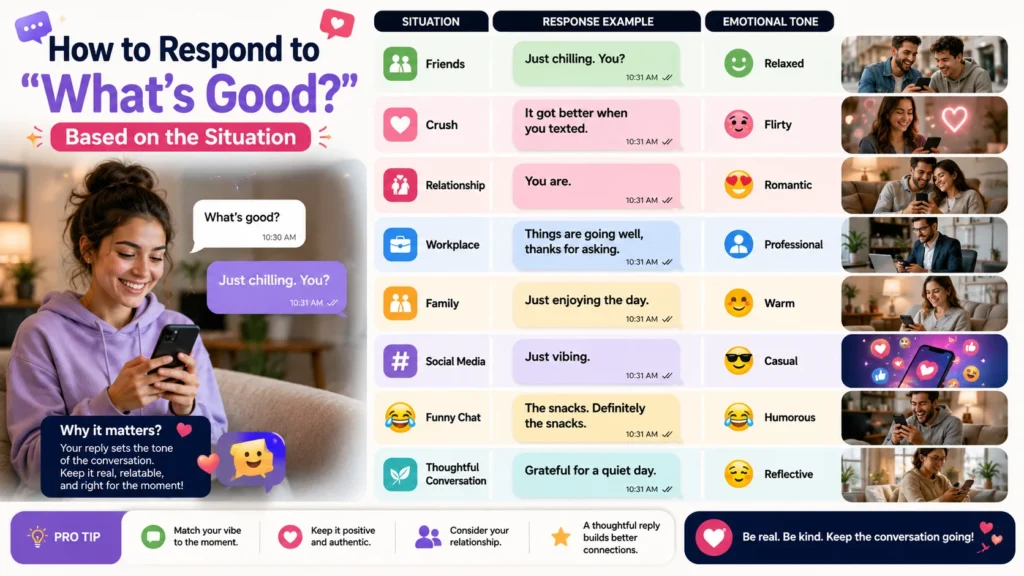
If you’re wondering how to respond to whats good, the best reply depends on your relationship, mood, and the tone of the conversation. Since “what’s good?” is usually a casual way of saying “what’s up?” or “how are things?”, your response can be friendly, funny, flirty, or professional.
Best short responses: Not much, just chilling, Everything’s good over here, Living the dream, What’s good with you?, Just handling life one day at a time.
Your phone lights up.
A friend sends a quick message:
“What’s good?”
Maybe it’s someone you’re dating. Maybe it’s a coworker checking in. Maybe it’s a person sliding into your DMs for the first time.
And suddenly, a simple message feels harder to answer than it should.
The truth is that “what’s good?” is one of the most common conversation starters in texting, social media, and everyday life. The response you choose can set the entire tone of the conversation. It can make you sound funny, confident, flirty, relaxed, or even mysterious.
In this guide, you’ll learn exactly how to respond to “what’s good?” in different situations, including friends, relationships, family chats, work conversations, and online messages. You’ll also discover why certain replies work better than others and how to avoid responses that accidentally kill the conversation.
Casual Responses to What’s Good
Just chilling. You?
Best used when:
You’re having a normal day and want to keep the conversation relaxed.
Meaning:
This reply feels friendly and approachable. It shows you’re open to chatting while inviting the other person to share what’s happening on their end.
Not much. What’s going on with you?
Best used when:
You want the other person to do most of the talking.
Meaning:
This keeps the conversation moving naturally. People often appreciate being invited to talk about themselves.
Same old, same old.
Best used when:
Nothing particularly exciting is happening.
Meaning:
This communicates familiarity and comfort. It’s a low-pressure response that feels authentic.
Just surviving Monday.
Best used when:
You’re dealing with work, school, or a busy schedule.
Meaning:
A little humor makes ordinary conversations more engaging and relatable.
Everything’s good over here.
Best used when:
You want a positive but simple answer.
Meaning:
This creates a friendly tone while reassuring the other person that things are going well.
Funny Responses to What’s Good
My Wi-Fi is finally cooperating.
Best used when:
Talking with friends or people who appreciate humor.
Meaning:
Lighthearted jokes create instant connection because they’re relatable.
The fridge and I are in a committed relationship.
Best used when:
You want to sound playful.
Meaning:
Self-deprecating humor often makes conversations feel more natural and memorable.
My stress level isn’t, but I am.
Best used when:
You want a funny response with a touch of honesty.
Meaning:
This joke acknowledges life’s challenges without sounding negative.
The snacks. Definitely the snacks.
Best used when:
You’re keeping things playful and casual.
Meaning:
Unexpected answers often get laughs and encourage continued conversation.
Me. Obviously.
Best used when:
You have a confident sense of humor.
Meaning:
Playful confidence can be charming when used with the right audience.
Flirty Responses to What’s Good
It got better when you texted.
Best used when:
Someone you’re interested in reaches out.
Meaning:
This creates instant warmth and signals attraction without being overly intense.
Trying to decide if I should flirt with you today.
Best used when:
You already have playful chemistry.
Meaning:
Teasing creates anticipation and often leads to more engaging conversations.
Not much. Missing someone, though.
Best used when:
You want to be subtly romantic.
Meaning:
It hints at affection while leaving room for playful interpretation.
You tell me. You started the conversation.
Best used when:
You want a fun, teasing dynamic.
Meaning:
This shifts the conversation back while keeping the energy playful.
Waiting for your message, apparently.
Best used when:
You want to show interest.
Meaning:
This makes the other person feel valued and appreciated.
Cute Responses to What’s Good
My day just got a little brighter.
Best used when:
Talking to someone you genuinely enjoy.
Meaning:
Simple positivity can make people feel important.
Just collecting good vibes.
Best used when:
You want an upbeat response.
Meaning:
This reflects a cheerful and optimistic personality.
A cup of coffee and a good mood.
Best used when:
You want a warm, relatable answer.
Meaning:
Specific details often feel more genuine than generic responses.
Thinking happy thoughts.
Best used when:
You want to sound positive and lighthearted.
Meaning:
This keeps the conversation friendly and welcoming.
Enjoying the little things.
Best used when:
You want a thoughtful response.
Meaning:
It reflects gratitude and emotional maturity.
Romantic Responses to What’s Good
You are.
Best used when:
You’re in a relationship or talking to someone special.
Meaning:
Short, sweet responses often have the strongest emotional impact.
My favorite person is texting me.
Best used when:
You want to express affection directly.
Meaning:
People naturally respond positively to feeling appreciated.
Life’s pretty good when you’re around.
Best used when:
You want to communicate genuine feelings.
Meaning:
This highlights emotional connection rather than superficial compliments.
Thinking about our last conversation.
Best used when:
You want to deepen emotional intimacy.
Meaning:
It shows that your interactions matter to you.
Looking for an excuse to talk to you.
Best used when:
You want a playful romantic response.
Meaning:
It signals interest while maintaining a relaxed tone.
Confident Responses to What’s Good
Working on something exciting.
Best used when:
You want to project ambition and positivity.
Meaning:
Confidence often comes from focusing on progress rather than showing off.
Living the dream.
Best used when:
You want a classic, upbeat response.
Meaning:
This phrase communicates optimism and resilience.
Busy making things happen.
Best used when:
You’re focused on goals or projects.
Meaning:
Purpose-driven responses often leave a strong impression.
Feeling pretty good today.
Best used when:
You want a direct answer.
Meaning:
Simple confidence tends to sound more authentic than exaggerated confidence.
Just doing my thing.
Best used when:
You want a relaxed but self-assured reply.
Meaning:
This suggests comfort with who you are.
Clever Responses to What’s Good
Depends who’s asking.
Best used when:
You want to create intrigue.
Meaning:
Curiosity encourages further conversation.
The question is, what’s not good?
Best used when:
You’re feeling positive and playful.
Meaning:
This flips the conversation in an unexpected way.
That’s a surprisingly deep question for a Tuesday.
Best used when:
You enjoy witty conversations.
Meaning:
Humor mixed with observation often feels intelligent and engaging.
Define good.
Best used when:
You’re being playful or philosophical.
Meaning:
It turns a simple greeting into a fun exchange.
Current status: loading.
Best used when:
You want a modern, internet-inspired response.
Meaning:
Digital humor resonates strongly in text conversations.
Chill and Relaxed Responses to What’s Good
Just vibing.
Best used when:
You’re relaxed and keeping things simple.
Meaning:
This modern phrase feels natural in texting culture.
Taking it easy today.
Best used when:
You want a calm response.
Meaning:
It communicates balance and low stress.
Nothing too crazy.
Best used when:
Your day is fairly normal.
Meaning:
This creates a comfortable conversational tone.
Just enjoying the moment.
Best used when:
You want to sound mindful.
Meaning:
People often respond positively to grounded energy.
Hanging in there.
Best used when:
Things aren’t perfect but you’re managing.
Meaning:
Honest responses often feel more genuine than forced positivity.
Professional Responses to What’s Good
Things are going well. Thanks for asking.
Best used when:
A colleague or client reaches out.
Meaning:
Polite, professional, and respectful.
Staying productive today.
Best used when:
Work-related conversations.
Meaning:
This keeps the focus on professional goals.
Busy but making progress.
Best used when:
Managing multiple responsibilities.
Meaning:
It communicates competence without complaining.
Everything’s moving in the right direction.
Best used when:
Project updates or workplace chats.
Meaning:
Positive professionalism builds trust.
Doing well. How about yourself?
Best used when:
Any professional environment.
Meaning:
Strong communication is often about showing interest in others.
Friendly Responses for Friends
Just trying to stay out of trouble.
Best used when:
Talking with close friends.
Meaning:
A classic playful response that keeps things light.
Same chaos, different day.
Best used when:
You share a humorous friendship dynamic.
Meaning:
Shared experiences strengthen social bonds.
Not much. Fill me in.
Best used when:
You want updates from your friend.
Meaning:
This encourages meaningful conversation.
Trying to figure out dinner.
Best used when:
You want a relatable answer.
Meaning:
Specific everyday details feel natural and authentic.
Glad you checked in.
Best used when:
You appreciate the message.
Meaning:
People like knowing their effort is noticed.
Responses for Social Media and DMs
Just out here making memories.
Best used when:
Instagram, Snapchat, or casual DMs.
Meaning:
Positive and engaging without oversharing.
Living one notification at a time.
Best used when:
Online conversations.
Meaning:
This feels modern and relatable.
The timeline is entertaining today.
Best used when:
Talking about social media.
Meaning:
Shared online experiences create connection.
Scrolling and surviving.
Best used when:
Casual internet conversations.
Meaning:
A humorous response many people understand instantly.
Just seeing where the day takes me.
Best used when:
You want an easygoing response.
Meaning:
It feels open-ended and conversational.
Thoughtful Responses to What’s Good
Grateful for a quiet day.
Best used when:
You want a meaningful reply.
Meaning:
Gratitude often creates deeper conversations.
Focusing on the things that matter.
Best used when:
Reflective moments.
Meaning:
This communicates maturity and purpose.
Taking things one step at a time.
Best used when:
Life feels busy or challenging.
Meaning:
People often relate to steady progress.
Learning something new every day.
Best used when:
Personal growth conversations.
Meaning:
Curiosity is an attractive quality in communication.
Appreciating what I have.
Best used when:
You want a positive, grounded response.
Meaning:
This reflects emotional intelligence and perspective.
Responses You Should Avoid
Nothing.
Best used when:
Rarely.
Meaning:
Single-word answers often end conversations instead of continuing them.
Fine.
Best used when:
Almost never.
Meaning:
Many people interpret this as disinterest or annoyance.
Why?
Best used when:
Only if context requires it.
Meaning:
It can sound defensive even when you don’t intend it that way.
K.
Best used when:
Practically never.
Meaning:
Short replies frequently come across as dismissive.
Doesn’t matter.
Best used when:
Avoiding deeper conversation isn’t your goal.
Meaning:
This can unintentionally create emotional distance.
Why “What’s Good?” Works as a Conversation Starter
People don’t usually ask “what’s good?” because they want a detailed life update.
Most of the time, they’re checking your mood, testing the conversation vibe, or looking for an easy way to connect.
Communication psychology shows that casual greetings serve as social invitations. They’re less about information and more about connection.
A good response accomplishes three things:
- It answers the question.
- It reflects your personality.
- It gives the other person something to respond to.
The best replies often include a small detail, a question, or a bit of humor because those elements keep conversations flowing naturally.
People Also Ask
What does “what’s good” mean in texting?
In texting, “what’s good?” usually means “what’s up?” or “how are things going?” It’s a casual greeting used to start a conversation. Most people are simply checking in or looking for a friendly way to connect.
Is “what’s good” the same as “how are you”?
Not exactly. “How are you?” focuses more on your emotional state, while “what’s good?” can refer to your mood, activities, plans, or anything interesting happening in your life. It’s generally more casual and conversational.
How do you respond to “what’s good” from a crush?
A good response to “what’s good?” from a crush is friendly, engaging, and slightly playful. Replies like “It got better when you texted” or “Just wondering when I’d hear from you” show interest without being overwhelming.
Is “what’s good” considered flirting?
Not necessarily. Most of the time it’s simply a casual greeting. However, depending on tone, context, and relationship dynamics, it can become a flirty conversation starter, especially in DMs or dating situations.
What’s the most professional response to “what’s good”?
A professional response could be, “Things are going well, thanks for asking. How about you?” This maintains a friendly tone while staying appropriate for workplace communication and professional relationships.
Why do some responses work better than others?
The best responses match the situation, relationship, and emotional tone. People respond positively when they feel acknowledged, understood, or entertained. Replies that invite conversation tend to create stronger connections than short, closed answers.
Conclusion
Knowing how to respond to whats good isn’t about finding one perfect answer. It’s about matching your reply to the moment, the relationship, and the energy of the conversation. A funny response can make someone laugh, a flirty response can build attraction, and a thoughtful response can create a deeper connection. The best replies feel natural, genuine, and true to your personality. Next time someone texts “what’s good?”, you’ll have plenty of options ready. Choose the one that fits the situation, and let the conversation flow from there.

Victoria Lane is a grammar-focused writer at GramBrix.com, passionate about helping readers master the rules of language. She provides clear explanations and practical examples that make writing more accurate, polished and confident.