
Last Updated on March 24, 2026
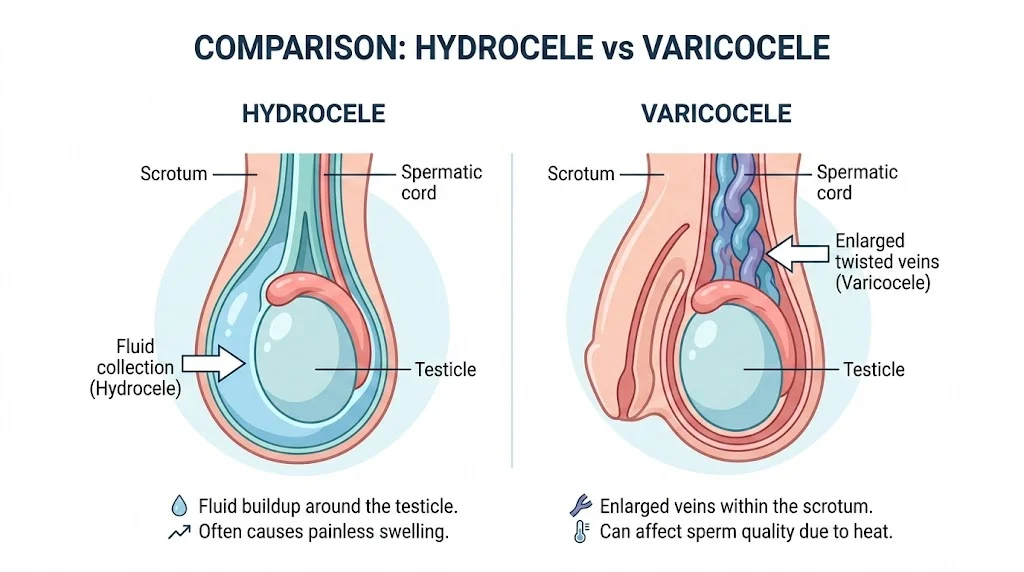
Hydrocele vs varicocele refers to two different conditions that cause swelling in the scrotum. A hydrocele is a fluid-filled sac surrounding the testicle, while a varicocele is an enlargement of veins inside the scrotum similar to varicose veins. Both conditions affect male reproductive health but differ in causes, symptoms, and treatment approaches.
Many men experience swelling or discomfort in the scrotum at some point in their lives. Two common causes of this problem are hydrocele and varicocele. Because both conditions involve swelling near the testicles, people often confuse them. Understanding hydrocele vs varicocele is important for proper diagnosis and treatment.
A hydrocele happens when fluid builds up around a testicle. It usually causes painless swelling and is often harmless. A varicocele, on the other hand, occurs when veins inside the scrotum become enlarged. This condition is similar to varicose veins in the legs and can affect fertility.
Many men discover these conditions during routine exams, fertility tests, or when they notice unusual swelling. While hydroceles are often harmless, varicoceles can sometimes lead to reduced sperm quality.
This guide explains hydrocele vs varicocele in simple terms. You will learn the causes, symptoms, diagnosis methods, treatment options, and key differences between the two conditions.
Quick Answer / Overview
| Feature | Hydrocele | Varicocele |
|---|---|---|
| Definition | Fluid-filled sac around testicle | Enlarged veins in scrotum |
| Appearance | Smooth swelling | Twisted vein-like swelling |
| Pain Level | Usually painless | May cause dull pain |
| Common Age | Infants and adults | Teenagers and adults |
| Fertility Impact | Rare | Possible |
| Treatment | Often not needed | Sometimes surgery |
In simple terms:
- Hydrocele = Fluid accumulation
- Varicocele = Enlarged veins
Both conditions cause scrotal swelling but develop for different reasons.
Definition and Explanation
What Is a Hydrocele?
A hydrocele occurs when fluid builds up inside the thin sac surrounding the testicle. This sac is called the tunica vaginalis.
The buildup of fluid causes the scrotum to appear swollen or enlarged.
Hydroceles are common in:
- Newborn boys
- Men over 40
- People with scrotal injuries
Types of Hydrocele
Communicating Hydrocele
Fluid moves between the abdomen and scrotum.
Non-communicating Hydrocele
Fluid stays trapped around the testicle.
Key Characteristics
- Soft swelling
- Usually painless
- Smooth shape
- Translucent under light during medical examination
What Is a Varicocele?
A varicocele occurs when veins in the scrotum become enlarged and twisted. These veins form part of the pampiniform plexus, which helps regulate testicular temperature.
When blood flow slows or valves inside veins stop working properly, blood pools inside the veins. This causes swelling.
Varicoceles are most common on the left side of the scrotum.
Key Characteristics
- Feels like a bag of worms
- Enlarged twisted veins
- Dull ache or heaviness
- Possible fertility issues
Causes of Hydrocele vs Varicocele
Understanding causes helps explain the difference between hydrocele and varicocele.
Causes of Hydrocele
Common causes include:
- Congenital fluid accumulation
- Injury to the scrotum
- Inflammation of the testicle
- Infection
- Post-surgical complications
- Blockage in lymphatic drainage
In infants, hydroceles often occur because the abdominal passage fails to close after birth.
Causes of Varicocele
Varicocele occurs due to poor blood flow in scrotal veins.
Possible causes:
- Weak vein valves
- Increased pressure in scrotal veins
- Abnormal vein structure
- Genetic predisposition
- Hormonal influences
Because the left testicular vein drains differently into the renal vein, varicoceles are more common on the left side.
Symptoms Comparison
Hydrocele Symptoms
Common symptoms include:
- Swelling in the scrotum
- Feeling of heaviness
- Smooth lump
- No pain in most cases
Large hydroceles may cause discomfort while walking or sitting.
Varicocele Symptoms
Varicocele symptoms may include:
- Dull aching pain
- Enlarged veins
- Scrotal swelling
- Fertility problems
- Shrinking testicle (in severe cases)
Pain may increase after:
- Standing for long periods
- Exercise
- Heat exposure
Visual and Physical Differences
Doctors often diagnose hydrocele vs varicocele during a physical exam.
| Feature | Hydrocele | Varicocele |
|---|---|---|
| Texture | Soft fluid sac | Rope-like veins |
| Light Test | Light passes through | Light blocked |
| Feel | Smooth | “Bag of worms” feeling |
| Position | Around testicle | Above testicle |
Doctors may also use ultrasound imaging to confirm the diagnosis.
Diagnosis Methods
Physical Examination
Doctors check the scrotum while standing and lying down.
Key checks include:
- Palpation of veins
- Swelling size
- Tenderness
- Position of testicles
Transillumination Test
A small light is placed behind the scrotum.
- Hydrocele: light passes through fluid
- Varicocele: light does not pass
Ultrasound
Scrotal ultrasound is the most accurate diagnostic tool.
It helps doctors:
- Detect fluid buildup
- Identify enlarged veins
- Evaluate blood flow
Treatment Options
Hydrocele Treatment
Small hydroceles often do not require treatment.
Possible options include:
Observation
Doctors monitor the condition over time.
Hydrocelectomy
Surgical removal of the fluid sac.
Needle Aspiration
Fluid is drained using a needle.
However, fluid may return after aspiration.
Varicocele Treatment
Varicocele treatment depends on symptoms and fertility concerns.
Observation
Many men live normally with mild varicocele.
Varicocelectomy
Surgical repair of enlarged veins.
Embolization
A minimally invasive procedure that blocks abnormal veins.
Advantages and Disadvantages of Treatments
| Treatment | Advantages | Disadvantages |
|---|---|---|
| Observation | No surgery | Condition may persist |
| Surgery | Permanent fix | Recovery time |
| Embolization | Less invasive | Not always available |
| Aspiration | Quick procedure | Recurrence risk |
Real World Examples
Example 1
A 25-year-old man notices painless swelling in the scrotum. A doctor performs a light test and diagnoses a hydrocele.
Treatment: Observation.
Example 2
A couple struggles with infertility. Tests reveal a varicocele affecting sperm production.
Treatment: Varicocelectomy.
Example 3
An athlete feels a dull ache in the scrotum after long workouts. A doctor diagnoses mild varicocele.
Treatment: Supportive underwear and monitoring.
Regional and Global Prevalence
Varicocele and hydrocele appear worldwide.
Hydrocele
More common in:
- Tropical regions
- Areas with parasitic infections
- Infant populations
Certain infections like filariasis increase hydrocele risk.
Varicocele
Common globally.
Statistics suggest:
- 15% of men have varicocele
- 40% of infertile men may have it
This makes varicocele one of the most studied causes of male infertility.
Impact on Fertility
Hydrocele and Fertility
Hydrocele rarely affects fertility.
However, large hydroceles may:
- Increase scrotal temperature
- Affect sperm production
This is uncommon.
Varicocele and Fertility
Varicocele may affect fertility because it:
- Raises testicular temperature
- Reduces sperm count
- Damages sperm DNA
- Decreases sperm motility
Surgical treatment may improve fertility in many men.
Common Mistakes When Understanding Hydrocele vs Varicocele
Mistake 1
Assuming all scrotal swelling is the same.
Correction: Different conditions cause swelling.
Mistake 2
Ignoring mild symptoms.
Correction: Early medical evaluation helps prevent complications.
Mistake 3
Believing hydrocele always needs surgery.
Correction: Many cases resolve naturally.
Mistake 4
Thinking varicocele always causes infertility.
Correction: Many men with varicocele have normal fertility.
Exercises with Answers
Exercise 1
Question:
What is the main difference between hydrocele and varicocele?
Answer:
Hydrocele is fluid accumulation around the testicle, while varicocele is enlarged veins in the scrotum.
Exercise 2
Question:
Which condition is more associated with infertility?
Answer:
Varicocele.
Exercise 3
Question:
Which diagnostic test involves shining a light through the scrotum?
Answer:
Transillumination test.
Exercise 4
Question:
Which condition often feels like a bag of worms?
Answer:
Varicocele.
Related Concepts and Comparisons
Understanding hydrocele vs varicocele becomes easier when comparing them with related conditions.
Inguinal Hernia
Occurs when abdominal tissue pushes into the scrotum.
Epididymitis
Inflammation of the epididymis.
Testicular Torsion
A medical emergency where the testicle twists and cuts off blood supply.
FAQs
What is the main difference between hydrocele and varicocele?
Hydrocele is fluid accumulation around the testicle, while varicocele is enlargement of scrotal veins affecting blood flow.
Can hydrocele turn into varicocele?
No. Hydrocele and varicocele are separate conditions with different causes.
Is hydrocele vs varicocele dangerous?
Most hydroceles are harmless, but varicoceles may affect fertility and should be evaluated by a doctor.
Does hydrocele cause pain?
Hydrocele is usually painless but may cause heaviness if the swelling becomes large.
Does varicocele always require surgery?
No. Many mild varicoceles require only monitoring unless they cause pain or infertility.
Can hydrocele go away on its own?
Yes. Many hydroceles in infants and some adults resolve without treatment.
How common is varicocele in men?
Varicocele occurs in about 15 percent of men worldwide.
Is hydrocele vs varicocele related to infertility?
Varicocele is more strongly linked to infertility, while hydrocele rarely affects sperm production.
How is hydrocele diagnosed?
Doctors use physical examination, transillumination, and ultrasound imaging.
How is varicocele treated?
Treatment options include observation, surgery called varicocelectomy, or minimally invasive embolization.
Conclusion
Understanding hydrocele vs varicocele helps men recognize and respond to scrotal swelling properly. While both conditions affect the scrotum, they develop for different reasons and require different treatments.
A hydrocele occurs when fluid collects around the testicle. It usually causes painless swelling and often resolves without treatment. Many cases require only observation, especially in infants or mild adult cases.
A varicocele, however, involves enlarged veins in the scrotum caused by abnormal blood flow. This condition may lead to discomfort, testicular shrinkage, or fertility problems. In some cases, surgical repair improves sperm quality and reproductive health.
If you notice swelling, heaviness, or pain in the scrotum, consult a healthcare professional for evaluation. Early diagnosis ensures proper treatment and prevents unnecessary complications.
Maintaining regular medical checkups, wearing supportive underwear during physical activity, and seeking medical advice when symptoms appear can help protect male reproductive health.
Understanding the difference between hydrocele and varicocele empowers individuals to make informed decisions about their health and treatment options.

Justin Powell is a writer at GramBrix.com who focuses on grammar, clarity and effective communication, helping readers strengthen their language skills.