
Last Updated on March 17, 2026
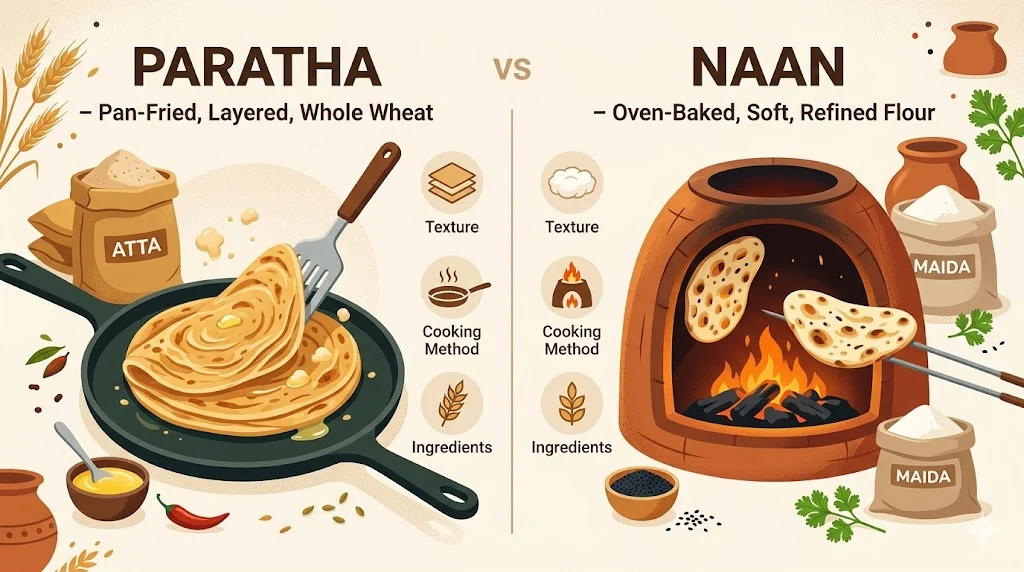
Paratha vs Naan difference comes down to texture, cooking method, and everyday use. Paratha is a layered, pan-fried flatbread made with whole wheat flour, while Naan is soft, oven-baked bread made with refined flour. Both are South Asian staples, but Paratha suits daily meals while Naan complements restaurant-style dishes.
You’re staring at the menu. Curry ordered, chai on the way. Then the question hits: paratha or naan? You point at one, secretly unsure if you chose right.
Most people pick based on whatever sounds familiar. Or whatever the person next to them ordered. Or pure instinct. And honestly? That’s fine both are delicious. But once you understand what actually separates them, every meal gets a little better.
Because paratha and naan are not just different breads. They represent two completely different food cultures, cooking traditions, and dining moments.
Naan is the bread of the tandoor soft, pillowy, slightly charred, born in the heat of a clay oven and built to scoop up rich, saucy curries. Paratha is something else entirely layered, buttery, pan-fried, and so satisfying on its own that entire breakfasts are built around it across Pakistan and India.
Same flat shape. Completely different soul.
And yes one is genuinely better for certain meals, certain diets, and certain cravings. Knowing which is which means you stop guessing and start choosing with confidence.
Whether you’re ordering at a restaurant, cooking at home for the first time, or just finally settling a debate that’s been going on at your dinner table for years this guide gives you the full picture.
Paratha vs naan, broken down simply, clearly and deliciously.
Quick Answer Overview
Paratha and naan differ mainly in how they are cooked and their texture.
- Paratha
- Cooked on a flat pan
- Usually layered and crispy
- Made with whole wheat flour
- Often eaten for breakfast
- Naan
- Baked in a tandoor oven
- Soft and fluffy
- Made with refined flour
- Common in restaurants and special meals
What is Paratha
Paratha is a type of flatbread made mainly from whole wheat flour. It is popular in homes across South Asia.
Key Features
- Made from whole wheat flour
- Cooked on a flat griddle or pan
- Often layered or stuffed
- Uses oil or butter during cooking
Types of Paratha
There are many varieties:
- Plain paratha
- Aloo paratha (stuffed with potatoes)
- Gobi paratha (cauliflower filling)
- Keema paratha (minced meat)
Texture and Taste
Paratha is:
- Crispy on the outside
- Soft inside
- Slightly oily or buttery
- Rich in flavor
Everyday Use
Paratha is commonly eaten:
- At breakfast
- With yogurt or pickles
- With tea
What is Naan
Naan is a soft, leavened flatbread traditionally baked in a tandoor oven.
Key Features
- Made with refined flour
- Uses yeast or baking powder
- Cooked in a clay oven
- Often brushed with butter
Types of Naan
Common variations include:
- Butter naan
- Garlic naan
- Cheese naan
- Plain naan
Texture and Taste
Naan is:
- Soft and fluffy
- Slightly chewy
- Light and airy
- Mild in taste
Common Usage
Naan is often served:
- In restaurants
- With rich curries
- During special meals
Paratha vs Naan: Detailed Comparison
Comparison Table
| Feature | Paratha | Naan |
|---|---|---|
| Flour Type | Whole wheat | Refined flour |
| Cooking Method | Pan-fried | Tandoor-baked |
| Texture | Crispy and layered | Soft and fluffy |
| Oil Content | Higher | Lower |
| Meal Type | Breakfast or daily meals | Lunch or dinner (special) |
| Preparation Time | Medium | Longer (due to dough rising) |
| Health Factor | More fiber | Less fiber |
Cooking Method Differences
Paratha Cooking
Paratha is cooked on a flat pan called a tawa.
Steps include:
- Roll the dough
- Add layers with oil or ghee
- Cook on both sides
- Press gently until crispy
Naan Cooking
Naan requires a tandoor oven.
Steps include:
- Prepare leavened dough
- Let it rise
- Shape into flat rounds
- Stick inside a hot oven
Advantages and Disadvantages
Advantages of Paratha
- High in fiber
- Keeps you full longer
- Can be stuffed with vegetables or meat
- Easy to cook at home
Disadvantages of Paratha
- High in oil or butter
- Can be heavy
- Not ideal for low-fat diets
Advantages of Naan
- Soft and light
- Pairs well with rich dishes
- Less oily
- Popular in restaurants
Disadvantages of Naan
- Made with refined flour
- Lower in fiber
- Hard to make without a tandoor
- May not keep you full for long
Health Comparison
Which is Healthier
It depends on your diet.
- Choose paratha if you want:
- More fiber
- A filling meal
- Whole grain benefits
- Choose naan if you want:
- A lighter option
- Less oil
- Softer texture
Nutrition Insight
- Paratha has more calories due to oil
- Naan has fewer nutrients due to refined flour
Real-World Examples
Example 1: Breakfast at Home
A family prepares aloo paratha with yogurt.
- Filling and energizing
- Keeps hunger away for hours
Example 2: Restaurant Dinner
You order butter chicken with naan.
- Naan absorbs curry well
- Soft texture enhances taste
Example 3: Street Food
Paratha rolls are common street food.
- Easy to carry
- Filled with meat or vegetables
Regional and Global Usage
In South Asia
- Paratha is common in homes
- Naan is popular in restaurants
In Western Countries
- Naan is more widely known
- Paratha is gaining popularity
Cultural Importance
- Paratha is linked to daily life
- Naan is linked to festive meals
Common Mistakes and Corrections
Mistake 1: Thinking They Are the Same
Correction:
Paratha and naan differ in flour, cooking, and texture.
Mistake 2: Choosing Based Only on Taste
Correction:
Consider health and meal type too.
Mistake 3: Overcooking Paratha
Correction:
Cook until golden, not burnt.
Mistake 4: Using Wrong Flour
Correction:
Use whole wheat for paratha and refined flour for naan.
Related Concepts and Comparisons
Paratha vs Roti
- Roti is plain and dry
- Paratha is layered and oily
Naan vs Kulcha
- Kulcha is softer and thicker
- Naan is lighter and more elastic
Flatbread Family
Both belong to the flatbread category, which includes:
- Tortilla
- Pita
- Lavash
Exercises with Answers
Exercise 1
Which bread is cooked in a tandoor?
Answer: Naan
Exercise 2
Which bread is usually made with whole wheat?
Answer: Paratha
Exercise 3
Which one is better for breakfast?
Answer: Paratha
Exercise 4
Which bread is softer?
Answer: Naan
Exercise 5
Which one contains more oil?
Answer: Paratha
FAQs
What is the main difference between paratha vs naan?
Paratha is pan-fried and layered, while naan is oven-baked and soft. They differ in texture, flour type, and cooking method.
Which is healthier, paratha or naan?
Paratha has more fiber due to whole wheat, but naan is lighter. Choose based on your health goals.
Can I eat paratha instead of naan?
Yes, but the taste and texture will differ. Paratha is heavier and crispier compared to naan.
Why is naan softer than paratha?
Naan uses refined flour and leavening agents, making it airy and soft.
Is naan always made in a tandoor?
Traditionally yes, but home versions can be made on a pan or oven.
Can paratha be made without oil?
Yes, but it will lose its classic crispy texture and rich flavor.
Which is better for weight loss, paratha or naan?
Naan may be better due to lower oil, but portion control matters more.
Why is paratha popular for breakfast?
It is filling and provides long-lasting energy, making it ideal for morning meals.
Can naan be made with whole wheat flour?
Yes, but it will be denser and less soft than traditional naan.
What dishes go best with paratha vs naan?
Paratha pairs well with yogurt and pickles, while naan is ideal with rich curries.
Conclusion
Paratha vs naan is not just a simple food comparison. It reflects cooking style, culture, and daily habits. Paratha is hearty, layered, and perfect for breakfast or filling meals. Naan is soft, light, and ideal for pairing with rich dishes.
If you want a nutritious and filling option, paratha is a good choice. If you prefer something soft and light, naan is better. Both have their place in a balanced diet.
The best choice depends on your meal, taste, and health goals. Try both in different situations to understand what suits you best. A smart approach is to enjoy variety while keeping portion sizes in mind.

Kevin Brooks is a grammar specialist at GramBrix.com, dedicated to helping readers understand language rules with clarity and confidence. He simplifies complex grammar concepts through practical examples and easy explanations.