Last Updated on April 4, 2026
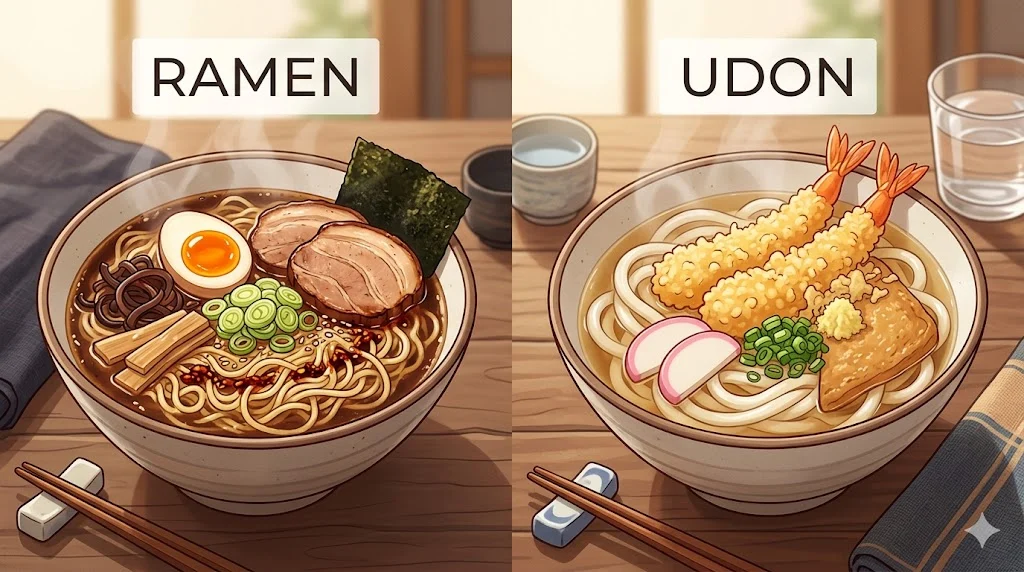
Ramen vs Udon compares two popular Japanese noodle dishes with very different textures and flavors. Ramen uses thin, curly noodles in rich broth, while udon features thick, soft noodles in a lighter, simpler soup. Both are delicious, but they offer very different eating experiences.
If you’ve ever looked at a Japanese menu, you’ve probably seen both ramen and udon. At first, they might seem similar. Both are noodle soups. Both are warm and comforting. But once you try them, you realize they are completely different.
This is where many people get confused.
Some think ramen and udon are just different names for the same dish. Others don’t know which one to choose. Should you go for the rich and bold ramen, or the simple and soft udon?
Understanding ramen vs udon helps you enjoy your food better. It also helps you pick the right dish based on your taste, mood, and even the weather.
In this guide, we’ll explain everything in simple words. From taste and texture to ingredients and real-life examples, you’ll clearly understand the difference between ramen and udon by the end.
Quick Answer / Overview
Let’s keep it simple:
- Ramen = thin noodles + rich broth
- Udon = thick noodles + light broth
Here’s a quick comparison:
| Feature | Ramen | Udon |
|---|---|---|
| Noodle Type | Thin, curly | Thick, straight |
| Texture | Firm, slightly chewy | Soft, smooth |
| Broth | Rich, flavorful | Light, simple |
| Origin | Chinese influence | Traditional Japanese |
| Best For | Bold taste lovers | Mild, comfort food |
In short:
If you want strong flavor, choose ramen.
If you want something light and soothing, go for udon.
What is Ramen?
Ramen is one of the most famous Japanese dishes worldwide. It actually has roots in Chinese cuisine but has become a Japanese favorite over time.
The noodles are:
- Thin
- Slightly curly
- Made with wheat
The broth is what makes ramen special. It is often:
- Rich
- Deep in flavor
- Cooked for hours
Common ramen broths include:
- Soy sauce based
- Miso based
- Pork bone (tonkotsu)
Ramen is usually topped with:
- Sliced meat
- Eggs
- Green onions
- Seaweed
It’s a full, heavy meal that feels satisfying.
What is Udon?
Udon is a traditional Japanese noodle dish known for its simplicity.
The noodles are:
- Thick
- Straight
- Soft and smooth
Unlike ramen, udon broth is:
- Light
- Clear
- Mild in flavor
It’s usually made with:
- Soy sauce
- Dashi (a simple Japanese stock)
Common toppings include:
- Green onions
- Tempura
- Tofu
Udon is more about comfort than intensity. It’s the kind of dish you eat when you want something warm and easy.
Advantages and Disadvantages
Ramen: Pros and Cons
Advantages:
- Rich and flavorful
- Many variations available
- Feels like a full meal
- Very popular worldwide
Disadvantages:
- Can be heavy
- Often high in calories
- Strong flavors may not suit everyone
Udon: Pros and Cons
Advantages:
- Light and easy to eat
- Gentle on the stomach
- Simple and clean taste
- Great for all ages
Disadvantages:
- May feel too plain for some people
- Less variety compared to ramen
- Not as filling for big appetites
Real-World Examples
Cold Winter Day
You want something warm and filling.
- Ramen is a great choice
- Rich broth keeps you satisfied
Feeling Sick or Tired
You don’t want heavy food.
- Udon is better
- Light broth is easier to digest
Trying Japanese Food for the First Time
- Ramen gives a bold first impression
- Udon offers a safer, milder option
Quick Lunch
- Udon is often quicker and lighter
- Good if you don’t want to feel too full
Regional / Global Usage
In Japan
Both ramen and udon are very popular.
- Ramen shops are everywhere in cities
- Udon is common in traditional restaurants
Different regions have their own styles.
Worldwide
Ramen is more famous globally.
- Instant ramen is popular everywhere
- Many restaurants focus on ramen
Udon is also growing in popularity, especially among people who prefer lighter meals.
Common Mistakes
Thinking ramen and udon are the same
They may look similar, but they are very different in texture and taste.
Choosing based only on looks
Both dishes can look similar in photos.
Reality:
Taste and texture are completely different.
Expecting udon to be rich
Udon is intentionally simple.
Assuming ramen is always spicy
Not all ramen is spicy. Many types are mild.
Exercises with Answers
Question 1
Which noodle is thicker?
Answer: Udon
Question 2
Which dish has richer broth?
Answer: Ramen
Question 3
Which is better for a light meal?
Answer: Udon
Question 4
Which is more filling?
Answer: Ramen
Question 5
Which one is softer in texture?
Answer: Udon
Related Concepts
Ramen vs Udon vs Soba
| Feature | Ramen | Udon | Soba |
|---|---|---|---|
| Thickness | Thin | Thick | Thin |
| Texture | Chewy | Soft | Slightly firm |
| Flavor | Rich | Light | Nutty |
| Main Ingredient | Wheat | Wheat | Buckwheat |
Simple Analogy
- Ramen = spicy, rich curry
- Udon = simple, comforting soup
FAQs
What is the main difference between ramen vs udon?
The main difference is in noodles and broth. Ramen has thin noodles and rich broth, while udon has thick noodles and light broth.
Which is healthier, ramen or udon?
Udon is generally lighter and lower in calories compared to ramen.
Is ramen always spicy?
No, many ramen types are not spicy at all.
Which is better for beginners, ramen vs udon?
Udon is often better for beginners because of its mild taste.
Can I eat ramen and udon cold?
Yes, both can be served cold in some styles, especially in summer.
Why is ramen more popular worldwide?
Because of instant ramen and its rich, bold flavor.
Is udon good for digestion?
Yes, it is light and easy on the stomach.
Which is more filling, ramen vs udon?
Ramen is usually more filling due to its rich broth and toppings.
Are ramen and udon gluten-free?
No, both are made from wheat and contain gluten.
Can I customize ramen and udon?
Yes, both dishes can be customized with different toppings and flavors.
Conclusion
Understanding ramen vs udon makes a big difference when choosing what to eat. While both are noodle dishes, they offer completely different experiences.
Ramen is bold, rich, and full of flavor. It’s perfect when you want something filling and satisfying. On the other hand, udon is simple, soft, and comforting. It works well when you want something light and easy.
There’s no “better” option. It really depends on your mood, taste, and situation.
If you enjoy strong flavors and variety, ramen is the way to go. If you prefer something gentle and relaxing, udon is a great choice.
The best advice? Try both. Once you taste them, you’ll easily know which one you prefer.

Kevin Brooks is a grammar specialist at GramBrix.com, dedicated to helping readers understand language rules with clarity and confidence. He simplifies complex grammar concepts through practical examples and easy explanations.