
Last Updated on March 10, 2026
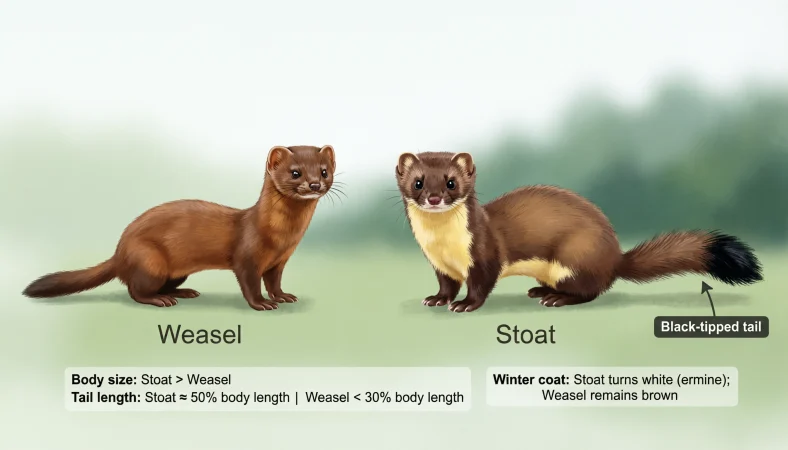
Weasel vs stoat is a common wildlife comparison because both animals look very similar. The main difference is that a stoat has a longer tail with a black tip, while a weasel has a shorter tail without a black tip. They also differ slightly in size, behavior, and habitat.
Many people see a small, long animal running through grass or snow and ask the same question: Is it a weasel or a stoat?
These animals look almost the same. They have slim bodies, short legs, and fast movements. Because of this, people often mix them up.
The confusion between weasel vs stoat is very common. Even wildlife beginners and photographers sometimes struggle to tell them apart. Both animals belong to the same family and share many features.
But if you look closely, there are clear differences.
Understanding these differences helps in many ways. Wildlife watchers can identify animals correctly. Students can learn more about nature. Farmers can understand which predator might be around their land.
In this guide, you will learn everything about weasel vs stoat. We will look at their size, tail, behavior, habitat, hunting style, and more. You will also see examples, comparisons, common mistakes, and simple exercises to test your knowledge.
By the end of this article, you will easily tell the difference between a weasel and a stoat.
Quick Answer: Weasel vs Stoat
Here is the fastest way to understand the difference.
| Feature | Weasel | Stoat |
|---|---|---|
| Tail | Short tail | Long tail with black tip |
| Body size | Smaller | Slightly larger |
| Winter coat | Usually brown | Often turns white (ermine) |
| Habitat | Fields and farms | Forests, grasslands, mountains |
| Scientific species | Mustela nivalis | Mustela erminea |
Simple Rule
If the animal has a black tip on its tail, it is usually a stoat.
If the tail has no black tip, it is likely a weasel.
Definition and Explanation
What Is a Weasel?
A weasel is a small carnivorous mammal from the Mustelidae family. This family also includes animals like ferrets, mink, otters, and badgers.
The most common species is the least weasel.
Key characteristics:
- Very small body
- Short legs
- Narrow head
- Short tail
- Brown top and white belly
Weasels are known for their fast hunting ability. They can enter small burrows and chase prey underground.
Typical prey includes:
- mice
- voles
- small birds
- insects
Because of this, weasels often live near farms and fields where rodents are common.
What Is a Stoat?
A stoat is another carnivorous mammal from the same family as weasels.
The scientific name is Mustela erminea.
Stoats look very similar to weasels but have a few unique features.
Main characteristics:
- Slightly larger body
- Longer tail
- Black tip on the tail
- Seasonal coat change
In cold climates, stoats turn completely white in winter. When this happens, the animal is called an ermine.
Stoats are also skilled hunters. They can take down animals larger than themselves, including rabbits.
Physical Differences Between Weasel and Stoat
The easiest way to identify weasel vs stoat is by examining physical features.
Body Size
| Animal | Average Length |
|---|---|
| Weasel | 15–22 cm |
| Stoat | 20–30 cm |
Stoats are generally larger and longer.
Tail Length
This is the most important visual difference.
| Feature | Weasel | Stoat |
|---|---|---|
| Tail size | Short | Long |
| Tail tip | No black tip | Black tip present |
Wildlife experts often say:
“Black tip means stoat.”
Coat Color
Both animals usually have:
- brown upper fur
- white belly
But stoats may change color in winter.
| Season | Stoat Color |
|---|---|
| Summer | Brown and white |
| Winter | Pure white (ermine) |
Weasels rarely turn completely white.
Behavior Differences
Understanding behavior also helps in identifying weasel vs stoat.
Hunting Style
Weasel Hunting
Weasels hunt mainly:
- mice
- voles
- small rodents
They hunt in narrow tunnels underground.
Their slim bodies allow them to follow prey into burrows.
Stoat Hunting
Stoats hunt larger animals such as:
- rabbits
- birds
- rodents
Stoats are famous for the “stoat dance.”
This strange jumping and twisting movement confuses prey.
Activity Pattern
Both animals are active during:
- day
- night
But stoats tend to travel longer distances.
Habitat and Distribution
Where Weasels Live
Weasels prefer:
- farmland
- grasslands
- hedges
- barns
- rural areas
They like places where rodents are abundant.
This makes farms ideal habitats.
Where Stoats Live
Stoats are more adaptable.
They live in:
- forests
- mountains
- grasslands
- tundra
- coastal areas
They are common across:
- Europe
- North America
- Asia
Stoats can survive in colder climates better than weasels.
Advantages and Disadvantages in Nature
Both animals play an important role in ecosystems.
Advantages of Weasels
- Control rodent populations
- Help farmers reduce crop pests
- Maintain ecological balance
Disadvantages of Weasels
- Sometimes kill poultry
- May enter barns or sheds
- Can be mistaken for pests
Advantages of Stoats
- Control rabbit populations
- Reduce rodent outbreaks
- Important predator in ecosystems
Disadvantages of Stoats
- Can threaten native wildlife
- Dangerous to ground nesting birds
- In some regions they are invasive
Example: Stoats introduced to New Zealand caused major damage to native bird populations.
Real World Examples
Understanding weasel vs stoat becomes easier with real examples.
Example 1: Farm Field
A farmer sees a small predator near grain storage.
Possible identification:
- short tail
- no black tip
- hunting mice
This is most likely a weasel.
Example 2: Snowy Mountain Area
A white animal with a black tipped tail appears.
This is likely a stoat in winter form (ermine).
Example 3: Rabbit Hunting
If the animal attacks rabbits or birds larger than mice, it is probably a stoat.
Regional and Global Usage
The names weasel and stoat vary by region.
Europe
Common species:
- stoat
- least weasel
The term ermine is used for winter stoats.
North America
People often refer to stoats as:
- short tailed weasels
This adds confusion when discussing weasel vs stoat.
Asia
Both species exist but may be less commonly distinguished by the public.
Wildlife experts still use scientific names.
Comparison Table: Weasel vs Stoat
| Feature | Weasel | Stoat |
|---|---|---|
| Scientific name | Mustela nivalis | Mustela erminea |
| Tail tip | No black tip | Black tip |
| Tail length | Short | Long |
| Body size | Smaller | Larger |
| Winter coat | Rarely white | Often white |
| Typical prey | Mice and voles | Rabbits and rodents |
| Habitat | Fields and farms | Forests and mountains |
Related Animals in the Mustelidae Family
Understanding related species can also clarify weasel vs stoat.
Common relatives include:
- ferrets
- mink
- otters
- badgers
- martens
These animals share traits like:
- long bodies
- sharp teeth
- carnivorous diet
Common Mistakes When Identifying Weasel vs Stoat
Many beginners make similar mistakes.
Mistake 1: Ignoring the Tail
People often look only at body size.
Correction:
Always check tail length and black tip.
Mistake 2: Confusing Stoats with Ferrets
Ferrets are much larger.
Correction:
- Ferrets are domesticated animals.
- Stoats are wild predators.
Mistake 3: Assuming All White Animals Are Weasels
White winter coats usually belong to stoats.
Correction: Check for the black tail tip.
Mistake 4: Relying Only on Size
Young stoats may appear small.
Correction: Look at tail length and behavior.
Exercises: Identify the Animal
Try these exercises to practice recognizing weasel vs stoat.
Exercise 1
Animal characteristics:
- long tail
- black tail tip
- hunts rabbits
Answer: Stoat
Exercise 2
Animal characteristics:
- very small body
- short tail
- hunts mice in fields
Answer: Weasel
Exercise 3
Animal characteristics:
- white winter coat
- black tail tip
- lives in cold regions
Answer: Stoat (ermine)
Exercise 4
Animal characteristics:
- brown coat
- no tail tip
- very small predator
Answer: Weasel
Ecological Importance
Both species are important predators.
Benefits to ecosystems include:
- controlling rodent populations
- balancing food chains
- supporting biodiversity
Without predators like weasels and stoats, rodent populations could increase rapidly.
Conservation and Environmental Impact
Conservation Status
Most weasel and stoat populations are stable.
However, threats include:
- habitat loss
- pesticide exposure
- climate change
Invasive Species Issues
Stoats are considered invasive in some countries.
Example:
In New Zealand, stoats threaten native birds such as:
- kiwi
- kakapo
- ground nesting species
Wildlife management programs try to control stoat populations.
FAQs
What is the main difference between weasel vs stoat?
The main difference is the tail. A stoat has a long tail with a black tip, while a weasel has a short tail without a black tip.
Is a stoat bigger than a weasel?
Yes. In most cases, stoats are larger and longer than weasels, though both are small predators.
Does a weasel have a black tipped tail?
No. A black tipped tail is a key feature of stoats, not weasels.
Why do stoats turn white in winter?
Stoats change color for camouflage in snowy environments. This winter form is called ermine.
Are stoats and weasels the same animal?
No. They are different species in the same animal family, which is why they look similar.
Which animal is more aggressive: weasel or stoat?
Stoats are generally more aggressive hunters because they often attack larger prey like rabbits.
Where are stoats commonly found?
Stoats live across Europe, Asia, and North America, especially in forests, mountains, and grasslands.
Are weasels good for farms?
Yes. Weasels help farmers by controlling mice and rodent populations, which protects crops.
What animals are related to weasels and stoats?
Animals in the same family include ferrets, mink, otters, and badgers.
How can beginners identify weasel vs stoat quickly?
Look at the tail length and color.
A long tail with a black tip means stoat.
Conclusion
The comparison of weasel vs stoat may seem confusing at first, but the differences become clear once you know what to look for.
The easiest identification method is the tail. A stoat has a longer tail with a black tip, while a weasel has a shorter tail without a black tip. Stoats are also slightly larger and often turn white in winter, becoming the well known ermine.
Both animals belong to the same mustelid family and share many traits. They are fast hunters, skilled predators, and important parts of natural ecosystems. Weasels mainly control small rodents, while stoats often hunt larger prey like rabbits.
Understanding the difference helps wildlife watchers, students, and farmers identify these animals correctly. It also improves knowledge of predator behavior and ecosystem balance.
When observing a small predator in the wild, remember this simple rule: check the tail first. That single detail can quickly tell you whether you are looking at a weasel or a stoat.

Victoria Lane is a grammar-focused writer at GramBrix.com, passionate about helping readers master the rules of language. She provides clear explanations and practical examples that make writing more accurate, polished and confident.