
Last Updated on March 23, 2026
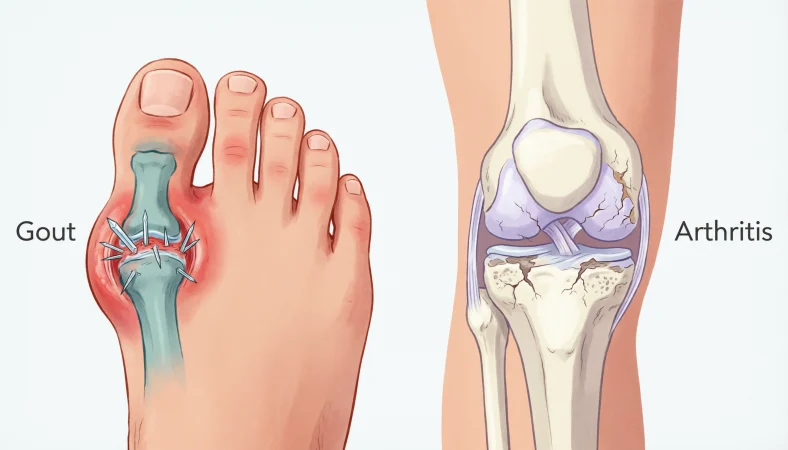
Gout vs arthritis is a comparison between a specific type of inflammatory arthritis called gout and the broader category of arthritis conditions that affect joints. Gout occurs when uric acid crystals build up in joints, causing sudden severe pain, while arthritis refers to over 100 joint diseases including osteoarthritis and rheumatoid arthritis. Understanding the difference helps people identify symptoms early and choose the right treatment.
Many people wake up one day with sudden joint pain and wonder what is wrong. Is it gout? Is it arthritis? Or are they the same thing? This confusion is extremely common because both conditions cause swelling, stiffness, and painful joints.
But understanding gout vs arthritis is very important. These two conditions may look similar, yet they are not the same. Arthritis is a broad medical term that includes more than 100 joint diseases. Gout, on the other hand, is one specific type of arthritis caused by a buildup of uric acid crystals in the joints.
Knowing the difference can help people recognize symptoms early, choose the right treatment, and avoid serious joint damage. For example, a person with osteoarthritis often benefits from exercise and joint protection, while someone with gout usually needs medication to control uric acid levels and dietary changes.
In this complete guide, you will learn the real difference between gout and arthritis, their causes, symptoms, treatments, and prevention tips. By the end, you will clearly understand which condition affects joints and how to manage it the right way.
Quick Answer: Gout vs Arthritis
| Factor | Gout | Arthritis |
|---|---|---|
| Definition | A type of inflammatory arthritis caused by uric acid crystals | A general term for joint diseases |
| Cause | High uric acid levels in the blood | Many causes depending on type |
| Onset | Sudden and severe | Usually gradual |
| Common Location | Big toe joint | Knees, hips, hands, spine |
| Pain Pattern | Intense attacks | Chronic or progressive pain |
| Treatment | Uric acid control medication | Depends on arthritis type |
Simple explanation
- Arthritis is the umbrella category.
- Gout is one condition under that category.
Think of it like this:
- Arthritis = “fruit”
- Gout = “apple”
All apples are fruit, but not all fruit are apples.
What Is Arthritis?
Definition of Arthritis
Arthritis is a medical condition that causes inflammation of one or more joints. It leads to pain, swelling, stiffness, and limited movement.
Doctors recognize over 100 types of arthritis.
The most common types include:
| Type | Description |
|---|---|
| Osteoarthritis | Wear and tear of joint cartilage |
| Rheumatoid arthritis | Autoimmune inflammation |
| Gout | Uric acid crystal buildup |
| Psoriatic arthritis | Linked with psoriasis |
| Ankylosing spondylitis | Affects spine joints |
Common Symptoms of Arthritis
Most arthritis conditions share these symptoms:
- Joint pain
- Swelling
- Stiffness
- Reduced range of motion
- Redness or warmth around joints
Symptoms often worsen with age or repeated joint stress.
What Is Gout?
Definition of Gout
Gout is a form of inflammatory arthritis caused by high levels of uric acid in the bloodstream.
When uric acid builds up, it forms sharp crystals in joints. These crystals trigger intense inflammation and pain.
The most commonly affected joint is the big toe.
Key Characteristics of Gout
- Sudden attacks
- Severe pain
- Redness and swelling
- Warm joints
- Often occurs at night
Stages of Gout
| Stage | Description |
|---|---|
| Asymptomatic hyperuricemia | High uric acid without symptoms |
| Acute gout attack | Sudden severe pain |
| Intercritical gout | Period between attacks |
| Chronic tophaceous gout | Long term crystal buildup |
Causes of Gout vs Arthritis
Causes of Gout
Gout happens when uric acid levels rise.
Common causes include:
- High purine foods
- Alcohol consumption
- Kidney problems
- Genetics
- Obesity
- Certain medications
Foods that trigger gout
- Red meat
- Organ meats
- Shellfish
- Sugary drinks
- Alcohol
Causes of Arthritis
Different types of arthritis have different causes.
| Type | Cause |
|---|---|
| Osteoarthritis | Joint wear and aging |
| Rheumatoid arthritis | Immune system attacking joints |
| Gout | Uric acid crystals |
| Infectious arthritis | Bacterial infection |
| Post-traumatic arthritis | Injury damage |
Symptoms: Gout vs Arthritis
| Symptom | Gout | Arthritis |
|---|---|---|
| Pain severity | Extreme during attacks | Mild to severe |
| Pain onset | Sudden | Gradual |
| Swelling | Severe | Moderate |
| Joint warmth | Very common | Sometimes |
| Attack duration | 3 to 10 days | Chronic |
Example
A gout attack may wake someone at night with severe toe pain. Even a bedsheet touching the joint can hurt.
Arthritis pain often develops slowly over months or years.
Advantages and Disadvantages of Understanding Gout vs Arthritis
Benefits of Understanding the Difference
- Early diagnosis
- Correct treatment
- Preventing joint damage
- Lifestyle adjustments
- Reduced medical costs
Example
If gout is mistaken for osteoarthritis, a patient might not receive uric acid medication. This can lead to repeated painful attacks.
Limitations
Some symptoms overlap, making diagnosis difficult without medical testing.
Doctors often use:
- Blood tests
- Joint fluid analysis
- X-rays
- Ultrasound
Real World Examples
Example 1: Office Worker with Gout
A 45 year old office worker develops sudden pain in the big toe overnight. The joint becomes red and swollen.
Blood tests show high uric acid.
Diagnosis: Gout attack
Treatment includes:
- Anti inflammatory medication
- Reduced alcohol
- Lower purine diet
Example 2: Elderly Person with Osteoarthritis
A 65 year old woman experiences knee stiffness when walking.
Pain gradually increases over several years.
Diagnosis: Osteoarthritis
Treatment includes:
- Exercise
- Physical therapy
- Pain relief medication
Regional and Global Usage
Arthritis and gout occur worldwide but prevalence varies.
Global Arthritis Statistics
- Over 350 million people worldwide have arthritis.
- Osteoarthritis is the most common form.
Gout Prevalence
Higher rates occur in:
- United States
- United Kingdom
- New Zealand
- Pacific Island populations
Reasons for regional differences
- Diet patterns
- Genetics
- Obesity rates
- Healthcare access
Common Mistakes When Comparing Gout vs Arthritis
Mistake 1: Thinking Gout Is Not Arthritis
Correction: Gout is a type of arthritis.
Mistake 2: Assuming All Joint Pain Is Arthritis
Joint pain can also come from:
- Injuries
- Tendon inflammation
- Infections
Mistake 3: Ignoring Diet in Gout
Diet plays a big role in gout attacks.
Mistake 4: Delaying Medical Diagnosis
Self diagnosis often leads to incorrect treatment.
Related Concepts and Comparisons
Rheumatoid Arthritis vs Gout
| Feature | Rheumatoid Arthritis | Gout |
|---|---|---|
| Cause | Autoimmune disease | Uric acid crystals |
| Onset | Gradual | Sudden |
| Joints affected | Symmetrical joints | Often one joint |
| Age group | 30 to 60 | 40 to 60 |
Osteoarthritis vs Gout
| Feature | Osteoarthritis | Gout |
|---|---|---|
| Cause | Cartilage wear | Crystal inflammation |
| Pain type | Mechanical | Inflammatory |
| Progression | Slow | Sudden attacks |
Exercises to Understand Gout vs Arthritis
Exercise 1
A patient experiences sudden toe pain with swelling overnight.
What is the most likely condition?
Answer: Gout
Exercise 2
A patient has gradual knee stiffness that worsens over years.
What is the likely diagnosis?
Answer: Osteoarthritis
Exercise 3
Which statement is correct?
A. Gout is not arthritis
B. Arthritis always starts suddenly
C. Gout is caused by uric acid crystals
Answer: C
Prevention Tips
Preventing Gout
- Drink plenty of water
- Reduce alcohol
- Limit red meat
- Maintain healthy weight
- Monitor uric acid levels
Preventing Arthritis
Some forms cannot be prevented, but risk can be reduced by:
- Maintaining healthy weight
- Regular exercise
- Joint protection
- Good posture
Lifestyle and Diet Differences
| Lifestyle Factor | Gout | Arthritis |
|---|---|---|
| Diet importance | Very high | Moderate |
| Exercise | Helpful between attacks | Essential |
| Weight management | Critical | Important |
Treatment Options
Gout Treatment
Common treatments include:
- Anti inflammatory drugs
- Colchicine
- Corticosteroids
- Uric acid lowering medications
Lifestyle changes:
- Reduce alcohol
- Eat low purine diet
- Stay hydrated
Arthritis Treatment
Depends on the type.
Common options:
- Pain medication
- Physical therapy
- Joint injections
- Surgery in severe cases
FAQs
What is the main difference between gout vs arthritis?
The main difference is that gout is one specific type of arthritis caused by uric acid crystals, while arthritis is a broad category of joint diseases.
Can gout turn into arthritis?
Gout is already a form of arthritis. Long term untreated gout can cause chronic joint damage similar to other arthritis conditions.
Is gout more painful than arthritis?
Many people report that gout attacks cause more intense pain because inflammation occurs suddenly due to crystal buildup.
Which joints are affected in gout vs arthritis?
Gout usually affects the big toe, ankle, or foot. Arthritis can affect knees, hips, hands, and spine.
How is gout diagnosed compared to arthritis?
Doctors diagnose gout through uric acid blood tests and joint fluid analysis. Arthritis diagnosis often involves imaging tests like X rays and MRI.
Can diet cure gout vs arthritis symptoms?
Diet changes can greatly reduce gout attacks. Diet helps arthritis symptoms but usually cannot cure arthritis.
Is gout permanent like arthritis?
Gout can be controlled with medication and lifestyle changes. Some forms of arthritis are chronic and lifelong.
Does arthritis cause uric acid buildup like gout?
No. Most arthritis types are not related to uric acid levels.
Can someone have both gout and arthritis?
Yes. A person can have gout along with osteoarthritis or rheumatoid arthritis.
What lifestyle changes help gout vs arthritis?
Healthy weight, balanced diet, hydration, and regular exercise help manage both gout and arthritis symptoms.
Conclusion
Understanding gout vs arthritis helps people recognize symptoms early and choose the correct treatment. Arthritis is a broad term covering more than 100 joint diseases, while gout is one specific form caused by uric acid crystal buildup.
The two conditions share symptoms such as joint pain and swelling, but their causes and treatments are very different. Gout usually appears suddenly with severe pain, often in the big toe. Other arthritis types like osteoarthritis develop slowly over time.
Accurate diagnosis is essential. Blood tests, imaging, and medical evaluation help identify the exact condition. Once diagnosed, patients can manage symptoms through medication, lifestyle changes, and preventive care.
Healthy habits also play a major role. Maintaining a balanced diet, staying active, controlling weight, and reducing alcohol intake can significantly lower the risk of gout attacks and arthritis complications.
If persistent joint pain occurs, consulting a healthcare professional is the best step. Early care protects joints, improves mobility, and greatly enhances quality of life.

Victoria Lane is a grammar-focused writer at GramBrix.com, passionate about helping readers master the rules of language. She provides clear explanations and practical examples that make writing more accurate, polished and confident.