
Last Updated on August 4, 2026
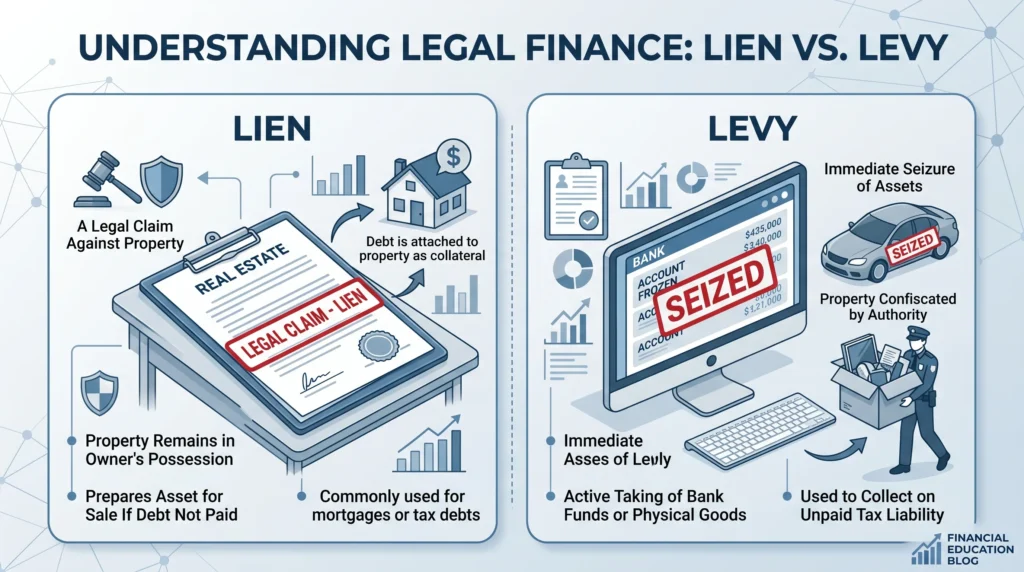
A lien and a levy are both legal tools used to collect unpaid debt, especially taxes, but they are not the same. A lien is a legal claim placed on your property, while a levy allows creditors or tax authorities to actually take money or assets. In most cases, a levy is considered more serious because it involves direct asset seizure.
Many people hear the terms “lien” and “levy” during tax problems, debt collection, or legal disputes. Since both involve money owed, they are often confused with each other.
But understanding the difference between a lien or levy is very important.
A lien is usually a warning sign. It gives a creditor legal rights over your property until a debt is paid. A levy goes a step further. It allows money or property to actually be taken.
This difference matters because the financial impact can be serious. A tax lien may damage your credit and property rights, while a levy can freeze bank accounts, garnish wages, or seize assets.
In this guide, you will learn:
- What liens and levies mean
- How they work
- Which one is more serious
- Common examples
- Mistakes people make
- How to avoid legal trouble
The explanations are simple and beginner-friendly so anyone can understand the topic clearly.
Quick Answer
| Feature | Lien | Levy |
|---|---|---|
| Meaning | Legal claim on property | Actual seizure of assets |
| Purpose | Secures debt payment | Collects debt directly |
| Asset Taken Immediately | No | Yes |
| Affects Ownership | Yes | Yes |
| More Serious | Moderate | Usually more serious |
Simple Summary
- A lien is a legal claim.
- A levy is the actual taking of money or property.
Think of a lien as a warning and a levy as enforcement.
What Is a Lien?
Definition of a Lien
A lien is a legal right placed on someone’s property because of unpaid debt.
The creditor does not immediately take the property. Instead, they gain a legal claim over it.
This means:
- The property may be difficult to sell
- The debt must usually be paid first
- The creditor gains financial protection
Common Types of Liens
Tax Liens
Government agencies may place tax liens for unpaid taxes.
Property Liens
Contractors or lenders may file liens against homes or buildings.
Judgment Liens
Courts can issue liens after legal judgments.
What Is a Levy?
Definition of a Levy
A levy is the legal seizure of property or money to satisfy unpaid debt.
Unlike a lien, a levy involves direct action.
Examples include:
- Taking money from bank accounts
- Garnishing wages
- Seizing vehicles or property
Common Types of Levies
Bank Levy
Money is frozen or removed from a bank account.
Wage Levy
Part of a paycheck is taken to pay debt.
Property Seizure
Assets may be sold to recover unpaid balances.
Main Difference Between Lien or Levy
Legal Claim vs Asset Seizure
This is the biggest difference.
A lien:
- Claims rights over property
A levy:
- Takes property or money directly
Example Scenario
Imagine someone owes unpaid taxes.
Step 1: Tax Lien
The government places a lien on the home.
The owner still lives there but cannot easily sell or refinance.
Step 2: Tax Levy
If the debt remains unpaid, authorities may:
- Freeze bank accounts
- Garnish wages
- Seize property
Which Is More Serious?
Why Levies Are Usually More Serious
A levy creates immediate financial impact.
It can:
- Remove money from accounts
- Interrupt income
- Cause financial hardship
A lien is serious too, but it acts more like a legal warning.
Long-Term Effects of Liens
Liens may:
- Hurt credit
- Delay property sales
- Create legal complications
Long-Term Effects of Levies
Levies can:
- Empty bank accounts
- Reduce wages
- Force asset sales
This often creates faster financial stress.
Real World Examples
IRS Tax Lien
The Internal Revenue Service may place a lien after unpaid federal taxes.
This protects the government’s interest in your property.
IRS Tax Levy
If taxes remain unpaid, the IRS may issue a levy to:
- Freeze accounts
- Take wages
- Seize assets
Contractor Property Lien
A contractor who is not paid may place a lien on a homeowner’s property.
Bank Levy Example
A creditor wins a court judgment and freezes money in a debtor’s bank account.
Advantages and Disadvantages
Advantages of Liens for Creditors
- Protects debt claims
- Encourages payment
- Creates legal security
Disadvantages of Liens for Debtors
- Property complications
- Credit impact
- Legal pressure
Advantages of Levies for Creditors
- Faster debt collection
- Direct recovery of funds
Disadvantages of Levies for Debtors
- Immediate financial loss
- Frozen accounts
- Income reduction
Common Mistakes People Make
Ignoring Tax Notices
Many people ignore warning letters until a levy occurs.
Early action can prevent serious consequences.
Thinking Liens Mean Immediate Seizure
A lien does not automatically take property away.
It simply creates a legal claim.
Waiting Too Long to Negotiate
Payment plans are often available before levies happen.
Confusing Garnishment and Liens
Wage garnishment is closer to a levy because money is actively taken.
How to Prevent Liens and Levies
Pay Debts Early
The best prevention is timely payment.
Respond to Notices Quickly
Never ignore legal or tax notices.
Set Up Payment Plans
Many agencies allow installment agreements.
Seek Professional Advice
Tax professionals and attorneys can help negotiate solutions.
Lien vs Levy Comparison Table
| Category | Lien | Levy |
|---|---|---|
| Legal Action | Yes | Yes |
| Property Claimed | Yes | Yes |
| Property Taken | No | Yes |
| Immediate Financial Impact | Low | High |
| Credit Effect | Often Yes | Sometimes |
| Used for Debt Collection | Yes | Yes |
Exercises With Answers
Exercise 1
Which action directly takes money from a bank account?
Answer: Levy
Exercise 2
Which is a legal claim on property?
Answer: Lien
Exercise 3
Which is usually more financially serious?
Answer: Levy
Exercise 4
Can a lien affect property sales?
Answer: Yes
Exercise 5
Can unpaid taxes lead to both liens and levies?
Answer: Yes
Related Concepts
Wage Garnishment
Wage garnishment is similar to a levy because income is directly taken.
Debt Collection
Liens and levies are tools used during debt collection processes.
Asset Seizure
A levy may involve asset seizure when debts remain unpaid.
FAQs
What is the main difference between lien or levy?
A lien is a legal claim on property, while a levy is the actual seizure of money or assets.
Which is worse, a lien or levy?
A levy is usually worse because it directly takes assets or income.
Can a lien become a levy?
Yes. If debt remains unpaid, a lien may eventually lead to a levy.
Does a lien hurt your credit?
In some cases, yes. Liens may affect financial records and borrowing ability.
Can the IRS issue both liens and levies?
Yes. The IRS can use both for unpaid taxes.
Can a levy freeze bank accounts?
Yes. Bank levies can freeze or remove funds.
How do I remove a lien?
Liens are usually removed after paying the debt or resolving the legal issue.
Can property be sold with a lien?
Sometimes, but the lien usually must be paid first.
What happens after a levy?
Assets or money may be taken to satisfy unpaid debt.
How can I avoid a levy?
Respond quickly to notices and arrange payment plans before enforcement begins.
Conclusion
Understanding the difference between lien or levy can help protect your finances and property.
A lien is a legal claim that secures debt repayment. It does not immediately take assets but creates restrictions and legal pressure. A levy is more aggressive because it involves actual seizure of money, wages, or property.
Both are serious, especially in tax and legal situations. However, levies usually create faster financial damage because they directly impact access to income and savings.
The best approach is prevention. Responding to notices early, communicating with creditors, and arranging payment plans can often stop problems before they become severe.
If you face a lien or levy situation, professional legal or tax advice can make a major difference. Acting early is almost always easier and less expensive than waiting until enforcement actions begin.

Justin Powell is a writer at GramBrix.com who focuses on grammar, clarity and effective communication, helping readers strengthen their language skills.