Last Updated on August 20, 2026
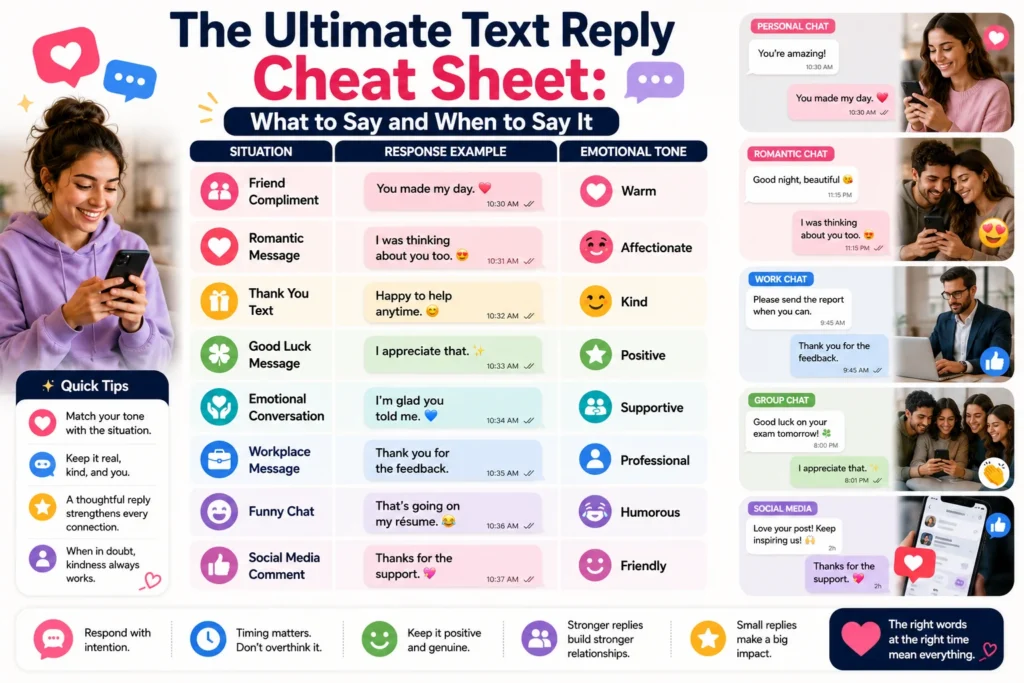
If you’re wondering how do I respond to this text, the best reply depends on the emotion, relationship, and situation behind the message. A good response should feel natural, match the tone of the conversation, and keep communication flowing. Some versatile replies include: “I appreciate that,” “That’s really sweet of you,” “You made my day,” “I’m glad you told me,” “That means a lot.”
We’ve all been there.
You open a text, stare at the screen, and suddenly your brain goes blank.
Maybe a friend sends a heartfelt message. Maybe your crush says something unexpectedly sweet. Maybe a coworker sends a compliment, a thank-you, or a message that deserves more than a simple “okay.”
The truth is that choosing the right response can completely change the direction of a conversation. A thoughtful reply can strengthen a friendship, deepen a relationship, build trust at work, or simply make someone feel heard.
The challenge is knowing what to say without sounding awkward, forced, or robotic.
This guide will help you find the perfect response for different situations, emotions, and relationship dynamics so your next text feels natural, genuine, and confident.
Sweet Responses
That really means a lot to me.
Best used when:
Someone sends a sincere compliment, thank-you, or supportive message.
Meaning:
This response shows appreciation while letting the other person know their words had a genuine impact.
You’re seriously so thoughtful.
Best used when:
Someone goes out of their way to help or encourage you.
Meaning:
It highlights their kindness and makes them feel valued.
I needed to hear that today.
Best used when:
A friend or loved one sends encouraging words at the right moment.
Meaning:
This creates emotional connection because it shows their message mattered.
That’s incredibly kind of you.
Best used when:
You want a warm but polished reply.
Meaning:
It communicates gratitude without sounding overly emotional.
You always know what to say.
Best used when:
Someone consistently offers support or comfort.
Meaning:
This reinforces trust and appreciation.
Funny Responses
Wow, who paid you to say that?
Best used when:
Someone gives you an unexpected compliment.
Meaning:
A playful way to accept praise while keeping the mood light.
Stop being nice. It’s suspicious.
Best used when:
You’re joking with close friends.
Meaning:
It adds humor without rejecting the compliment.
Screenshotting this before you change your mind.
Best used when:
Someone says something sweet or flattering.
Meaning:
This playful response shows appreciation and confidence.
I knew you had great taste.
Best used when:
Someone compliments you.
Meaning:
A lighthearted and confident joke.
That’s going on my résumé.
Best used when:
Someone praises your skills or accomplishments.
Meaning:
It turns a compliment into a humorous moment.
Cute Responses
Aww, that’s adorable.
Best used when:
Someone says something wholesome or sweet.
Meaning:
A simple response that keeps positive energy flowing.
You’re making me smile over here.
Best used when:
You want to acknowledge a sweet message.
Meaning:
It shows their words created an emotional reaction.
Okay, that’s actually really cute.
Best used when:
A playful or affectionate text catches you off guard.
Meaning:
This feels modern and natural in texting culture.
That’s the nicest thing I’ve heard today.
Best used when:
Someone sends encouragement or affection.
Meaning:
It makes the sender feel appreciated.
You’re kind of amazing, you know that?
Best used when:
You want to return positive energy.
Meaning:
It creates mutual warmth.
Romantic Responses
You make it easy to feel this way.
Best used when:
A partner expresses affection.
Meaning:
This acknowledges their feelings while returning affection.
I was just thinking about you.
Best used when:
You want to create closeness.
Meaning:
It reinforces emotional connection.
That’s one of my favorite texts ever.
Best used when:
Your partner sends something meaningful.
Meaning:
It tells them their message stood out.
You always know how to make my day better.
Best used when:
Someone brightens your mood.
Meaning:
This expresses gratitude and affection together.
Now you’re making me miss you.
Best used when:
You’re texting a romantic partner.
Meaning:
A sweet response that builds intimacy.
Flirty Responses
Careful, you’re making it hard not to like you.
Best used when:
You want to flirt without being too direct.
Meaning:
It signals interest while staying playful.
Is this your way of impressing me?
Best used when:
Someone sends a charming message.
Meaning:
It keeps the conversation fun and engaging.
Keep talking like that.
Best used when:
You enjoy what they’re saying.
Meaning:
A subtle invitation for more flirting.
Well, that was unexpectedly attractive.
Best used when:
Someone says something clever or sweet.
Meaning:
This feels playful and modern.
You’re pretty smooth, aren’t you?
Best used when:
Someone successfully flirts with you.
Meaning:
It acknowledges their effort while encouraging the conversation.
Emotional Responses
Thank you for being honest with me.
Best used when:
Someone opens up emotionally.
Meaning:
It validates vulnerability and builds trust.
I appreciate you sharing that.
Best used when:
A friend discusses something personal.
Meaning:
This makes people feel heard.
I’m here for you.
Best used when:
Someone is struggling or upset.
Meaning:
One of the most powerful supportive responses.
That couldn’t have been easy to say.
Best used when:
Someone reveals difficult feelings.
Meaning:
It acknowledges emotional courage.
I’m glad you told me.
Best used when:
Someone shares important information.
Meaning:
It creates emotional safety.
Confident Responses
I appreciate that. Thank you.
Best used when:
Receiving a compliment.
Meaning:
Confident people often accept praise directly.
That’s good to hear.
Best used when:
Someone offers positive feedback.
Meaning:
A calm, self-assured response.
I’ve been working hard for it.
Best used when:
Someone recognizes your effort.
Meaning:
It accepts recognition without arrogance.
I’ll take that compliment.
Best used when:
You want a playful but confident tone.
Meaning:
Shows healthy self-esteem.
Thanks. That means something coming from you.
Best used when:
The sender’s opinion matters.
Meaning:
Adds sincerity and confidence.
Chill and Casual Responses
Appreciate it.
Best used when:
You want a relaxed reply.
Meaning:
Simple, friendly, and modern.
That’s awesome.
Best used when:
Responding to good news or kind words.
Meaning:
Keeps the conversation positive.
Good looking out.
Best used when:
Someone helps or supports you.
Meaning:
A casual expression of gratitude.
That’s fair.
Best used when:
Acknowledging someone’s perspective.
Meaning:
Shows understanding without overexplaining.
Totally get that.
Best used when:
Someone shares their thoughts or feelings.
Meaning:
Communicates empathy.
Professional Responses
Thank you for the feedback.
Best used when:
Receiving workplace input.
Meaning:
Shows professionalism and maturity.
I appreciate your support.
Best used when:
A colleague or manager helps you.
Meaning:
Strengthens professional relationships.
Thank you for bringing this to my attention.
Best used when:
Someone shares important information.
Meaning:
Acknowledges communication respectfully.
That’s helpful insight.
Best used when:
Someone offers suggestions.
Meaning:
Demonstrates openness and professionalism.
I appreciate you reaching out.
Best used when:
Beginning or continuing a work conversation.
Meaning:
Creates a positive tone.
Clever Responses
That’s a plot twist I didn’t see coming.
Best used when:
Someone surprises you.
Meaning:
Adds personality and humor.
Well, that’s going to live rent-free in my head now.
Best used when:
Someone says something memorable.
Meaning:
A popular modern internet phrase.
You’ve given me something to think about.
Best used when:
Someone shares an interesting perspective.
Meaning:
Shows engagement and curiosity.
That’s unexpectedly insightful.
Best used when:
Someone makes a thoughtful observation.
Meaning:
Compliments their intelligence.
I wasn’t prepared for that level of wisdom.
Best used when:
A friend gives good advice.
Meaning:
Playful appreciation.
Supportive Responses
You’ve got this.
Best used when:
Someone feels nervous or uncertain.
Meaning:
Offers confidence and encouragement.
I believe in you.
Best used when:
Someone needs reassurance.
Meaning:
Simple but powerful support.
Whatever happens, I’m rooting for you.
Best used when:
A friend faces a challenge.
Meaning:
Shows loyalty and encouragement.
One step at a time.
Best used when:
Someone feels overwhelmed.
Meaning:
Helps reduce stress.
You’re stronger than you think.
Best used when:
Someone doubts themselves.
Meaning:
Provides emotional reassurance.
Responses to Common Relationship Texts
“I don’t deserve you.”
Best used when:
Someone feels insecure in the relationship.
Meaning:
A thoughtful response might be: “I chose you for a reason.” It reassures without dismissing their feelings.
“Thank you for everything.”
Best used when:
Someone expresses gratitude.
Meaning:
Try: “You never have to thank me for caring about you.”
“Good luck.”
Best used when:
Someone wishes you well.
Meaning:
You can reply: “Thank you. I’ll do my best.”
“I miss you.”
Best used when:
Someone wants emotional connection.
Meaning:
A simple “I miss you too” often works best because sincerity beats creativity.
“I’m proud of you.”
Best used when:
Someone celebrates your achievement.
Meaning:
Reply with: “That means a lot coming from you.
Responses for Online Chats and Social Media
Appreciate the support.
Best used when:
Responding to comments or messages.
Meaning:
Friendly and widely applicable.
Thanks for the kind words.
Best used when:
Someone compliments your content.
Meaning:
Professional and approachable.
You’re the best.
Best used when:
A follower or friend shows support.
Meaning:
Warm and casual.
Glad you think so.
Best used when:
Someone agrees with your opinion.
Meaning:
Confident without being defensive.
That made me smile.
Best used when:
Someone leaves a thoughtful comment.
Meaning:
Creates a positive connection.
Common Mistakes When Responding to Texts
Overthinking Every Word
Best used when:
You spend too much time crafting replies.
Meaning:
Most people care more about authenticity than perfection.
Ignoring The Emotion
Best used when:
Someone shares feelings.
Meaning:
Respond to the emotion before the facts.
Making Everything A Joke
Best used when:
Someone is being vulnerable.
Meaning:
Humor can accidentally dismiss feelings.
Giving One-Word Replies
Best used when:
A conversation deserves engagement.
Meaning:
Short responses can seem uninterested.
Matching The Wrong Tone
Best used when:
Someone sends a serious message.
Meaning:
Tone awareness is one of the most important communication skills.
People Also Ask
How should I respond to a compliment?
The best way to respond to a compliment is to accept it graciously. A simple “Thank you, I appreciate that” often works better than dismissing or arguing against the compliment.
What is the best response to thank you?
A good response to thank you includes phrases like “You’re welcome,” “Happy to help,” or “Anytime.” The best choice depends on how formal or casual the conversation is.
How do I reply when someone says I don’t deserve you?
A reassuring response is usually best. Try saying, “I chose you for a reason” or “We’re lucky to have each other.” This acknowledges their feelings while offering comfort.
How do I respond to a sweet text message?
Respond by matching the emotional energy. If someone sends a heartfelt message, acknowledge it with appreciation, warmth, or affection rather than changing the subject.
What should I avoid when replying to emotional texts?
Avoid minimizing feelings, making jokes too quickly, or giving cold one-word replies. People usually want validation before advice or humor.
Why is choosing the right text response important?
The right response helps people feel understood, respected, and valued. Good communication strengthens relationships and prevents misunderstandings in both personal and professional conversations.
Conclusion
Knowing how do I respond to this text isn’t about finding one perfect answer. It’s about understanding the emotion behind the message and choosing a reply that fits the moment.
Whether you’re texting a friend, talking to someone you like, supporting a family member, responding to a coworker, or chatting online, the most effective replies are usually the most genuine ones.
A thoughtful response doesn’t need to be clever, funny, or elaborate. It just needs to feel real. When in doubt, focus on kindness, authenticity, and emotional awareness. Those three things rarely lead a conversation in the wrong direction.

Kevin Brooks is a grammar specialist at GramBrix.com, dedicated to helping readers understand language rules with clarity and confidence. He simplifies complex grammar concepts through practical examples and easy explanations.