
Last Updated on August 20, 2026
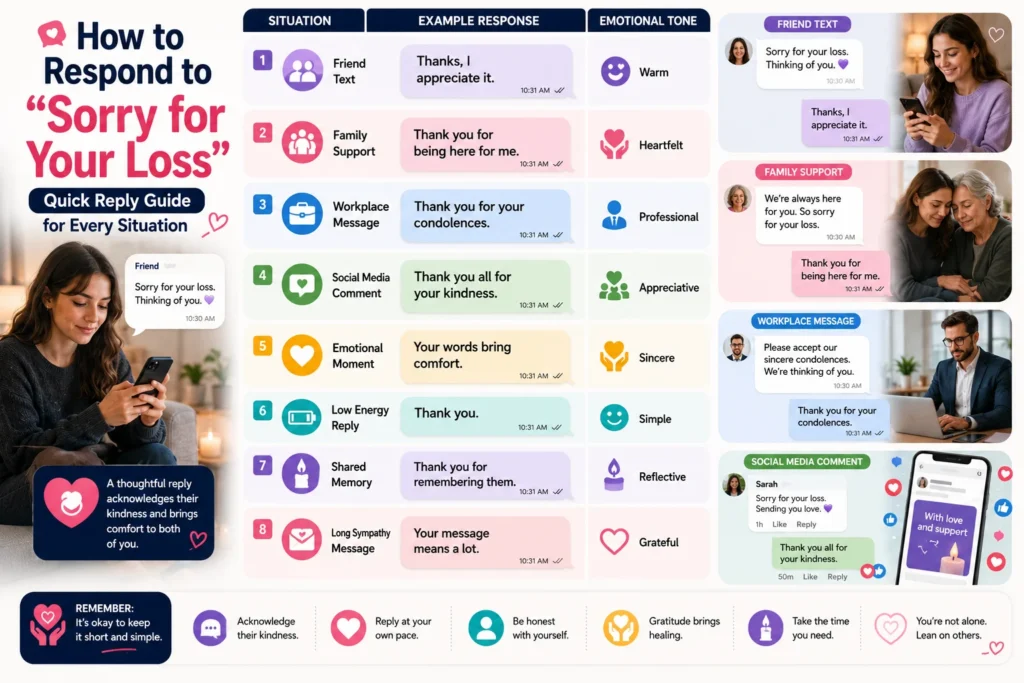
If you’re wondering how to respond to sorry for your loss, the best reply is one that feels genuine and matches your emotional state. A simple thank you is always appropriate, but you can also acknowledge their support or share a brief feeling. Popular responses include: “Thank you,” “I appreciate your kindness,” “That means a lot right now,” “Thank you for thinking of me,” and “I’m grateful for your support.”
Your phone buzzes with a text.
“I’m so sorry for your loss.”
A coworker says it during a meeting. A friend sends it in a DM. A distant relative comments on a social media post. In moments of grief, even simple conversations can feel surprisingly difficult.
Many people aren’t sure how to respond. You may appreciate the support but not have the energy for a long conversation. You may want to be polite without sounding formal. Or you might simply not know what to say.
The good news is that there is no perfect response.
The best reply depends on your relationship with the person, your emotional state, and the situation. Whether you’re replying to a close friend, a family member, a coworker, or an online message, this guide will help you find words that feel natural, sincere, and right for the moment.
Simple Responses to Sorry for Your Loss
Thank you
Best used when:
You want a short, polite response without continuing the conversation.
Meaning:
This is the most universal reply. It acknowledges their sympathy while requiring little emotional energy.
I appreciate that
Best used when:
Someone has offered kind words and you want to acknowledge them warmly.
Meaning:
It feels slightly more personal than a simple thank you.
Thank you for your kindness
Best used when:
The person has been especially thoughtful or supportive.
Meaning:
This response recognizes not only their words but also their intention.
I’m grateful for your support
Best used when:
Friends, family members, or coworkers have been checking in regularly.
Meaning:
It communicates appreciation while highlighting their ongoing support.
That means a lot right now
Best used when:
You genuinely feel comforted by their message.
Meaning:
It lets the person know their words had a positive impact.
Warm and Heartfelt Responses
Thank you for thinking of me
Best used when:
Someone reaches out unexpectedly.
Meaning:
You acknowledge the effort they made to contact you.
Your support means so much
Best used when:
A close friend or family member offers condolences.
Meaning:
It emphasizes the value of their presence during a difficult time.
I truly appreciate your kind words
Best used when:
Someone sends a thoughtful message.
Meaning:
This response feels sincere and respectful.
Thank you for being here for me
Best used when:
The person has been helping emotionally or practically.
Meaning:
It expresses gratitude for their continued presence.
I’m touched by your kindness
Best used when:
You receive especially compassionate messages.
Meaning:
This reply conveys genuine emotional appreciation.
Text Message Responses
Thank you, I really appreciate it
Best used when:
Replying to a text from friends, coworkers, or acquaintances.
Meaning:
Simple, modern, and natural.
Thanks for reaching out
Best used when:
Someone texts after hearing the news.
Meaning:
It recognizes their effort to connect.
I appreciate your message
Best used when:
You want a slightly formal but warm response.
Meaning:
It works well in both personal and professional situations.
Thank you for keeping me in your thoughts
Best used when:
The person cannot be physically present.
Meaning:
It acknowledges emotional support from afar.
Thanks, it’s been a difficult time
Best used when:
You feel comfortable sharing a little more.
Meaning:
It opens the door for further support if desired.
Responses for Close Friends
Thank you for always being there
Best used when:
A trusted friend reaches out.
Meaning:
It acknowledges the relationship and their support.
I honestly don’t know what I’d do without friends like you
Best used when:
You want to express deep appreciation.
Meaning:
This response strengthens emotional connection.
Your message helped more than you know
Best used when:
A friend’s words brought comfort.
Meaning:
It reassures them their effort mattered.
Thanks for checking in on me
Best used when:
A friend has been consistently supportive.
Meaning:
It shows gratitude for ongoing care.
I appreciate you so much right now
Best used when:
You want a personal and heartfelt response.
Meaning:
It communicates emotional closeness.
Responses for Family Members
Thank you for being by my side
Best used when:
Close relatives are offering support.
Meaning:
It recognizes their presence during grief.
We’ll get through this together
Best used when:
The loss affects the entire family.
Meaning:
It emphasizes unity and shared healing.
Your love means everything right now
Best used when:
Family members are helping emotionally.
Meaning:
It acknowledges their care and affection.
Thank you for supporting our family
Best used when:
Relatives have been helping everyone involved.
Meaning:
It broadens gratitude beyond yourself.
I’m thankful to have you
Best used when:
You want a simple but meaningful reply.
Meaning:
It reinforces family bonds.
Professional Responses
Thank you for your condolences
Best used when:
Replying to coworkers, managers, or clients.
Meaning:
Professional, respectful, and appropriate.
I appreciate your kind thoughts
Best used when:
Responding in workplace settings.
Meaning:
Warm without becoming overly personal.
Thank you for your support during this time
Best used when:
Colleagues have shown understanding.
Meaning:
It balances professionalism and gratitude.
Your message is greatly appreciated
Best used when:
Meaning:
Polished and respectful.
Thank you for reaching out
Best used when:
A coworker or supervisor contacts you.
Meaning:
Simple, professional, and sincere.
Social Media Responses
Thank you all for your kindness
Best used when:
Many people comment on a post.
Meaning:
A collective response saves time while remaining appreciative.
I’m grateful for everyone’s support
Best used when:
Friends and followers have been reaching out.
Meaning:
It acknowledges a larger group.
Your messages have brought comfort
Best used when:
Many people have shared condolences online.
Meaning:
It lets others know their words mattered.
Thank you for keeping our family in your thoughts
Best used when:
Posting publicly after a family loss.
Meaning:
Warm and respectful.
We appreciate all the love and support
Best used when:
Responding on behalf of a family.
Meaning:
Inclusive and heartfelt.
Emotional Responses
It’s been hard, but your words help
Best used when:
You want to be open about your feelings.
Meaning:
It combines honesty with gratitude.
Thank you, I’m taking things one day at a time
Best used when:
You want to acknowledge your grief.
Meaning:
A realistic and relatable response.
I appreciate your compassion
Best used when:
Someone has shown genuine empathy.
Meaning:
It recognizes emotional understanding.
Your kindness brings comfort
Best used when:
The person’s words genuinely helped.
Meaning:
A warm acknowledgment of support.
Thank you for understanding
Best used when:
Someone has respected your emotions and space.
Meaning:
It shows appreciation for empathy.
Responses When You Don’t Feel Like Talking
Thank you
Best used when:
You lack emotional energy.
Meaning:
A complete response that requires no explanation.
I appreciate it
Best used when:
You want brevity without sounding distant.
Meaning:
Simple and sincere.
Thanks for your message
Best used when:
Responding quickly by text.
Meaning:
Polite and efficient.
Thank you for your thoughts
Best used when:
You want a respectful reply.
Meaning:
Acknowledges sympathy without extending conversation.
I’m grateful for your support
Best used when:
You want warmth with minimal words.
Meaning:
Expresses appreciation without emotional labor.
Responses When Someone Knew the Person
They would have appreciated your kindness
Best used when:
The person knew your loved one.
Meaning:
It honors both the deceased and the sender.
Thank you for remembering them
Best used when:
Someone shares memories or condolences.
Meaning:
Acknowledges their connection.
It means a lot that you thought of them
Best used when:
Someone expresses fond memories.
Meaning:
Keeps the focus on the loved one.
Thank you for sharing that memory
Best used when:
Someone tells a story about the person.
Meaning:
Invites remembrance and connection.
They touched so many lives
Best used when:
Reflecting on the person’s impact.
Meaning:
A meaningful way to honor their legacy.
Responses to Long Sympathy Messages
Thank you for taking the time to write that
Best used when:
Someone sends a thoughtful message.
Meaning:
Acknowledges their effort and care.
Your words brought comfort during a difficult time
Best used when:
A message genuinely helped.
Meaning:
Shows appreciation for emotional support.
I appreciate your thoughtful message
Best used when:
You want a warm but concise response.
Meaning:
Recognizes the care behind their words.
Thank you for your kindness and support
Best used when:
Someone offers both condolences and assistance.
Meaning:
Acknowledges multiple forms of support.
Your message means more than I can express
Best used when:
You feel deeply moved.
Meaning:
Conveys profound gratitude.
Responses That Honor the Loved One
Thank you for helping keep their memory alive
Best used when:
Someone shares stories or memories.
Meaning:
Focuses on remembrance.
They would have appreciated your words
Best used when:
The sender knew the deceased.
Meaning:
Connects their message to the loved one.
We’re holding on to the good memories
Best used when:
Talking with family or friends.
Meaning:
Emphasizes remembrance and healing.
Thank you for celebrating their life with us
Best used when:
After services or memorials.
Meaning:
Acknowledges shared remembrance.
Their memory will always stay with us
Best used when:
You want to honor the person’s legacy.
Meaning:
Keeps the focus on love and remembrance.
Responses to Avoid
It’s okay
Best used when:
Generally avoid this response.
Meaning:
Loss is not really “okay,” and some people may feel their sympathy is being dismissed.
Don’t worry about it
Best used when:
Usually not recommended.
Meaning:
It can unintentionally minimize both the loss and their support.
Whatever
Best used when:
Avoid entirely.
Meaning:
May sound dismissive or hurtful.
You too
Best used when:
Avoid unless the loss affects both people equally.
Meaning:
Can sound accidental or awkward.
I’m over it
Best used when:
Generally avoid in sympathy conversations.
Meaning:
May create confusion or appear emotionally distant.
People Also Ask
What is the best response to sorry for your loss?
The best response is usually a simple and sincere “Thank you” or “I appreciate your kindness.” Short replies are completely acceptable because most people understand that grief can make conversations difficult.
Do I have to respond when someone says sorry for your loss?
No, you do not have to respond. Most people offer condolences to show support, not to receive a reply. If responding feels overwhelming, it’s okay to wait or not respond at all.
How do you respond professionally to condolences?
Professional responses include phrases like “Thank you for your condolences,” “I appreciate your support,” or “Thank you for your kind thoughts.” These responses are respectful and workplace-appropriate.
What should I text back after someone says sorry for your loss?
A simple text such as “Thank you, I appreciate it” or “Thanks for reaching out” works well. These responses are natural, polite, and easy to send when emotions are high.
Is thank you enough when someone offers condolences?
Yes. In most situations, “Thank you” is more than enough. People generally understand that grieving individuals may not have the emotional energy for lengthy conversations.
Why do people say sorry for your loss?
People say “sorry for your loss” to express sympathy, compassion, and support after someone experiences a death. The phrase communicates care and acknowledges the emotional pain the person may be facing.
Conclusion
Knowing how to respond to sorry for your loss is less about finding perfect words and more about choosing words that feel authentic to you. Sometimes a simple “thank you” is enough. Other times, you may want to express deeper appreciation or honor the memory of your loved one.
The right response depends on your emotions, your relationship with the person, and the situation. Above all, remember that most people offering condolences simply want to show they care. A sincere reply, no matter how short, is always enough.

Kevin Brooks is a grammar specialist at GramBrix.com, dedicated to helping readers understand language rules with clarity and confidence. He simplifies complex grammar concepts through practical examples and easy explanations.