Last Updated on August 16, 2026
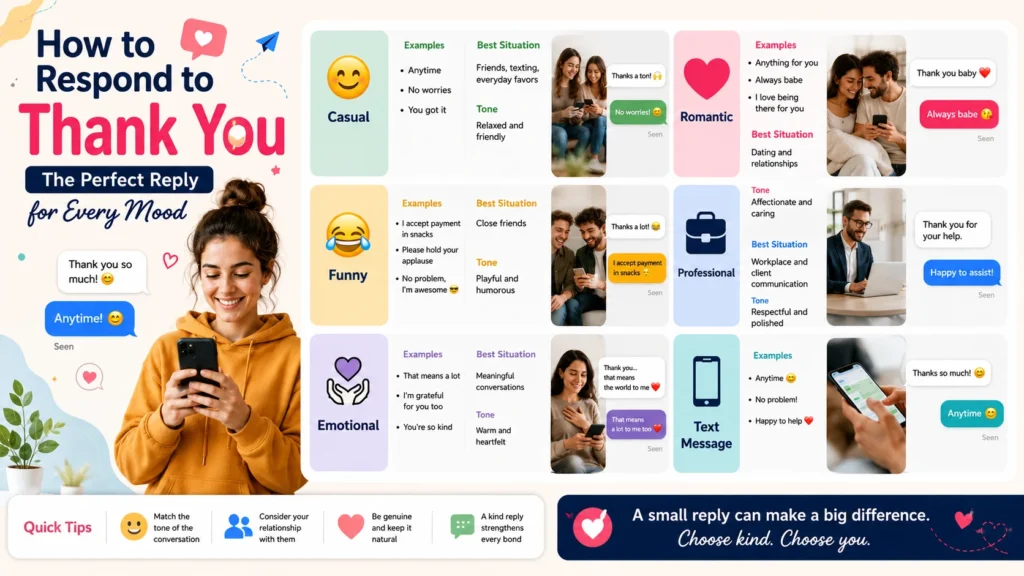
If you’re wondering how to respond to thank you, the best reply depends on your relationship, tone, and situation. Simple responses like “You’re welcome,” “Anytime,” “Happy to help,” “Of course,” and “No problem at all” work in most conversations because they acknowledge appreciation while keeping the interaction warm and natural.
You send a friend a favor. Help a coworker finish a project. Hold the door open for a stranger. Then your phone lights up with a message:
“Thank you so much.”
Suddenly, you’re staring at the screen wondering what to say next.
It sounds simple, but the way you respond to “thank you” can shape the tone of the entire conversation. A thoughtful reply can make someone feel valued. A playful response can strengthen a friendship. A professional response can build workplace trust.
Whether you’re replying in a text message, DM, social media comment, family chat, dating conversation, or work email, choosing the right words helps the interaction feel genuine rather than automatic.
This guide covers the best responses for every mood, relationship, and situation so you’ll always know exactly what to say.
Classic Responses to Thank You
You’re Welcome
Best used when:
Almost any situation, especially formal or polite conversations.
Meaning:
This is the traditional response that acknowledges gratitude respectfully. It feels professional, clear, and universally understood.
Happy to Help
Best used when:
Someone thanks you for assistance or support.
Meaning:
It shows kindness and reinforces that helping them wasn’t a burden.
Anytime
Best used when:
Friends, family members, or people you regularly interact with.
Meaning:
It communicates generosity and openness to helping again in the future.
Of Course
Best used when:
Helping someone you care about.
Meaning:
It suggests that helping them felt natural and expected.
No Problem at All
Best used when:
Casual conversations and everyday favors.
Meaning:
It reassures the other person that they haven’t inconvenienced you.
Casual Responses to Thank You
No Worries
Best used when:
Text messages and relaxed conversations.
Meaning:
A friendly way to remove any sense of obligation or guilt.
You Got It
Best used when:
Helping friends, coworkers, or acquaintances.
Meaning:
It feels confident, positive, and approachable.
Sure Thing
Best used when:
Informal interactions.
Meaning:
This response keeps the conversation light and easygoing.
Absolutely
Best used when:
Someone seems especially grateful.
Meaning:
It signals enthusiasm and genuine willingness.
Glad I Could Help
Best used when:
Providing useful support.
Meaning:
It emphasizes satisfaction in being helpful.
Funny Responses to Thank You
Please Hold Your Applause
Best used when:
Friends with a shared sense of humor.
Meaning:
A playful way to joke about receiving recognition.
I Accept Payment in Snacks
Best used when:
Close friends or family.
Meaning:
It turns gratitude into a lighthearted joke.
My Hero Cape Is at the Dry Cleaner
Best used when:
Casual, humorous conversations.
Meaning:
You acknowledge the thanks while making fun of yourself.
I’m Just Doing My Job as Your Favorite Person
Best used when:
Close friendships.
Meaning:
A teasing response that keeps things fun.
Don’t Tell Anyone I’m This Nice
Best used when:
Playful social conversations.
Meaning:
It creates humor through fake modesty.
Cute Responses to Thank You
Aww, Anytime
Best used when:
Friends, siblings, or someone close.
Meaning:
It feels warm, affectionate, and approachable.
You Deserve It
Best used when:
Someone genuinely appreciates your help.
Meaning:
You shift attention back toward them positively.
Always Happy to Be There for You
Best used when:
Meaningful friendships.
Meaning:
It reinforces support and emotional connection.
That’s What Friends Are For
Best used when:
Close personal relationships.
Meaning:
It highlights the value of the relationship itself.
Seeing You Happy Is Enough
Best used when:
Heartfelt situations.
Meaning:
You emphasize caring more about their happiness than recognition.
Sweet Responses to Thank You
It Means a Lot That You Said That
Best used when:
Someone expresses sincere gratitude.
Meaning:
You acknowledge their appreciation rather than dismissing it.
You’d Do the Same for Me
Best used when:
Mutual friendships.
Meaning:
It reflects trust and reciprocity.
I’m Glad It Helped
Best used when:
Practical support situations.
Meaning:
You focus on the positive outcome.
You Never Need to Thank Me
Best used when:
Close family or romantic relationships.
Meaning:
It communicates deep care and generosity.
That’s What Family Does
Best used when:
Family-related situations.
Meaning:
It reinforces belonging and support.
Romantic Responses to Thank You
Anything for You
Best used when:
Partners or serious romantic relationships.
Meaning:
It expresses affection and devotion.
Seeing You Smile Is My Reward
Best used when:
Sweet romantic moments.
Meaning:
It emphasizes emotional connection over recognition.
You Make It Easy to Care
Best used when:
Heartfelt relationship conversations.
Meaning:
This response communicates genuine affection.
I Love Being There for You
Best used when:
Long-term relationships.
Meaning:
It reinforces commitment and emotional support.
Always, Babe
Best used when:
Casual romantic texting.
Meaning:
Short, affectionate, and reassuring.
Flirty Responses to Thank You
Now You Owe Me a Coffee
Best used when:
Light flirting.
Meaning:
Creates an opportunity for future interaction.
I’ll Take a Smile as Payment
Best used when:
Playful romantic conversations.
Meaning:
It keeps things charming and low-pressure.
Glad I Could Impress You
Best used when:
Someone seems particularly appreciative.
Meaning:
A confident but playful flirt.
Just Trying to Earn Favorite-Person Status
Best used when:
Developing romantic chemistry.
Meaning:
Lighthearted and engaging.
I’d Do It Again for You
Best used when:
Someone you’re interested in.
Meaning:
Suggests continued interest and care.
Professional Responses to Thank You
Happy to Assist
Best used when:
Workplace conversations.
Meaning:
Professional, respectful, and efficient.
It Was My Pleasure
Best used when:
Client-facing communication.
Meaning:
Shows professionalism and courtesy.
Glad We Could Get It Resolved
Best used when:
Problem-solving situations.
Meaning:
Focuses on successful outcomes.
Thank You for Your Kind Words
Best used when:
Receiving praise from colleagues or clients.
Meaning:
Acknowledges appreciation professionally.
I Appreciate Your Feedback
Best used when:
Formal workplace communication.
Meaning:
Shows maturity and professionalism.
Confident Responses to Thank You
That’s What I Do Best
Best used when:
Friendly conversations.
Meaning:
Projects confidence without arrogance.
I Had You Covered
Best used when:
Helping someone through a challenge.
Meaning:
Communicates reliability and trustworthiness.
Consider It Handled
Best used when:
After solving a problem.
Meaning:
Creates a sense of competence.
Always One Step Ahead
Best used when:
Playful confidence.
Meaning:
Suggests preparedness and capability.
Glad I Could Deliver
Best used when:
Completing a task successfully.
Meaning:
Acknowledges competence while staying humble.
Emotional Responses to Thank You
Your Appreciation Means a Lot
Best used when:
Meaningful personal moments.
Meaning:
You acknowledge the emotional significance of their gratitude.
I’m Really Glad I Could Be There
Best used when:
Difficult situations.
Meaning:
Shows genuine care and empathy.
You Don’t Have to Go Through Things Alone
Best used when:
Supporting someone emotionally.
Meaning:
Reinforces connection and support.
That Means More Than You Know
Best used when:
Receiving heartfelt gratitude.
Meaning:
Expresses emotional impact.
I’m Grateful for You Too
Best used when:
Close relationships.
Meaning:
Turns gratitude into mutual appreciation.
Text Message Responses to Thank You
Anytime 😊
Best used when:
Quick replies.
Meaning:
Friendly, simple, and modern.
Of Course! Glad It Worked Out
Best used when:
Helping solve a problem.
Meaning:
Keeps the tone positive and conversational.
You Got It 👍
Best used when:
Short casual texting.
Meaning:
Efficient and relaxed.
Happy to Help ❤️
Best used when:
Close relationships.
Meaning:
Adds warmth through emotion.
No Problem at All!
Best used when:
Almost any casual text exchange.
Meaning:
Friendly and reassuring.
Social Media Responses to Thank You
Appreciate You Too!
Best used when:
Comments and public interactions.
Meaning:
Encourages positive engagement.
Always Happy to Support
Best used when:
Community-based conversations.
Meaning:
Builds connection and goodwill.
Thanks for Being Awesome
Best used when:
Friendly online communities.
Meaning:
Returns positivity.
Glad You Enjoyed It
Best used when:
Content creation or sharing.
Meaning:
Acknowledges the audience’s appreciation.
Your Support Means Everything
Best used when:
Creators, influencers, and brands.
Meaning:
Strengthens audience relationships.
Responses to Thank You After a Big Favor
I’d Do It Again in a Heartbeat
Best used when:
Helping someone through an important moment.
Meaning:
Shows commitment and care.
That’s What Matters Most
Best used when:
When the outcome was positive.
Meaning:
Keeps focus on results rather than praise.
You Never Had to Handle It Alone
Best used when:
Supporting someone through hardship.
Meaning:
Reinforces emotional support.
I’m Just Glad Things Worked Out
Best used when:
Stressful situations.
Meaning:
Centers the success rather than your effort.
Your Happiness Is Worth It
Best used when:
Deep personal relationships.
Meaning:
Highlights genuine care and generosity.
People Also Ask
What is the best response to thank you?
The best response to thank you depends on the situation. “You’re welcome,” “Happy to help,” and “Of course” work in most conversations because they sound polite, natural, and sincere while acknowledging the other person’s gratitude.
Is saying no problem rude?
No, saying “no problem” is not usually rude. In modern communication, it often reassures the other person that helping them was easy and not an inconvenience. Context and tone matter more than the phrase itself.
How do you respond to thank you in a professional setting?
Professional responses include “Happy to assist,” “My pleasure,” “Thank you for your kind words,” and “Glad I could help.” These replies maintain professionalism while still sounding warm and approachable.
What is a cute reply to thank you?
Cute replies include “Aww, anytime,” “That’s what friends are for,” and “Seeing you happy is enough.” These responses create warmth and strengthen personal connections.
Why do people say thank you?
People say thank you to acknowledge effort, kindness, support, or generosity. Gratitude helps strengthen relationships, build trust, and make others feel valued and appreciated.
Should you always respond to thank you?
In most conversations, yes. Even a short response acknowledges the person’s gratitude and keeps the interaction positive. A simple reply often helps conversations feel more natural and complete.
Conclusion
Knowing how to respond to thank you isn’t about memorizing one perfect phrase. It’s about understanding the moment, the relationship, and the emotion behind the gratitude. A casual “No worries,” a heartfelt “I’m glad I could help,” or a romantic “Anything for you” can all be the right answer in different situations.
The best responses feel genuine, natural, and appropriate for the conversation. When in doubt, keep it simple, sincere, and kind. People may forget the exact words you use, but they’ll remember how your response made them feel.

Justin Powell is a writer at GramBrix.com who focuses on grammar, clarity and effective communication, helping readers strengthen their language skills.