
Last Updated on June 6, 2026
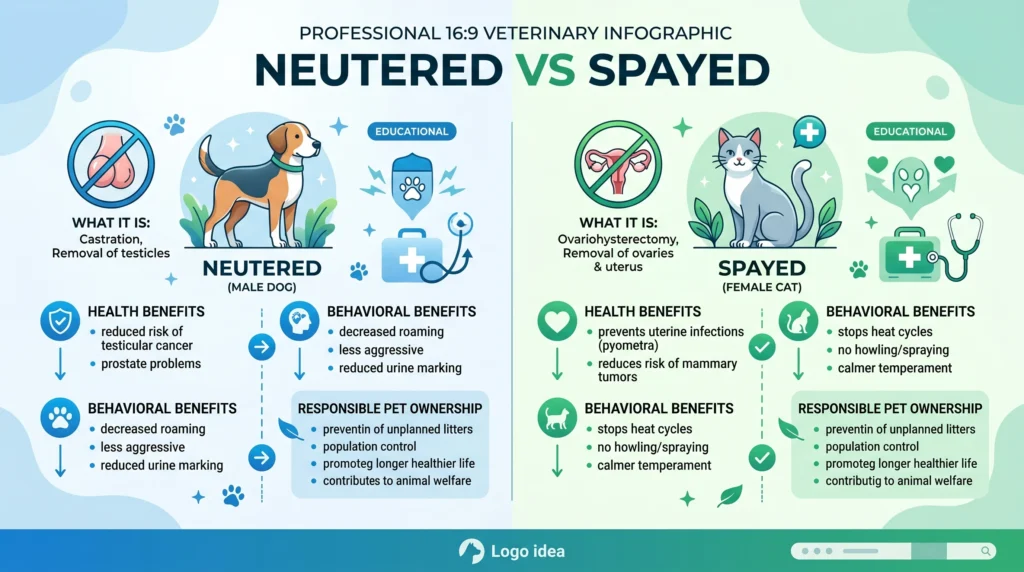
Neutered and spayed both refer to surgical procedures that prevent pets from reproducing. The key difference is that neutered usually refers to male animals, while spayed refers to female animals. Both procedures can help control pet populations, reduce certain health risks, and influence some behaviors, making them common recommendations from veterinarians.
If you’ve recently adopted a dog or cat, you’ve probably heard the terms neutered or spayed. While many people use these words interchangeably, they actually refer to two different procedures.
Pet owners often ask:
- Is neutering the same as spaying?
- Which procedure is for males?
- Which procedure is for females?
- Are there health benefits?
- When should the surgery be performed?
Understanding the difference is important for responsible pet ownership. Both procedures play a major role in preventing unwanted litters and improving animal welfare.
Veterinarians around the world commonly recommend spaying and neutering because they can provide several health and behavioral benefits while helping reduce pet overpopulation.
In this guide, you’ll learn:
- The difference between neutered and spayed
- How each procedure works
- Benefits and considerations
- Common myths
- Real-world examples
- Frequently asked questions
Quick Answer
| Procedure | Animal |
|---|---|
| Neutered | Male pets |
| Spayed | Female pets |
Simple Summary
Male dogs and cats are usually neutered, while female dogs and cats are typically spayed.
What Does Neutered Mean?
Definition
Neutering is a surgical procedure performed on male animals to prevent reproduction.
Common Animals Neutered
Neutering is commonly performed on:
- Dogs
- Cats
- Rabbits
- Ferrets
Purpose of Neutering
The procedure helps:
- Prevent breeding
- Reduce unwanted litters
- Support population control
What Does Spayed Mean?
Definition
Spaying is a surgical procedure performed on female animals to prevent pregnancy.
Common Animals Spayed
Spaying is commonly performed on:
- Female dogs
- Female cats
- Rabbits
- Other companion animals
Purpose of Spaying
Spaying helps:
- Prevent pregnancy
- Reduce reproduction
- Support long-term pet management
Main Difference Between Neutered or Spayed
Gender
Neutered
Performed on male animals.
Spayed
Performed on female animals.
Reproductive Function
Neutered
Prevents male reproduction.
Spayed
Prevents female reproduction and pregnancy.
Terminology
Veterinarians may sometimes use “neuter” as a general term for both procedures, but technically the terms refer to different sexes.
Comparison Table
| Feature | Neutered | Spayed |
|---|---|---|
| Gender | Male | Female |
| Prevents Reproduction | Yes | Yes |
| Surgical Procedure | Yes | Yes |
| Common in Dogs | Yes | Yes |
| Common in Cats | Yes | Yes |
| Veterinary Recommendation | Often | Often |
Why Veterinarians Recommend These Procedures
Population Control
Millions of unwanted animals enter shelters every year.
Spaying and neutering help reduce this issue.
Responsible Pet Ownership
The procedures help prevent accidental breeding.
Community Benefits
Fewer unwanted litters can reduce strain on shelters and rescue organizations.
Health Benefits of Neutering
Reproductive Health
Neutering may reduce the risk of certain male reproductive conditions.
Reduced Roaming Behavior
Some male pets may roam less after neutering.
Reduced Mating Behaviors
Certain hormone-driven behaviors may decrease.
Health Benefits of Spaying
Preventing Pregnancy
Spaying permanently prevents pregnancy.
Reproductive Health Support
Spaying may reduce the risk of certain female reproductive diseases.
Heat Cycle Elimination
Female pets no longer experience heat cycles after spaying.
Behavioral Considerations
Male Pets
Some owners notice:
- Less marking behavior
- Reduced roaming
- Reduced mating behaviors
Female Pets
Spaying may reduce behaviors associated with heat cycles.
Individual Differences
Every pet is unique.
Behavior changes can vary significantly between animals.
Real World Examples
Family Dog
A family adopts a male puppy and schedules neutering to prevent unwanted breeding.
Shelter Cat
A rescue organization spays a female cat before adoption.
Multi-Pet Household
Spaying and neutering can help prevent accidental litters among household pets.
When Should Pets Be Spayed or Neutered?
Veterinary Guidance
Timing varies based on:
- Species
- Breed
- Size
- Health status
Individual Assessment
Veterinarians often recommend a personalized approach rather than a one-size-fits-all timeline.
Follow Professional Advice
Owners should discuss timing with a licensed veterinarian.
Common Myths About Neutered or Spayed Pets
Myth: The Procedure Changes Personality
Most pets maintain their unique personality traits.
Myth: Every Pet Gains Weight
Weight gain is more closely related to diet and exercise than surgery alone.
Myth: Females Need One Litter First
Veterinary recommendations do not generally require a female pet to have a litter before being spayed.
Myth: Only Dogs Need These Procedures
Cats, rabbits, and other companion animals may also benefit.
Advantages of Spaying and Neutering
Prevents Unwanted Litters
One of the biggest benefits.
Supports Animal Welfare
Helps reduce shelter overcrowding.
Potential Health Benefits
May reduce risks of certain medical conditions.
Easier Population Management
Helps control community pet populations.
Possible Considerations
Surgery Requires Recovery
Pets need time to heal after the procedure.
Veterinary Costs
Costs vary depending on location and provider.
Timing Decisions
Owners should discuss appropriate timing with a veterinarian.
Related Pet Care Concepts
Pet Adoption
Many shelters require pets to be spayed or neutered before adoption.
Vaccinations
Routine veterinary care often includes vaccination planning.
Preventive Healthcare
Spaying and neutering are considered preventive health measures.
Common Mistakes Pet Owners Make
Waiting Too Long for Advice
Consult a veterinarian early.
Believing Online Myths
Always rely on professional veterinary guidance.
Ignoring Recovery Instructions
Following post-surgery care instructions is important.
Assuming Every Pet Is Identical
Treatment recommendations vary by animal.
Exercises With Answers
Exercise 1
Which procedure is usually performed on male pets?
Answer: Neutering
Exercise 2
Which procedure is usually performed on female pets?
Answer: Spaying
Exercise 3
Do both procedures prevent reproduction?
Answer: Yes
Exercise 4
Can cats be spayed or neutered?
Answer: Yes
Exercise 5
Should timing be discussed with a veterinarian?
Answer: Yes
FAQs
What is the difference between neutered or spayed?
Neutered typically refers to male animals, while spayed refers to female animals.
Can both dogs and cats be neutered or spayed?
Yes. Both procedures are common for dogs and cats.
Does neutering stop reproduction?
Yes. Neutering prevents male animals from reproducing.
Does spaying prevent pregnancy?
Yes. Spaying prevents female animals from becoming pregnant.
Is neutering the same as spaying?
Both prevent reproduction, but neutering is generally for males and spaying is for females.
Will my pet’s personality change?
Most pets maintain their core personality after surgery.
When should a pet be spayed or neutered?
The ideal timing depends on the pet and should be discussed with a veterinarian.
Do shelters recommend these procedures?
Many shelters and rescue organizations strongly encourage or require them.
Can older pets be spayed or neutered?
In many cases, yes, but a veterinarian should evaluate the pet first.
Why do veterinarians recommend spaying and neutering?
Reasons may include population control, preventive healthcare, and responsible pet ownership.
Conclusion
Understanding neutered or spayed is an important part of responsible pet care.
The key difference is simple:
- Neutered refers to male animals.
- Spayed refers to female animals.
Both procedures help prevent reproduction and are commonly recommended by veterinarians for dogs, cats, and other companion animals.
Potential benefits include:
- Preventing unwanted litters
- Supporting animal welfare
- Improving population control
- Providing certain health advantages
If you’re considering either procedure, consult a licensed veterinarian who can recommend the best timing and approach based on your pet’s breed, age, size, and overall health.
For most pet owners, understanding the difference between neutered and spayed is the first step toward making informed decisions that support a pet’s long-term wellbeing.

Kevin Brooks is a grammar specialist at GramBrix.com, dedicated to helping readers understand language rules with clarity and confidence. He simplifies complex grammar concepts through practical examples and easy explanations.