
Last Updated on July 5, 2026
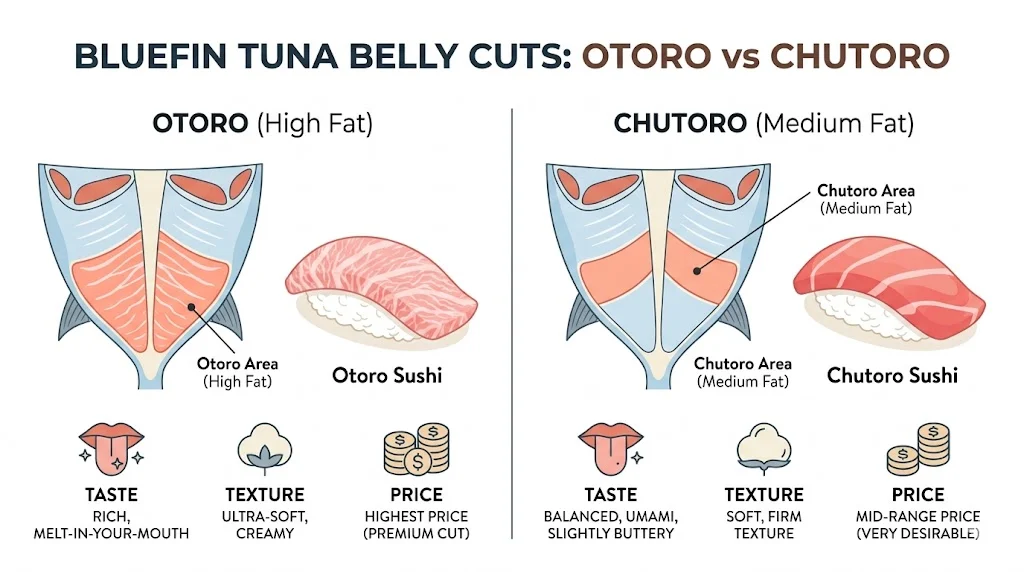
Otoro and chutoro are premium cuts of tuna used in sushi, but they differ mainly in fat content and texture. Otoro is the fattiest, richest, and most luxurious cut, while chutoro offers a balanced flavor with moderate fat and a slightly firmer bite. Both are prized, but their taste, price, and culinary use set them apart.
Not all tuna sushi is created equal. If you’ve ever looked at a sushi menu and wondered why some tuna pieces cost significantly more than others, the answer often comes down to otoro vs chutoro.
Both are premium cuts of bluefin tuna, prized by sushi chefs and seafood lovers around the world. At first glance, they may seem almost identical, but their fat content, texture, flavor, and price are surprisingly different. Choosing the right one can completely change your sushi experience.
Many people ask:
- Is otoro really better than chutoro?
- Why is otoro more expensive?
- Which cut has the best balance of flavor and texture?
- Which one should beginners try first?
The short answer is this: Otoro is the fattiest and most luxurious part of the tuna belly, offering an exceptionally buttery, melt-in-your-mouth texture. Chutoro comes from a slightly leaner section of the belly, providing a rich yet more balanced flavor that many sushi enthusiasts prefer.
As someone exploring premium sushi, understanding these differences can help you order with confidence and get better value for your money. This guide is based on widely accepted sushi grading standards and traditional Japanese culinary knowledge, making it easy for beginners while still offering useful insights for experienced sushi lovers.
In this guide, you’ll learn exactly how otoro and chutoro differ, including their location on the tuna, taste, texture, appearance, nutrition, price, and the best occasions to enjoy each one. By the end, you’ll know which premium tuna cut is the right choice for your palate and budget.
Quick Answer / Overview
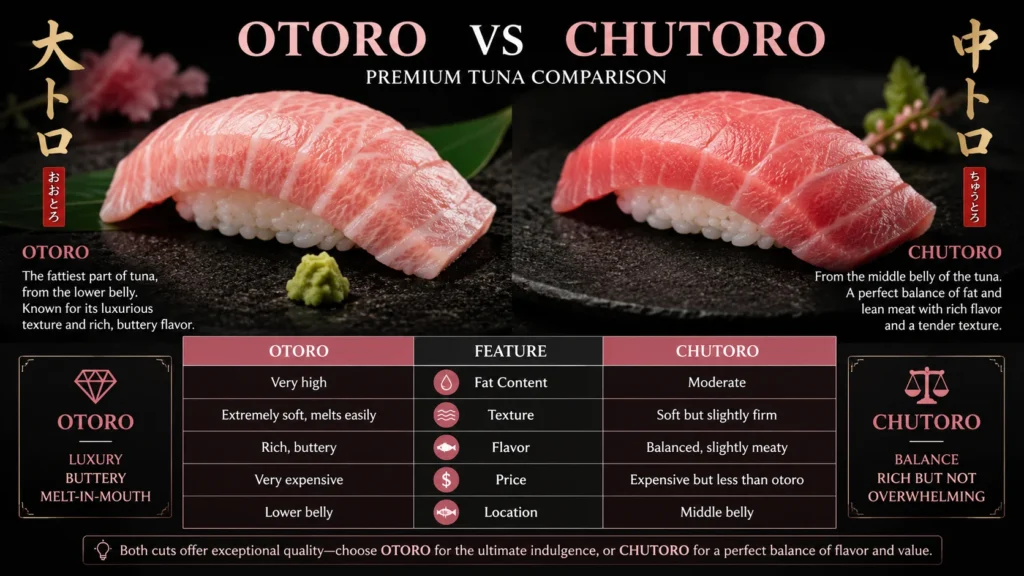
When comparing otoro vs chutoro, the main difference is fat content, texture, and price.
| Feature | Otoro | Chutoro |
| Fat Content | Very high | Moderate |
| Texture | Extremely soft, melts easily | Soft but slightly firm |
| Flavor | Rich, buttery | Balanced, slightly meaty |
| Price | Very expensive | Expensive but less than otoro |
| Location | Lower belly | Middle belly |
Simple idea:
- Otoro = luxury, buttery, melt-in-mouth
- Chutoro = balance, rich but not overwhelming
Definition / Explanation
What Is Otoro?
Otoro is the fattiest part of tuna. It comes from the lower belly of the fish.
Key features:
- Very high fat content
- Pale pink to white color
- Extremely soft texture
- Melts quickly in the mouth
It is often considered the most premium sushi cut.
What Is Chutoro?
Chutoro comes from the middle part of the tuna belly.
Key features:
- Medium fat content
- Pink color
- Balanced texture
- Mix of fat and lean meat
It is popular because it offers both flavor and texture.
Advantages and Disadvantages
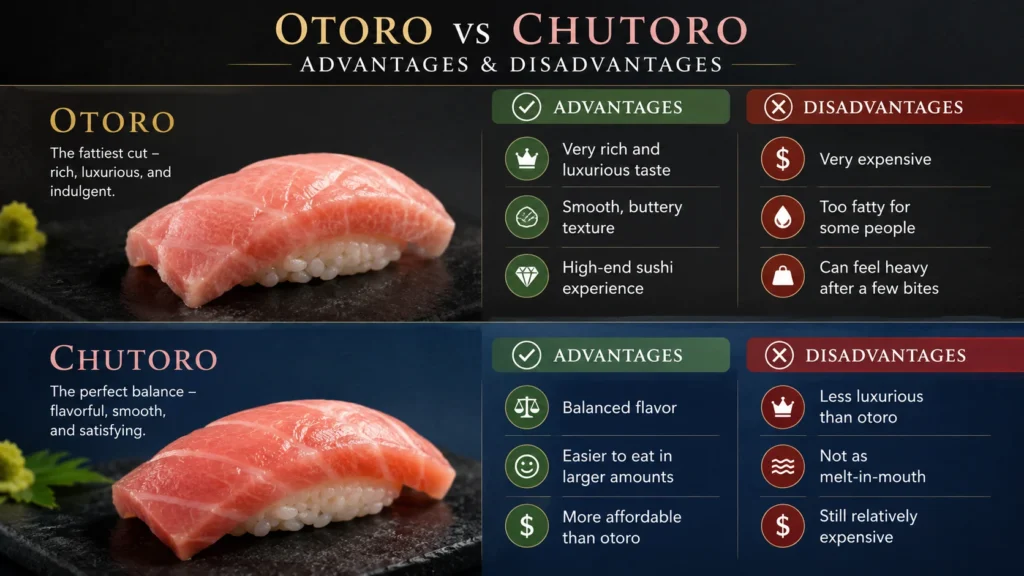
Otoro Pros and Cons
Advantages
- Very rich and luxurious taste
- Smooth, buttery texture
- High-end sushi experience
Disadvantages
- Very expensive
- Too fatty for some people
- Can feel heavy after a few bites
Chutoro Pros and Cons
Advantages
- Balanced flavor
- Easier to eat in larger amounts
- More affordable than otoro
Disadvantages
- Less luxurious than otoro
- Not as melt-in-mouth
- Still relatively expensive
Real-World Examples
In Sushi Restaurants
- Otoro is often served as a premium nigiri piece
- Chutoro is more commonly available on menus
At Home Dining
- Otoro is used for special occasions
- Chutoro is better for regular sushi meals
Chef Recommendations
Many sushi chefs suggest:
- Beginners try chutoro first
- Experienced diners enjoy otoro as a treat
Regional / Global Usage
Japan
- Otoro is considered a luxury item
- Often served in high-end sushi bars
- Chutoro is widely popular and more common
United States and Europe
- Otoro is marketed as premium sushi
- Chutoro is used in upscale restaurants
Asia (General)
- Both cuts are appreciated
- Availability depends on tuna quality
Common Mistakes
Thinking They Are the Same
Mistake:
- Many believe otoro and chutoro are identical
Correction:
- They differ in fat, taste, and price
Choosing Based Only on Price
Mistake:
- Expensive means better
Correction:
- Some people prefer chutoro’s balance
Overeating Otoro
Mistake:
- Eating too much otoro
Correction:
- Its richness is best enjoyed in small amounts
Ignoring Freshness
Mistake:
- Focus only on type
Correction:
- Freshness matters more than cut
Related Concepts or Comparisons
Otoro vs Chutoro vs Akami
| Feature | Otoro | Chutoro | Akami |
| Fat | Very high | Medium | Low |
| Taste | Buttery | Balanced | Clean, meaty |
| Texture | Very soft | Soft | Firm |
Simple analogy:
- Otoro = butter
- Chutoro = cream
- Akami = lean meat
How to Choose Between Otoro vs Chutoro
Choose Otoro If:
- You want luxury
- You enjoy rich, fatty foods
- You are celebrating something special
Choose Chutoro If:
- You want balance
- You prefer lighter taste
- You want better value for money
Exercises with Answers
Exercise 1: Identify the Cut
Which one is more fatty?
A. Chutoro
B. Otoro
Answer: B. Otoro
Exercise 2: True or False
Chutoro is leaner than otoro.
Answer: True
Exercise 3: Fill in the Blank
Otoro comes from the ______ belly of the tuna.
Answer: lower
Exercise 4: Match the Feature
| Feature | Match |
| Balanced taste | ? |
| Most expensive | ? |
Answers:
- Balanced taste → Chutoro
- Most expensive → Otoro
Exercise 5: Short Answer
Why might someone prefer chutoro over otoro?
Answer:
Because it has a balanced taste and is less fatty.
Advanced Insights
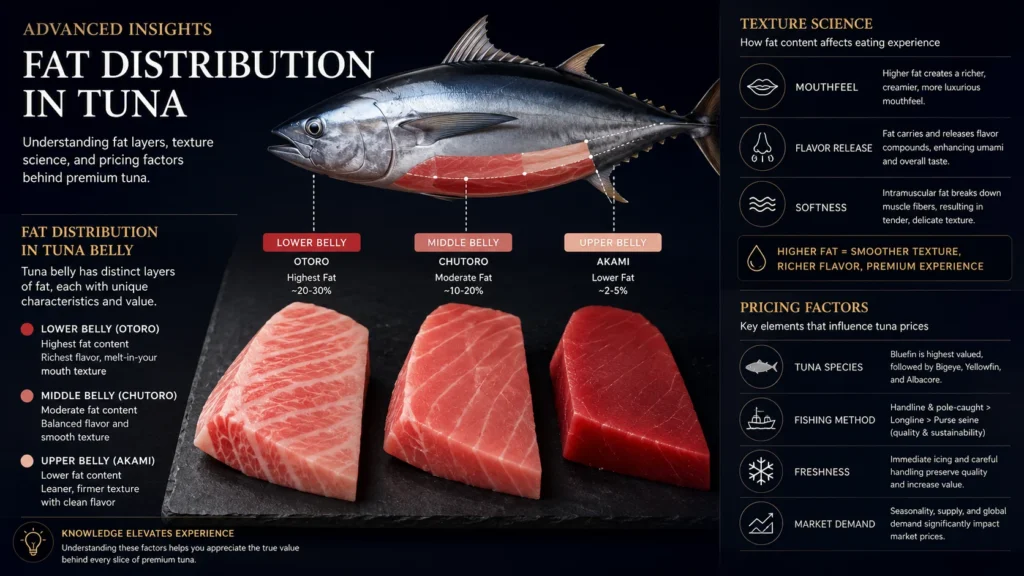
Fat Distribution in Tuna
Tuna belly has layers:
- Lower belly → highest fat (otoro)
- Middle belly → moderate fat (chutoro)
Texture Science
Fat content affects:
- Mouthfeel
- Flavor release
- Softness
Higher fat = smoother texture
Pricing Factors
Prices depend on:
- Tuna species
- Fishing method
- Freshness
- Market demand
FAQs
What is the main difference in otoro vs chutoro?
The main difference is fat content. Otoro is much fattier, while chutoro offers a balanced mix of fat and lean meat.
Which tastes better, otoro or chutoro?
It depends on preference. Otoro is richer, while chutoro is more balanced and easier to enjoy.
Is otoro always more expensive than chutoro?
Yes, otoro is typically more expensive due to its rarity and high fat content.
Can beginners try otoro first?
Yes, but chutoro is usually better for beginners because it is less heavy and easier to enjoy.
Is chutoro healthy compared to otoro?
Chutoro has less fat, so it may feel lighter, but both contain healthy omega-3 fatty acids.
Why is otoro so rare?
Otoro comes from a small part of the tuna belly, making it limited and expensive.
Is chutoro still considered premium sushi?
Yes, chutoro is still a high-quality and premium sushi option.
How should otoro be eaten?
Eat it fresh as nigiri with minimal seasoning to enjoy its natural flavor.
Can I cook otoro or chutoro?
They are best eaten raw, but can be lightly seared for different textures.
Which is better for regular sushi meals?
Chutoro is better for regular meals due to its balance and affordability.
Conclusion
Understanding otoro vs chutoro helps you make smarter sushi choices. Both cuts come from tuna belly, but they offer very different experiences.
Otoro is rich, fatty, and luxurious. It melts in your mouth and feels special. But it can be heavy and expensive. Chutoro, on the other hand, gives a perfect balance. It has enough fat to be flavorful, but not too much to overwhelm.
For most people, chutoro is the better everyday choice. It is easier to enjoy and more affordable. Otoro is best saved for special occasions or when you want a premium experience.
The key takeaway is simple. Choose based on your taste, not just price. If you like rich foods, go for otoro. If you prefer balance, chutoro is ideal.
Next time you see these options on a menu, you will know exactly what to pick.

Kevin Brooks is a grammar specialist at GramBrix.com, dedicated to helping readers understand language rules with clarity and confidence. He simplifies complex grammar concepts through practical examples and easy explanations.