
Last Updated on July 12, 2026
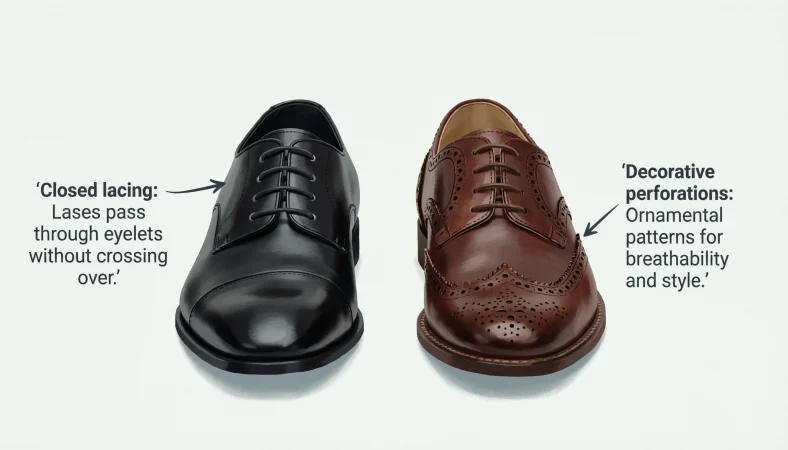
Oxfords and brogues are not the same shoe. Oxford refers to the shoe’s construction, while brogue refers to decorative perforations. You can have Oxford brogues, Derby brogues, or even boot brogues, because broguing is a design detail, not a style category.
Many people use the terms oxfords and brogues interchangeably, but they are not the same—and that small mistake often leads to the wrong choice of shoes for important occasions. It’s common to see someone wearing heavily detailed brogues with a strict business suit or, on the other hand, choosing plain shoes when a slightly more expressive style would have worked better.
In practice, the confusion can affect how polished and appropriate an outfit looks. A formal event demands clean, minimal design, while casual or semi-formal settings allow more decorative patterns and texture. Understanding this difference is not just about fashion—it’s about dressing with intention and confidence.
From a design and footwear perspective, oxfords and brogues are defined by construction and detailing. Oxford refers to a closed-lacing system that creates a sleek, structured silhouette. Brogue, on the other hand, refers to the decorative perforations added to the shoe and can appear on different shoe types, including oxfords themselves.
This guide is written to give you a clear, practical understanding based on traditional shoemaking principles and modern styling practices. You will learn how oxfords are constructed, what broguing actually means, how both styles evolved, and how they are used in real-world fashion today. By the end, you’ll be able to confidently choose the right shoe for any occasion—whether it’s a formal business meeting or a smart-casual weekend outfit.
Quick Answer Overview
The easiest way to understand oxfords vs brogues is this:
- Oxford describes how the shoe is built.
- Brogue describes the decorative holes and patterns.
An Oxford can be plain or brogued. A brogue can be an Oxford, Derby, or boot.
Think of Oxford as the architecture of a house, while brogue is the interior decoration.
What Are Oxford Shoes
Oxford shoes are defined by their closed lacing system. This means the eyelet tabs are stitched under the vamp. The result is a clean and tight silhouette.
Key Characteristics of Oxfords
- Closed lacing construction
- Sleek and minimal appearance
- Lower profile compared to other dress shoes
- Traditionally formal
- Often made from polished leather
Because of their refined look, Oxfords are considered the most formal men’s shoes.
Why Closed Lacing Matters
Closed lacing pulls the shoe together neatly. This creates:
- A sharper shape
- Less visible stitching
- A more elegant finish
This is why Oxfords are worn at formal events, business meetings, and ceremonies.
What Are Brogues
Brogues are not a type of shoe structure. They are shoes decorated with perforations and serrated edges.
These small holes were originally functional. They allowed water to drain when people walked through wet countryside terrain. Today, they are purely decorative.
Key Characteristics of Brogues
- Decorative perforations
- Patterned design on toe and seams
- Can exist on many shoe constructions
- Often seen as smart casual or semi formal
So, brogue is about ornamentation, not formality level.
Types of Brogue Designs
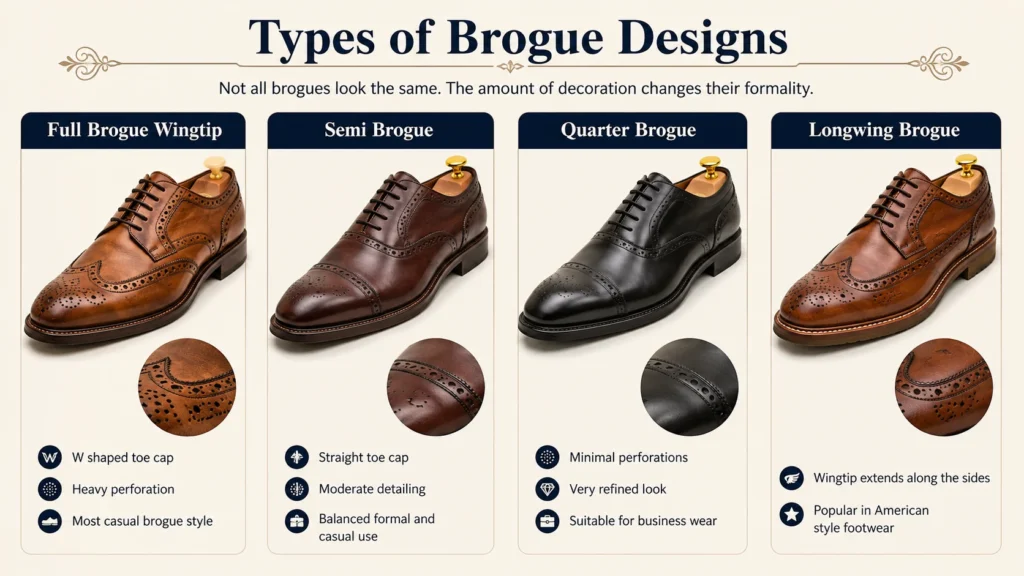
Not all brogues look the same. The amount of decoration changes their formality.
Full Brogue Wingtip
- W shaped toe cap
- Heavy perforation
- Most casual brogue style
Semi Brogue
- Straight toe cap
- Moderate detailing
- Balanced formal and casual use
Quarter Brogue
- Minimal perforations
- Very refined look
- Suitable for business wear
Longwing Brogue
- Wingtip extends along the sides
- Popular in American style footwear
Key Differences Between Oxfords vs Brogues
| Feature | Oxfords | Brogues |
|---|---|---|
| Definition | Shoe construction | Decorative detailing |
| Lacing System | Closed lacing | Can be closed or open |
| Formality | Usually very formal | Depends on design |
| Visual Style | Clean and minimal | Patterned and textured |
| Versatility | Formal settings | Smart casual to business |
| Purpose | Structure | Decoration |
Can You Have Oxford Brogues
Yes. This is where people get confused.
You can have:
- Oxford with no broguing
- Oxford with brogue detailing
- Derby with broguing
- Boots with broguing
So when someone says brogues, they may still be wearing Oxfords.
The History Behind These Shoes
Understanding their origins helps explain their modern use.
Oxford Origins
Oxford shoes became popular in the 19th century among university students. They wanted something sleeker than tall boots. The low cut design allowed more comfort and movement.
Over time, Oxfords became associated with professionalism and formality.
Brogue Origins
Brogues began in rural Scotland and Ireland. Farmers walked through marshy land, so they punched holes into shoes to let water escape.
Eventually, these perforations turned into decorative patterns. What was once practical became stylish.
Advantages and Disadvantages
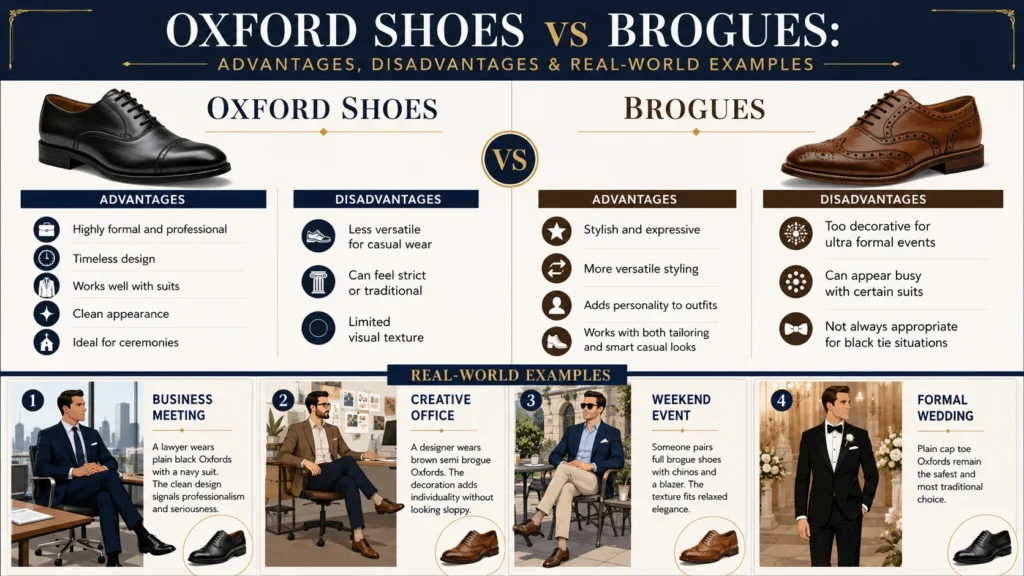
Advantages of Oxfords
- Highly formal and professional
- Timeless design
- Works well with suits
- Clean appearance
- Ideal for ceremonies
Disadvantages of Oxfords
- Less versatile for casual wear
- Can feel strict or traditional
- Limited visual texture
Advantages of Brogues
- Stylish and expressive
- More versatile styling
- Adds personality to outfits
- Works with both tailoring and smart casual looks
Disadvantages of Brogues
- Too decorative for ultra formal events
- Can appear busy with certain suits
- Not always appropriate for black tie situations
Real World Examples
Business Meeting
A lawyer wears plain black Oxfords with a navy suit. The clean design signals professionalism and seriousness.
Creative Office
A designer wears brown semi brogue Oxfords. The decoration adds individuality without looking sloppy.
Weekend Event
Someone pairs full brogue shoes with chinos and a blazer. The texture fits relaxed elegance.
Formal Wedding
Plain cap toe Oxfords remain the safest and most traditional choice.
When to Wear Oxfords vs Brogues
| Occasion | Best Choice |
|---|---|
| Formal ceremony | Plain Oxford |
| Job interview | Oxford or quarter brogue |
| Business formal | Oxford |
| Business casual | Semi brogue |
| Smart casual | Full brogue |
| Weekend wear | Brogues |
| Black tie event | Plain Oxford |
Styling Differences
How Oxfords Affect an Outfit
Oxfords create structure. They sharpen the overall silhouette. They are best paired with:
- Tailored suits
- Formal trousers
- Minimal accessories
How Brogues Affect an Outfit
Brogues add texture. They soften strict tailoring. They pair well with:
- Tweed
- Flannel
- Chinos
- Smart casual looks
Materials Commonly Used
Both Oxfords and brogues can be made from similar materials, but the finish changes their tone.
- Calf leather for formal wear
- Suede for relaxed brogues
- Grain leather for durability
- Patent leather for evening Oxfords
Regional and Global Usage
United Kingdom
Brogues are deeply tied to heritage style. They are often worn with country clothing and business attire.
United States
American fashion embraces longwing brogues and business casual combinations.
Europe
Italian styling favors sleeker Oxfords with subtle broguing.
Asia and Middle East
Formal Oxfords dominate professional environments, while brogues are popular for weddings and social events.
Common Mistakes People Make
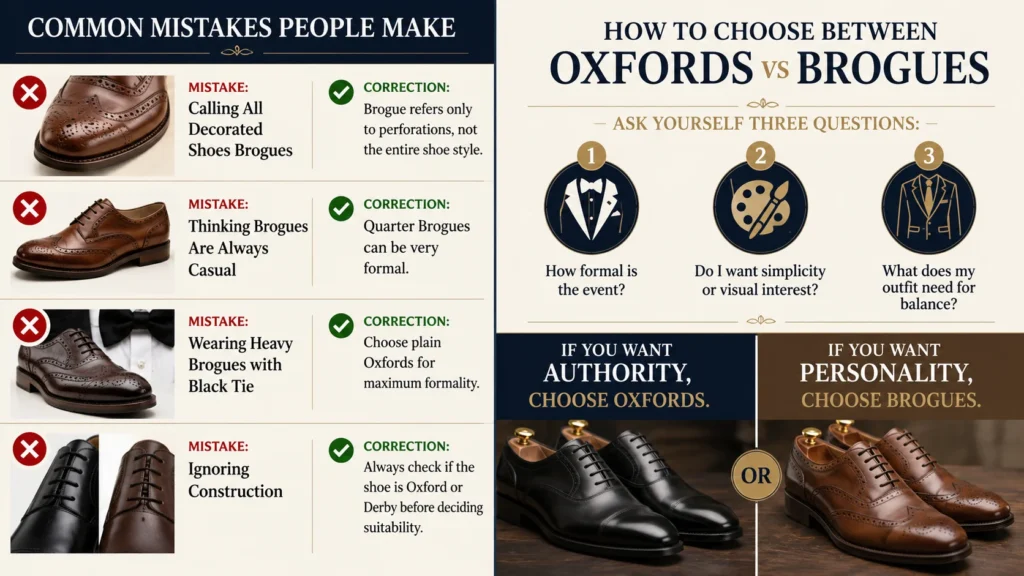
Mistake: Calling All Decorated Shoes Brogues
Correction: Brogue refers only to perforations, not the entire shoe style.
Mistake: Thinking Brogues Are Always Casual
Correction: Quarter brogues can be very formal.
Mistake: Wearing Heavy Brogues with Black Tie
Correction: Choose plain Oxfords for maximum formality.
Mistake: Ignoring Construction
Correction: Always check if the shoe is Oxford or Derby before deciding suitability.
How to Choose Between Oxfords vs Brogues
Ask yourself three questions:
- How formal is the event
- Do I want simplicity or visual interest
- What does my outfit need for balance
If you want authority, choose Oxfords.
If you want personality, choose brogues.
Related Concepts and Comparisons
Oxford vs Derby
Oxford has closed lacing. Derby has open lacing. Derby is slightly less formal.
Brogue vs Wingtip
Wingtip is a toe shape. Brogue is the perforation detail often seen on wingtips.
Dress Shoes vs Casual Shoes
Oxfords sit at the formal end. Brogues can span across the spectrum depending on design.
Exercises With Answers
Exercise 1
You are attending a black tie dinner. Which should you choose?
Answer: Plain Oxford shoes.
Exercise 2
You want shoes for business casual Fridays.
Answer: Semi brogue shoes offer balance.
Exercise 3
You want maximum versatility across outfits.
Answer: Choose brown Oxford brogues.
Exercise 4
You want the most formal shoe possible.
Answer: Black cap toe Oxfords.
Advanced Insight Into Shoe Construction
Experts often evaluate shoes based on:
- Last shape
- Sole construction
- Stitching method
- Leather quality
High quality Oxfords often use Goodyear welting. This allows resoling and improves durability. Broguing does not affect construction quality. It only changes aesthetics.
Psychological Impact of Each Style
Clothing sends signals.
Oxfords communicate:
- Authority
- Discipline
- Precision
Brogues communicate:
- Approachability
- Confidence
- Style awareness
Understanding this helps professionals dress intentionally.
Care and Maintenance Differences
Oxfords require:
- Regular polishing
- Edge dressing
- Careful storage
Brogues require:
- Cleaning perforations
- Conditioning leather
- Occasional brushing to prevent dust buildup
FAQs
Are Oxfords more formal than brogues?
Yes. Oxford refers to a formal shoe construction, while brogues add decoration that can reduce perceived formality.
Can Oxfords have brogue detailing?
Yes. Many Oxford shoes include broguing, creating Oxford brogues that combine structure and decoration.
Are brogues suitable for business settings?
Quarter brogues and semi brogues work well in business environments, especially with suits.
Should I wear Oxfords or brogues to a wedding?
For formal weddings choose Oxfords. For relaxed weddings, brogues are acceptable.
Why are they called brogues?
The term comes from Gaelic origins referring to rugged outdoor shoes with perforations for drainage.
Do brogues count as dress shoes?
Yes. Many brogues are considered dress shoes depending on design and leather finish.
What color works best for Oxfords vs brogues?
Black is ideal for formal Oxfords. Brown and tan enhance the character of brogues.
Can I wear brogues with jeans?
Yes. Brogues pair well with denim for smart casual styling, unlike formal Oxfords.
Which is more versatile, Oxfords or brogues?
Brogues are generally more versatile because they can transition between formal and casual outfits.
How do I identify Oxfords vs brogues when shopping?
Look at the lacing system first. Closed lacing means Oxford. Then check for perforations to see if it is brogued.
Conclusion
Understanding oxfords vs brogues becomes simple once you separate construction from decoration. Oxfords define how the shoe is built, featuring a closed lacing system that creates a refined and formal silhouette. Brogues describe the ornamental perforations that add texture and personality to a shoe. Because these are different characteristics, they often overlap, which is why you may see Oxford brogues in stores.
For formal occasions, interviews, and traditional business wear, plain Oxfords remain the gold standard. For versatility, smart casual settings, and style expression, brogues offer flexibility without sacrificing elegance. The right choice depends on context, outfit, and the message you want your appearance to send.
Invest in at least one classic Oxford for formal needs and one versatile brogue for broader use. With these two options, you can confidently handle nearly every dress code.

Kevin Brooks is a grammar specialist at GramBrix.com, dedicated to helping readers understand language rules with clarity and confidence. He simplifies complex grammar concepts through practical examples and easy explanations.