
Last Updated on August 16, 2026
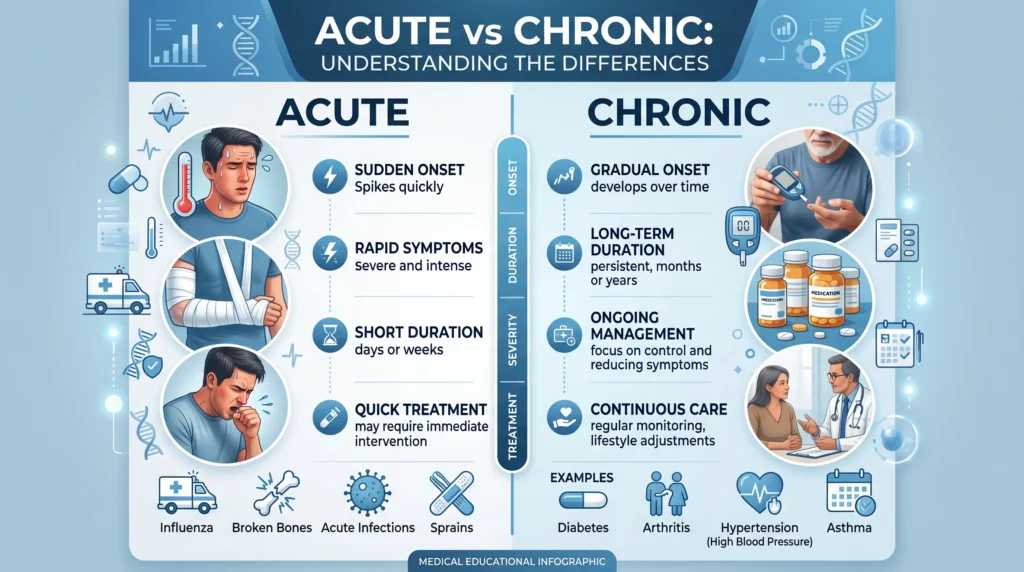
Acute and chronic are medical terms used to describe how long a disease, condition, or symptom lasts. Acute conditions develop suddenly and usually last a short time, while chronic conditions develop slowly and continue for months or years. Understanding the difference helps patients recognize symptoms, treatment needs, and long-term health risks.
Many people hear doctors use the terms “acute” and “chronic” during medical visits but do not fully understand what they mean. These words are extremely common in healthcare because they describe how a disease, injury, or condition behaves over time.
For example:
- A sudden flu infection is usually acute.
- Diabetes is typically chronic.
The difference matters because treatment, recovery time, and health risks often depend on whether a condition is acute or chronic.
If you are searching for acute meaning medical or acute meaning in medical terms, an acute condition is one that develops suddenly and often lasts for a short period. Similarly, acute illness meaning refers to an illness that begins quickly and may improve within days or weeks. This is also the meaning of acute illness used by healthcare professionals.
By contrast, chronic meaning medical refers to a condition that develops gradually or persists for months, years, or even a lifetime. Examples include diabetes, asthma, and high blood pressure.
Understanding acute and chronic meaning is important because these terms help doctors determine treatment plans, monitor progress, and predict outcomes. When comparing chronic and acute meaning or acute vs chronic meaning, the key distinction is duration:
- Acute = sudden onset and usually short-term.
- Chronic = long-lasting and often ongoing.
You may also hear the term acute on chronic meaning, which describes a sudden worsening of an existing chronic condition. For example, a person with chronic lung disease who experiences a severe flare-up may be diagnosed with an acute-on-chronic condition.
Because of this, understanding acute chronic meaning can help patients better interpret medical reports, diagnoses, and treatment recommendations.
Understanding these terms can help people:
- Recognize warning signs
- Seek medical care earlier
- Understand treatment plans
- Manage long-term health more effectively
In this guide, you will learn:
- The meaning of acute and chronic
- Main differences between acute and chronic conditions
- Real-world medical examples
- Symptoms and treatment comparisons
- Common mistakes people make
- Frequently asked health questions
The explanations are simple, medically accurate, and beginner-friendly, making it easier to understand how healthcare professionals use these important terms.
Quick Answer
| Feature | Acute | Chronic |
|---|---|---|
| Onset | Sudden | Slow |
| Duration | Short-term | Long-term |
| Severity | Often intense | Often ongoing |
| Treatment Goal | Fast recovery | Long-term management |
| Example | Flu | Diabetes |
Simple Summary
- Acute conditions happen suddenly and usually end quickly.
- Chronic conditions last for months or years.
What Does Acute Mean?
Definition of Acute
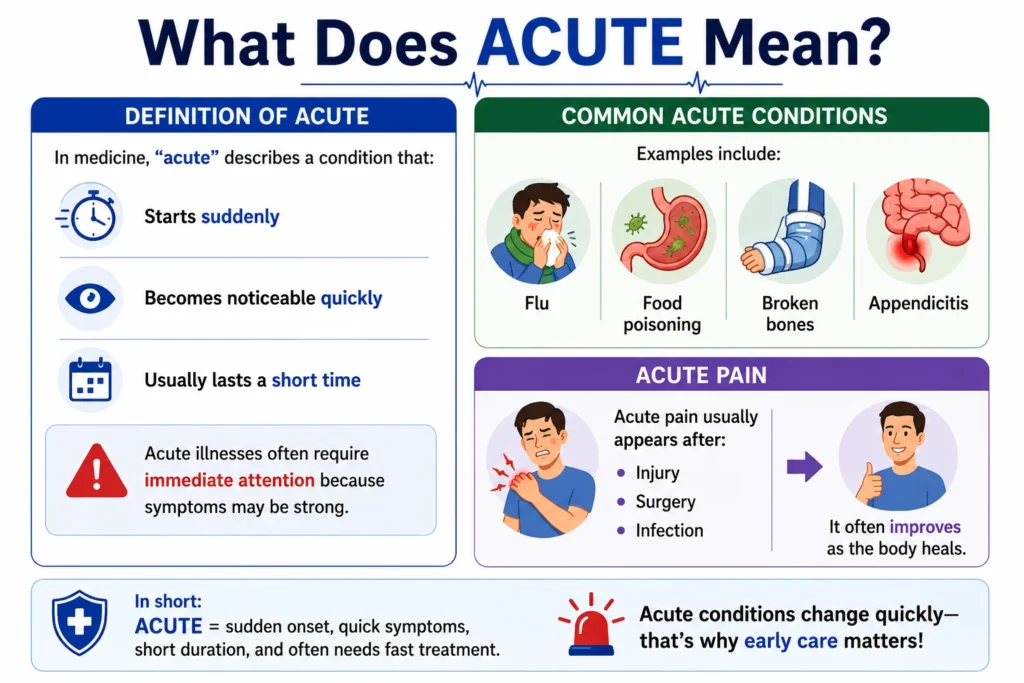
In medicine, “acute” describes a condition that:
- Starts suddenly
- Becomes noticeable quickly
- Usually lasts a short time
Acute illnesses often require immediate attention because symptoms may be strong.
Common Acute Conditions
Examples include:
- Flu
- Food poisoning
- Broken bones
- Appendicitis
Acute Pain
Acute pain usually appears after:
- Injury
- Surgery
- Infection
It often improves as the body heals.
What Does Chronic Mean?
Definition of Chronic
“Chronic” describes a condition that:
- Develops slowly
- Lasts a long time
- May continue permanently
Many chronic diseases require ongoing treatment instead of complete cure.
Common Chronic Conditions
Examples include:
- Diabetes
- Asthma
- Hypertension
- Arthritis
Chronic Pain
Chronic pain lasts longer than expected healing time, often for months or years.
Main Difference Between Acute or Chronic
Duration
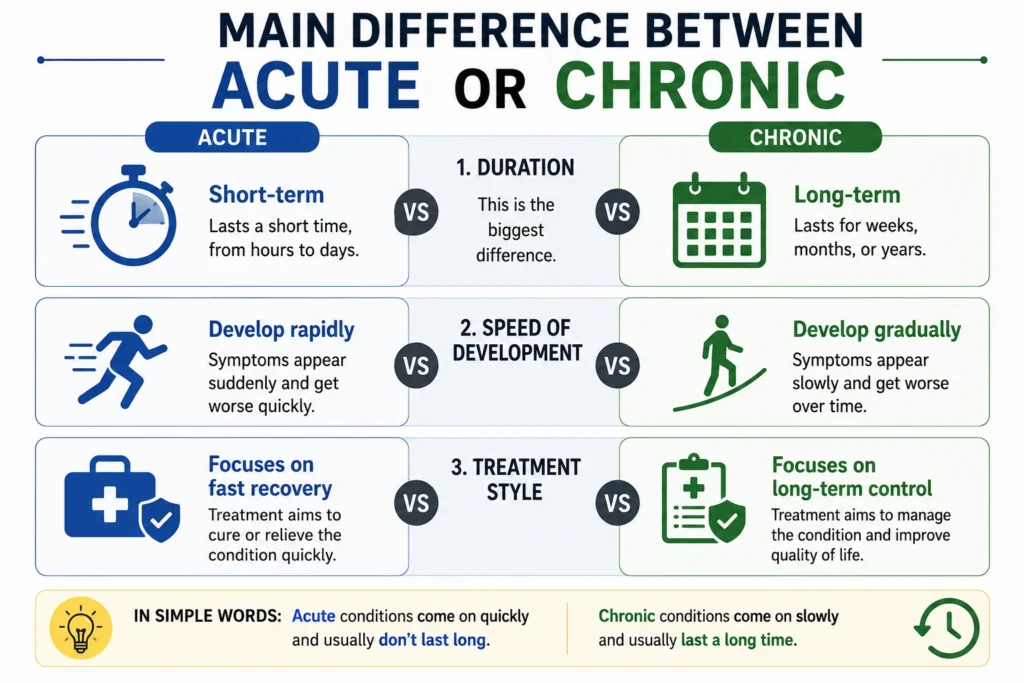
This is the biggest difference.
Acute
- Short-term
Chronic
- Long-term
Speed of Development
Acute Conditions
- Develop rapidly
Chronic Conditions
- Develop gradually
Treatment Style
Acute Treatment
- Focuses on fast recovery
Chronic Treatment
- Focuses on long-term control
Real World Examples
Acute Illness Example
A person catches the flu.
Symptoms:
- Fever
- Body aches
- Fatigue
The illness usually improves within days.
Chronic Disease Example
A patient develops diabetes.
The condition may require:
- Lifelong monitoring
- Medication
- Lifestyle changes
Acute Injury Example
A sprained ankle causes sudden pain and swelling.
Recovery usually occurs within weeks.
Chronic Back Pain Example
Persistent back pain lasting several years is considered chronic.
Symptoms Comparison
| Symptom Pattern | Acute | Chronic |
|---|---|---|
| Sudden Onset | Common | Rare |
| Long Duration | Rare | Common |
| Immediate Intensity | Often high | Variable |
| Recurring Symptoms | Sometimes | Frequently |
Causes of Acute Conditions
Infections
Viruses and bacteria commonly trigger acute illnesses.
Injuries
Accidents can create acute pain and trauma.
Sudden Medical Events
Examples:
- Allergic reactions
- Heart attacks
- Acute infections
Causes of Chronic Conditions
Genetics
Some chronic illnesses run in families.
Lifestyle Factors
Examples:
- Poor diet
- Smoking
- Lack of exercise
Aging
Certain chronic conditions become more common with age.
Treatment Differences
Acute Condition Treatment
Treatment often focuses on:
- Immediate symptom relief
- Short-term medication
- Recovery support
Chronic Condition Treatment
Treatment may include:
- Long-term medication
- Monitoring
- Lifestyle management
Acute vs Chronic Pain
Acute Pain
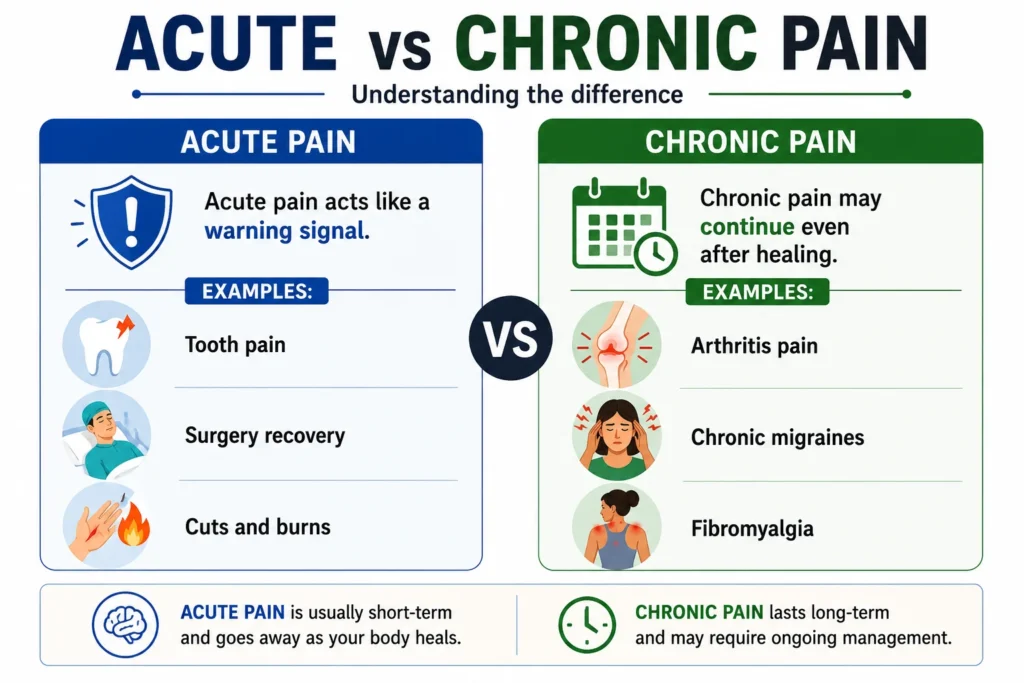
- Acute pain acts like a warning signal.
Examples:
- Tooth pain
- Surgery recovery
- Cuts and burns
Chronic Pain
Chronic pain may continue even after healing.
Examples:
- Arthritis pain
- Chronic migraines
- Fibromyalgia
Advantages of Early Diagnosis
Better Recovery Chances
Acute conditions treated early often heal faster.
Reduced Long-Term Damage
Managing chronic illness early may reduce complications.
Improved Quality of Life
Early care helps patients maintain healthier lifestyles.
Common Mistakes People Make
Ignoring Chronic Symptoms
People often ignore symptoms that slowly worsen over time.
Treating Chronic Conditions Like Temporary Problems
Chronic illnesses usually require long-term management.
Delaying Medical Care
Waiting too long may worsen both acute and chronic conditions.
Misunderstanding Pain Duration
Not all severe pain is chronic. Some acute pain can feel intense but temporary.
Acute and Chronic in Mental Health
Acute Mental Health Episodes
Examples:
- Panic attacks
- Sudden emotional crisis
Chronic Mental Health Conditions
Examples:
- Depression
- Anxiety disorders
Long-term mental health support may be needed.
Related Medical Concepts
Subacute Conditions
Subacute conditions fall between acute and chronic duration.
Chronic Inflammation
Long-term inflammation may contribute to chronic disease.
Acute Infection
An infection that appears suddenly and progresses rapidly.
Exercises With Answers
Exercise 1
Which condition develops suddenly?
Answer: Acute
Exercise 2
Which condition lasts longer?
Answer: Chronic
Exercise 3
Is diabetes acute or chronic?
Answer: Chronic
Exercise 4
Can acute pain improve after healing?
Answer: Yes
Exercise 5
Do chronic conditions usually require long-term management?
Answer: Yes
FAQs
What is the difference between acute or chronic?
Acute conditions appear suddenly and last a short time, while chronic conditions develop slowly and last longer.
Is acute more serious than chronic?
Not always. Some acute conditions are emergencies, while some chronic conditions are manageable for years.
Can an acute condition become chronic?
Yes. Some untreated acute problems may develop into chronic conditions.
How long is a chronic illness?
Chronic illnesses typically last for months, years, or even a lifetime.
Is chronic pain permanent?
Not always, but chronic pain often continues for long periods.
What are examples of acute diseases?
Examples include flu, infections, and sudden injuries.
What are examples of chronic diseases?
Examples include diabetes, asthma, and arthritis.
Can stress cause chronic illness?
Long-term stress may contribute to certain chronic health conditions.
Why is early diagnosis important?
Early treatment may improve recovery and reduce complications.
Can chronic conditions be cured?
Some can be controlled but not fully cured.
Conclusion
Understanding the difference between acute or chronic conditions is important for recognizing symptoms, managing health, and seeking proper treatment.
Acute conditions develop suddenly and usually last a short time. They often require quick treatment and may heal completely. Chronic conditions develop slowly and continue over long periods, often requiring lifelong management and monitoring.
Neither term automatically means more serious. Some acute conditions are medical emergencies, while many chronic illnesses can be managed successfully for years with proper care.
The most important step is paying attention to symptoms and seeking medical advice early. Whether a condition is acute or chronic, early diagnosis and proper treatment can improve recovery, reduce complications, and support better long-term health.
Understanding these medical terms also helps patients communicate more confidently with healthcare professionals and make smarter health decisions.

Kevin Brooks is a grammar specialist at GramBrix.com, dedicated to helping readers understand language rules with clarity and confidence. He simplifies complex grammar concepts through practical examples and easy explanations.