
Last Updated on June 22, 2026
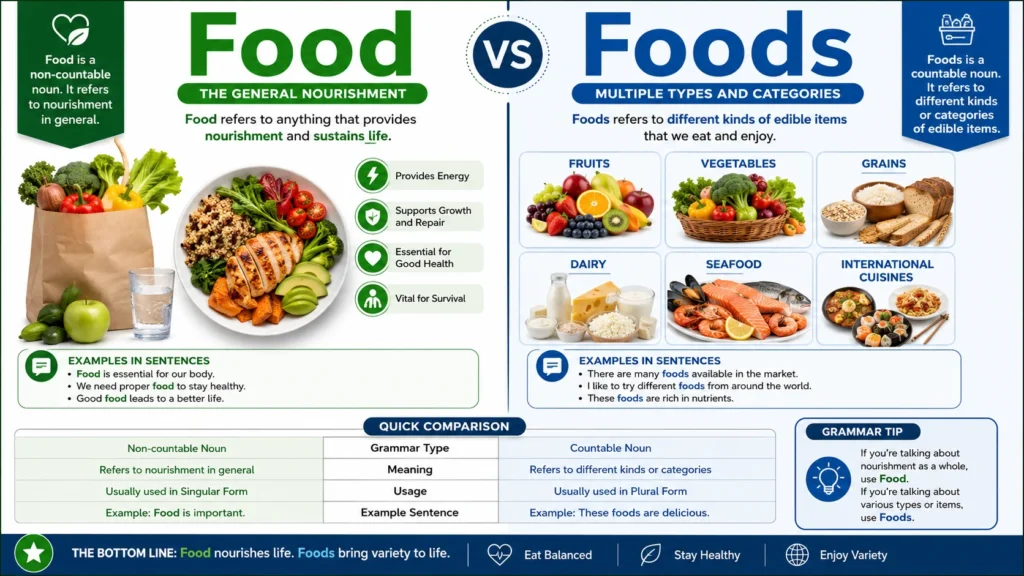
“Food” and “foods” are both correct, but they are used differently. “Food” usually refers to food in a general or uncountable sense, while “foods” refers to different types or categories of food. Understanding the difference helps improve writing, speaking, and professional communication.
Many people use the words “food” and “foods” without thinking about the difference. In daily conversation, both words appear simple. But in English grammar, they have different meanings and uses.
The word “food” usually talks about nourishment in general. For example, people say, “Food is important for health.” The word “foods” is used when speaking about many kinds or groups of food. For example, “Healthy foods include fruits and vegetables.”
This small difference can confuse students, writers, business owners, bloggers, and even English learners. Using the wrong form may make a sentence sound unnatural or unclear.
Learning the difference between “food” and “foods” improves grammar, writing, SEO content, business communication, and daily conversation. It also helps you understand menus, nutrition articles, recipes, and health guides more clearly.
In this complete guide, you will learn definitions, grammar rules, examples, common mistakes, regional usage, comparisons, exercises, and practical tips for using “food” or “foods” correctly.
Quick Answer About Food or Foods
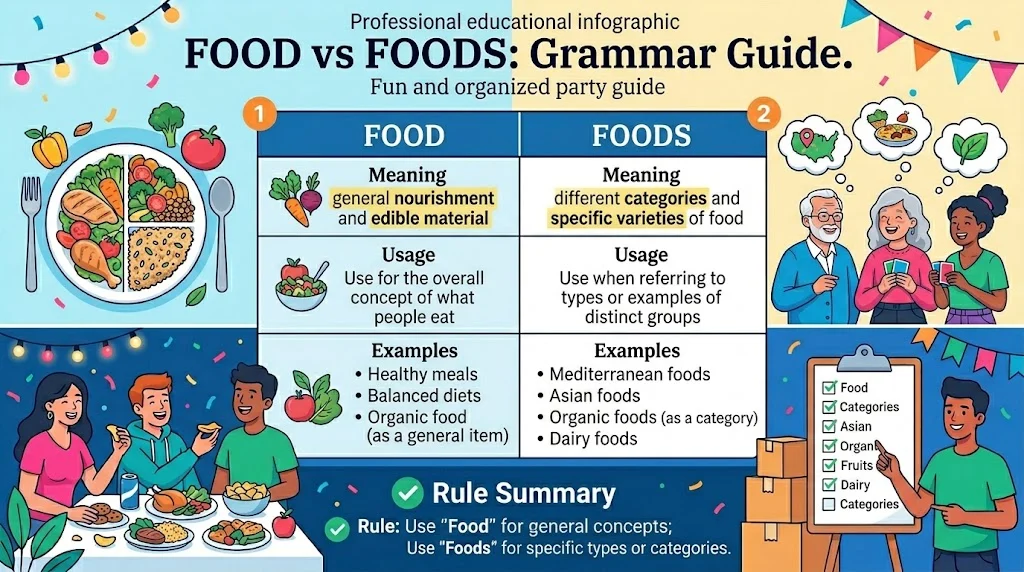
| Word | Meaning | Example |
|---|---|---|
| Food | General nourishment or edible material | Food gives us energy. |
| Foods | Different types or categories of food | Mediterranean foods are popular worldwide. |
Simple Rule
Use food when talking generally.
Use foods when talking about specific varieties or categories.
What Does Food Mean?
“Food” is usually an uncountable noun in English. It refers to anything people or animals eat for energy, nutrition, and survival.
Examples of Food
- Food is necessary for life.
- Good food improves health.
- We bought food for the trip.
- Street food is popular in many countries.
In these examples, “food” refers to nourishment in a broad sense.
Characteristics of Food
- Usually singular
- General meaning
- Uncountable noun
- Refers to nourishment overall
Common Phrases With Food
- Fast food
- Healthy food
- Junk food
- Organic food
- Pet food
- Frozen food
What Does Foods Mean?
“Foods” is the plural form used when discussing different kinds, groups, or categories of food.
Examples of Foods
- Asian foods are famous worldwide.
- Protein rich foods help muscle growth.
- Fermented foods support digestion.
- Plant based foods are becoming more popular.
Here, “foods” points to several types rather than food in general.
Characteristics of Foods
- Plural noun
- Specific categories
- Multiple varieties
- Used in nutrition and culinary discussions
Food vs Foods Explained Simply
Imagine a library.
- “Food” is like saying “books” in a general sense.
- “Foods” is like talking about mystery books, science books, and history books separately.
Another simple example:
- “I need food.” means any nourishment.
- “I enjoy spicy foods.” means several types of spicy dishes.
Why People Confuse Food and Foods
The confusion happens because many nouns in English change meaning slightly when pluralized.
With “food,” the plural form does not simply mean “more food.” Instead, it means different categories or varieties.
Common Reasons for Confusion
- English learners treat all nouns the same way.
- “Food” is usually uncountable.
- Many people hear both forms in media.
- Regional speaking habits vary.
- Nutrition articles often use “foods.”
Grammar Rules for Food and Foods
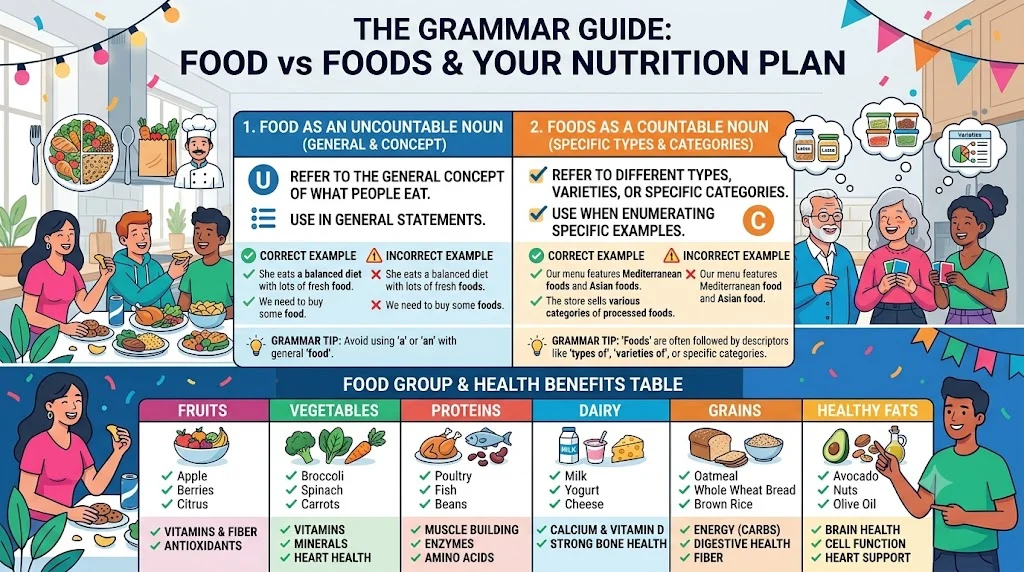
Food as an Uncountable Noun
When used generally, “food” is uncountable.
Correct Examples
- Food is expensive nowadays.
- We need food and water.
- Healthy food improves energy.
Incorrect Examples
- Foods is expensive.
- I need many foods for dinner.
Foods as a Countable Noun
Use “foods” for categories or varieties.
Correct Examples
- Italian foods are delicious.
- Processed foods may contain preservatives.
- Traditional foods reflect culture.
Types of Foods
Different foods support different body functions. Nutrition experts often divide foods into groups.
| Food Group | Examples | Main Benefit |
|---|---|---|
| Fruits | Apples, bananas | Vitamins |
| Vegetables | Spinach, carrots | Minerals |
| Proteins | Chicken, beans | Muscle repair |
| Dairy | Milk, cheese | Calcium |
| Grains | Rice, bread | Energy |
| Healthy fats | Nuts, olive oil | Brain health |
Real World Examples of Food and Foods
In Restaurants
Restaurants usually use “food” generally.
Examples:
- The food here is excellent.
- Thai food is spicy.
But menus or nutrition guides may use “foods.”
Examples:
- Gluten free foods
- Seafood foods
- Organic foods
In Healthcare
Doctors and nutritionists commonly use “foods.”
Examples:
- High fiber foods improve digestion.
- Sugary foods can increase weight gain.
In Education
Teachers often explain grammar differences.
Examples:
- Food keeps us alive.
- Different foods provide different nutrients.
Food in Nutrition Science
In nutrition, “foods” is common because experts discuss categories and nutritional value.
Nutrient Dense Foods
These foods contain high nutrition with fewer calories.
Examples:
- Leafy greens
- Eggs
- Fish
- Nuts
Processed Foods
Processed foods are changed from their natural state.
Examples:
- Chips
- Frozen meals
- Soft drinks
Functional Foods
These foods provide additional health benefits.
Examples:
- Yogurt with probiotics
- Oats
- Green tea
Global Usage of Food and Foods
English speaking countries generally follow the same grammar rules, but usage frequency changes.
American English
Americans often say:
- Comfort food
- Organic foods
- Fast food industry
British English
British English also uses both forms similarly.
Examples:
- Frozen foods section
- Food waste reduction
Asian English Usage
In some Asian countries, learners may overuse “foods” because of translation patterns.
Incorrect:
- I like many food.
Correct:
- I like many foods.
- I like food.
Cultural Importance of Food
Food is more than nutrition. It connects people through culture, religion, celebrations, and tradition.
Food and Family
Many families gather around food during celebrations.
Examples:
- Eid meals
- Thanksgiving dinner
- Wedding feasts
Traditional Foods Around the World
| Country | Traditional Food |
|---|---|
| Pakistan | Biryani |
| Italy | Pasta |
| Japan | Sushi |
| Mexico | Tacos |
| India | Curry |
| Turkey | Kebab |
Healthy Food vs Unhealthy Foods
This comparison helps explain the grammar difference naturally.
| Healthy Food | Unhealthy Foods |
|---|---|
| General concept | Specific categories |
| Supports wellness | Often high in sugar or fat |
| Includes balanced meals | Includes chips, soda, candy |
| Improves energy | May reduce health quality |
Notice how “food” refers generally while “foods” identifies categories.
Advantages of Understanding Food or Foods
Better Grammar
Correct usage improves writing quality.
Professional Communication
Business documents sound clearer and more polished.
Better SEO Writing
Content writers rank better when using natural language correctly.
Stronger Academic Writing
Students avoid grammar mistakes in essays and reports.
Improved Speaking Skills
Conversations sound more fluent and natural.
Disadvantages of Incorrect Usage
Confusing Sentences
Wrong grammar may confuse readers.
Reduced Professionalism
Errors may affect business communication.
Poor Academic Performance
Grammar mistakes can lower grades.
Weak SEO Content
Search engines prefer clear and natural language.
Food Industry Terminology
The food industry uses both terms regularly.
Food Industry
General term for businesses related to edible products.
Packaged Foods
Specific category of prepared items.
Frozen Foods
Products preserved by freezing.
Organic Foods
Foods grown with limited chemicals.
Food Safety and Hygiene
Food safety is important worldwide.
Safe Food Practices
- Wash hands before cooking
- Store food properly
- Cook meat thoroughly
- Avoid expired foods
Foods That Spoil Quickly
- Seafood
- Dairy products
- Cooked rice
- Fresh meat
Common Mistakes With Food and Foods
Mistake One
Incorrect:
- Foods is necessary for life.
Correct:
- Food is necessary for life.
Mistake Two
Incorrect:
- I enjoy Italian foodS very much.
Correct:
- I enjoy Italian food very much.
or
- I enjoy Italian foods very much.
Both can work depending on meaning.
Mistake Three
Incorrect:
- There are much foods here.
Correct:
- There is much food here.
or
- There are many foods here.
Food or Foods in Business Writing
Companies use these words carefully in branding and advertising.
Examples
- Healthy food products
- Natural foods market
- Food delivery service
- International foods aisle
Food in Digital Marketing and SEO
Food blogs and recipe websites rely on proper keyword usage.
SEO Examples
Broad Keyword
- Healthy food
Category Keyword
- High protein foods
- Vegan foods
- Fermented foods
Using the correct form improves search relevance.
Food Categories Explained
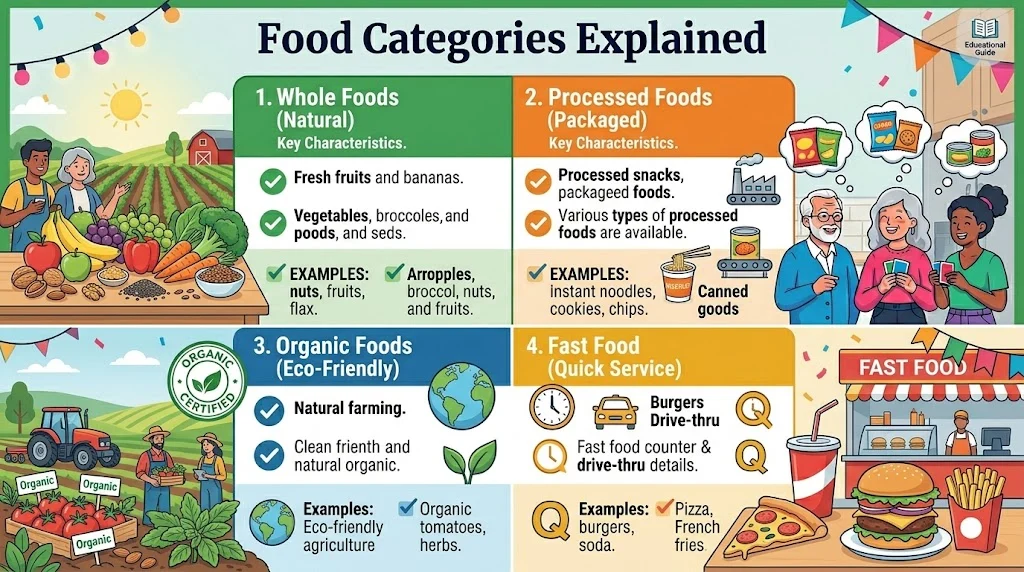
Whole Foods
Foods close to their natural state.
Examples:
- Fruits
- Vegetables
- Seeds
Processed Foods
Modified during manufacturing.
Examples:
- Packaged snacks
- Instant noodles
Organic Foods
Produced with natural farming methods.
Fast Food
Quickly prepared meals.
Examples:
- Burgers
- Pizza
- Fries
Countable vs Uncountable Nouns
Understanding this grammar rule helps explain food vs foods.
| Uncountable | Countable |
|---|---|
| Water | Bottles |
| Rice | Grains |
| Food | Foods |
Key Idea
Uncountable nouns refer to general substances.
Countable nouns refer to separate items or categories.
Food in Academic Writing
Researchers often use “foods” when classifying items.
Example:
- Fermented foods improve gut health.
But they use “food” for broader concepts.
Example:
- Food security is a global challenge.
Food Security and Global Issues
Food security means people have enough safe nutrition.
Challenges
- Climate change
- Poverty
- War
- Supply chain problems
Solutions
- Sustainable farming
- Better storage systems
- Reduced food waste
Food Waste Around the World
Millions of tons of food are wasted yearly.
Common Causes
- Overbuying
- Poor storage
- Restaurant waste
- Transportation issues
How to Reduce Food Waste
- Plan meals
- Freeze leftovers
- Donate extra food
- Buy responsibly
Idioms and Expressions With Food
English includes many food related expressions.
| Expression | Meaning |
|---|---|
| Food for thought | Something to consider |
| Soul food | Comforting traditional food |
| Fast food culture | Lifestyle focused on convenience |
| Finger food | Small snacks eaten by hand |
Related Concepts and Comparisons
Food vs Meal
| Food | Meal |
|---|---|
| General nourishment | Specific eating occasion |
| Broad term | Structured serving |
| Example: rice | Example: dinner |
Food vs Dish
| Food | Dish |
|---|---|
| General term | Specific prepared item |
| Example: vegetables | Example: vegetable curry |
Foods vs Ingredients
| Foods | Ingredients |
|---|---|
| Final edible categories | Components used in cooking |
| Example: dairy foods | Example: milk |
Beginner Guide to Using Food Correctly
Use Food When
- Speaking generally
- Discussing nutrition overall
- Talking about survival or health
Examples:
- Food prices increased.
- Healthy food matters.
Use Foods When
- Talking about categories
- Comparing types
- Listing varieties
Examples:
- Fermented foods help digestion.
- Mediterranean foods are popular.
Advanced Understanding of Food and Foods
Advanced English users notice subtle meaning changes.
Food as an Abstract Concept
Example:
- Food connects culture and identity.
Foods as Scientific Classification
Example:
- Functional foods may improve immunity.
Examples in Sentences
Food Sentences
- Food keeps the body healthy.
- Good food improves mood.
- Street food attracts tourists.
Foods Sentences
- Citrus foods contain vitamin C.
- Traditional foods vary by region.
- High calorie foods may increase weight.
Exercises With Answers
Exercise One
Choose the correct word.
- Healthy _____ improves energy.
- Spicy _____ are popular in Thailand.
- We bought enough _____ for the picnic.
- Fermented _____ support digestion.
Answers
- food
- foods
- food
- foods
Exercise Two
Correct the sentence.
- Foods is important for survival.
- I love Italian foodS.
- There are much foods in the fridge.
Answers
- Food is important for survival.
- I love Italian food.
- There are many foods in the fridge.
Exercise Three
Fill in the blank.
- Junk _____ may harm health.
- Organic _____ are expensive.
- The _____ at the restaurant was excellent.
Answers
- food
- foods
- food
Food Trends in Modern Society
Plant Based Foods
Many people now prefer vegetarian and vegan diets.
Functional Foods
Foods with health benefits are increasing in popularity.
Sustainable Food Production
Consumers want environmentally friendly food systems.
Online Food Delivery
Digital apps changed how people buy food.
Technology and Food
Technology affects agriculture, cooking, and food delivery.
Smart Farming
Farmers use sensors and data tools.
Food Delivery Apps
Apps make ordering food easier.
Artificial Intelligence in Food Industry
AI helps predict demand and reduce waste.
Food and Health Connection
Food strongly affects physical and mental health.
Benefits of Healthy Food
- Better energy
- Stronger immunity
- Improved focus
- Better sleep
Risks of Poor Food Choices
- Obesity
- Diabetes
- Heart disease
Food in Schools and Education
Schools teach children healthy eating habits.
Healthy School Foods
- Fruits
- Milk
- Whole grains
Unhealthy School Foods
- Sugary snacks
- Fried items
- Soft drinks
Food in Media and Advertising
Advertising influences food choices.
Common Marketing Strategies
- Bright packaging
- Celebrity endorsements
- Health claims
Social Media Food Trends
- Viral recipes
- Food photography
- Restaurant reviews
Food and Culture
Food represents identity and tradition.
Religious Food Practices
Different religions follow food rules.
Examples:
- Halal food
- Kosher food
- Vegetarian diets
Festival Foods
Special foods appear during celebrations.
Environmental Impact of Foods
Different foods affect the environment differently.
| Food Type | Environmental Impact |
|---|---|
| Beef | High |
| Vegetables | Lower |
| Processed foods | Moderate to high |
| Local foods | Usually lower |
Professional Tips for Correct Usage
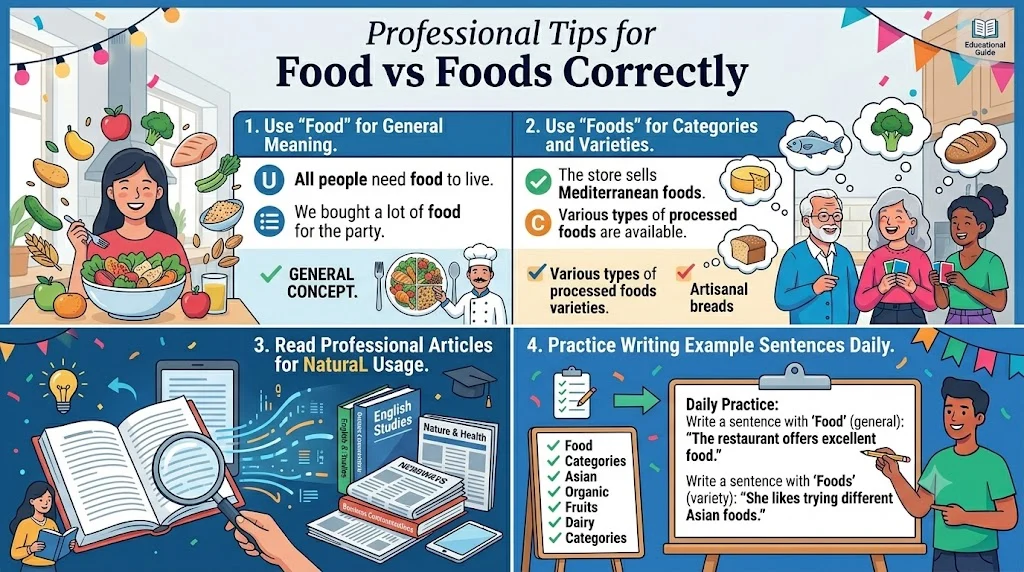
Tip One
Use “food” for general meaning.
Tip Two
Use “foods” for categories and varieties.
Tip Three
Read professional articles to observe natural usage.
Tip Four
Practice writing example sentences daily.
FAQs
What is the difference between food and foods?
“Food” refers to nourishment generally, while “foods” refers to different kinds or categories of edible items.
Is food singular or plural?
“Food” is usually an uncountable singular noun in English grammar.
When should I use foods instead of food?
Use “foods” when discussing multiple types, groups, or categories of food.
Can I say healthy foods?
Yes. “Healthy foods” is correct because it refers to different healthy food categories.
Why do nutritionists use the word foods?
Nutrition experts classify food types, so they often discuss foods such as proteins, grains, and vegetables.
Is fast food countable or uncountable?
“Fast food” is usually uncountable when discussed generally.
Which is correct: food is or foods are?
Both are correct depending on context:
- Food is important.
- Healthy foods are beneficial.
Can foods refer to cuisines?
Yes. “Foods” can describe cuisines or food categories, such as Asian foods or Mexican foods.
Is food a common noun?
Yes. “Food” is a common noun used in everyday English.
How can I avoid mistakes with food or foods?
Remember this rule:
- General meaning = food
- Types or categories = foods
Conclusion
Understanding the difference between “food” and “foods” is important for clear English communication. Although the two words look similar, they serve different purposes. “Food” usually refers to nourishment in a general sense, while “foods” refers to different types or categories of edible items.
Using the correct form improves grammar, academic writing, professional communication, SEO content, and everyday conversation. It also helps readers understand your meaning more clearly. In nutrition, healthcare, education, and the food industry, choosing the right word creates more precise communication.
A simple way to remember the rule is this: use “food” when speaking broadly and use “foods” when discussing varieties or groups. Practice writing and speaking with both forms regularly to build confidence.
Whether you are a student, writer, teacher, blogger, or business professional, mastering “food or foods” will strengthen your English skills and make your communication more natural and effective.

Victoria Lane is a grammar-focused writer at GramBrix.com, passionate about helping readers master the rules of language. She provides clear explanations and practical examples that make writing more accurate, polished and confident.