
Last Updated on July 16, 2026
| Term | Meaning |
|---|---|
| Cathartic | Providing emotional release, relief, or purification after expressing strong feelings. |
| Common Contexts | Psychology, therapy, conversations, art, music, writing, and personal experiences. |
| Emotional Tone | Reflective, healing, relieving, and emotionally freeing. |
| Example | “Crying after a difficult week felt incredibly cathartic.” |
Have you ever cried after holding in emotions for a long time and suddenly felt lighter afterward? Or perhaps you talked about a painful experience and experienced an unexpected sense of relief. If so, you’ve likely experienced something cathartic.
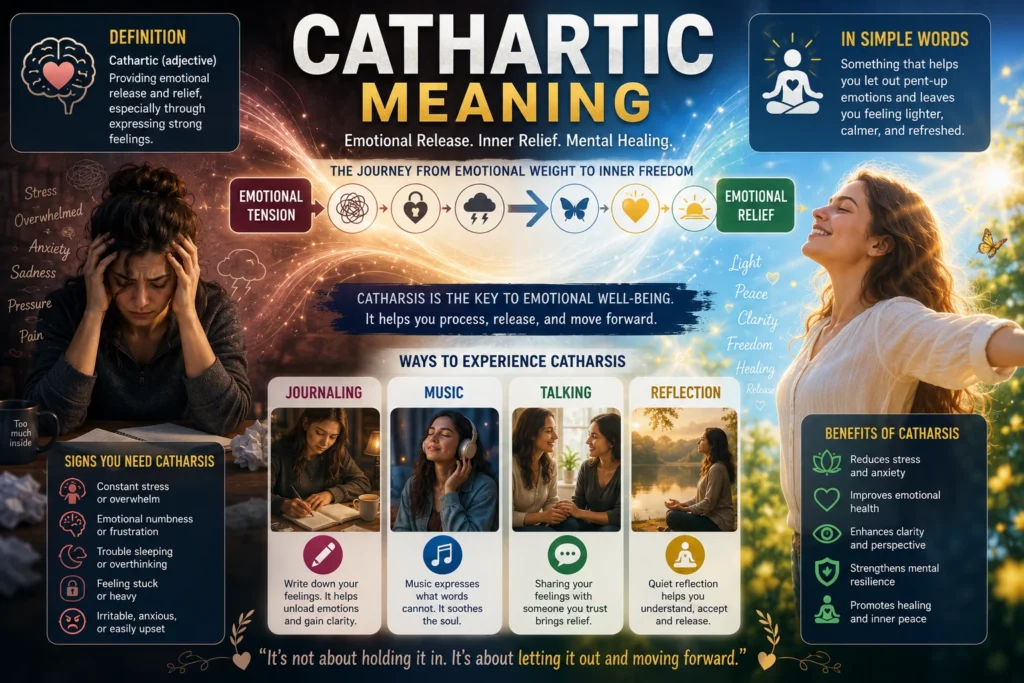
The phrase cathartic meaning refers to an experience, activity, conversation, or emotional release that helps a person let go of intense feelings and achieve emotional relief. People often describe crying, journaling, therapy sessions, heartfelt conversations, music, movies, and creative activities as cathartic because they help process emotions in a healthy way.
Today, the word appears frequently in psychology, mental health discussions, social media posts, entertainment reviews, and everyday conversations. Moreover, understanding this term can help you better recognize emotional healing experiences and communicate your feelings more effectively.
In this comprehensive guide, you’ll learn the full meaning of cathartic, its psychological roots, practical examples, platform-specific usage, related terms, common misconceptions, and much more.
Quick Answer Box
| Element | Explanation |
|---|---|
| Meaning | Providing emotional release or relief after expressing strong emotions |
| Context | Psychology, therapy, grief, stress relief, art, music, conversations |
| Usage | Used to describe experiences that help release emotional tension |
| Platforms | TikTok, Instagram, Reddit, YouTube, therapy discussions |
| Example | “Writing about my experience was incredibly cathartic.” |
| Tone | Emotional, reflective, healing, positive |
What Does It Mean?
The word cathartic describes something that helps release strong emotions and creates a sense of emotional relief afterward.
A cathartic experience often involves:
- Releasing pent-up emotions
- Processing difficult feelings
- Letting go of emotional tension
- Achieving emotional clarity
- Feeling lighter after expression
For example:
“After talking with her best friend for two hours, she felt cathartic relief.”
In this case, expressing emotions helped reduce emotional stress.
People often use the term when discussing sadness, grief, frustration, anxiety, heartbreak, or even overwhelming happiness.
Full Definition
A cathartic experience is one that produces emotional cleansing, emotional release, or psychological relief.
The word comes from the concept of catharsis, which refers to the process of releasing intense emotions.
A cathartic event may involve:
- Crying
- Talking openly
- Therapy sessions
- Creative expression
- Writing
- Meditation
- Listening to music
- Watching emotional films
- Sharing personal experiences
Unlike simple distraction, catharsis involves actively processing emotions rather than avoiding them.
Therefore, cathartic experiences often leave people feeling calmer, clearer, and emotionally refreshed.
Context & Usage
The word appears across many situations.
Emotional Context
People often use cathartic when discussing emotional healing.
Example:
“Finally expressing my feelings was cathartic.”
Mental Health Context
Therapists frequently discuss cathartic moments during counseling.
Example:
“The therapy session helped create a cathartic breakthrough.”
Creative Context
Artists often describe creating work as cathartic.
Example:
“Painting helped me process my emotions in a cathartic way.”
Relationship Context
Honest conversations can feel cathartic.
Example:
“Our conversation gave us closure and felt deeply cathartic.”
Personal Growth Context
Many people experience catharsis after overcoming challenges.
Example:
“Finishing that difficult chapter of my life felt cathartic.”
Real-Life Examples
Cathartic experiences happen every day.
Conversation Example 1
Friend 1: “How are you feeling after the breakup?”
Friend 2: “Honestly, crying about it was cathartic.”
Conversation Example 2
Coworker: “Did talking to your manager help?”
Employee: “Yes, it was surprisingly cathartic.”
Conversation Example 3
Friend: “Why did you write that long journal entry?”
Friend 2: “Because writing everything down felt cathartic.”
Conversation Example 4
Sibling: “How was therapy today?”
Sibling 2: “Very cathartic. I finally discussed things I’d avoided.”
Conversation Example 5
Friend: “Why do you keep listening to that song?”
Friend 2: “Because it’s emotional and cathartic.”
Platform-Specific Meaning
The meaning remains consistent across platforms, although usage varies slightly.
TikTok
TikTok users often describe emotional videos as cathartic.
Examples include:
- Personal healing journeys
- Emotional storytelling
- Mental health content
- Recovery experiences
Example:
“Watching her recovery story was cathartic.”
Instagram users frequently use the word in captions.
Example:
“Spent the weekend journaling and reflecting. It was incredibly cathartic.”
Reddit communities often discuss emotional experiences.
Users commonly describe sharing personal stories as cathartic.
Example:
“Posting my experience here felt cathartic.”
YouTube
YouTube creators use the word when reviewing emotional content.
Example:
“The ending of that documentary was deeply cathartic.”
Podcasts
Mental health and self-improvement podcasts frequently discuss cathartic breakthroughs and healing experiences.
Alternative Meanings
Although emotional release remains the primary meaning, the term appears in related contexts.
Psychological Meaning
In psychology, cathartic refers to releasing suppressed emotions.
Literary Meaning
In literature, readers experience catharsis through emotional engagement with characters.
Artistic Meaning
Art can provide cathartic emotional expression.
Therapeutic Meaning
Therapists often encourage healthy emotional processing that leads to catharsis.
Spiritual Meaning
Some people describe meditation, prayer, or reflection as cathartic experiences.
The Psychology Behind Catharsis
Understanding the psychology helps explain why cathartic experiences feel powerful.
Emotional Release
People often suppress emotions.
Eventually, those emotions build internal tension.
Cathartic experiences help release that pressure.
Emotional Processing
Healthy processing helps individuals understand their feelings.
Consequently, emotional confusion often decreases.
Stress Reduction
Expressing emotions can reduce mental strain.
Therefore, many people report feeling calmer afterward.
Self-Awareness
Catharsis frequently increases emotional understanding.
As a result, individuals gain greater clarity.
Emotional Recovery
Although catharsis doesn’t solve every problem, it often supports healing and resilience.
Related Terms / NLP Variations
Many words share similar meanings.
Emotional Release
A direct expression of feelings.
Healing
Recovery from emotional pain.
Relief
A reduction in emotional burden.
Cleansing
An emotional reset or release.
Therapeutic
Beneficial for emotional well-being.
Expressive
Openly communicating thoughts and feelings.
Liberating
Creating a sense of emotional freedom.
Restorative
Helping emotional recovery.
Reflective
Encouraging thoughtful emotional processing.
Releasing
Letting go of emotional tension.
How to Respond / Reply
When someone describes an experience as cathartic, several responses work naturally.
Acknowledge Their Experience
Example:
“I’m glad that helped you feel better.”
Show Empathy
Example:
“That sounds like an important step.”
Encourage Reflection
Example:
“What part felt most cathartic for you?”
Offer Support
Example:
“I’m happy you found a healthy outlet.”
Validate Their Feelings
Example:
“Sometimes expressing emotions really helps.”
Misinterpretations
Many people misunderstand the term.
Mistake 1: Cathartic Means Happy
Not necessarily.
A cathartic experience may involve sadness, grief, anger, or pain.
The relief comes afterward.
Mistake 2: Crying Is Always Cathartic
Sometimes crying helps.
However, not every emotional expression creates relief.
Mistake 3: Catharsis Solves Problems
Catharsis can help emotionally.
However, practical problems may still require action.
Mistake 4: Only Therapy Creates Catharsis
Many activities can be cathartic.
Examples include music, exercise, art, and conversations.
Mistake 5: Catharsis Is Weakness
In reality, emotional expression often demonstrates self-awareness and emotional intelligence.
When NOT to Use It
Avoid using the word incorrectly.
When No Emotional Release Occurs
A fun activity isn’t automatically cathartic.
The experience should involve emotional relief.
When Describing Pure Entertainment
Entertainment can be enjoyable without being cathartic.
When Referring Only to Relaxation
Relaxation differs from emotional release.
When Discussing Routine Activities
Daily tasks may reduce stress but not necessarily create catharsis.
When Emotional Processing Is Absent
Catharsis usually involves confronting emotions rather than avoiding them.
Usage Tips
These tips help you use the word naturally.
Focus on Emotional Relief
The key element is emotional release.
Consider Context
The word often appears in emotional or reflective discussions.
Use It Authentically
Reserve the term for meaningful experiences.
Connect It to Feelings
Explain what emotions were released.
Recognize Different Forms
Catharsis can occur through:
- Talking
- Writing
- Music
- Therapy
- Exercise
- Creativity
- Reflection
- Meditation
Cathartic Experiences in Everyday Life
Many common activities can become cathartic.
Journaling
Writing thoughts helps organize emotions.
Therefore, many people experience relief after journaling.
Listening to Music
Music often triggers emotional processing.
Consequently, certain songs feel deeply cathartic.
Exercise
Physical movement can release stress and emotional tension.
Meaningful Conversations
Honest discussions frequently provide emotional clarity.
Creative Activities
Painting, writing, photography, and crafting often help people process emotions.
Watching Movies
Emotionally powerful films sometimes create cathartic experiences.
Reading Books
Stories can help readers connect with emotions and gain perspective.
Cathartic vs Similar Terms
| Term | Meaning | Difference |
|---|---|---|
| Cathartic | Emotional release and relief | Focuses on processing emotions |
| Relaxing | Creates calmness | Doesn’t necessarily involve emotional release |
| Therapeutic | Promotes well-being | Broader than cathartic |
| Healing | Supports recovery | Often longer-term |
| Liberating | Creates freedom | May not involve emotional processing |
| Comforting | Provides reassurance | Doesn’t always release emotions |
Why People Seek Cathartic Experiences
Humans naturally seek emotional balance.
Stress Management
People need healthy outlets for emotions.
Emotional Understanding
Catharsis helps clarify feelings.
Personal Growth
Processing emotions often leads to self-discovery.
Relationship Improvement
Open communication can strengthen connections.
Mental Wellness
Healthy emotional expression supports psychological well-being.
FAQs
What is the simple meaning of cathartic?
Cathartic means providing emotional release and relief after expressing strong feelings.
Is cathartic a positive word?
Generally, yes. It usually describes a beneficial emotional experience.
Can crying be cathartic?
Yes. Many people feel emotional relief after crying.
What is a cathartic experience?
Any experience that helps release emotions and reduce emotional tension.
Is therapy cathartic?
Often, yes. Therapy can create opportunities for emotional expression and healing.
Can music be cathartic?
Absolutely. Music frequently helps people process emotions.
Is cathartic the same as therapeutic?
Not exactly. Cathartic focuses on emotional release, while therapeutic has a broader meaning.
Can happy experiences be cathartic?
Yes. Although people often associate catharsis with sadness, joyful emotional releases can also feel cathartic.
Why do people describe movies as cathartic?
Emotional stories often help viewers process feelings and gain perspective.
What is the difference between catharsis and cathartic?
Catharsis is the emotional release itself. Cathartic describes something that produces that release.
Conclusion
The cathartic meaning centers on emotional release, healing, and relief. A cathartic experience helps people process strong feelings and reduce emotional tension. Whether it happens through therapy, music, writing, exercise, art, conversation, or personal reflection, catharsis often leaves individuals feeling lighter and more emotionally balanced.
Moreover, understanding this term helps explain why certain experiences feel so powerful. Cathartic moments do more than simply distract us from emotions. Instead, they help us confront, process, and release those feelings in healthy ways. As a result, they often support emotional growth, resilience, and overall well-being.

Victoria Lane is a grammar-focused writer at GramBrix.com, passionate about helping readers master the rules of language. She provides clear explanations and practical examples that make writing more accurate, polished and confident.