Last Updated on August 17, 2026
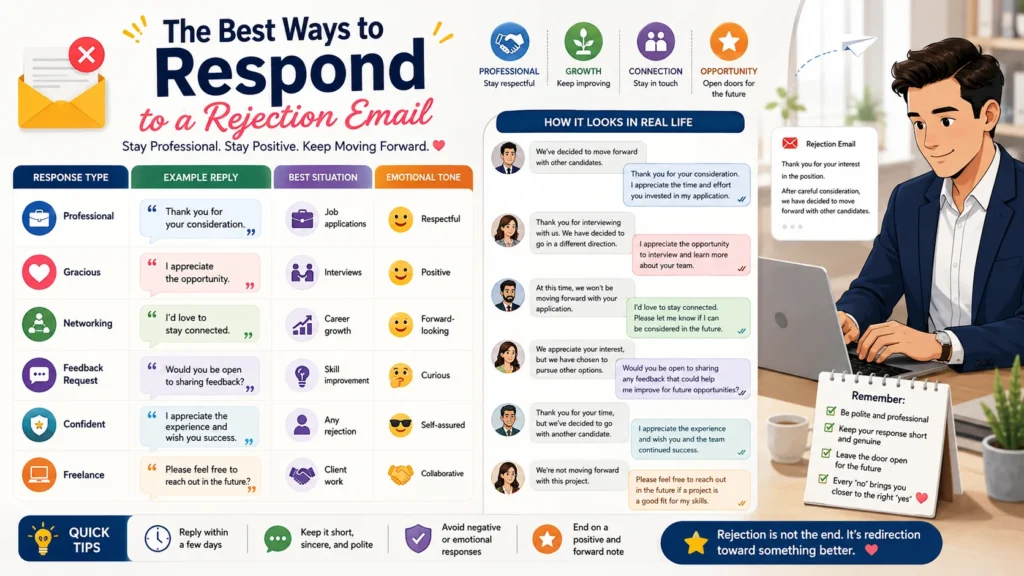
If you’re wondering how to respond to a rejection email, the best approach is to stay professional, polite, and appreciative. Thank the sender for their time, express gratitude for the opportunity, and keep the door open for future possibilities. Great short replies include: “Thank you for letting me know,” “I appreciate the opportunity,” “Thanks for your consideration,” “I wish your team continued success,” “Please keep me in mind for future openings.”
You open your inbox, see a new message, and instantly feel hopeful.
Then you read it.
“We appreciate your interest, but we’ve decided to move forward with another candidate.”
Whether it’s a job application, internship, scholarship, freelance project, college admission, or business opportunity, rejection emails can sting. Many people either ignore them completely or send an emotional response they later regret.
The truth is that your reply matters more than you think.
A thoughtful response can leave a positive impression, strengthen your professional reputation, and even create future opportunities. In some cases, today’s rejection can become tomorrow’s offer.
This guide will show you exactly how to respond to a rejection email based on your situation, personality, and goals, with practical examples you can use immediately.
Professional Responses to a Rejection Email
Thank You for Letting Me Know
Best used when:
You want a simple, respectful response.
Meaning:
This reply shows maturity and professionalism. It acknowledges the decision without creating awkwardness.
I Appreciate the Opportunity to Interview
Best used when:
You completed interviews and want to leave a positive impression.
Meaning:
It communicates gratitude while recognizing the time both sides invested in the process.
Thank You for Your Consideration
Best used when:
You need a universally appropriate response.
Meaning:
This is one of the safest and most professional replies in almost any rejection scenario.
I Wish Your Team Continued Success
Best used when:
You genuinely respect the organization.
Meaning:
It demonstrates professionalism and goodwill rather than disappointment.
Please Keep Me in Mind for Future Opportunities
Best used when:
You still want to work with the company later.
Meaning:
This keeps the relationship open and signals continued interest.
Gracious Responses That Leave a Good Impression
I Appreciate the Update
Best used when:
You want to acknowledge the decision respectfully.
Meaning:
It shows emotional maturity and avoids sounding defensive.
Thank You for the Transparency
Best used when:
The employer provided clear communication.
Meaning:
People appreciate appreciation. This response reinforces positive communication.
I Learned a Lot Through the Process
Best used when:
You participated in multiple interviews.
Meaning:
It shows growth and a positive mindset.
Thank You for Your Time and Effort
Best used when:
Several people were involved in evaluating you.
Meaning:
This acknowledges the work behind the hiring process.
I Value the Experience
Best used when:
You want to emphasize personal development.
Meaning:
Employers often remember candidates who respond with grace.
Responses When You Want Feedback
Would You Be Open to Sharing Feedback?
Best used when:
You genuinely want to improve.
Meaning:
This signals a growth-oriented attitude.
Any Insights Would Be Greatly Appreciated
Best used when:
You want feedback without sounding demanding.
Meaning:
It invites advice while respecting the other person’s time.
I’d Love to Learn How I Can Improve
Best used when:
You’re early in your career.
Meaning:
Employers often respond positively to candidates seeking growth.
If Possible, Could You Share Areas for Development?
Best used when:
You want constructive feedback.
Meaning:
The wording feels professional rather than emotional.
Thank You in Advance for Any Guidance
Best used when:
You’re requesting feedback politely.
Meaning:
This creates a cooperative tone.
Confident Responses After Rejection
Thank You for the Opportunity and Best Wishes
Best used when:
You want confidence without bitterness.
Meaning:
It demonstrates self-respect and professionalism.
I Appreciate the Experience and Will Continue Growing
Best used when:
You want to project resilience.
Meaning:
This communicates confidence in your future.
Thank You for Considering My Application
Best used when:
You want a clean, polished response.
Meaning:
It reflects maturity and professionalism.
I Respect the Decision and Wish You Success
Best used when:
You disagree but want to remain courteous.
Meaning:
It shows emotional intelligence.
I Hope Our Paths Cross Again
Best used when:
You want to maintain a future connection.
Meaning:
This sounds optimistic and professional.
Friendly and Warm Responses
Thanks for the Update
Best used when:
The conversation felt informal.
Meaning:
A friendly, modern response that still remains respectful.
I Really Appreciate the Opportunity
Best used when:
You want warmth without being overly formal.
Meaning:
It communicates genuine gratitude.
It Was Great Meeting Everyone
Best used when:
You interviewed with multiple team members.
Meaning:
People remember positive interactions.
Thanks for Keeping Me Informed
Best used when:
The company communicated promptly.
Meaning:
It acknowledges professional courtesy.
Wishing You and the Team All the Best
Best used when:
You want a warm ending.
Meaning:
It leaves the relationship on a positive note.
Short Responses for Busy Professionals
Thank You for the Update
Best used when:
You want brevity.
Meaning:
Simple, direct, and professional.
I Appreciate Your Time
Best used when:
You prefer concise communication.
Meaning:
Shows respect with minimal wording.
Thank You for Considering Me
Best used when:
You need a quick response.
Meaning:
Professional and effective.
Best Wishes Moving Forward
Best used when:
You want a clean closing.
Meaning:
Positive without unnecessary detail.
Thanks Again for the Opportunity
Best used when:
You want a brief but warm reply.
Meaning:
Expresses appreciation efficiently.
Responses After a Job Interview Rejection
It Was a Pleasure Speaking With Your Team
Best used when:
You completed multiple interviews.
Meaning:
Shows appreciation for the interaction itself.
Thank You for the Insight Into Your Organization
Best used when:
You learned about the company during interviews.
Meaning:
Highlights the value you gained.
I Appreciated Learning More About the Role
Best used when:
You want to emphasize interest.
Meaning:
Keeps the tone positive and professional.
Thank You for the Professional Process
Best used when:
The hiring experience was positive.
Meaning:
Employers appreciate recognition.
I Hope to Stay Connected
Best used when:
Networking remains valuable.
Meaning:
Keeps future communication possible.
Responses for Internship Rejections
Thank You for Reviewing My Application
Best used when:
You applied for internships or entry-level opportunities.
Meaning:
Professional and respectful.
I Appreciate the Opportunity to Be Considered
Best used when:
You want a polished response.
Meaning:
Shows gratitude despite disappointment.
I Wish the Team a Successful Season Ahead
Best used when:
The organization has ongoing projects.
Meaning:
Demonstrates goodwill.
Thank You for Your Encouragement
Best used when:
The rejection email was supportive.
Meaning:
Acknowledges positive communication.
I Look Forward to Future Opportunities
Best used when:
You hope to apply again later.
Meaning:
Keeps the relationship open.
Networking-Friendly Responses
I’d Love to Stay Connected
Best used when:
You want to build professional relationships.
Meaning:
Turns rejection into networking.
Thank You for Your Guidance
Best used when:
The recruiter offered advice.
Meaning:
Shows appreciation and professionalism.
I Hope We Can Connect Again in the Future
Best used when:
You see long-term potential.
Meaning:
Keeps future opportunities alive.
I Appreciate the Professional Courtesy
Best used when:
Communication was respectful.
Meaning:
People remember gracious candidates.
Thank You for the Positive Experience
Best used when:
The process was enjoyable.
Meaning:
Leaves a memorable final impression.
Responses for Freelance or Client Rejections
Thank You for Considering My Proposal
Best used when:
A client selected another freelancer.
Meaning:
Professional and relationship-focused.
I Appreciate the Opportunity to Connect
Best used when:
You want future collaboration.
Meaning:
Maintains goodwill.
Please Feel Free to Reach Out in the Future
Best used when:
You remain available.
Meaning:
Creates future opportunities.
Best of Luck With the Project
Best used when:
You genuinely wish the client success.
Meaning:
Shows professionalism.
I’d Welcome Future Collaboration
Best used when:
You want to stay on their radar.
Meaning:
Keeps the door open.
Responses You Should Avoid
Why Wasn’t I Chosen?
Best used when:
Almost never.
Meaning:
Can sound confrontational if phrased poorly.
I Deserved This Position
Best used when:
Avoid entirely.
Meaning:
Appears entitled rather than professional.
You Made the Wrong Decision
Best used when:
Never.
Meaning:
Damages your reputation.
This Is Extremely Disappointing
Best used when:
Keep private.
Meaning:
Your emotions are valid, but this rarely helps.
I Don’t Understand Your Choice
Best used when:
Avoid emotional reactions.
Meaning:
Can sound defensive or argumentative.
Smart Responses That Create Future Opportunities
Please Keep My Information on File
Best used when:
You want future consideration.
Meaning:
Signals ongoing interest.
I’d Be Interested in Similar Roles
Best used when:
The company has multiple openings.
Meaning:
Expands your opportunities.
Thank You and Please Stay in Touch
Best used when:
You built rapport during interviews.
Meaning:
Encourages future communication.
I Hope to Apply Again in the Future
Best used when:
You genuinely admire the organization.
Meaning:
Shows long-term interest.
I Appreciate the Relationship We Built During the Process
Best used when:
The hiring process was extensive.
Meaning:
People often remember candidates who value relationships.
Communication Psychology Behind Rejection Responses
Why a Polite Response Matters
Best used when:
Understanding long-term career strategy.
Meaning:
People rarely remember every applicant. They do remember candidates who respond with professionalism and grace.
Why Gratitude Creates Positive Impressions
Best used when:
Building professional relationships.
Meaning:
Gratitude lowers tension and reinforces goodwill.
Why Emotional Responses Often Backfire
Best used when:
Managing disappointment.
Meaning:
Strong emotions can cloud judgment and harm future opportunities.
Why Recruiters Appreciate Professional Replies
Best used when:
Understanding workplace dynamics.
Meaning:
Professional communication reflects maturity and emotional intelligence.
Why Rejections Sometimes Lead to Future Offers
Best used when:
Maintaining perspective.
Meaning:
Hiring needs change. Candidates who leave positive impressions often receive future consideration.
People Also Ask
Should I respond to a rejection email?
Yes. Responding to a rejection email is usually a good idea, especially after interviews or meaningful conversations. A brief, professional reply shows maturity, gratitude, and respect while helping maintain positive relationships for future opportunities.
What is the best response to a rejection email?
The best response is polite, appreciative, and concise. Thank the sender for their time, acknowledge the decision, and express interest in future opportunities if appropriate. Professionalism often leaves a lasting positive impression.
Can a rejection turn into a future opportunity?
Yes. Hiring needs change frequently. Candidates who leave a strong impression and respond professionally may be considered for future roles, projects, or referrals that become available later.
Should I ask for feedback after being rejected?
Yes, but politely. Request feedback respectfully and understand that not every organization can provide detailed comments. When available, feedback can help improve future applications and interviews.
Is it okay to feel upset after a rejection?
Absolutely. Rejection can be disappointing, especially when you’ve invested time and energy. The key is separating your emotions from your response so you can communicate professionally and protect future opportunities.
How long should a rejection email response be?
Most responses should be between two and five sentences. A short, thoughtful message is usually more effective than a lengthy explanation or emotional reaction.
Conclusion
Learning how to respond to a rejection email is less about changing the outcome and more about shaping what happens next. A professional reply shows confidence, emotional intelligence, and respect for the relationship you’ve built during the process.
The best response depends on the situation, your goals, and the tone of the conversation. Sometimes a simple thank-you is enough. Other times, requesting feedback or keeping the door open for future opportunities can be valuable.
A rejection may close one opportunity, but a thoughtful response can help open the next one.

Kevin Brooks is a grammar specialist at GramBrix.com, dedicated to helping readers understand language rules with clarity and confidence. He simplifies complex grammar concepts through practical examples and easy explanations.