
Last Updated on August 20, 2026
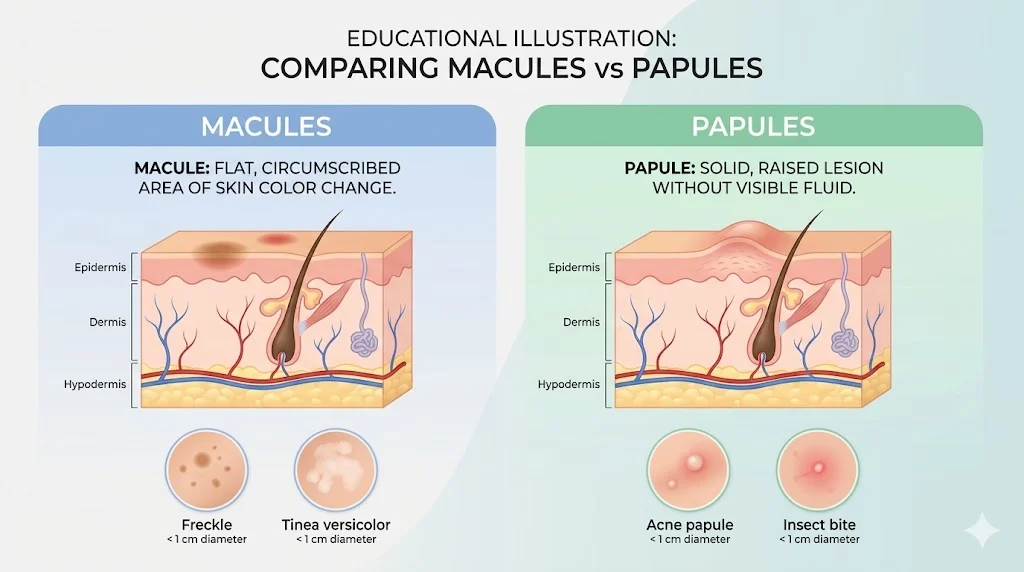
Macules and papules are two common types of skin lesions. A macule is a flat, discolored spot on the skin, while a papule is a small, raised bump. The key difference lies in texture and elevation macules are flat, papules are raised.
Have you ever noticed a new spot or bump on your skin and wondered whether it was harmless or a sign of something more serious? Skin changes can appear suddenly, and without knowing the correct terms, it is easy to feel confused or anxious. In dermatology, two of the most common lesion types are macules and papules. Although these medical terms may sound complicated, they simply describe whether a skin lesion is flat or raised.
Understanding the difference between macules vs papules is more than learning medical vocabulary. It helps you communicate your symptoms accurately with healthcare professionals, recognize common skin conditions, and better understand the information your doctor provides. Many conditions—including acne, allergic rashes, viral infections, eczema, and pigmentation disorders—may present with either macules, papules, or a combination of both.
People often mistake one for the other because some skin lesions are small and difficult to evaluate without careful observation. A flat discoloration may appear slightly elevated under certain lighting, while a tiny raised bump may seem flat to the touch. Although identifying a lesion does not replace a professional medical diagnosis, understanding these basic skin changes can help you know when to seek medical advice.
Medical Review Note: This article is based on standard dermatology terminology and educational guidance. It is intended for informational purposes only and should not replace an evaluation by a qualified healthcare professional. If you develop a rapidly spreading rash, painful skin changes, bleeding lesions, or skin abnormalities that persist or worsen, consult a dermatologist or your healthcare provider.
In this comprehensive guide, you’ll learn exactly what macules and papules are, how they differ in appearance and texture, their common causes, real-life examples, and when they may require medical attention. By the end, you’ll be able to confidently distinguish between these two fundamental types of skin lesions.
Quick Answer / Overview
Macules vs Papules at a Glance
| Feature | Macules | Papules |
|---|---|---|
| Texture | Flat | Raised |
| Size | Usually small | Small to medium |
| Color | Different from surrounding skin | May be red, pink, or skin-colored |
| Feel | Smooth | Can feel firm |
| Example | Freckles | Acne bumps |
Simple Explanation
- A macule is like a stain on the skin.
- A papule is like a tiny bump you can feel.
Think of a macule as paint on a wall. Think of a papule as a small pebble glued to the wall.
Definition and Explanation
What Are Macules?
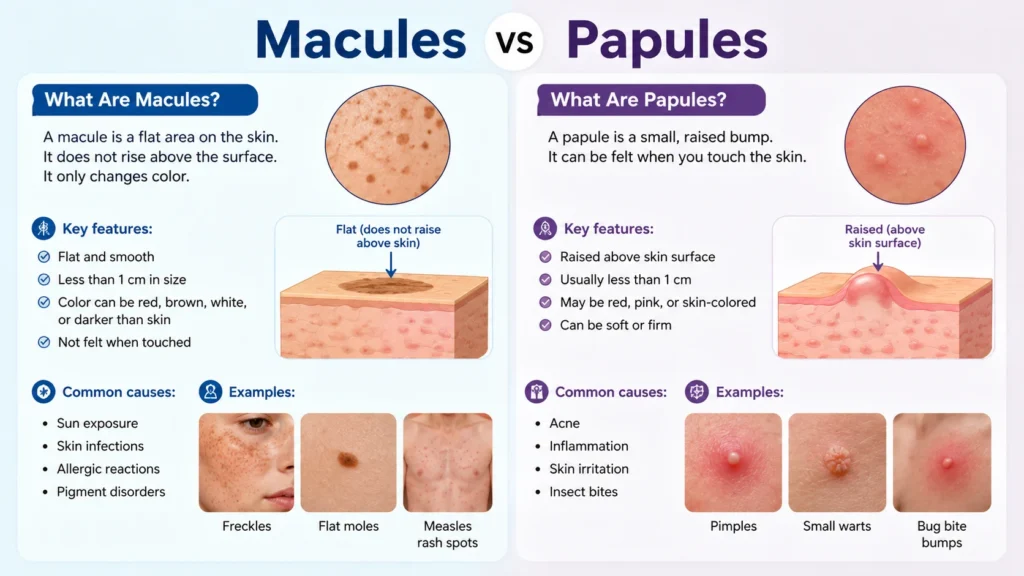
A macule is a flat area on the skin. It does not rise above the surface. It only changes color.
Key features:
- Flat and smooth
- Less than 1 cm in size
- Color can be red, brown, white, or darker than skin
- Not felt when touched
Common causes:
- Sun exposure
- Skin infections
- Allergic reactions
- Pigment disorders
Examples:
- Freckles
- Flat moles
- Measles rash spots
What Are Papules?
A papule is a small, raised bump. It can be felt when you touch the skin.
Key features:
- Raised above skin surface
- Usually less than 1 cm
- May be red, pink, or skin-colored
- Can be soft or firm
Common causes:
- Acne
- Inflammation
- Skin irritation
- Insect bites
Examples:
- Pimples
- Small warts
- Bug bite bumps
Macules vs Papules: Detailed Comparison
| Feature | Macules | Papules |
|---|---|---|
| Elevation | Flat | Raised |
| Texture | Smooth | Bumpy |
| Sensation | Not felt | Felt easily |
| Cause | Pigment change | Tissue growth or inflammation |
| Risk level | Usually harmless | Can indicate infection or inflammation |
| Treatment | Often not needed | May need treatment |
Advantages and Disadvantages
Macules
Advantages
- Often harmless
- Usually painless
- Easy to monitor
Disadvantages
- May indicate underlying disease
- Can spread in infections
- Hard to notice early
Papules
Advantages
- Easier to detect early
- Visible warning sign of skin issues
Disadvantages
- Can be painful or itchy
- May lead to infection
- Can leave scars if untreated
Real-World Examples
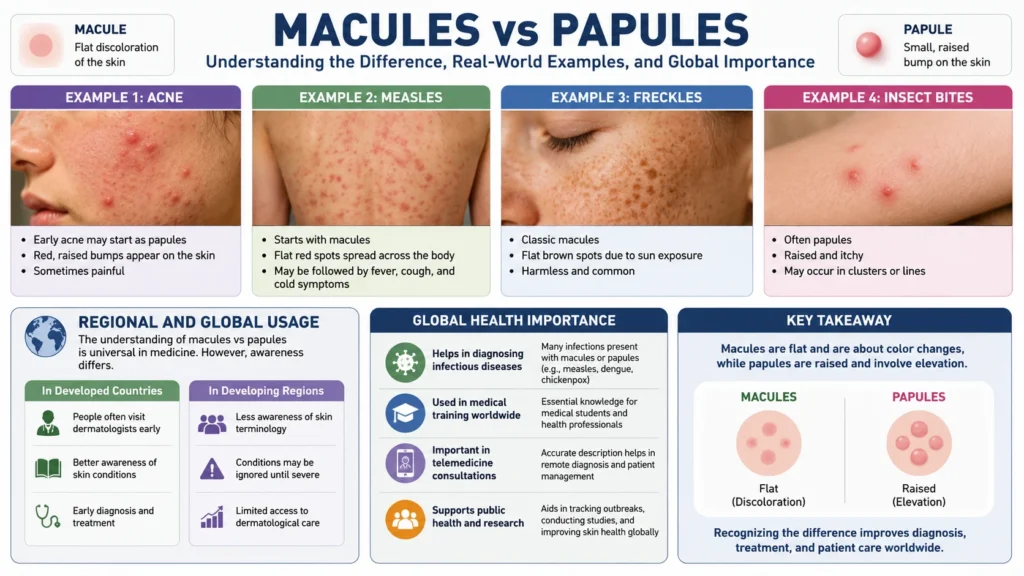
Example 1: Acne
- Early acne may start as papules
- Red, raised bumps appear on the skin
- Sometimes painful
Example 2: Measles
- Starts with macules
- Flat red spots spread across the body
Example 3: Freckles
- Classic macules
- Flat brown spots due to sun exposure
Example 4: Insect Bites
- Often papules
- Raised and itchy
Regional and Global Usage
The understanding of macules vs papules is universal in medicine. However, awareness differs.
In Developed Countries
- People often visit dermatologists early
- Better awareness of skin conditions
In Developing Regions
- Less awareness of skin terminology
- Conditions may be ignored until severe
Global Health Importance
- Helps in diagnosing infectious diseases
- Used in medical training worldwide
- Important in telemedicine consultations
Common Mistakes
Mistake 1: Confusing Flat and Raised Lesions
- Many people think all spots are bumps
- Always check by touching
Mistake 2: Ignoring Small Changes
- A macule can signal early disease
- A papule can worsen quickly
Mistake 3: Self-Diagnosis
- Not all bumps are acne
- Not all spots are harmless
Mistake 4: Over-Treatment
- Using strong creams without diagnosis
- Can worsen skin condition
Correction Tips
- Look and feel the skin
- Note size and color
- Consult a professional if unsure
Exercises with Answers
Exercise 1: Identify the Lesion
A flat brown spot appears on your arm.
Answer: Macule
Exercise 2: True or False
Papules are always flat.
Answer: False
Exercise 3: Multiple Choice
Which is raised?
A. Macule
B. Papule
Answer: B. Papule
Exercise 4: Scenario
You feel a small bump on your face that is red.
Answer: Papule
Exercise 5: Fill in the Blank
A ______ is flat and changes skin color.
Answer: Macule
Related Concepts or Comparisons
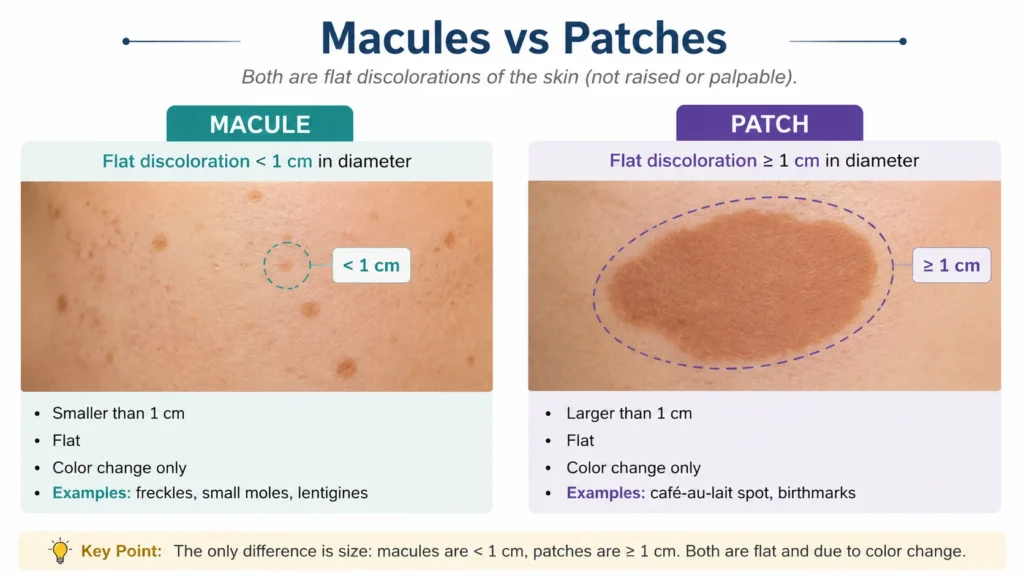
Macules vs Patches
- Both are flat
- Patch is larger than 1 cm
- Macule is smaller
Papules vs Nodules
- Both are raised
- Nodule is deeper and larger
- Papule is small and surface-level
Papules vs Pustules
- Papule: solid bump
- Pustule: contains pus
Other Skin Lesions
| Type | Description |
|---|---|
| Vesicle | Small fluid-filled blister |
| Plaque | Large raised area |
| Ulcer | Open sore |
FAQs
What is the main difference between macules vs papules?
Macules are flat and only change skin color, while papules are raised bumps you can feel on the skin.
Can macules turn into papules?
Yes, in some conditions like infections or inflammation, a flat macule may develop into a raised papule.
Are papules dangerous?
Most papules are harmless, but some may indicate infection or inflammation and need medical care.
Do macules require treatment?
Many macules do not need treatment, but some may require evaluation if they change in size or color.
How can I identify macules vs papules at home?
Gently touch the skin. If it is flat, it is likely a macule. If it feels raised, it is a papule.
Are freckles macules or papules?
Freckles are macules because they are flat and only involve color change.
Is acne a papule or macule?
Acne often forms papules, especially in early stages when bumps appear on the skin.
Do papules hurt?
Some papules may be tender or painful, especially if inflamed, like acne bumps.
Can macules be itchy?
Yes, macules can be itchy, especially in allergic reactions or rashes.
When should I see a doctor for macules vs papules?
See a doctor if lesions change quickly, spread, bleed, or do not heal over time.
Conclusion
Understanding macules vs papules is simple once you know what to look for. A macule is flat and changes color. A papule is raised and can be felt. This basic difference helps you describe skin changes clearly.
These terms are important in both everyday life and medical care. They help identify conditions like acne, infections, and allergic reactions. Knowing the difference can also prevent unnecessary worry.
Always observe your skin closely. Check for changes in size, shape, color and texture. If something looks unusual or persists, seek professional advice.
For best results:
- Do not self-diagnose serious conditions
- Avoid harsh treatments without guidance
- Keep your skin clean and protected
With this knowledge, you can better understand your skin and make informed decisions about your health.

Kevin Brooks is a grammar specialist at GramBrix.com, dedicated to helping readers understand language rules with clarity and confidence. He simplifies complex grammar concepts through practical examples and easy explanations.