
Last Updated on June 7, 2026
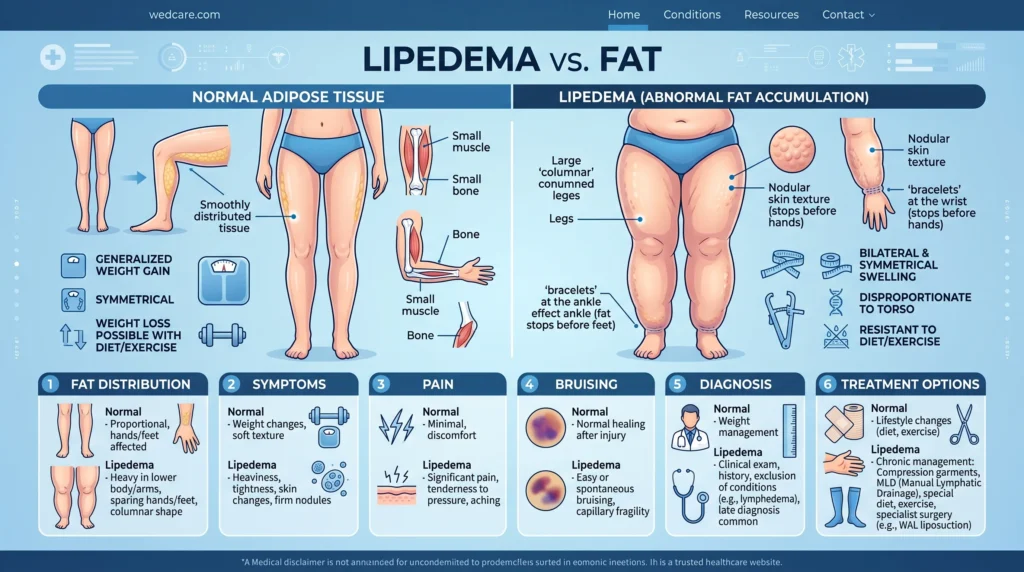
Lipedema and ordinary body fat are not the same thing. Lipedema is a chronic medical condition that causes an abnormal buildup of fat, usually in the legs, hips, buttocks, and sometimes arms. Regular fat can increase or decrease with diet and exercise, while lipedema fat often remains resistant to traditional weight-loss methods. Understanding the difference between lipedema or fat is important for proper diagnosis, treatment, and long-term health management.
Many people wonder whether enlarged legs, hips, or arms are caused by normal fat storage or a condition known as lipedema.
At first glance, the two may appear similar. Both involve fat tissue, body size changes, and weight-related concerns. However, lipedema is much more than simply carrying extra body fat.
People with lipedema often experience:
- Symmetrical fat buildup
- Pain or tenderness
- Easy bruising
- Swelling
- Difficulty losing fat in affected areas
Because lipedema is frequently misunderstood, many individuals spend years trying diets and exercise programs without seeing changes in specific body regions.
This guide explains:
- What lipedema is
- How it differs from normal fat
- Common symptoms
- Diagnosis methods
- Treatment options
- Frequently asked questions
Quick Answer
| Feature | Lipedema | Normal Fat |
|---|---|---|
| Medical Condition | Yes | No |
| Painful | Often | Usually No |
| Easy Bruising | Common | Uncommon |
| Diet Responsive | Limited | Yes |
| Symmetrical Distribution | Common | Variable |
Simple Summary
Regular fat is a normal part of the body and usually responds to weight loss. Lipedema is a medical condition involving abnormal fat accumulation that often does not respond well to traditional diet and exercise.
What Is Lipedema?
Definition
Lipedema is a chronic condition involving abnormal fat tissue accumulation.
Common Areas Affected
Lipedema often affects:
- Legs
- Thighs
- Hips
- Buttocks
- Arms
The hands and feet are often less affected.
Who Develops Lipedema?
The condition is most commonly diagnosed in women.
What Is Normal Body Fat?
Definition
Body fat is a natural tissue that stores energy and supports normal bodily functions.
Functions of Fat
Fat helps:
- Store energy
- Protect organs
- Regulate hormones
- Insulate the body
Normal Variation
Body fat levels naturally vary among individuals.
Main Difference Between Lipedema or Fat
Medical Condition
Lipedema
A recognized health condition.
Fat
A normal body tissue.
Pain
Lipedema
Pain and tenderness are common.
Fat
Usually painless.
Weight Loss Response
Lipedema
Affected areas often resist weight loss.
Fat
Typically decreases with calorie reduction and exercise.
Common Symptoms of Lipedema
Symmetrical Enlargement
Both sides of the body are often affected similarly.
Painful Tissue
Many individuals report tenderness.
Easy Bruising
Bruising may occur more frequently than expected.
Heaviness
Affected limbs may feel heavy.
Progressive Changes
Symptoms may worsen over time without management.
Characteristics of Normal Fat
Energy Storage
Fat stores excess calories.
Weight Fluctuation
Fat levels often change with lifestyle habits.
No Significant Pain
Normal fat generally does not cause pain.
Distribution Differences
Fat may accumulate in various body areas.
Why Lipedema Is Often Misdiagnosed
Similar Appearance
Lipedema can resemble obesity or weight gain.
Limited Awareness
Many people have never heard of the condition.
Delayed Diagnosis
Symptoms may be overlooked for years.
Weight Loss Assumptions
People may incorrectly assume the condition results solely from lifestyle choices.
Stages of Lipedema
Early Stage
Skin may appear relatively smooth.
Moderate Stage
Fat deposits become more noticeable.
Advanced Stage
Tissue changes become more pronounced.
Individual Variation
Progression differs from person to person.
Real World Examples
Example 1
A woman loses significant body weight but notices her legs remain disproportionately large.
Example 2
An individual experiences painful, bruised legs despite healthy eating habits.
Example 3
A patient struggles for years before receiving an accurate diagnosis of lipedema.
How Lipedema Is Diagnosed
Medical Evaluation
Healthcare professionals assess symptoms and physical findings.
Symptom Review
Doctors often evaluate:
- Pain
- Swelling
- Bruising
- Fat distribution
Physical Examination
A thorough examination helps identify characteristic patterns.
Differential Diagnosis
Other conditions may need to be ruled out.
Treatment Options for Lipedema
Compression Therapy
Compression garments may help manage symptoms.
Physical Activity
Exercise can support overall health and mobility.
Weight Management
Although lipedema fat may be resistant, healthy habits remain important.
Specialized Care
Treatment plans are often individualized.
Can Lipedema Be Prevented?
Current Understanding
There is currently no guaranteed prevention method.
Early Recognition
Early diagnosis may help improve management.
Professional Monitoring
Regular medical follow-up can be beneficial.
Common Mistakes People Make
Assuming Lipedema Is Simple Weight Gain
Lipedema is a medical condition.
Ignoring Symptoms
Pain and bruising should not be dismissed.
Self-Diagnosing
Professional evaluation is important.
Believing Diet Alone Will Eliminate Lipedema
Affected tissue may respond differently from ordinary fat.
Lipedema vs Obesity
Similarities
Both may involve increased body size.
Differences
Lipedema includes characteristic symptoms such as:
- Pain
- Tenderness
- Symmetrical fat accumulation
Medical Assessment
Healthcare professionals help distinguish between conditions.
Related Health Concepts
Lymphedema
A condition involving lymphatic fluid buildup.
Obesity
Excess body fat accumulation.
Chronic Swelling
Can have multiple causes.
Exercises With Answers
Exercise 1
Is lipedema a medical condition?
Answer: Yes.
Exercise 2
Does normal fat usually cause pain?
Answer: No.
Exercise 3
Can lipedema affect both legs symmetrically?
Answer: Yes.
Exercise 4
Does regular fat often respond to weight loss?
Answer: Yes.
Exercise 5
Should lipedema be diagnosed by a healthcare professional?
Answer: Yes.
FAQs
What is the difference between lipedema or fat?
Lipedema is a chronic medical condition involving abnormal fat accumulation, while normal fat is a natural body tissue.
Is lipedema the same as obesity?
No. Although both can affect body size, lipedema has unique symptoms and characteristics.
Can lipedema cause pain?
Yes. Pain and tenderness are common symptoms.
Does lipedema affect both sides of the body?
Often yes. Lipedema typically appears symmetrically.
Can diet remove lipedema fat?
Lipedema tissue often responds differently than ordinary body fat.
Who is most commonly affected by lipedema?
The condition is most frequently diagnosed in women.
Is easy bruising a sign of lipedema?
It can be a common symptom.
Can exercise help lipedema?
Exercise may support mobility and overall health, although it may not completely remove affected tissue.
How is lipedema diagnosed?
Diagnosis typically involves medical history, symptoms, and physical examination.
Should I see a doctor if I suspect lipedema?
Yes. A healthcare professional can provide an accurate evaluation and treatment plan.
Conclusion
The comparison between lipedema or fat highlights an important distinction that is often misunderstood.
Normal body fat is a natural part of human physiology and usually responds to diet, exercise, and weight management strategies. Lipedema, on the other hand, is a chronic medical condition characterized by abnormal fat accumulation, pain, tenderness, easy bruising, and distinctive body patterns.
Key differences include:
- Lipedema is a medical condition.
- Normal fat is a healthy body tissue.
- Lipedema often causes discomfort.
- Lipedema may resist traditional weight-loss methods.
- Professional diagnosis is essential.
If you suspect lipedema, consulting a qualified healthcare professional is the best step toward understanding your symptoms and developing an appropriate management plan.

Victoria Lane is a grammar-focused writer at GramBrix.com, passionate about helping readers master the rules of language. She provides clear explanations and practical examples that make writing more accurate, polished and confident.