Last Updated on August 17, 2026
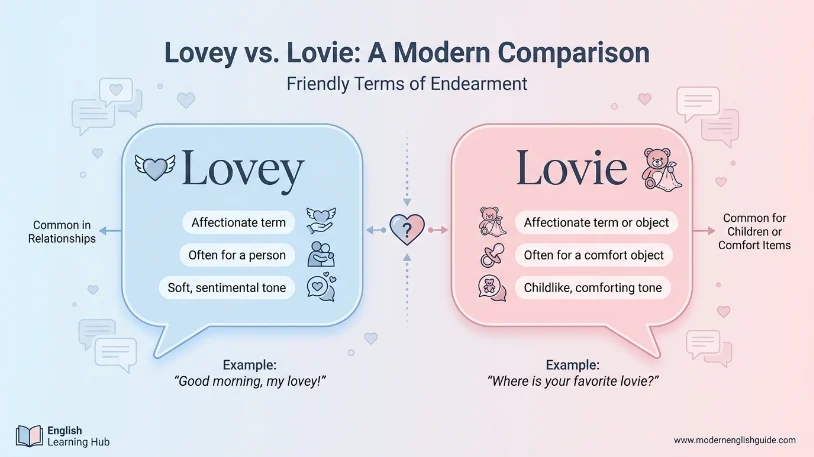
“Lovey” and “lovie” are both affectionate words used for someone special, but they are used differently depending on region and context. “Lovey” is more common in everyday English as a sweet nickname, while “lovie” is often linked to British English and theatrical culture.
English has many sweet and affectionate words. Some are formal, while others are playful and emotional. Two words that often confuse people are lovey and lovie. They sound the same when spoken, but their spelling and usage can be different.
You may have seen someone text “Hey lovey” in a romantic message. In another place, you might hear “lovie” used in British movies or theater circles. Because both words sound alike, many people wonder which spelling is correct.
The truth is simple. Both words are real, but they are not always used in the same way.
In this guide, you will learn the difference between lovey or lovie, where each word comes from, how native speakers use them, and which one works best in modern English writing. We will also look at examples, common mistakes, and practical exercises to help you understand the topic naturally.
Quick Answer About Lovey or Lovie
Which One Is More Common?
“Lovey” is more commonly used in modern English, especially in text messages, relationships, and casual conversation.
“Lovie” is less common and is mostly associated with British English or old-fashioned theatrical slang.
Simple Difference Between Lovey and Lovie
| Word | Common Use | Region | Tone |
|---|---|---|---|
| Lovey | Sweet nickname | Worldwide | Warm and romantic |
| Lovie | Theater slang or affectionate term | Mostly British | Stylish or dramatic |
Short Answer
If you are writing a sweet message to someone, “lovey” is usually the safer and more natural choice.
What Does Lovey Mean?
Definition of Lovey
“Lovey” is an affectionate word people use for someone they care about.
It is similar to:
- Honey
- Sweetheart
- Darling
- Babe
Parents, couples, and even close friends sometimes use it.
Examples of Lovey in Sentences
- “Good morning, lovey.”
- “Are you okay, lovey?”
- “Thanks for helping me, lovey.”
The word sounds soft, caring, and emotional.
Why People Use Lovey
People use “lovey” because it feels:
- Friendly
- Warm
- Personal
- Comforting
It creates emotional closeness.
What Does Lovie Mean?
Definition of Lovie
“Lovie” can also mean a loved person, but historically it became popular in British entertainment culture.
In British English, “lovie” was often used to describe actors or theater people who behaved dramatically or spoke in an exaggerated way.
Examples of Lovie in Sentences
- “The party was full of famous lovies from the theater world.”
- “Hello, lovie. You look wonderful tonight.”
In modern casual texting, people may still use “lovie,” but it is less common than “lovey.”
British Connection of Lovie
The word became famous in:
- British theater
- Television culture
- Entertainment journalism
That is why some people associate it with dramatic or artistic personalities.
Main Differences Between Lovey or Lovie
Spelling Difference
The biggest difference is spelling:
- Lovey = more modern and common
- Lovie = older or British style
Usage Difference
“Lovey” is mostly used as:
- A pet name
- A loving nickname
- A caring expression
“Lovie” is often used:
- In British media
- In theater culture
- As playful slang
Tone Difference
| Word | Emotional Feel |
|---|---|
| Lovey | Gentle and sweet |
| Lovie | Stylish or theatrical |
Real World Examples of Lovey or Lovie
In Relationships
Most couples today use “lovey.”
Example:
“Miss you, lovey.”
This sounds natural and modern.
In British Television
You may hear “lovie” in British comedy shows.
Example:
“All the famous lovies attended the award show.”
Here, it refers to actors or entertainers.
In Family Conversations
Parents often use “lovey” with children.
Example:
“Come here, lovey.”
This sounds caring and soft.
Why the Confusion Happens
Both Words Sound the Same
When spoken aloud:
- Lovey
- Lovie
Both sound identical.
That is why many writers confuse the spelling.
Social Media and Texting
Online messaging has made spelling flexible.
Some people type:
- Lovey
- Luvy
- Lovie
based on personal style.
Regional English Differences
American English usually prefers “lovey.”
British English may still use “lovie” in certain contexts.
Advantages and Disadvantages of Each Word
Advantages of Using Lovey
- More widely understood
- Sounds natural in texting
- Common in modern English
- Better for romantic messages
Disadvantages of Using Lovey
- Can sound overly sweet in formal writing
- Not suitable for professional situations
Advantages of Using Lovie
- Stylish and unique
- Recognized in British culture
- Works in creative writing
Disadvantages of Using Lovie
- Less common globally
- Some readers may think it is a spelling mistake
Common Mistakes People Make
Using Lovie in Formal Writing
Some learners use “lovie” in business emails.
Incorrect:
“Thank you, lovie.”
Professional writing should avoid both words.
Thinking One Spelling Is Wrong
Many people believe only one version exists.
Truth:
Both are real English words.
Overusing Affectionate Nicknames
Using “lovey” too often can sound unnatural.
Example:
“Hi lovey, thanks lovey, bye lovey.”
This feels repetitive.
Exercises With Answers
Exercise 1
Which spelling is more common in modern texting?
A. Lovie
B. Lovey
Answer: B. Lovey
Exercise 2
Which word is linked more with British theater culture?
A. Lovey
B. Lovie
Answer: B. Lovie
Exercise 3
Fill in the blank:
“Goodnight, _____.”
Answer: Lovey
Exercise 4
True or False:
“Lovey” and “lovie” sound different when spoken.
Answer: False
Exercise 5
Which word sounds more modern in casual English?
Answer: Lovey
Related Words and Similar Terms
Other Affectionate Nicknames
People also use:
- Honey
- Babe
- Darling
- Sweetie
- Love
- Dear
These words serve a similar emotional purpose.
Lovey vs Love
“Love” is more common in British English.
Example:
“You alright, love?”
“Lovey” sounds more personal and emotional.
Lovey vs Sweetheart
| Word | Tone |
|---|---|
| Lovey | Soft and casual |
| Sweetheart | Traditional and romantic |
Regional Usage of Lovey or Lovie
In American English
“Lovey” is more popular.
People use it casually in:
- Relationships
- Parenting
- Friendly texting
In British English
Both spellings exist, but “lovie” has stronger cultural roots in entertainment and theater.
Online and Social Media Usage
Today, “lovey” dominates social media because it feels more natural and modern.
FAQs
Is lovey or lovie correct?
Both are correct, but “lovey” is more common in modern English.
What does lovey mean in texting?
In texting, “lovey” is a sweet nickname for someone you care about.
Is lovie a real word?
Yes, “lovie” is a real English word often linked to British theater culture.
Which spelling is more popular, lovey or lovie?
“Lovey” is more widely used today.
Can I call my partner lovey?
Yes. Many couples use “lovey” affectionately.
Is lovie old-fashioned?
In some contexts, yes. It can sound more traditional or theatrical.
Do lovey and lovie mean the same thing?
Mostly yes, but “lovie” can also refer to theater personalities in British English.
Is lovey formal or informal?
“Lovey” is informal and should be used casually.
Why do people confuse lovey or lovie?
Because both words sound exactly the same when spoken.
Which spelling should I use in modern writing?
“Lovey” is usually the better choice for modern casual English.
Conclusion
The confusion between lovey or lovie is understandable because both words sound identical. However, their usage has changed over time.
Today, “lovey” is the more common and natural spelling in everyday English. People use it in romantic texts, family conversations, and friendly chats. It feels warm, soft, and modern.
“Lovie,” on the other hand, carries a more British and theatrical feeling. While it is still correct, it appears less often in modern casual writing.
If your goal is clear communication, especially online or in personal messages, “lovey” is usually the safest option.
Language constantly evolves, and affectionate words often change with culture and trends. The important thing is understanding the context and choosing the version that sounds natural to your audience.
In most modern situations, “lovey” wins for simplicity, familiarity, and emotional warmth.

Justin Powell is a writer at GramBrix.com who focuses on grammar, clarity and effective communication, helping readers strengthen their language skills.