Last Updated on June 9, 2026
Constipation and appendicitis can both cause abdominal discomfort, bloating, and pain, which is why they are sometimes confused. However, constipation is usually a digestive issue involving difficult or infrequent bowel movements, while appendicitis is a medical emergency caused by inflammation of the appendix. Understanding the differences between constipation or appendicitis can help people recognize warning signs and seek appropriate medical care.
Abdominal pain is one of the most common reasons people seek medical advice. When discomfort develops in the stomach area, many individuals wonder whether the problem is simple constipation or something more serious like appendicitis.
The confusion is understandable because both conditions can produce symptoms such as:
- Abdominal pain
- Bloating
- Nausea
- Loss of appetite
- Difficulty passing stool
Despite these similarities, constipation and appendicitis are very different conditions.
Constipation is generally a common digestive problem that can often improve with lifestyle changes, hydration, and dietary adjustments. Appendicitis, on the other hand, typically requires urgent medical evaluation and often surgical treatment.
Knowing the differences can help you understand when symptoms may require immediate medical attention.
This guide explains:
- What constipation is
- What appendicitis is
- Key symptom differences
- Warning signs
- Diagnosis methods
- Treatment options
- Frequently asked questions
Quick Answer
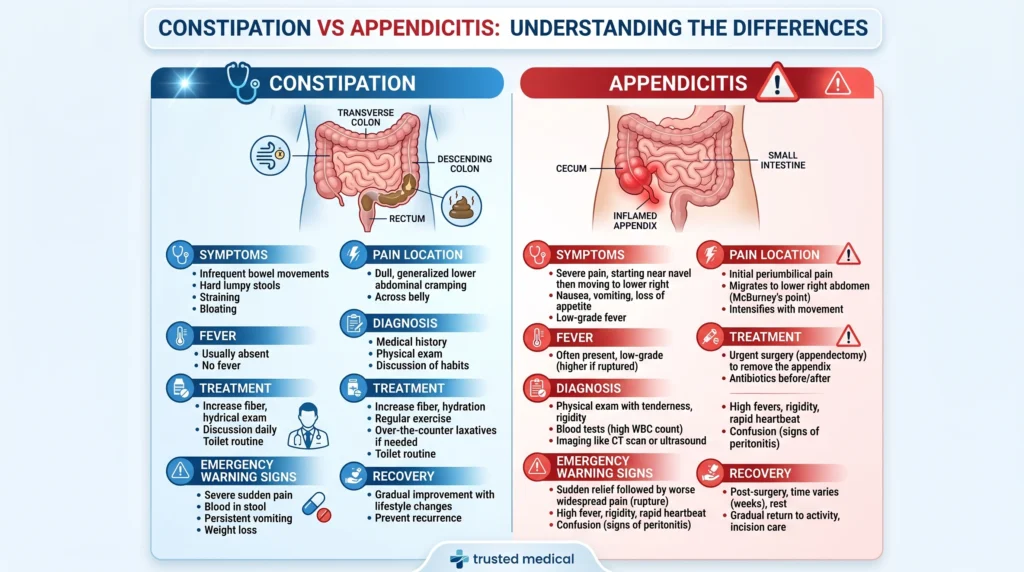
| Feature | Constipation | Appendicitis |
|---|---|---|
| Medical Emergency | Usually No | Often Yes |
| Main Problem | Difficulty passing stool | Inflamed appendix |
| Pain Location | Variable | Often lower right abdomen |
| Fever | Rare | Common |
| Requires Surgery | No | Often Yes |
Simple Summary
Constipation typically causes difficulty with bowel movements and abdominal discomfort. Appendicitis usually causes worsening abdominal pain, especially in the lower right side, and often requires urgent medical treatment.
What Is Constipation?
Definition
Constipation occurs when bowel movements become infrequent, difficult, or uncomfortable.
Common Signs
Symptoms often include:
- Hard stools
- Straining
- Feeling unable to completely empty the bowels
- Bloating
How Common Is It?
Constipation is one of the most common digestive complaints worldwide.
What Is Appendicitis?
Definition
Appendicitis is inflammation of the appendix, a small pouch attached to the large intestine.
Why It Matters
If untreated, the appendix may rupture, which can become a serious medical emergency.
Typical Development
Symptoms often worsen over several hours or days.
Main Difference Between Constipation or Appendicitis
Cause
Constipation
Usually related to bowel movement difficulties.
Appendicitis
Caused by inflammation or blockage of the appendix.
Severity
Constipation
Often improves with treatment and lifestyle changes.
Appendicitis
Usually requires prompt medical evaluation.
Urgency
Constipation
Generally not an emergency.
Appendicitis
Can become life-threatening if untreated.
Symptoms of Constipation
Infrequent Bowel Movements
Fewer bowel movements than usual.
Hard Stools
Stools may be dry and difficult to pass.
Bloating
Abdominal fullness is common.
Mild to Moderate Discomfort
Pain is usually diffuse rather than sharply localized.
Relief After Bowel Movement
Symptoms may improve after passing stool.
Symptoms of Appendicitis
Abdominal Pain
Pain often starts near the belly button.
Lower Right Abdominal Pain
Pain frequently shifts to the lower right side.
Nausea
Many patients experience nausea or vomiting.
Fever
A low-grade fever may develop.
Loss of Appetite
Reduced appetite is common.
Pain Location Comparison
Constipation Pain
Pain may occur in various areas of the abdomen.
Appendicitis Pain
Pain often becomes concentrated in the lower right abdomen.
Important Difference
Localized, worsening pain should not be ignored.
Real World Examples
Example 1
A person experiences bloating and has not had a bowel movement for several days.
This may suggest constipation.
Example 2
Someone develops increasing pain that moves to the lower right abdomen and is accompanied by fever.
This may suggest appendicitis.
Example 3
A patient experiences severe abdominal pain that worsens with movement.
Immediate medical evaluation may be necessary.
Risk Factors for Constipation
Low Fiber Diet
Insufficient dietary fiber can contribute.
Dehydration
Not drinking enough fluids may worsen symptoms.
Lack of Physical Activity
Reduced movement can affect bowel function.
Certain Medications
Some medications can increase constipation risk.
Risk Factors for Appendicitis
Age
Appendicitis often occurs in younger individuals but can affect anyone.
Family History
Some studies suggest possible genetic influences.
Appendix Blockage
Blockages may contribute to inflammation.
How Doctors Diagnose Constipation
Medical History
Healthcare providers ask about symptoms and bowel habits.
Physical Examination
Abdominal examination may be performed.
Additional Testing
Testing is sometimes used to identify underlying causes.
How Doctors Diagnose Appendicitis
Symptom Review
Doctors evaluate pain patterns carefully.
Physical Examination
Abdominal tenderness is often assessed.
Imaging Tests
Common imaging methods include:
- Ultrasound
- CT scans
- MRI scans
Blood Tests
Laboratory tests may help identify infection or inflammation.
Treatment for Constipation
Increased Fiber
Fiber-rich foods may improve bowel movements.
Hydration
Adequate water intake is important.
Physical Activity
Exercise may support digestive health.
Medical Treatments
Some individuals may require medications.
Treatment for Appendicitis
Medical Evaluation
Prompt diagnosis is essential.
Antibiotics
Sometimes used depending on the situation.
Surgery
Appendectomy is a common treatment.
Recovery
Most patients recover successfully with proper care.
When to Seek Immediate Medical Attention
Severe Abdominal Pain
Sudden or worsening pain requires evaluation.
Fever With Abdominal Pain
May indicate infection.
Persistent Vomiting
Should not be ignored.
Pain Moving to Lower Right Abdomen
A classic warning sign of appendicitis.
Common Mistakes People Make
Assuming All Abdominal Pain Is Constipation
Serious conditions can cause similar symptoms.
Delaying Medical Care
Appendicitis may worsen quickly.
Self-Diagnosing Online
Professional evaluation is important.
Ignoring Fever
Fever may indicate something more serious than constipation.
Related Digestive Conditions
Irritable Bowel Syndrome
Can cause abdominal discomfort and bowel changes.
Gastroenteritis
Often involves stomach upset and diarrhea.
Intestinal Blockage
May produce severe abdominal symptoms.
Exercises With Answers
Exercise 1
Which condition is generally considered a medical emergency?
Answer: Appendicitis.
Exercise 2
Which condition often involves hard stools?
Answer: Constipation.
Exercise 3
Where is appendicitis pain commonly located?
Answer: Lower right abdomen.
Exercise 4
Can constipation cause bloating?
Answer: Yes.
Exercise 5
Should worsening abdominal pain be medically evaluated?
Answer: Yes.
FAQs
What is the difference between constipation or appendicitis?
Constipation involves difficulty passing stool, while appendicitis involves inflammation of the appendix and may require urgent treatment.
Can constipation feel like appendicitis?
Some symptoms can overlap, including abdominal discomfort and bloating.
Where does appendicitis pain usually occur?
Pain often moves to the lower right side of the abdomen.
Can appendicitis cause constipation?
Some people with appendicitis may experience bowel changes, including constipation.
Does constipation cause fever?
Fever is uncommon with simple constipation and may indicate another condition.
Is appendicitis an emergency?
It often requires urgent medical evaluation because complications can develop.
Can constipation cause severe abdominal pain?
It can cause discomfort, but severe or worsening pain should be evaluated by a healthcare professional.
How is appendicitis diagnosed?
Doctors may use physical examinations, imaging tests, and laboratory testing.
Can drinking water help constipation?
Adequate hydration may help support normal bowel function.
When should I see a doctor for abdominal pain?
Seek medical attention if pain is severe, worsening, associated with fever, vomiting, or localized to the lower right abdomen.
Conclusion
Understanding the difference between constipation or appendicitis is important because both conditions can produce abdominal discomfort but require very different approaches.
Constipation is generally a digestive issue involving infrequent or difficult bowel movements and often improves with hydration, dietary changes, and lifestyle adjustments.
Appendicitis is a potentially serious condition involving inflammation of the appendix. It frequently causes worsening abdominal pain, particularly in the lower right side, and often requires prompt medical treatment.
Key takeaways include:
- Constipation and appendicitis can share symptoms.
- Appendicitis is usually more serious.
- Fever and worsening localized pain are important warning signs.
- Persistent or severe symptoms require medical evaluation.
- Early diagnosis can improve outcomes.
When in doubt, especially if symptoms are severe or worsening, professional medical assessment is the safest course of action.

Justin Powell is a writer at GramBrix.com who focuses on grammar, clarity and effective communication, helping readers strengthen their language skills.