
Last Updated on June 16, 2026
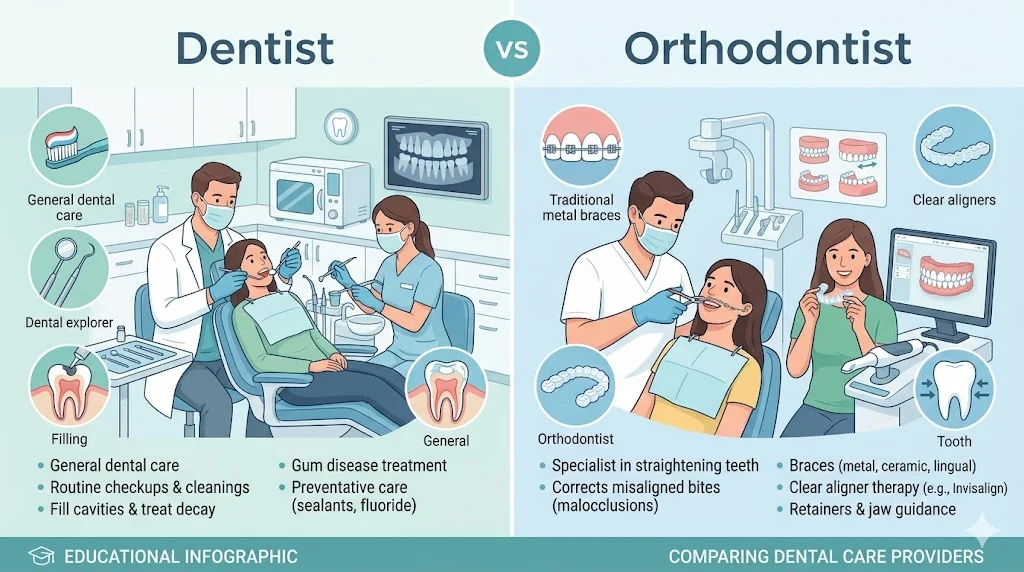
The difference between a dentist and an orthodontist is based on their training and the type of dental care they provide. A dentist focuses on overall oral health, including teeth cleaning, fillings, and gum care. An orthodontist is a dental specialist who corrects teeth alignment and jaw positioning using braces, aligners, and other devices.
Most people visit a dentist for general oral care and an orthodontist for straightening teeth and fixing bite issues.
The topic of dentist vs orthodontist often confuses many people. Both work with teeth, both help improve smiles, and both are part of oral health care. Yet their roles are not the same. This confusion can lead to wrong expectations, delayed treatment, or unnecessary visits to the wrong specialist.
Many patients visit a dentist thinking they need braces. Others go to an orthodontist for tooth pain that should be treated by a dentist. Understanding the difference saves time, money, and discomfort.
In simple terms, a dentist takes care of your general oral health. An orthodontist focuses on straightening teeth and fixing jaw alignment. Both are important, but their work is different. Knowing when to see each one helps you get the right treatment at the right time.
This article will explain everything about dentist vs orthodontist, including their roles, education, treatments, advantages, real world examples, and common mistakes people make. You will also find FAQs, exercises, and a clear comparison table to make learning easy.
Quick Answer Overview
When comparing dentist vs orthodontist, the key difference is specialization.
A dentist treats general oral health issues like cavities, gum disease, and tooth cleaning. An orthodontist is a specialist who focuses on aligning teeth and correcting bite problems using braces or aligners.
In simple words, a dentist keeps your teeth healthy, while an orthodontist makes them straight and properly aligned.
Definition and Explanation of Dentist vs Orthodontist
What is a Dentist?
A dentist is a medical professional who diagnoses, treats, and prevents problems related to teeth, gums, and overall oral health. They are your primary oral care provider.
Common services provided by a dentist include:
- Teeth cleaning and polishing
- Filling cavities
- Treating gum disease
- Root canal treatment
- Tooth extraction
- Dental crowns and bridges
- Preventive care and checkups
Dentists are the first point of contact for most dental problems.
What is an Orthodontist?
An orthodontist is a dental specialist who focuses on correcting the position of teeth and jaws. After completing dental school, they undergo additional training in orthodontics.
Their main goal is to improve:
- Teeth alignment
- Bite function
- Jaw positioning
- Smile appearance
Common treatments include:
- Braces (metal, ceramic, or lingual)
- Clear aligners
- Retainers
- Space maintainers
- Jaw correction devices
Orthodontists do not usually treat cavities or gum disease unless they are related to alignment issues.
Dentist vs Orthodontist: Key Differences Table
| Feature | Dentist | Orthodontist |
| Education | Dental degree | Dental degree + orthodontic specialization |
| Focus | General oral health | Teeth and jaw alignment |
| Treatments | Fillings, cleaning, extraction | Braces, aligners, bite correction |
| Age group | All ages | Mostly children, teens, adults |
| Tools used | Basic dental instruments | Braces, wires, aligners |
| Visit purpose | Pain, decay, hygiene | Crooked teeth, bite issues |
Advantages and Disadvantages of Dentist vs Orthodontist
Advantages of Visiting a Dentist
- Covers all general dental problems
- Prevents tooth decay and gum disease
- Provides emergency care for tooth pain
- Regular cleaning improves oral hygiene
- Affordable routine care
Disadvantages of a Dentist
- Does not specialize in teeth alignment
- May refer you to an orthodontist for complex cases
- Limited in cosmetic alignment treatments
Advantages of Visiting an Orthodontist
- Expert in straightening teeth
- Improves facial structure and bite
- Offers advanced alignment technology
- Long term smile improvement
- Customized treatment plans
Disadvantages of an Orthodontist
- Higher cost compared to general dental visits
- Long treatment duration (months or years)
- Not suitable for general dental diseases
Real World Examples of Dentist vs Orthodontist
Example 1: Tooth Pain
A person feels sharp pain in a molar tooth. The correct professional is a dentist because the issue may be a cavity or infection.
Example 2: Crooked Teeth
A teenager has overlapping front teeth. The correct professional is an orthodontist who may recommend braces or aligners.
Example 3: Gum Bleeding
A patient has swollen gums and bleeding while brushing. A dentist treats gum disease, not an orthodontist.
Example 4: Jaw Misalignment
An adult has difficulty chewing due to jaw alignment issues. An orthodontist can correct the bite.
Regional and Global Usage of Dentist vs Orthodontist Services
Developed Countries
In countries like the United States, United Kingdom, and Canada:
- Regular dental checkups are routine
- Orthodontic treatments are common among teenagers
- Insurance often covers part of dental care
Developing Countries
In regions like South Asia and Africa:
- Dental visits are often delayed
- Orthodontic care is seen as cosmetic
- Awareness about orthodontic treatment is increasing
Urban vs Rural Areas
- Urban areas have better access to orthodontists
- Rural areas mainly rely on general dentists
- Specialist referrals are common in small towns
Common Mistakes in Dentist vs Orthodontist Understanding
Mistake 1: Visiting Orthodontist for Tooth Pain
Many people think orthodontists treat all dental problems. This is incorrect. Tooth pain should go to a dentist.
Mistake 2: Ignoring Alignment Problems
Some people visit only dentists and ignore crooked teeth. This can lead to long term bite issues.
Mistake 3: Delaying Orthodontic Treatment
Waiting too long for braces can make treatment harder and longer.
Mistake 4: Assuming Both Are the Same
Dentists and orthodontists have different training and roles. They are not interchangeable.
Exercises with Answers
Exercise 1
Who should you visit for a cavity?
A. Orthodontist
B. Dentist
Answer: Dentist
Exercise 2
Who treats crooked teeth?
A. Dentist
B. Orthodontist
Answer: Orthodontist
Exercise 3
True or False: Orthodontists treat gum disease.
Answer: False
Exercise 4
Match the condition:
- Tooth pain → ?
- Braces → ?
Answers:
- Tooth pain → Dentist
- Braces → Orthodontist
Related Concepts and Comparisons
Dentist vs Orthodontist vs Periodontist
- Dentist: General care
- Orthodontist: Teeth alignment
- Periodontist: Gum specialist
Orthodontist vs Cosmetic Dentist
A cosmetic dentist improves smile appearance using whitening and veneers. An orthodontist corrects tooth position structurally.
Pediatric Dentist vs Orthodontist
- Pediatric dentist: Treats children’s dental health
- Orthodontist: Corrects children’s teeth alignment
FAQs
What is the main difference between dentist vs orthodontist?
A dentist treats general oral health issues while an orthodontist specializes in straightening teeth and correcting bite alignment.
Do I need a dentist or orthodontist for braces?
You need an orthodontist for braces because they specialize in tooth alignment and jaw correction.
Can a dentist do orthodontic treatment?
Some dentists offer basic alignment services, but complex cases should be handled by an orthodontist.
Is orthodontic treatment painful?
Mild discomfort may occur when braces are adjusted, but it is manageable and temporary.
How often should I visit a dentist?
You should visit a dentist every six months for cleaning and checkups.
At what age should orthodontic treatment start?
Orthodontic evaluation is recommended around age 7, but treatment can happen at any age.
Are orthodontists more expensive than dentists?
Yes, orthodontic treatment usually costs more due to specialized care and longer treatment time.
Can adults see an orthodontist?
Yes, adults can receive braces or aligners to improve their smile and bite.
What problems does a dentist treat that an orthodontist does not?
Dentists treat cavities, infections, and gum disease, which orthodontists do not handle directly.
Do orthodontists remove teeth?
In some cases, orthodontists may coordinate with dentists for extractions, but they mainly focus on alignment.
Conclusion
Understanding dentist vs orthodontist is essential for proper dental care. A dentist is your first line of defense for oral health problems such as cavities, gum disease, and tooth pain. An orthodontist is a specialist who focuses on correcting misaligned teeth and jaw issues.
Both professionals work together to improve oral health and smile appearance. Choosing the right specialist saves time, prevents complications, and ensures better long term results.
If you have pain or infection, visit a dentist. If you have crooked teeth or bite issues, consult an orthodontist. Regular dental checkups combined with timely orthodontic care lead to a healthy and confident smile for life.

Kevin Brooks is a grammar specialist at GramBrix.com, dedicated to helping readers understand language rules with clarity and confidence. He simplifies complex grammar concepts through practical examples and easy explanations.