Last Updated on June 24, 2026
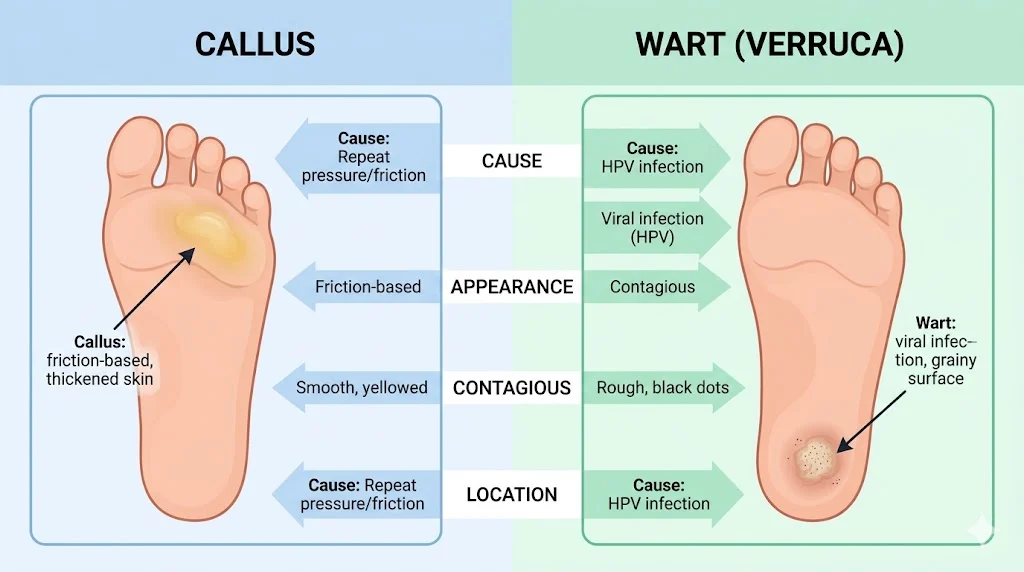
Callus vs wart is a common confusion because both appear as thickened or rough skin on hands and feet. A callus is a hard, thickened layer of skin caused by repeated pressure or friction, while a wart is a viral skin infection caused by the human papillomavirus (HPV). The key difference is that calluses are harmless protective skin responses, whereas warts are contagious growths that may spread if untreated.
The topic of callus vs wart is important because many people mistake one for the other. Both conditions often look similar at first glance. They can appear as rough, thick, or raised areas of skin, especially on the feet and hands. This confusion can lead to wrong treatment choices and sometimes make the condition worse.
A callus usually forms due to repeated pressure, friction, or rubbing. It is the skin’s natural way of protecting itself. A wart, on the other hand, is caused by a viral infection called human papillomavirus (HPV). Unlike calluses, warts can spread from person to person or from one body part to another.
Understanding the difference between callus vs wart is important for proper care, prevention, and treatment. Many people try home remedies without knowing what they are dealing with, which can delay healing. In this guide, you will learn everything about callus vs wart, including symptoms, causes, treatments, prevention methods, and practical examples to help you identify each condition correctly.
Quick Answer Overview
When comparing callus vs wart, the simplest explanation is:
- A callus is thick skin caused by pressure or friction. It is not contagious.
- A wart is a viral skin growth caused by HPV. It is contagious.
Calluses are usually painless or mildly uncomfortable, while warts can be painful, especially on pressure points like the soles of the feet. Calluses develop gradually, while warts may appear suddenly and grow over time.
Understanding Callus vs Wart
What is a Callus?
A callus is a thickened and hardened area of skin that develops as a protective response. It usually forms on areas exposed to repeated friction, such as:
- Feet (especially heels and balls of feet)
- Hands (palm areas)
- Fingers
In the callus vs wart comparison, calluses are considered harmless and natural. They are the body’s way of preventing skin damage.
What is a Wart?
A wart is a small, rough skin growth caused by infection with HPV. In the callus vs wart discussion, warts are medically classified as contagious skin lesions.
Warts commonly appear on:
- Hands
- Feet (plantar warts)
- Fingers
- Around nails
They can spread through direct contact or shared surfaces.
Key Differences Between Callus vs Wart
| Feature | Callus | Wart |
| Cause | Friction or pressure | HPV viral infection |
| Contagious | No | Yes |
| Appearance | Thick, flat, yellowish skin | Rough, grainy, raised bumps |
| Pain | Usually mild or none | Can be painful |
| Skin lines | Skin lines continue through callus | Skin lines are broken |
| Black dots | No | Yes (clotted blood vessels) |
| Growth speed | Slow | May grow quickly |
Understanding this table is essential when identifying callus vs wart correctly.
Causes of Callus vs Wart
Causes of Callus
Calluses form due to repeated stress on the skin. Common causes include:
- Wearing tight or ill-fitting shoes
- Walking barefoot on hard surfaces
- Repetitive activities like typing or manual labor
- Abnormal walking posture
In the callus vs wart comparison, calluses are mechanical, not infectious.
Causes of Wart
Warts are caused by HPV infection. The virus enters through small cuts or weak spots in the skin. Common causes include:
- Walking barefoot in public showers
- Sharing towels or shoes
- Direct contact with infected skin
- Weak immune system
Unlike calluses, warts in the callus vs wart comparison are biological infections.
Symptoms of Callus vs Wart
Symptoms of Callus
- Thickened, rough skin
- Yellow or gray color
- Hard texture
- Mild discomfort when pressed
- Usually flat
Symptoms of Wart
- Rough, grainy surface
- Small black dots (clotted blood vessels)
- Raised bumps
- Pain when squeezed from sides
- Irregular shape
Recognizing symptoms is a key step in distinguishing callus vs wart.
Diagnosis of Callus vs Wart
Doctors usually diagnose callus vs wart through visual examination.
For Callus:
- No special tests needed
- Based on pressure patterns on skin
- Patient history of friction or footwear use
For Wart:
- Visual inspection
- Scraping test (may show bleeding dots)
- Sometimes biopsy in unclear cases
Correct diagnosis prevents incorrect treatment in callus vs wart cases.
Callus vs Wart Treatment Options
Treatment for Callus
Calluses are easy to manage:
- Soaking feet in warm water
- Using pumice stone
- Moisturizing creams
- Wearing comfortable shoes
- Padding to reduce pressure
In most callus vs wart cases, calluses do not require medical treatment.
Treatment for Wart
Warts require antiviral or medical treatment:
- Salicylic acid treatment
- Cryotherapy (freezing)
- Laser therapy
- Minor surgical removal
- Immune therapy in severe cases
Unlike calluses, warts in callus vs wart require medical attention if persistent.
Advantages and Disadvantages of Callus vs Wart
Callus
Advantages:
- Protects skin from injury
- Reduces risk of blisters
- Natural defense mechanism
Disadvantages:
- Can become thick and uncomfortable
- May cause pressure pain
- Cosmetic concern
Wart
Advantages:
- No biological advantage
Disadvantages:
- Contagious
- Can spread quickly
- Painful in some cases
- May require medical treatment
Real-World Examples of Callus vs Wart
Example 1: Callus
A student who writes long hours develops thick skin on fingers. This is a callus due to friction.
Example 2: Wart
A person walking barefoot in a public shower develops a rough bump on the foot. This is a plantar wart.
Example 3: Misdiagnosis
A person mistakes a wart for a callus and tries scrubbing it. The wart spreads further due to improper handling.
These examples show why understanding callus vs wart is important.
Regional and Global Awareness of Callus vs Wart
Globally, awareness of callus vs wart varies:
- In developed countries, medical treatment is commonly used early
- In rural areas, home remedies are more common
- Cultural beliefs may influence treatment choices
- Foot hygiene awareness reduces wart cases significantly
Education plays a major role in preventing confusion between callus vs wart.
Common Mistakes in Callus vs Wart Identification
Many people misidentify callus vs wart due to:
- Assuming all thick skin is a callus
- Trying to cut or shave a wart like a callus
- Ignoring black dots in warts
- Delaying medical treatment
- Using harsh home remedies
Correct identification prevents complications in callus vs wart cases.
Prevention of Callus vs Wart
Preventing Callus
- Wear proper shoes
- Use cushioning insoles
- Avoid repetitive pressure
- Moisturize skin regularly
Preventing Wart
- Avoid walking barefoot in public places
- Do not share personal items
- Keep skin clean and dry
- Strengthen immune system
Prevention is essential in reducing callus vs wart occurrence.
Exercises with Answers
Exercise 1
A rough thick patch appears on heel due to tight shoes. What is it?
Answer: Callus
Exercise 2
A small bump with black dots appears on foot. What is it?
Answer: Wart
Exercise 3
Which is contagious in callus vs wart comparison?
Answer: Wart
Exercise 4
Which is caused by friction?
Answer: Callus
Exercise 5
Which requires antiviral treatment?
Answer: Wart
Related Concepts and Comparisons
Callus vs Corn vs Wart
| Condition | Cause | Pain | Appearance |
| Callus | Friction | Mild | Broad thick skin |
| Corn | Pressure point | More painful | Small, hard core |
| Wart | Virus | Moderate | Rough, grainy |
Understanding this comparison helps clarify callus vs wart confusion further.
FAQs on Callus vs Wart
What is the main difference between callus vs wart?
A callus is caused by friction, while a wart is caused by a virus (HPV).
Are calluses contagious like warts?
No, calluses are not contagious, unlike warts in callus vs wart cases.
Can a callus turn into a wart?
No, they are completely different conditions.
Do warts go away without treatment?
Some warts may disappear, but many require treatment.
Is a callus painful?
Usually no, but it may feel uncomfortable under pressure.
How can I quickly identify callus vs wart?
Look for black dots and rough texture in warts; calluses are smoother.
Can I remove a callus at home?
Yes, with pumice stone and moisturizers.
Are plantar warts dangerous?
Not dangerous but can spread and become painful.
Which is harder: callus vs wart treatment?
Warts are harder to treat due to viral infection.
Should I see a doctor for callus vs wart?
Yes, if you are unsure or the lesion is painful or spreading.
Conclusion
Understanding callus vs wart is essential for proper skin care and treatment. While both conditions may appear similar, their causes and treatments are very different. A callus is a harmless skin response to repeated friction, while a wart is a contagious viral infection that may require medical treatment.
Proper identification helps prevent complications and ensures faster healing. If you notice thickened skin, examine it carefully for signs like black dots, pain, and texture differences. When in doubt, consult a healthcare professional.
By practicing good hygiene, wearing proper footwear, and avoiding skin trauma, you can prevent both callus and wart formation effectively. Knowing the difference between callus vs wart helps you make better health decisions and maintain healthy skin.

Kevin Brooks is a grammar specialist at GramBrix.com, dedicated to helping readers understand language rules with clarity and confidence. He simplifies complex grammar concepts through practical examples and easy explanations.