Last Updated on July 5, 2026
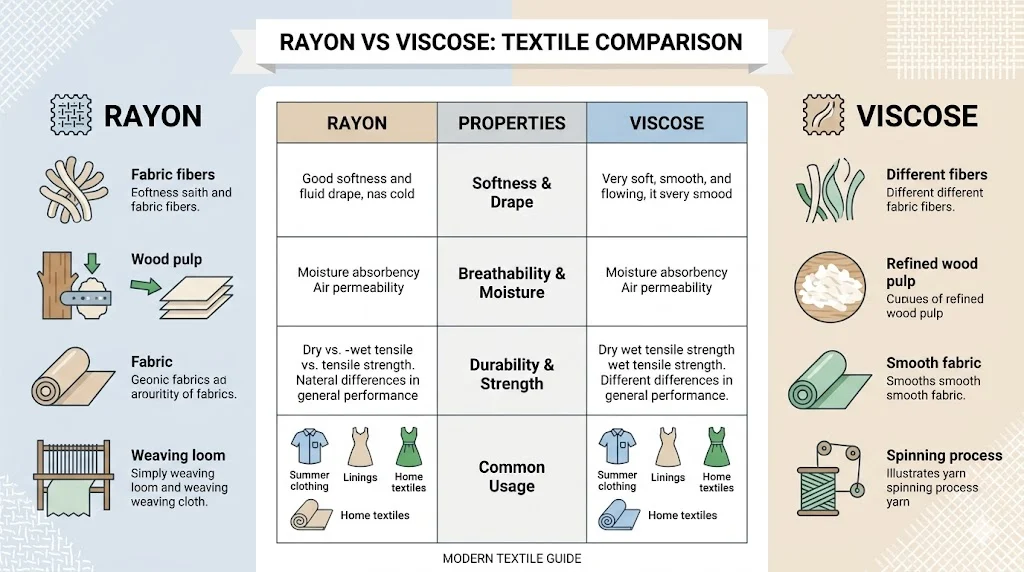
Rayon vs viscose refers to the comparison between two names for the same type of regenerated cellulose fiber used in textiles. Rayon is the general name used in North America, while viscose is the more common term in Europe and many other regions. Both come from natural plant materials like wood pulp, but they are chemically processed into soft, breathable fabrics used in clothing and home textiles.
Imagine slipping into two shirts that feel equally soft, silky, and breathable. One label says Rayon. The other says Viscose. The price is different—but is the fabric really different, or are you simply paying for a different name?
Most shoppers assume rayon and viscose are two separate materials. Surprisingly, that’s one of the biggest misconceptions in the textile world. In reality, they’re so closely related that, in many cases, they’re the same fiber marketed under different names.
This confusion isn’t just about labels—it can affect how you shop, compare fabrics, and judge quality. Rayon and viscose are used in everything from T-shirts and dresses to bedding, curtains, and home furnishings, making it important to understand what these terms actually mean.
The truth is simple: viscose is the most common type of rayon. Both are made from natural wood pulp that’s transformed into a soft, breathable, silk-like fiber through a regeneration process. The difference usually comes down to regional naming conventions, manufacturing methods, or branding—not an entirely different fabric.
In this guide, you’ll uncover the real rayon vs viscose difference, learn how they’re made, compare their pros and cons, explore their common uses, understand their environmental impact, and clear up the myths that confuse millions of buyers. By the end, you’ll know exactly what those fabric labels really mean—and how to choose the right one with confidence.
Quick Answer Overview of Rayon vs Viscose
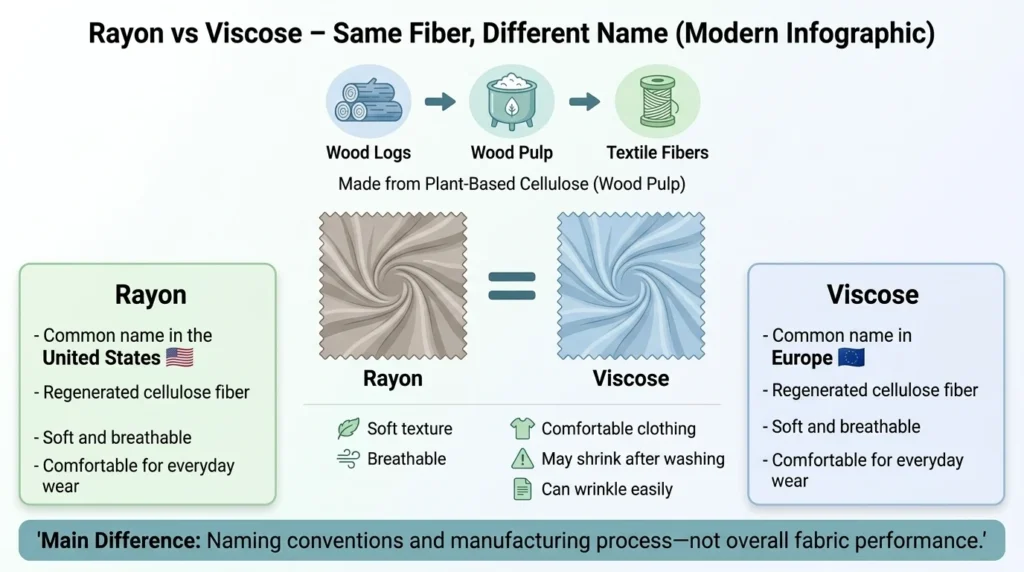
Rayon vs viscose is mainly a naming difference rather than a material difference. Both refer to regenerated cellulose fibers made from plant-based sources like wood pulp. The term “viscose” is commonly used in Europe, while “rayon” is widely used in the United States and other regions.
In most practical cases, rayon and viscose behave similarly in clothing. They are soft, breathable, and comfortable but can shrink or wrinkle easily. The difference lies more in processing methods and industry naming conventions than in final fabric performance.
What Is Rayon vs Viscose
To fully understand rayon vs viscose, we must first understand what each term means in textile science.
What is Rayon?
Rayon is a semi-synthetic fiber made from regenerated cellulose. It is created by dissolving wood pulp or plant fiber and then spinning it into filaments. Rayon was first developed as a cheaper alternative to silk.
Key features of rayon:
- Soft and smooth texture
- High absorbency
- Breathable fabric
- Drapes well on the body
- Often used in fashion clothing
Rayon is a broad category that includes different types such as:
- Viscose rayon
- Modal
- Lyocell (Tencel)
So, rayon is actually the umbrella term.
What is Viscose?
Viscose is a specific type of rayon. It is produced using a chemical process called the viscose process. This process converts wood pulp into a liquid solution and then regenerates it into fiber.
Key features of viscose:
- Very soft and silky feel
- Lightweight and breathable
- Excellent drape
- Common in dresses and linings
In simple words, viscose is a subtype of rayon, but in many countries, the two terms are used interchangeably.
Rayon vs Viscose Quick Comparison Table
| Feature | Rayon | Viscose |
| Definition | General fiber category | Specific type of rayon |
| Origin | Plant cellulose | Plant cellulose |
| Texture | Soft, varies by type | Very soft and smooth |
| Breathability | High | High |
| Moisture absorption | High | High |
| Strength | Moderate | Moderate to low when wet |
| Common use | Global textile industry | Fashion and apparel |
| Naming region | USA and global usage | Europe and Asia |
How Rayon vs Viscose Is Made
Understanding production helps clarify rayon vs viscose differences.
Step 1: Raw Material Collection
Both rayon and viscose start with natural cellulose sources:
- Wood pulp
- Bamboo
- Cotton waste
Step 2: Chemical Processing
The cellulose is treated with chemicals such as:
- Sodium hydroxide
- Carbon disulfide
This creates a thick solution called viscose.
Step 3: Spinning Fibers
The solution is forced through spinnerets to form fibers.
Step 4: Regeneration
The fibers are regenerated into solid cellulose strands.
Step 5: Finishing
Fibers are washed, bleached, and processed into fabric.
Advantages of Rayon vs Viscose
Both materials offer many benefits, making them popular in fashion and home textiles.
Soft and Comfortable
Both rayon and viscose feel soft like silk. This makes them ideal for dresses and shirts.
Breathable Fabric
They allow air circulation, making them comfortable in warm climates.
Good Draping Quality
They fall beautifully on the body, making them ideal for elegant clothing.
Affordable Alternative to Silk
They provide a luxury look at a lower price.
Versatile Usage
Used in:
- Clothing
- Bedsheets
- Curtains
- Lining fabrics
Disadvantages of Rayon vs Viscose
Despite their benefits, rayon vs viscose fabrics also have limitations.
Weak When Wet
Both fabrics lose strength when wet and may tear easily.
Shrinkage Issues
They may shrink after washing if not handled properly.
Wrinkling
They wrinkle easily compared to polyester or nylon.
Chemical Processing Concerns
The production process involves chemicals that raise environmental concerns.
Not Very Durable
They may wear out faster than synthetic fabrics.
Real-World Examples of Rayon vs Viscose
To understand rayon vs viscose, let’s look at real-life applications.
Fashion Industry
- Summer dresses
- Blouses
- Scarves
- Formal wear lining
Home Textiles
- Bedsheets
- Pillow covers
- Curtains
Industrial Use
- Medical dressings
- Non-woven products
- Tire cords (special types)
Example:
A summer dress labeled “viscose” in Europe might be labeled “rayon” in the US, but both are almost identical in feel and behavior.
Regional and Global Usage of Rayon vs Viscose
The confusion in rayon vs viscose mainly comes from regional naming differences.
United States
- Uses the term “rayon”
- Focuses on fiber category
Europe
- Uses “viscose” more commonly
- Strict textile labeling laws
Asia
- Mixed usage depending on manufacturer
Fashion Brands
Global brands may use both terms depending on market labeling rules.
Common Mistakes in Understanding Rayon vs Viscose
Thinking They Are Completely Different
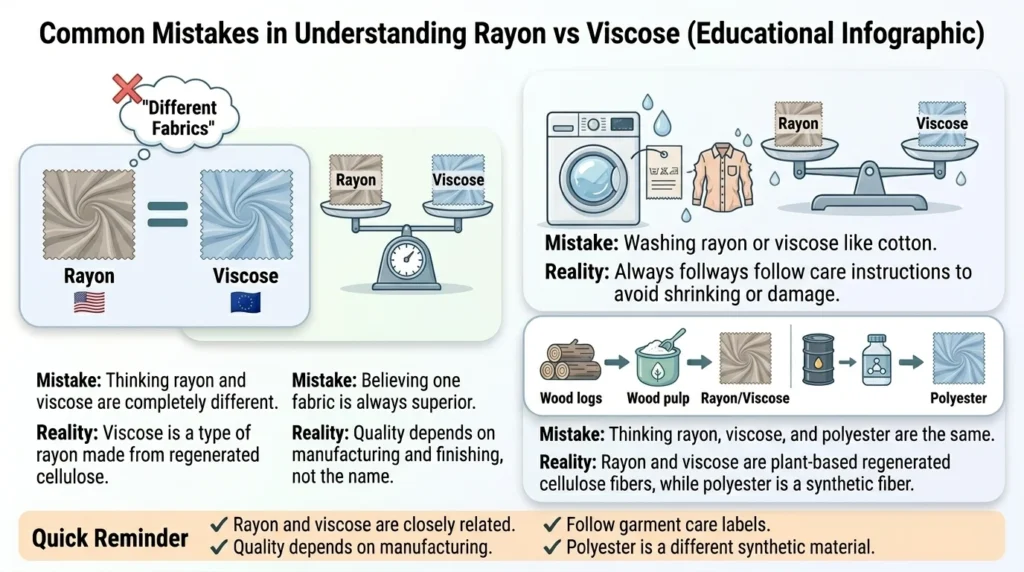
Many believe rayon and viscose are different fabrics. In reality, viscose is a type of rayon.
Assuming One Is Better
Neither is superior. Both depend on processing quality.
Ignoring Care Instructions
People often wash rayon or viscose like cotton, causing damage.
Confusing with Polyester
Rayon vs viscose are natural-based, while polyester is synthetic.
Care Tips for Rayon vs Viscose Fabrics
Proper care improves fabric life.
Washing Tips
- Use cold water
- Gentle hand wash recommended
- Avoid harsh detergents
Drying Tips
- Air dry only
- Avoid direct sunlight
Ironing Tips
- Low heat setting
- Use steam if possible
Exercises with Answers on Rayon vs Viscose
Exercise 1
What is the main difference between rayon and viscose?
Answer: Rayon is a general term, while viscose is a type of rayon.
Exercise 2
Is rayon vs viscose natural or synthetic?
Answer: They are semi-synthetic because they come from natural cellulose but are chemically processed.
Exercise 3
Name two uses of rayon vs viscose.
Answer: Clothing and home textiles like curtains and bedsheets.
Exercise 4
Why does viscose wrinkle easily?
Answer: Because it has low elasticity and weak wet strength.
Exercise 5
Which is more commonly used in Europe?
Answer: Viscose.
Related Concepts and Comparisons
Rayon vs Cotton
Cotton is fully natural, while rayon vs viscose are regenerated fibers.
Rayon vs Polyester
Polyester is fully synthetic and more durable but less breathable.
Viscose vs Modal
Modal is a stronger and more durable version of rayon.
Viscose vs Lyocell
Lyocell is more eco-friendly and stronger than viscose.
Sustainability of Rayon vs Viscose
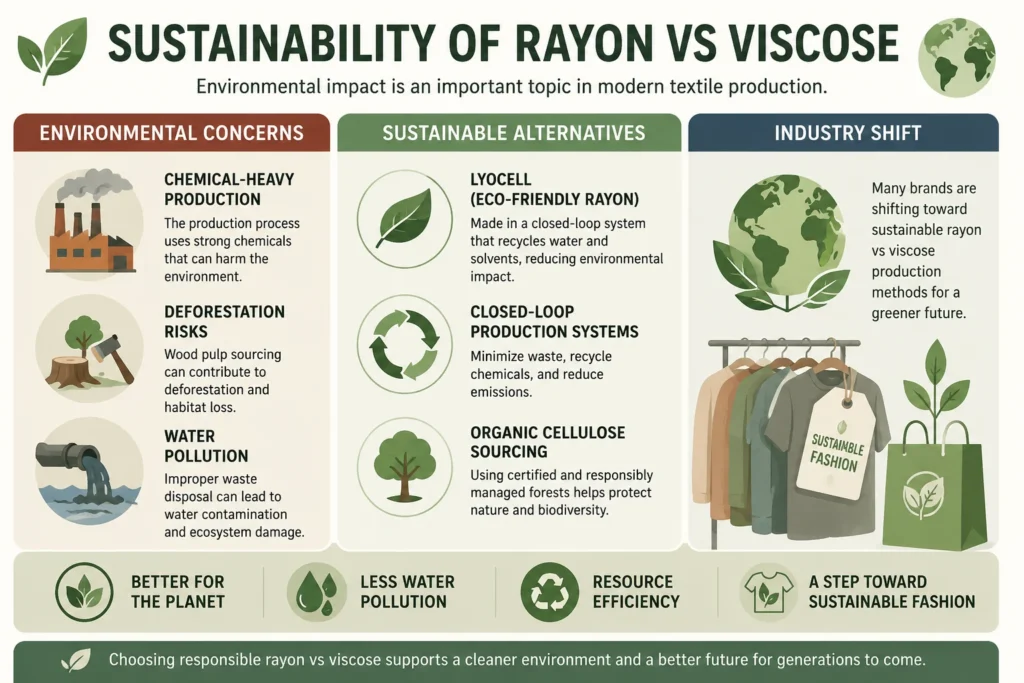
Environmental impact is an important topic in modern textile production.
Environmental Concerns
- Chemical-heavy production
- Deforestation risks
- Water pollution
Sustainable Alternatives
Modern innovations include:
- Lyocell (eco-friendly rayon)
- Closed-loop production systems
- Organic cellulose sourcing
Industry Shift
Many brands are shifting toward sustainable rayon vs viscose production methods.
FAQs
What is rayon vs viscose in simple terms?
They are essentially the same type of fabric, with viscose being a type of rayon.
Is viscose better than rayon?
Neither is better; they are mostly the same, depending on labeling.
Why is rayon called viscose in Europe?
Because of regional textile naming standards and regulations.
Is rayon vs viscose good for summer clothing?
Yes, both are breathable and lightweight, ideal for hot weather.
Does rayon shrink after washing?
Yes, it can shrink if not washed properly.
Is viscose a natural fabric?
It is semi-natural because it comes from plant cellulose but is chemically processed.
Which is more durable, rayon or viscose?
They are similar in durability since viscose is a form of rayon.
Can rayon vs viscose be ironed?
Yes, but at low heat settings to avoid damage.
Is rayon vs viscose expensive?
No, they are affordable compared to silk and other luxury fabrics.
Are rayon and viscose eco-friendly?
Not fully, but newer production methods are improving sustainability.
Conclusion
Understanding rayon vs viscose is essential for students, designers, and shoppers who deal with fabrics regularly. Although the terms may seem different, they usually refer to the same family of regenerated cellulose fibers. The main difference lies in naming conventions rather than material properties.
Both rayon and viscose offer softness, breathability, and elegant draping, making them popular in fashion and home textiles. However, they also require careful handling due to shrinkage and low wet strength.
When choosing between rayon vs viscose, focus less on the name and more on fabric quality, weave type, and care instructions. For sustainable choices, consider newer alternatives like lyocell or eco-friendly rayon production.
By understanding these differences clearly, you can make better purchasing decisions and avoid confusion in textile labeling.

Justin Powell is a writer at GramBrix.com who focuses on grammar, clarity and effective communication, helping readers strengthen their language skills.