
Last Updated on July 31, 2026
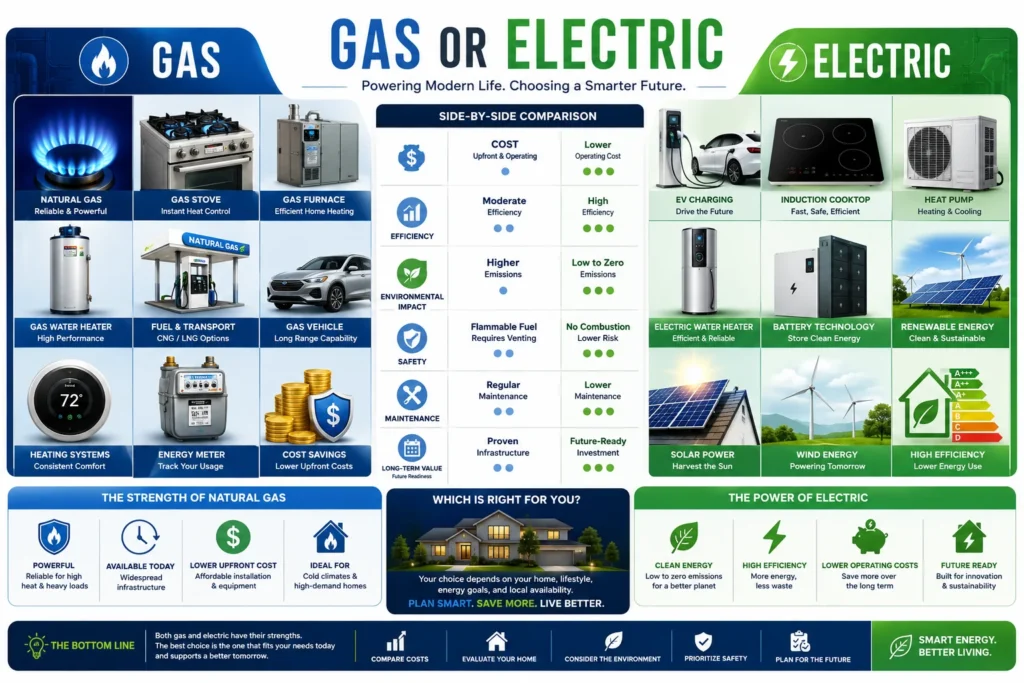
Gas or electric is a common comparison when choosing appliances, vehicles, heating systems, and cooking equipment. Gas options often provide lower operating costs and faster performance, while electric options usually offer better efficiency, safety, and environmental benefits. The right choice depends on your budget, location, energy prices, and long term needs.
The debate between gas or electric affects millions of people every day. Whether you are buying a stove, water heater, car, dryer, furnace, or lawn equipment, the choice can influence your costs, convenience, and environmental impact for years.
Many people struggle with this decision because both options have clear benefits. Gas appliances often provide powerful performance and lower fuel costs in some regions. Electric alternatives are becoming more efficient, easier to maintain, and environmentally friendly as renewable energy grows.
The confusion usually comes from comparing upfront costs with long term savings. A gas appliance may cost less to operate in one area but more in another. An electric product may cost more initially but save money through efficiency and lower maintenance.
This guide explains everything you need to know about gas or electric, from basic definitions to advanced comparisons. By the end, you will understand which option works best for your specific situation and how to make a smart purchasing decision.
Quick Answer
If you want the shortest answer to the gas or electric question:
| Factor | Gas | Electric |
|---|---|---|
| Initial Cost | Often lower | Sometimes higher |
| Energy Efficiency | Moderate | Usually higher |
| Maintenance | More maintenance | Less maintenance |
| Safety | Gas leak risk | Lower risk |
| Environmental Impact | Higher emissions | Lower emissions when using clean energy |
| Performance | Fast heating | Consistent heating |
| Installation | Requires gas line | Easier installation |
| Long Term Trend | Declining in some regions | Growing rapidly |
Choose gas if: fuel prices are low in your area and you need powerful heating or cooking performance.
Choose electric if: you want efficiency, easier maintenance, lower emissions, and future focused technology.
Understanding Gas and Electric Energy
Before comparing gas or electric, it helps to understand what each term means.
What Is Gas Energy?
Gas energy typically comes from natural gas or propane. It is burned to create heat or power.
Common gas powered products include:
- Gas stoves
- Gas furnaces
- Gas water heaters
- Gas dryers
- Gas vehicles
- Gas generators
When gas burns, it releases heat that can be used directly.
What Is Electric Energy?
Electric energy comes from the power grid, solar panels, batteries, or other electricity sources.
Common electric products include:
- Electric stoves
- Electric heat pumps
- Electric water heaters
- Electric dryers
- Electric vehicles
- Electric lawn equipment
Electric systems convert electrical energy into heat, motion, or light.
Why the Gas or Electric Decision Matters
Choosing between gas or electric affects several areas of life.
Cost
Energy bills vary depending on fuel prices.
Environmental Impact
Different energy sources create different amounts of pollution.
Convenience
Maintenance and installation requirements differ.
Performance
Some tasks benefit from rapid gas heating, while others benefit from precise electric control.
Future Value
Many governments and companies are investing heavily in electric technologies.
Gas or Electric for Home Heating
Home heating is one of the biggest energy expenses.
Gas Heating
Gas furnaces burn natural gas to produce heat.
Advantages
- Fast heating
- Powerful performance
- Often lower operating costs in some regions
- Works well in cold climates
Disadvantages
- Carbon emissions
- Gas leak risks
- Requires venting
- More maintenance
Electric Heating
Electric heating includes electric furnaces, heat pumps, and space heaters.
Advantages
- Cleaner operation
- Easier installation
- Lower maintenance
- Better indoor air quality
Disadvantages
- Higher electricity costs in some areas
- May heat more slowly
Heating Comparison Table
| Feature | Gas Heating | Electric Heating |
|---|---|---|
| Heating Speed | Fast | Moderate |
| Maintenance | Higher | Lower |
| Emissions | Higher | Lower |
| Installation | Complex | Simpler |
| Safety | Gas risks | Safer |
Gas or Electric Stoves
Cooking is one of the most discussed gas or electric comparisons.
Gas Stoves
Gas flames provide immediate heat.
Benefits
- Instant temperature changes
- Visual flame control
- Works during some power outages
Drawbacks
- Indoor emissions
- Cleaning challenges
- Open flame risks
Electric Stoves
Electric cooktops use heating elements or induction technology.
Benefits
- Easy cleaning
- Better energy efficiency
- Improved safety
Drawbacks
- Slower response on traditional models
- Requires electricity
Which Is Better for Cooking?
Professional chefs often prefer gas because of quick heat adjustments.
Many homeowners prefer electric or induction because they are easier to clean and more energy efficient.
Gas or Electric Water Heaters
Water heating accounts for a large share of household energy use.
Gas Water Heaters
Pros
- Fast recovery time
- Reliable hot water supply
- Lower operating costs in some areas
Cons
- Ventilation requirements
- Higher maintenance
Electric Water Heaters
Pros
- Simpler installation
- High efficiency
- Lower purchase complexity
Cons
- Slower heating
- Potentially higher operating costs
Gas or Electric Vehicles
The rise of electric vehicles has made the gas or electric debate more important than ever.
Gas Vehicles
Gasoline vehicles dominate roads worldwide.
Advantages
- Wide fuel availability
- Quick refueling
- Lower purchase prices in many cases
Disadvantages
- Fuel expenses
- Emissions
- More moving parts
Electric Vehicles
Electric vehicles use battery powered motors.
Advantages
- Lower operating costs
- Quiet driving
- Reduced maintenance
- Zero tailpipe emissions
Disadvantages
- Charging time
- Battery replacement concerns
- Charging infrastructure varies by region
Vehicle Comparison
| Feature | Gas Vehicle | Electric Vehicle |
|---|---|---|
| Refueling Time | Minutes | Longer charging |
| Maintenance | Higher | Lower |
| Fuel Cost | Higher | Lower |
| Emissions | Higher | Lower |
| Noise | Louder | Quiet |
Gas or Electric Dryers
Clothes dryers are another common comparison.
Gas Dryers
Benefits
- Faster drying
- Lower energy costs in some regions
Drawbacks
- Requires gas connection
- More complex installation
Electric Dryers
Benefits
- Easier installation
- Widely available
Drawbacks
- Longer drying times
- Potentially higher electricity usage
Advantages of Gas
Many consumers still choose gas for practical reasons.
Strong Heating Power
Gas creates immediate heat.
Lower Fuel Costs
In some regions, natural gas remains affordable.
Reliability
Gas systems can operate independently of some electric heating methods.
Fast Performance
Gas stoves and furnaces often respond quickly.
Disadvantages of Gas
Greenhouse Gas Emissions
Burning gas releases carbon dioxide.
Safety Risks
Gas leaks can be dangerous.
Maintenance Requirements
Gas systems often require inspections.
Installation Complexity
Gas lines increase installation requirements.
Advantages of Electric
High Efficiency
Modern electric systems waste less energy.
Environmental Benefits
Electric products can run on renewable energy.
Lower Maintenance
Fewer moving parts reduce service needs.
Safety
No combustion means fewer risks.
Disadvantages of Electric
Electricity Costs
Rates can be high in some locations.
Power Outages
Electric equipment depends on grid availability.
Charging or Heating Time
Some electric products require more time to operate.
Real World Examples
Example 1: Family Home
A family replacing a furnace compares gas or electric.
If natural gas is inexpensive locally, a gas furnace may reduce winter bills.
If electricity comes from renewable sources and heat pumps are efficient, electric heating may be the better long term investment.
Example 2: Apartment Kitchen
A renter choosing between gas or electric cooking may prefer electric because:
- Easier cleaning
- Better safety
- No gas connection concerns
Example 3: Daily Commuter
A commuter driving 50 miles daily might save significant fuel costs with an electric vehicle.
Regional and Global Usage
The answer to gas or electric often depends on location.
North America
Gas remains common for heating and cooking.
Europe
Electric heat pumps are growing rapidly.
Asia
Both gas and electric technologies are widely used depending on infrastructure.
Australia
Electric systems and solar energy adoption continue to increase.
Environmental Impact of Gas or Electric
Environmental concerns are becoming a major factor.
Gas Emissions
Natural gas produces:
- Carbon dioxide
- Methane emissions during extraction
- Air pollutants
Electric Emissions
Electricity emissions depend on the source.
Renewable Sources
- Solar
- Wind
- Hydroelectric
These can make electric products much cleaner.
Fossil Fuel Sources
Electricity generated from coal or gas may still create emissions.
Long Term Cost Comparison
Many buyers focus only on purchase price.
A better approach is total ownership cost.
Gas Costs
- Fuel expenses
- Maintenance
- Repairs
- Installation
Electric Costs
- Electricity bills
- Potential upgrades
- Lower maintenance
Example
A gas furnace may cost less to run annually.
An electric heat pump may save more money over 15 years due to efficiency improvements.
Related Concepts and Comparisons
Understanding these concepts helps when evaluating gas or electric options.
Natural Gas vs Propane
Natural gas arrives through pipelines.
Propane is stored in tanks.
Electric Resistance Heating vs Heat Pumps
Resistance heating creates heat directly.
Heat pumps move heat and are often much more efficient.
Hybrid Systems
Some homes combine gas and electric technologies.
Examples include:
- Hybrid water heaters
- Hybrid vehicles
- Dual fuel heating systems
Common Mistakes When Choosing Gas or Electric
Ignoring Local Energy Prices
Energy costs vary dramatically.
Correction
Compare local utility rates first.
Looking Only at Purchase Price
Cheaper products may cost more over time.
Correction
Calculate total ownership costs.
Forgetting Maintenance Expenses
Gas systems often require more service.
Correction
Include maintenance in your budget.
Ignoring Environmental Goals
Some buyers overlook future sustainability needs.
Correction
Consider long term environmental impact.
Choosing Based on Trends Alone
Popular products are not always the best choice.
Correction
Focus on your actual needs.
Exercises With Answers
Exercise 1
Which option typically has fewer moving parts?
A. Gas
B. Electric
Answer
B. Electric
Exercise 2
Which system generally produces direct combustion emissions?
A. Electric
B. Gas
Answer
B. Gas
Exercise 3
Which technology is often associated with lower maintenance?
A. Electric
B. Gas
Answer
A. Electric
Exercise 4
Which vehicle type usually has lower fueling costs per mile?
A. Electric Vehicle
B. Gas Vehicle
Answer
A. Electric Vehicle
Exercise 5
True or False: Gas appliances require a fuel supply line.
Answer
True
FAQs
Is gas or electric cheaper?
It depends on local utility rates. Gas is cheaper in some regions, while electric systems save more in others.
Is gas or electric better for cooking?
Gas offers instant flame control, while electric and induction cooktops provide efficiency and easy cleaning.
Is gas or electric better for home heating?
Cold climates often favor gas furnaces, while modern heat pumps can provide highly efficient electric heating.
Are electric appliances safer than gas appliances?
Generally yes. Electric appliances eliminate combustion and gas leak risks.
Which is more environmentally friendly, gas or electric?
Electric products powered by renewable energy are usually the cleaner choice.
Should I buy a gas or electric water heater?
Choose gas for rapid heating and choose electric for simpler installation and high efficiency.
Is a gas or electric dryer better?
Gas dryers often dry clothes faster, while electric dryers are easier to install.
Will gas appliances become obsolete?
Not immediately. However, many regions are encouraging greater use of electric technologies.
Are electric vehicles better than gas vehicles?
Electric vehicles often provide lower operating costs and reduced maintenance, while gas vehicles offer faster refueling.
How do I decide between gas or electric?
Compare energy prices, installation costs, maintenance requirements, environmental goals, and long term ownership expenses.
Conclusion
The choice between gas or electric depends on your priorities, location, budget, and future plans. Gas systems continue to offer strong performance, rapid heating, and affordable operation in many areas. Electric technologies, however, are becoming increasingly efficient, environmentally friendly, and cost effective over the long term.
When making a decision, avoid focusing solely on the purchase price. Consider fuel costs, maintenance, safety, environmental impact, and expected lifespan. A gas furnace or stove may be ideal in one home, while an electric heat pump or induction cooktop may be the smarter choice in another.
For most consumers planning for the future, electric technologies are gaining advantages due to improvements in efficiency, renewable energy integration, and reduced maintenance needs. Still, gas remains a practical and reliable solution in many situations.
The best approach is to compare local energy rates, calculate total ownership costs, and select the option that matches your lifestyle and long term goals.

Justin Powell is a writer at GramBrix.com who focuses on grammar, clarity and effective communication, helping readers strengthen their language skills.