Last Updated on August 17, 2026
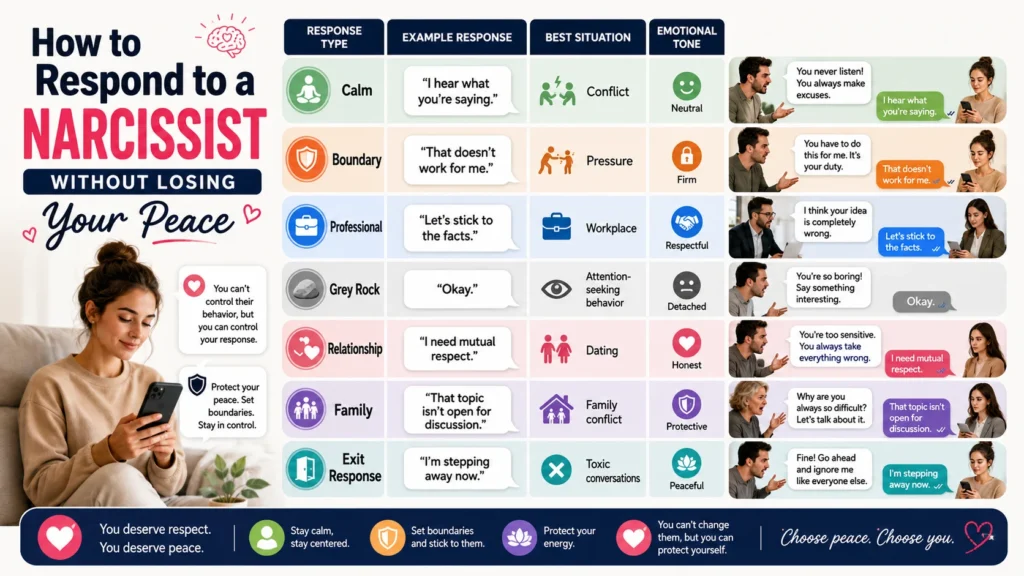
If you’re wondering how to respond to a narcissist, the best approach is to stay calm, set clear boundaries, avoid emotional arguments, and keep your replies short and confident. Narcissists often seek control, attention, or emotional reactions, so your response should protect your peace rather than win the argument.
Best short responses: “I understand your view.”, “I’m not discussing this further.”, “Let’s stick to the facts.”, “I disagree, and that’s okay.”, “I’m ending this conversation now.”
You’ve probably been there.
A text message arrives that instantly raises your stress level.
Maybe it’s a partner twisting your words. A family member making everything about themselves. A coworker demanding praise while ignoring everyone else’s effort.
You stare at the screen wondering what to say.
Responding to a narcissist can feel exhausting because normal communication rules often don’t work. Conversations become arguments. Boundaries become challenges. Simple disagreements somehow become your fault.
The good news is that you don’t need the perfect comeback. You need the right response for the situation.
Whether you’re dealing with a friend, partner, parent, coworker, or someone online, knowing how to respond can help you stay calm, protect your energy, and avoid getting pulled into unnecessary drama.
Calm Responses to a Narcissist
I hear what you’re saying.
Best used when:
Someone is pushing their opinion and wants validation.
Meaning:
This acknowledges their words without agreeing with them. It prevents unnecessary escalation while keeping you emotionally neutral.
That’s your perspective.
Best used when:
A narcissist insists their version of events is the only truth.
Meaning:
You recognize their viewpoint without accepting it as fact.
I see things differently.
Best used when:
You need to disagree respectfully.
Meaning:
A simple statement that reinforces your independence without inviting debate.
Let’s focus on the issue.
Best used when:
The conversation is becoming personal.
Meaning:
It redirects attention away from blame and back to the actual topic.
I understand your point.
Best used when:
You want to de-escalate tension.
Meaning:
Understanding someone’s point is not the same as agreeing with it.
Boundary-Setting Responses
I’m not comfortable with that.
Best used when:
Someone is pushing your limits.
Meaning:
A clear and direct boundary that doesn’t require justification.
That doesn’t work for me.
Best used when:
You need to decline a request.
Meaning:
Short, firm, and difficult to argue against.
I’m not discussing this anymore.
Best used when:
The conversation becomes repetitive or manipulative.
Meaning:
You are choosing to end the discussion.
My decision is final.
Best used when:
Someone keeps challenging your choice.
Meaning:
It signals confidence and closes negotiation attempts.
I need some space right now.
Best used when:
Emotions are running high.
Meaning:
Creates distance and protects your emotional well-being.
Confident Responses
I stand by what I said.
Best used when:
A narcissist tries to make you doubt yourself.
Meaning:
Shows confidence in your thoughts and decisions.
We don’t have to agree.
Best used when:
Someone demands complete agreement.
Meaning:
Healthy relationships allow different opinions.
I’m comfortable with my choice.
Best used when:
Your decisions are being criticized.
Meaning:
Demonstrates self-trust and independence.
I trust my judgment.
Best used when:
Someone is attempting to undermine your confidence.
Meaning:
A powerful reminder that you can think for yourself.
That’s not how I see it.
Best used when:
Facts or experiences are being distorted.
Meaning:
You calmly defend your reality.
Professional Responses
Let’s keep this professional.
Best used when:
Workplace conversations become personal.
Meaning:
Refocuses the discussion on business matters.
Can we stick to the facts?
Best used when:
Emotions are replacing evidence.
Meaning:
Encourages objective communication.
I’d like to discuss solutions.
Best used when:
Someone keeps assigning blame.
Meaning:
Moves the conversation toward progress.
Let’s review the details together.
Best used when:
Facts are being misrepresented.
Meaning:
Encourages accountability.
Thank you for your feedback.
Best used when:
Receiving criticism that may not be constructive.
Meaning:
Polite, professional, and emotionally detached.
Text Message Responses
Noted.
Best used when:
You don’t want to engage further.
Meaning:
A short acknowledgment that doesn’t invite more conflict.
Thanks for sharing your thoughts.
Best used when:
You want to remain polite while staying distant.
Meaning:
Acknowledges the message without validating manipulation.
I’ll think about it.
Best used when:
You need time before responding.
Meaning:
Creates breathing room and avoids impulsive reactions.
I don’t agree, but I respect your right to feel that way.
Best used when:
A disagreement is becoming heated.
Meaning:
Maintains respect while protecting your position.
Let’s talk later.
Best used when:
The conversation is becoming unproductive.
Meaning:
Postpones discussion until emotions settle.
Responses to Gaslighting
That’s not how I remember it.
Best used when:
Someone is rewriting history.
Meaning:
Protects your perception without starting a fight.
My experience was different.
Best used when:
Your feelings are being dismissed.
Meaning:
Validates your reality.
I trust my memory.
Best used when:
A narcissist is trying to create self-doubt.
Meaning:
Reinforces confidence in your recollection.
We clearly remember this differently.
Best used when:
Arguments about the past continue endlessly.
Meaning:
Ends the debate without surrendering your perspective.
I know what happened.
Best used when:
Facts are being blatantly denied.
Meaning:
Simple and firm.
Responses to Criticism
Thanks for your opinion.
Best used when:
Criticism is more about control than improvement.
Meaning:
Polite acknowledgment without emotional investment.
I’ll consider that.
Best used when:
Feedback may contain useful information.
Meaning:
Keeps you open-minded while maintaining control.
I see it differently.
Best used when:
You disagree with the criticism.
Meaning:
Confident but respectful.
That’s one way to look at it.
Best used when:
Someone insists their judgment is correct.
Meaning:
Recognizes their perspective without accepting it.
I appreciate your input.
Best used when:
You want to remain courteous.
Meaning:
Professional and emotionally neutral.
Responses to Manipulation
No.
Best used when:
A clear boundary is needed.
Meaning:
One of the most powerful responses available.
I’m not responsible for your feelings.
Best used when:
Someone uses guilt to influence you.
Meaning:
Separates responsibility appropriately.
That’s your choice.
Best used when:
A narcissist makes threats or ultimatums.
Meaning:
Returns ownership to them.
I won’t be pressured into a decision.
Best used when:
Someone demands an immediate answer.
Meaning:
Protects your decision-making process.
I need time to think.
Best used when:
Manipulation is creating urgency.
Meaning:
Slows down the interaction.
Grey Rock Responses
Okay.
Best used when:
You want minimal engagement.
Meaning:
Neutral and emotionally flat.
I see.
Best used when:
Someone is seeking a reaction.
Meaning:
Acknowledges without rewarding behavior.
That’s interesting.
Best used when:
You want to avoid conflict.
Meaning:
Noncommittal and low energy.
Understood.
Best used when:
A response is required but discussion isn’t.
Meaning:
Brief and neutral.
Thanks for letting me know.
Best used when:
You need to remain polite.
Meaning:
Ends many conversations quickly.
Responses in Family Situations
I love you, but I disagree.
Best used when:
Family conflict involves differing opinions.
Meaning:
Separates love from agreement.
I’m setting a boundary here.
Best used when:
Family members repeatedly cross limits.
Meaning:
Clear and direct.
That topic isn’t open for discussion.
Best used when:
Personal choices are constantly challenged.
Meaning:
Protects your privacy.
Let’s change the subject.
Best used when:
Conversations become toxic.
Meaning:
Redirects attention peacefully.
I’m leaving this conversation.
Best used when:
Respect is disappearing.
Meaning:
A healthy exit strategy.
Responses in Dating and Relationships
I need mutual respect.
Best used when:
Respect is lacking in the relationship.
Meaning:
Communicates an essential need.
That comment hurt me.
Best used when:
You want to express feelings directly.
Meaning:
Honest and clear communication.
I won’t accept being spoken to that way.
Best used when:
Disrespect occurs.
Meaning:
Protects your self-worth.
Healthy relationships require accountability.
Best used when:
Someone avoids responsibility.
Meaning:
Sets expectations for mature communication.
I deserve to be treated with respect.
Best used when:
You need to reinforce your value.
Meaning:
A strong self-respect statement.
Clever Responses
Interesting theory.
Best used when:
Someone presents a distorted narrative.
Meaning:
Lightly challenges the claim without arguing.
We seem to be reading from different scripts.
Best used when:
Reality is being twisted.
Meaning:
Highlights the disconnect calmly.
That’s certainly one interpretation.
Best used when:
A narcissist insists their version is correct.
Meaning:
Keeps emotional distance.
You may be right about your perspective.
Best used when:
You want a diplomatic response.
Meaning:
Recognizes their viewpoint without surrendering yours.
Let’s agree to disagree.
Best used when:
The conversation is going nowhere.
Meaning:
A respectful ending.
Responses to End the Conversation
This discussion is over for me.
Best used when:
Nothing productive is happening.
Meaning:
Clear closure.
I’m stepping away now.
Best used when:
You need immediate distance.
Meaning:
Protects your emotional energy.
We’re not getting anywhere.
Best used when:
The same argument repeats.
Meaning:
Acknowledges reality and ends engagement.
I wish you well.
Best used when:
You want a polite exit.
Meaning:
Ends things respectfully.
Goodbye.
Best used when:
A complete ending is necessary.
Meaning:
Simple, direct, and effective.
Communication Mistakes to Avoid
Trying to Win Every Argument
Best used when:
Recognizing unhealthy communication patterns.
Meaning:
Many narcissists view discussions as competitions rather than conversations.
Over-Explaining Yourself
Best used when:
You feel pressured to justify every decision.
Meaning:
Long explanations often create more opportunities for manipulation.
Reacting Emotionally
Best used when:
You feel provoked.
Meaning:
Strong reactions may fuel further conflict.
Ignoring Boundaries
Best used when:
Someone repeatedly crosses limits.
Meaning:
Boundaries only work when enforced consistently.
Expecting Validation
Best used when:
You want acknowledgment or accountability.
Meaning:
Not everyone is willing or able to provide it.
People Also Ask
What is the best response to a narcissist?
The best response to a narcissist is usually calm, brief, and confident. Avoid emotional arguments and focus on clear boundaries. Statements like “I disagree” or “I’m not discussing this further” often work better than lengthy explanations.
Should you argue with a narcissist?
In most situations, arguing with a narcissist is not productive. Many narcissistic individuals focus on winning rather than understanding. Staying calm and setting limits is usually more effective than trying to prove a point.
How do you respond to narcissistic manipulation?
Respond by recognizing the behavior, maintaining boundaries, and refusing to be pressured. Short responses such as “That’s your choice” or “I need time to think” can reduce manipulation’s impact.
What should you never say to a narcissist?
Avoid insults, personal attacks, and emotionally reactive comments. These often escalate conflict and distract from the real issue. Clear and neutral communication is usually the safer approach.
How do you text a narcissist?
Keep messages concise, factual, and emotionally neutral. Avoid long explanations and unnecessary details. The less emotional energy you provide, the less opportunity there is for conflict.
How can you protect your mental health when dealing with a narcissist?
Protect your mental health by setting boundaries, limiting unnecessary interactions, maintaining supportive relationships, and remembering that you are responsible for your actions, not someone else’s behavior.
Conclusion
Learning how to respond to a narcissist isn’t about finding the perfect comeback. It’s about protecting your time, energy, and emotional well-being. The best response depends on the relationship, the situation, and your goals. Sometimes a calm boundary works best. Sometimes a professional reply is needed. And sometimes the healthiest response is simply ending the conversation. When you focus on clarity, confidence, and self-respect, you gain something far more valuable than winning an argument: peace of mind.

Kevin Brooks is a grammar specialist at GramBrix.com, dedicated to helping readers understand language rules with clarity and confidence. He simplifies complex grammar concepts through practical examples and easy explanations.