Last Updated on August 17, 2026
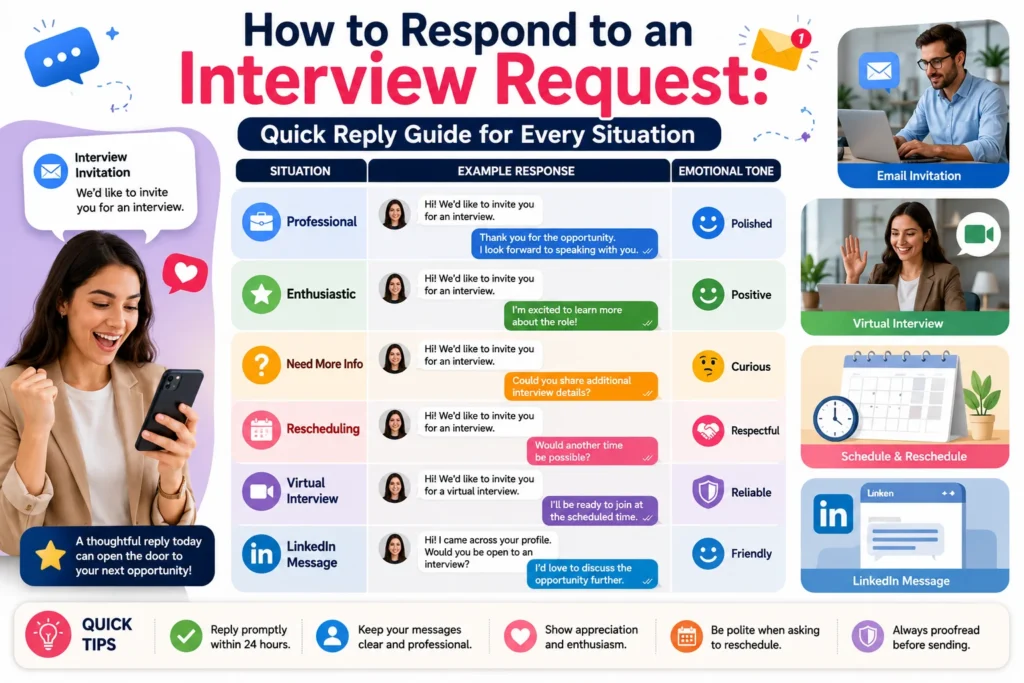
If you’re wondering how to respond to an interview request, the best approach is to reply promptly, express appreciation, confirm your interest, and provide your availability. A professional response shows enthusiasm while keeping communication clear and respectful.
Best short responses: “Thank you for the opportunity.”, “I’d be happy to interview.”, “I appreciate the invitation.”, “I’m available and interested.”, “Looking forward to speaking with you.”
Your phone buzzes.
You open your inbox and see a message from a recruiter or hiring manager.
” We’d like to schedule an interview.”
Exciting? Absolutely.
A little stressful? Also yes.
Many people know how to apply for jobs, but they hesitate when it comes to responding to an interview request. Should you sound formal? Friendly? Enthusiastic? What if you need to reschedule? What if the interview is online?
The truth is that your reply creates a first impression before you even meet the interviewer. A thoughtful response can make you appear professional, confident, and easy to work with.
Whether you’re replying through email, LinkedIn, text message, or another platform, this guide will help you choose the right response for every situation.
Professional Responses to an Interview Request
Thank You for the Opportunity. I Would Be Delighted to Interview.
Best used when:
You want to sound professional and enthusiastic.
Meaning:
This response communicates gratitude and genuine interest without sounding overly excited.
I Appreciate the Invitation and Am Available at the Proposed Time.
Best used when:
The interviewer already suggested a date and time.
Meaning:
It confirms availability while demonstrating professionalism and efficiency.
Thank You for Reaching Out. I Look Forward to Speaking With You.
Best used when:
You want a warm but polished response.
Meaning:
This reply creates a positive impression and signals confidence.
I Am Excited to Learn More About the Role and Team.
Best used when:
You want to show enthusiasm for the opportunity.
Meaning:
Employers often appreciate candidates who express authentic interest.
Thank You. Please Let Me Know If You Need Any Additional Information Before the Interview.
Best used when:
You want to appear proactive.
Meaning:
It shows preparation and willingness to cooperate.
Short Responses to an Interview Request
Thank You. I Am Available.
Best used when:
A concise response is appropriate.
Meaning:
Simple, direct, and professional.
Sounds Great. Looking Forward to It.
Best used when:
The company culture feels friendly and modern.
Meaning:
Shows enthusiasm without unnecessary formality.
I’d Be Happy to Attend.
Best used when:
You want a polite and brief confirmation.
Meaning:
A straightforward acceptance.
Thank You for the Invitation.
Best used when:
You need a quick acknowledgment.
Meaning:
Professional and respectful.
Looking Forward to Our Conversation.
Best used when:
You want a warm closing.
Meaning:
Creates positive anticipation.
Email Responses to an Interview Request
Thank You for Inviting Me to Interview. The Proposed Time Works Well for Me.
Best used when:
Responding to a scheduling email.
Meaning:
Confirms attendance clearly and professionally.
I Appreciate the Opportunity and Confirm My Availability.
Best used when:
You want a polished business response.
Meaning:
Shows reliability and organization.
Thank You. I Have Added the Interview to My Calendar.
Best used when:
Details have already been finalized.
Meaning:
Signals preparedness.
I Am Looking Forward to Discussing the Position Further.
Best used when:
You want to reinforce interest.
Meaning:
Shows engagement with the opportunity.
Thank You for Considering My Application.
Best used when:
You want a respectful tone.
Meaning:
Demonstrates gratitude and professionalism.
Responses When You Need More Information
Thank You. Could You Please Confirm Whether the Interview Is Virtual or In Person?
Best used when:
Interview format is unclear.
Meaning:
Ensures you are fully prepared.
I’d Be Happy to Interview. Could You Share Additional Details About the Meeting?
Best used when:
You need clarification.
Meaning:
Professional and practical.
Thank You. May I Ask Who I Will Be Meeting With?
Best used when:
You want to prepare effectively.
Meaning:
Shows initiative and preparation.
Could You Please Confirm the Expected Duration of the Interview?
Best used when:
Scheduling requires more information.
Meaning:
Helps avoid misunderstandings.
Thank You. Is There Anything You Recommend Reviewing Before Our Meeting?
Best used when:
You want to demonstrate preparation.
Meaning:
Shows seriousness about the opportunity.
Responses When You Need to Reschedule
Thank You for the Invitation. Would It Be Possible to Discuss Alternative Times?
Best used when:
You have a genuine scheduling conflict.
Meaning:
Respectful and flexible.
Unfortunately, I Am Unavailable at That Time but Would Welcome Another Opportunity.
Best used when:
You need a professional reschedule.
Meaning:
Maintains enthusiasm while explaining availability issues.
I Appreciate the Invitation. Could We Explore Another Time Slot?
Best used when:
You want a polite adjustment.
Meaning:
Keeps the conversation positive.
Thank You. I Have a Prior Commitment but Remain Very Interested in the Position.
Best used when:
You need to decline the proposed time.
Meaning:
Reassures the employer of your interest.
Would Any of the Following Times Work Instead?
Best used when:
You want to speed up scheduling.
Meaning:
Makes coordination easier for everyone.
Enthusiastic Responses to an Interview Request
That’s Wonderful News. Thank You for the Opportunity.
Best used when:
You’re genuinely excited.
Meaning:
Expresses enthusiasm while remaining professional.
I’m Excited to Speak With the Team.
Best used when:
You want to show energy.
Meaning:
Signals strong interest.
Thank You. I’m Looking Forward to Learning More About the Position.
Best used when:
You want balanced enthusiasm.
Meaning:
Shows curiosity and engagement.
I Appreciate the Invitation and Am Eager to Connect.
Best used when:
You want a positive tone.
Meaning:
Creates a strong first impression.
This Opportunity Sounds Great. Thank You for Reaching Out.
Best used when:
You want warmth and professionalism.
Meaning:
Highlights genuine interest.
Responses for Virtual Interview Requests
Thank You. I Confirm My Availability for the Virtual Interview.
Best used when:
The interview is online.
Meaning:
Provides clear confirmation.
The Scheduled Time Works Well for Me. I Look Forward to Joining the Meeting.
Best used when:
Meeting details are already provided.
Meaning:
Professional and straightforward.
Thank You. Please Share the Meeting Link When Convenient.
Best used when:
The link is missing.
Meaning:
Ensures preparation.
I Appreciate the Invitation and Am Looking Forward to Connecting Virtually.
Best used when:
You want a polished response.
Meaning:
Friendly and professional.
Thank You. I’ll Be Ready to Join at the Scheduled Time.
Best used when:
Final confirmation is needed.
Meaning:
Signals reliability.
Responses Through LinkedIn Messages
Thank You for Reaching Out. I’d Love to Learn More About the Opportunity.
Best used when:
A recruiter contacts you on LinkedIn.
Meaning:
Friendly and professional.
I Appreciate Your Message and Would Be Happy to Schedule a Conversation.
Best used when:
The recruiter suggests an interview.
Meaning:
Keeps the conversation moving forward.
Thank You. Please Let Me Know the Next Steps.
Best used when:
You need more information.
Meaning:
Shows initiative.
I’d Be Interested in Discussing the Position Further.
Best used when:
You want a concise response.
Meaning:
Professional and direct.
Thank You for Considering My Profile.
Best used when:
A recruiter found you directly.
Meaning:
Demonstrates appreciation.
Friendly Yet Professional Responses
Thank You. I’m Looking Forward to Our Conversation.
Best used when:
You want warmth without being too casual.
Meaning:
Creates a positive tone.
Sounds Great. Thank You for the Invitation.
Best used when:
The company culture feels relaxed.
Meaning:
Friendly and approachable.
I Appreciate the Opportunity and Can’t Wait to Learn More.
Best used when:
You want enthusiasm.
Meaning:
Shows genuine interest.
Thanks for Reaching Out. I’d Be Happy to Connect.
Best used when:
The communication feels informal.
Meaning:
Warm and professional.
Looking Forward to Meeting Everyone.
Best used when:
A team interview is scheduled.
Meaning:
Shows positivity and openness.
Responses for Internal Job Interviews
Thank You for Considering Me for This Opportunity.
Best used when:
Applying within your organization.
Meaning:
Shows gratitude and professionalism.
I Appreciate the Invitation and Look Forward to Discussing My Qualifications.
Best used when:
You want a formal internal response.
Meaning:
Focuses attention on your experience.
Thank You. I Am Excited to Explore This Next Step.
Best used when:
Seeking promotion opportunities.
Meaning:
Demonstrates ambition and enthusiasm.
I Appreciate the Opportunity to Discuss the Role Further.
Best used when:
Interview details are already provided.
Meaning:
Professional and confident.
Looking Forward to Learning More About the Position’s Expectations.
Best used when:
You want additional insight.
Meaning:
Shows curiosity and preparation.
Responses After a Long Job Search
Thank You for the Opportunity. I Am Excited to Connect.
Best used when:
You’ve been searching for a while.
Meaning:
Positive and optimistic.
I Appreciate the Invitation and Look Forward to the Conversation.
Best used when:
You want a balanced response.
Meaning:
Professional enthusiasm.
Thank You for Reviewing My Application.
Best used when:
You want to acknowledge their time.
Meaning:
Respectful and courteous.
I’m Grateful for the Chance to Interview.
Best used when:
You want to express appreciation.
Meaning:
Highlights sincerity.
Looking Forward to Discussing How I Can Contribute.
Best used when:
You want a confident tone.
Meaning:
Focuses on value rather than need.
Common Mistakes to Avoid When Responding to an Interview Request
Replying Too Late
Best used when:
Understanding interview etiquette.
Meaning:
Quick responses show professionalism and interest.
Being Overly Casual
Best used when:
Avoiding communication mistakes.
Meaning:
Even relaxed companies expect professional communication.
Writing Extremely Long Messages
Best used when:
Keeping communication efficient.
Meaning:
Interview confirmations should be clear and concise.
Forgetting to Confirm Availability
Best used when:
Preventing scheduling confusion.
Meaning:
Always clearly state whether the proposed time works.
Ignoring Important Details
Best used when:
Preparing effectively.
Meaning:
Review dates, times, time zones, and meeting links carefully.
Communication Psychology: Why Your Interview Response Matters
First Impressions Begin Before the Interview
Best used when:
Understanding employer expectations.
Meaning:
Your response reflects professionalism, communication skills, and attention to detail.
Enthusiasm Signals Interest
Best used when:
Building rapport with recruiters.
Meaning:
People naturally respond positively to genuine excitement.
Clarity Creates Confidence
Best used when:
Avoiding misunderstandings.
Meaning:
Clear communication makes scheduling easier for everyone.
Professionalism Builds Trust
Best used when:
Creating a positive reputation.
Meaning:
Reliable communication suggests you’ll be reliable at work.
Preparation Shows Commitment
Best used when:
Making a strong impression.
Meaning:
Thoughtful questions often signal serious candidates.
People Also Ask
How should I respond to an interview invitation?
Respond promptly, thank the interviewer, confirm your interest, and provide your availability. A clear and professional reply helps create a positive first impression and keeps the hiring process moving smoothly.
What is the best response to an interview request email?
The best response thanks the sender, confirms your availability, and expresses interest in the role. Keep the message concise, professional, and easy to understand.
How quickly should I respond to an interview request?
Ideally, respond within 24 hours. Quick replies demonstrate professionalism, enthusiasm, and respect for the interviewer’s time while helping secure your preferred interview slot.
Can I ask questions when responding to an interview request?
Yes. It’s perfectly acceptable to ask about interview format, duration, participants, or preparation requirements. Thoughtful questions often show organization and genuine interest.
How do I respond if I need to reschedule an interview?
Thank the interviewer for the opportunity, explain that you have a scheduling conflict, and suggest alternative times. Stay polite, flexible, and appreciative throughout the conversation.
Is it okay to sound excited in an interview response?
Absolutely. Professional enthusiasm can help you stand out. The key is balancing excitement with professionalism so your response feels genuine and respectful.
Conclusion
Learning how to respond to an interview request is about more than confirming a meeting. It’s an opportunity to demonstrate professionalism, confidence, and genuine interest in the role. The best response depends on the situation, the company culture, and your communication style. Whether you’re accepting immediately, requesting more information, or rescheduling, a thoughtful reply helps set the right tone. A few well-chosen words can make the hiring process smoother and leave a positive impression before the interview even starts.

Victoria Lane is a grammar-focused writer at GramBrix.com, passionate about helping readers master the rules of language. She provides clear explanations and practical examples that make writing more accurate, polished and confident.