
Last Updated on July 6, 2026
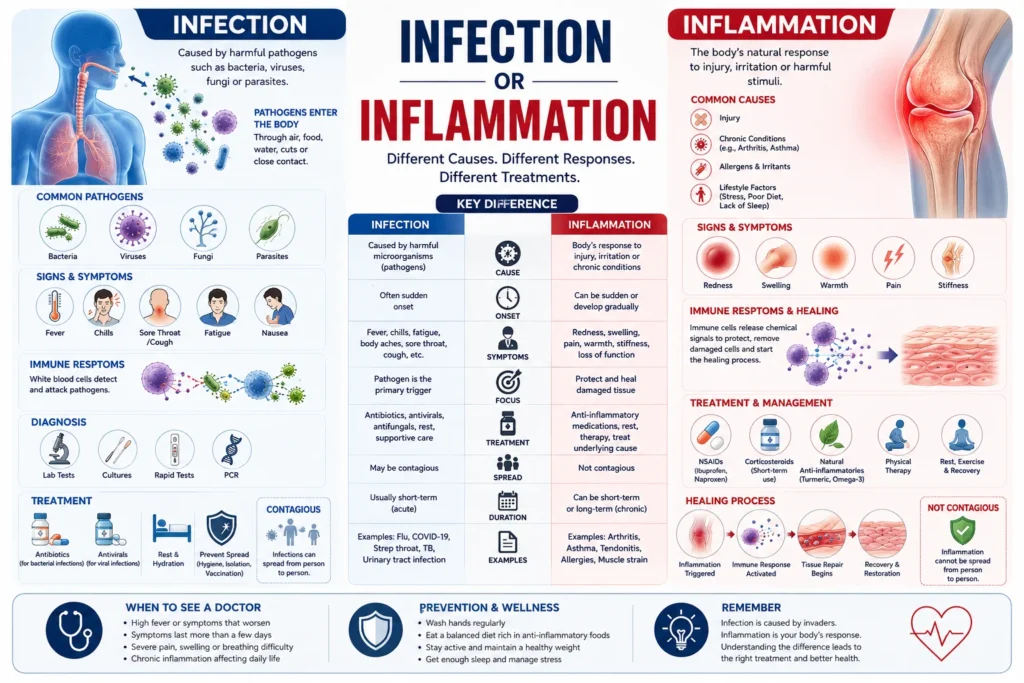
Infection and inflammation are related but not the same. Infection happens when harmful microorganisms such as bacteria, viruses, fungi, or parasites enter the body and multiply. Inflammation is the body’s natural response to injury, irritation, or infection and can occur with or without an infection.
Many people use the terms infection and inflammation as if they mean the same thing. This is a common mistake. While the two are closely connected, they are different medical concepts.
An infection occurs when germs enter the body and begin to grow. These germs may include bacteria, viruses, fungi, or parasites. Inflammation, on the other hand, is the body’s defense response. It helps protect tissues from harm and supports healing.
Understanding the difference between infection or inflammation is important because treatment depends on the cause. An infection may require antibiotics, antiviral drugs, or other treatments. Inflammation may need rest, anti-inflammatory medications, or treatment of an underlying condition.
Whether you are dealing with a swollen joint, a sore throat, a skin rash, or a fever, knowing whether the problem is caused by infection, inflammation, or both can help you make better healthcare decisions. This guide explains everything you need to know in simple language, from basic definitions to real-world examples, common mistakes, and frequently asked questions.
Quick Answer
| Feature | Infection | Inflammation |
|---|---|---|
| Definition | Invasion of the body by harmful microorganisms | Body’s protective response to injury or threat |
| Cause | Bacteria, viruses, fungi, parasites | Injury, infection, autoimmune disease, irritants |
| Contagious | Often yes | No |
| Main Purpose | Harmful process caused by microbes | Protective healing process |
| Symptoms | Fever, pus, fatigue, pain | Redness, swelling, heat, pain |
| Treatment | Antibiotics, antivirals, antifungals | Anti-inflammatory treatment and addressing the cause |
| Can Occur Together | Yes | Yes |
In simple terms, infection causes inflammation, but inflammation does not always mean infection.
What Is an Infection?
An infection happens when harmful microorganisms enter the body and multiply.
These organisms include:
- Bacteria
- Viruses
- Fungi
- Parasites
The immune system works hard to fight these invaders. If the microorganisms overwhelm the body’s defenses, symptoms appear.
Common Signs of Infection
- Fever
- Chills
- Fatigue
- Pus formation
- Swollen lymph nodes
- Cough
- Sore throat
- Diarrhea
- Skin redness
Examples of Infections
- Common cold
- Influenza
- COVID-19
- Urinary tract infection
- Pneumonia
- Strep throat
- Athlete’s foot
An infection can be mild, moderate, or severe depending on the microorganism and the person’s immune system.
What Is Inflammation?
Inflammation is the body’s natural response to damage, injury, irritation, or infection.
It is part of the immune system’s healing process.
When tissues are damaged, the body sends immune cells, proteins, and chemicals to the affected area. This helps remove harmful substances and begin repair.
The Five Classic Signs of Inflammation
| Sign | Description |
|---|---|
| Redness | Increased blood flow |
| Heat | Higher temperature in affected tissue |
| Swelling | Fluid accumulation |
| Pain | Nerve stimulation |
| Loss of function | Reduced movement or function |
Examples of Inflammation Without Infection
- Sprained ankle
- Rheumatoid arthritis
- Asthma
- Tendinitis
- Allergic reactions
- Inflammatory bowel disease
In these conditions, no germs are present, yet inflammation still occurs.
How Infection and Inflammation Are Connected
The relationship between infection and inflammation can be confusing.
Think of infection as a burglar entering a house.
Think of inflammation as the alarm system responding.
The burglar represents harmful microorganisms.
The alarm system represents the body’s defense mechanism.
When an infection occurs, inflammation usually follows. However, the alarm can sound for other reasons too, such as injury or autoimmune disease.
Key Point
- Infection can cause inflammation.
- Inflammation does not always indicate infection.
Types of Infections
Bacterial Infections
Caused by bacteria.
Examples:
- Tuberculosis
- Strep throat
- Urinary tract infections
Often treated with antibiotics.
Viral Infections
Caused by viruses.
Examples:
- Common cold
- COVID-19
- Influenza
Antibiotics do not work against viruses.
Fungal Infections
Caused by fungi.
Examples:
- Ringworm
- Athlete’s foot
- Yeast infections
Usually treated with antifungal medications.
Parasitic Infections
Caused by parasites.
Examples:
- Malaria
- Giardia infection
Treatment depends on the specific parasite.
Types of Inflammation
Acute Inflammation
Short term inflammation.
Occurs after:
- Cuts
- Bruises
- Infections
- Burns
Usually resolves within days or weeks.
Example
A cut finger becomes red and swollen for a few days before healing.
Chronic Inflammation
Long lasting inflammation.
Can persist for months or years.
Associated with:
- Autoimmune diseases
- Obesity
- Diabetes
- Heart disease
Example
A person with rheumatoid arthritis may experience ongoing joint inflammation.
Symptoms: Infection or Inflammation?
The symptoms can overlap.
| Symptom | Infection | Inflammation |
|---|---|---|
| Fever | Common | Possible |
| Redness | Common | Common |
| Swelling | Common | Common |
| Pain | Common | Common |
| Pus | Common | Rare |
| Fatigue | Common | Possible |
| Chills | Common | Rare |
| Heat in tissue | Common | Common |
Symptoms Suggesting Infection
- Fever
- Chills
- Pus
- Foul-smelling discharge
- Positive laboratory cultures
Symptoms Suggesting Inflammation
- Joint stiffness
- Chronic swelling
- Autoimmune disease symptoms
- Injury-related pain
Causes of Infection
Common causes include:
Exposure to Germs
Touching contaminated surfaces.
Poor Hygiene
Insufficient hand washing.
Weak Immune System
The body becomes less able to fight microorganisms.
Contaminated Food or Water
Can introduce bacteria and parasites.
Close Contact
Many infections spread through coughing, sneezing, or physical contact.
Causes of Inflammation
Inflammation may occur due to:
Physical Injury
- Cuts
- Burns
- Fractures
Autoimmune Disorders
The immune system attacks healthy tissues.
Examples:
- Lupus
- Rheumatoid arthritis
Allergies
The immune system reacts to harmless substances.
Environmental Irritants
Examples:
- Smoke
- Pollution
- Chemicals
Chronic Diseases
Conditions such as obesity and diabetes can promote long-term inflammation.
Advantages and Disadvantages of Inflammation
Advantages
Helps Healing
Inflammation initiates tissue repair.
Fights Infections
It recruits immune cells to destroy pathogens.
Removes Damaged Cells
Supports recovery from injury.
Disadvantages
Can Become Chronic
Long-term inflammation may damage tissues.
Causes Pain
Inflammatory chemicals stimulate nerves.
Increases Disease Risk
Chronic inflammation is linked to:
- Heart disease
- Diabetes
- Cancer
- Alzheimer’s disease
Advantages and Disadvantages of the Immune Response to Infection
Advantages
- Eliminates harmful microorganisms
- Creates immune memory
- Prevents disease spread
Disadvantages
- Excessive inflammation can damage tissues
- Severe infections can cause organ failure
- Some infections become chronic
Real World Examples of Infection and Inflammation
Example One: Infected Cut
A child falls and cuts a knee.
Infection
Bacteria enter the wound.
Inflammation
The area becomes:
- Red
- Warm
- Swollen
- Painful
Both infection and inflammation occur together.
Example Two: Sprained Ankle
An athlete twists an ankle.
Infection
No infection exists.
Inflammation
Swelling and pain develop.
This is inflammation without infection.
Example Three: Pneumonia
Bacteria infect the lungs.
The body responds with inflammation inside lung tissue.
Symptoms include:
- Fever
- Cough
- Difficulty breathing
Example Four: Rheumatoid Arthritis
The immune system attacks joints.
Inflammation occurs continuously.
No infection is present.
Regional and Global Impact
Both infection and inflammation affect populations worldwide.
Infections Around the World
Major global infections include:
- Malaria
- Tuberculosis
- HIV/AIDS
- Influenza
Developing countries often face higher infectious disease burdens due to limited healthcare access.
Chronic Inflammation Worldwide
Inflammatory diseases are increasing globally because of:
- Sedentary lifestyles
- Obesity
- Poor diet
- Aging populations
Today, chronic inflammation contributes significantly to healthcare costs around the world.
How Doctors Tell the Difference
Healthcare professionals use several methods.
Medical History
Doctors ask about:
- Symptoms
- Travel history
- Exposure to illness
- Injuries
Physical Examination
They assess:
- Swelling
- Redness
- Fever
- Tenderness
Blood Tests
Common tests include:
- White blood cell count
- C-reactive protein (CRP)
- Erythrocyte sedimentation rate (ESR)
Imaging Tests
Examples:
- X-rays
- CT scans
- MRI scans
Cultures
Samples may be collected from:
- Blood
- Urine
- Sputum
- Wounds
These tests help identify infectious organisms.
Treatment Approaches
Treating Infection
Treatment depends on the cause.
Bacterial Infection
Antibiotics may be prescribed.
Viral Infection
Antiviral medication may help.
Fungal Infection
Antifungal drugs are used.
Parasitic Infection
Special antiparasitic medications may be needed.
Treating Inflammation
Rest
Allows tissues to heal.
Ice
Reduces swelling.
Anti-inflammatory Medication
May reduce pain and inflammation.
Lifestyle Changes
Helpful measures include:
- Exercise
- Healthy diet
- Weight management
- Adequate sleep
Common Mistakes About Infection or Inflammation
Assuming All Swelling Means Infection
Many injuries cause swelling without infection.
Correction
Look for signs such as fever or pus.
Using Antibiotics for Every Condition
Antibiotics only treat bacterial infections.
Correction
Many inflammatory conditions do not require antibiotics.
Ignoring Chronic Inflammation
Long-term inflammation can be harmful.
Correction
Seek medical evaluation for persistent symptoms.
Believing Inflammation Is Always Bad
Inflammation is necessary for healing.
Correction
Acute inflammation is often beneficial.
Self Diagnosing Serious Symptoms
Many conditions have overlapping signs.
Correction
Consult healthcare professionals when symptoms persist or worsen.
Related Concepts and Comparisons
Infection vs Inflammation
| Feature | Infection | Inflammation |
|---|---|---|
| Trigger | Microorganisms | Injury or immune response |
| Contagious | Often | No |
| Requires Germs | Yes | No |
| Can Cause Fever | Yes | Sometimes |
| Can Occur Alone | Yes | Yes |
Acute vs Chronic Inflammation
| Acute | Chronic |
|---|---|
| Short term | Long term |
| Helps healing | May damage tissues |
| Rapid onset | Slow onset |
| Usually resolves | Often persists |
Infection vs Allergy
| Infection | Allergy |
|---|---|
| Caused by germs | Caused by immune reaction |
| May spread | Not contagious |
| Often includes fever | Usually no fever |
Exercises With Answers
Exercise 1
A person develops swelling after twisting an ankle.
Is this infection or inflammation?
Answer
Inflammation.
Exercise 2
A patient has fever, chills, and pus from a wound.
Is this infection or inflammation?
Answer
Likely infection with associated inflammation.
Exercise 3
A person with rheumatoid arthritis experiences joint swelling.
Is this infection or inflammation?
Answer
Inflammation.
Exercise 4
True or False:
Inflammation always means infection.
Answer
False.
Exercise 5
True or False:
An infection usually triggers inflammation.
Answer
True.
FAQs
What is the main difference between infection or inflammation?
Infection is caused by microorganisms entering the body. Inflammation is the body’s response to injury, irritation, or infection.
Can you have inflammation without infection?
Yes. Conditions like arthritis, allergies, and injuries can cause inflammation without any infection.
Can infection occur without inflammation?
Most infections trigger some degree of inflammation because the immune system reacts to the invading microorganisms.
How can I tell if swelling is infection or inflammation?
Signs such as fever, pus, and chills suggest infection. Swelling after an injury often indicates inflammation.
Do antibiotics treat inflammation?
No. Antibiotics treat bacterial infections, not inflammation itself.
What blood tests help distinguish infection or inflammation?
Doctors commonly use CRP, ESR, white blood cell counts, and microbial cultures.
Can chronic inflammation be dangerous?
Yes. Long-term inflammation is associated with heart disease, diabetes, cancer, and other chronic illnesses.
Is fever always a sign of infection?
No. Some inflammatory diseases can also cause fever.
What causes chronic inflammation?
Common causes include obesity, autoimmune disease, smoking, poor diet, and chronic stress.
Why do infection and inflammation often occur together?
The immune system responds to invading microorganisms by creating inflammation to help eliminate the threat and promote healing.
Conclusion
Understanding the difference between infection or inflammation is essential for proper diagnosis and treatment. Although the two terms are often used interchangeably, they describe different processes. Infection occurs when harmful microorganisms invade the body, while inflammation is the body’s natural defense response to injury, irritation, or infection.
A key point to remember is that infection frequently causes inflammation, but inflammation can occur without any infection. Conditions such as arthritis, allergies, and physical injuries are common examples. Symptoms like fever, chills, and pus often suggest infection, whereas swelling and pain after an injury usually indicate inflammation.
Proper diagnosis may require physical examinations, blood tests, imaging studies, or cultures. Treatment depends on the underlying cause and may involve antibiotics, antivirals, anti-inflammatory medications, lifestyle changes, or supportive care.
If symptoms are severe, persistent, or worsening, professional medical evaluation is important. By understanding how infection and inflammation differ, patients can make informed healthcare decisions and seek the most appropriate treatment for their condition.

Kevin Brooks is a grammar specialist at GramBrix.com, dedicated to helping readers understand language rules with clarity and confidence. He simplifies complex grammar concepts through practical examples and easy explanations.