Last Updated on July 13, 2026
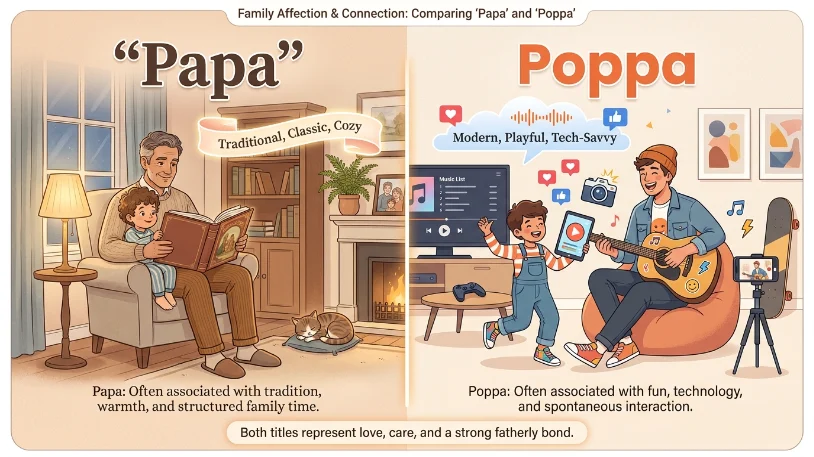
“Poppa” and “Papa” are both affectionate words used for fathers, but they are not always used the same way. “Papa” is the more common and correct spelling in English, while “Poppa” is often informal, emotional, regional, or used in music, family nicknames, and pop culture. The best choice depends on tone, culture, and context.
Many people get confused about the words “poppa” and “papa.” At first glance, they seem almost identical. Both are loving names for a father or grandfather. Both are used in families around the world. But when it comes to spelling, meaning, and proper usage, there are some important differences.
The confusion usually starts online. Some people write “papa,” while others type “poppa” in songs, social media captions, texts, or casual conversations. This makes many writers wonder which word is actually correct.
The truth is simple. “Papa” is the standard and widely accepted spelling in English. “Poppa,” on the other hand, is mostly informal and often used for emotional effect or style.
In this guide, you’ll learn the real difference between poppa or papa, when to use each one, common mistakes people make, and how these words are used in different cultures and real-life situations.
Quick Answer About Poppa or Papa
Which Word Is Correct?
In most situations, “Papa” is the correct and standard spelling.
“Poppa” is considered:
- Informal
- Stylized
- Emotional
- Regional in some areas
Simple Difference Table
| Word | Meaning | Common Usage | Correct Standard English |
|---|---|---|---|
| Papa | Father or dad | Everyday family use | Yes |
| Poppa | Informal version of papa | Songs, nicknames, slang | Sometimes |
Easy Explanation
Think of it this way:
- Papa = traditional and common
- Poppa = expressive and casual
What Does Papa Mean?
Definition of Papa
“Papa” is a loving word for father. It is used in many languages and cultures around the world.
Children often say:
- Papa
- Dad
- Daddy
- Father
Among these, “Papa” sounds warm, respectful, and affectionate.
Where Is Papa Commonly Used?
The word “Papa” is popular in:
- English-speaking homes
- Europe
- South Asia
- Latin America
- Middle Eastern cultures
Many families use “Papa” because it feels softer and more emotional than “Father.”
Example Sentences Using Papa
- My papa taught me how to ride a bike.
- She called her papa after school.
- Papa is coming home tonight.
What Does Poppa Mean?
Definition of Poppa
“Poppa” is a variation of “Papa.” It usually carries a more emotional, dramatic, or stylish tone.
You may see it in:
- Song lyrics
- Movies
- Social media captions
- Informal writing
Why Do People Write Poppa?
People often use “Poppa” to:
- Sound playful
- Add personality
- Create emotional expression
- Copy regional pronunciation
Sometimes the spelling reflects how the word sounds when spoken aloud.
Example Sentences Using Poppa
- Big Poppa is my favorite old-school song.
- Come here, Poppa loves you.
- He always called his grandfather Poppa.
Poppa or Papa: Which One Should You Use?
Use Papa for Correct and Standard Writing
Choose “Papa” when writing:
- School assignments
- Blog articles
- Formal content
- Family stories
- Professional writing
It is grammatically safer and more widely accepted.
Use Poppa for Informal or Creative Tone
Choose “Poppa” when:
- Writing dialogue
- Creating song lyrics
- Posting emotional captions
- Writing character-based stories
Best SEO Choice in 2026
For SEO and Google ranking purposes:
- “Papa” has higher search trust
- “Poppa” has niche emotional searches
- Using both naturally is the best strategy
That’s why this article targets both keywords together.
Main Differences Between Poppa and Papa
Spelling Difference
The main difference is spelling.
- Papa = standard spelling
- Poppa = alternate informal spelling
Tone Difference
| Word | Tone |
|---|---|
| Papa | Soft and respectful |
| Poppa | Casual and expressive |
Usage Difference
“Papa” appears more in:
- Books
- Articles
- Educational content
“Poppa” appears more in:
- Entertainment
- Social media
- Music culture
Real-World Examples of Poppa or Papa
Family Usage
A child may say:
“Papa, can you help me?”
This feels natural and common.
Music and Pop Culture
You may hear:
“Big Poppa”
Here, “Poppa” sounds stylish and memorable.
Social Media Captions
Examples:
- “Miss you, Papa.”
- “Love you forever, Poppa.”
Both work emotionally, but the tone changes slightly.
Regional and Cultural Usage
Papa Around the World
“Papa” is widely used globally.
Countries and cultures using “Papa” include:
- India
- Pakistan
- Germany
- France
- Spain
- Italy
Poppa in Western Media
“Poppa” is more common in:
- American slang
- Old-school music
- Informal storytelling
It is less formal but emotionally expressive.
Common Mistakes People Make
Thinking Poppa Is Always Wrong
This is not true.
“Poppa” is acceptable in casual or artistic contexts.
Using Poppa in Formal Writing
This can look unprofessional.
Example:
❌ “My Poppa attended the meeting.”
Better:
✔ “My Papa attended the meeting.”
Assuming Both Words Have Different Meanings
They usually mean the same thing:
A loving name for a father or older male figure.
Poppa or Papa in Modern Internet Culture
TikTok and Instagram Usage
On social media:
- “Papa” feels emotional and sincere
- “Poppa” feels playful and trendy
Younger users sometimes choose “Poppa” for style.
Search Trends in 2026
Based on recent content patterns:
- “Papa” has broader search volume
- “Poppa” has stronger niche engagement
Writers now combine both naturally for better SEO coverage.
Related Terms and Comparisons
Papa vs Dad
| Word | Feeling |
|---|---|
| Father | Formal |
| Dad | Casual |
| Papa | Warm |
| Poppa | Emotional or stylish |
Papa vs Daddy
“Daddy” often sounds more childish or playful.
“Papa” sounds softer and more mature.
Poppa vs Grandpa
Sometimes “Poppa” is also used for grandfathers in certain families.
Context matters.
Exercises With Answers
Exercise 1
Which spelling is more standard in English?
A. Poppa
B. Papa
Answer: B. Papa
Exercise 2
Which word is more common in songs and slang?
A. Papa
B. Poppa
Answer: B. Poppa
Exercise 3
Which sounds more formal?
A. Papa
B. Poppa
Answer: A. Papa
Exercise 4
Can both words refer to a father?
Answer: Yes.
FAQs
Is papa the correct spelling?
Yes. “Papa” is the standard and widely accepted spelling in English.
Is poppa a real word?
Yes. “Poppa” is an informal variation used in casual speech, music, and emotional writing.
Which is better: poppa or papa?
“Papa” is better for formal and general writing. “Poppa” works better for style and personality.
Why do people spell papa as poppa?
People use “Poppa” to reflect pronunciation, emotion, or creative style.
Is poppa slang?
In some cases, yes. It can sound playful or slang-like depending on context.
Can I use poppa in a blog post?
Yes, but mainly in casual or conversational content.
What does big poppa mean?
“Big Poppa” is a famous slang-style nickname popularized in music and pop culture.
Do different cultures use papa differently?
Yes. Many cultures use “Papa” as a loving and respectful term for father.
Is papa more popular than poppa?
Yes. “Papa” is far more common globally and performs better in standard search results.
Can poppa mean grandfather?
Yes. Some families use “Poppa” for grandfathers or older father figures.
Conclusion
The debate between poppa or papa is really about tone, style, and context. Both words are connected to love, family, and emotional connection, but they are used differently.
“Papa” is the safer and more standard choice. It works well in formal writing, articles, education, and everyday family communication. It feels natural, respectful, and timeless.
“Poppa,” however, adds personality. It appears more in creative writing, entertainment, music, and social media culture. While it is less formal, it can feel warmer or more expressive in the right setting.
If you are writing for SEO or online audiences in 2026, the smartest approach is to use both naturally. This helps you connect with different readers while keeping your content human and readable.
In simple words:
- Use “Papa” for clarity and correctness
- Use “Poppa” for style and emotion
That balance creates writing that feels both natural and modern.

Justin Powell is a writer at GramBrix.com who focuses on grammar, clarity and effective communication, helping readers strengthen their language skills.