Last Updated on August 19, 2026
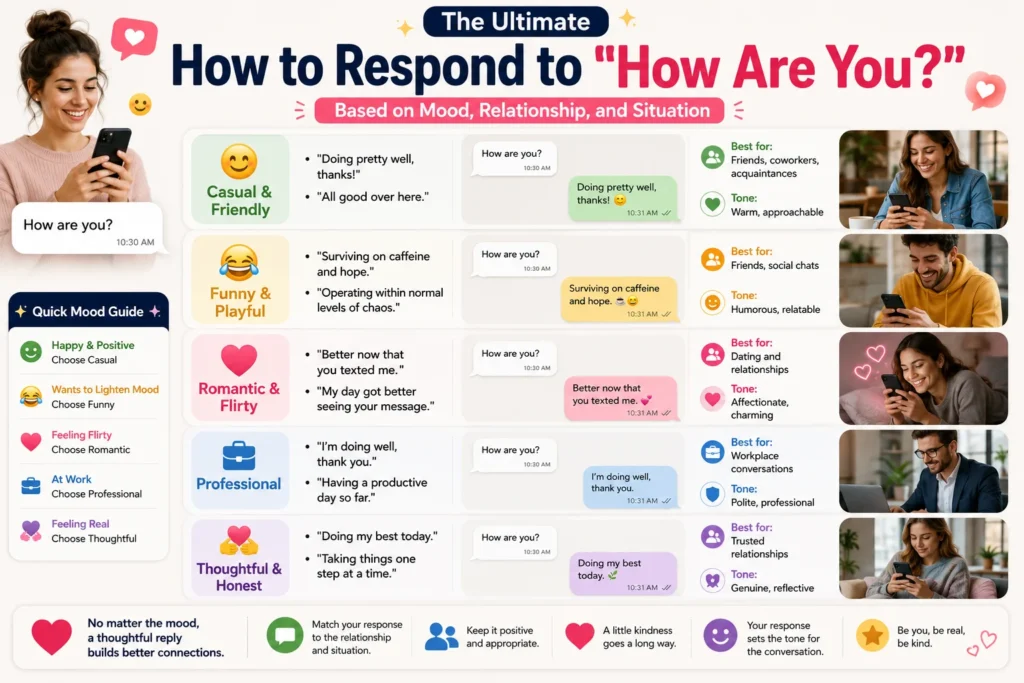
If you’re wondering how to respond to how are you, the best reply depends on your mood, relationship, and situation. Simple, honest, and friendly responses usually work best. Popular replies include: “I’m doing well, thanks!”, “Pretty good, how about you?”, “Can’t complain!”, “Doing my best today!”, “All good here, what about you?”
Your phone lights up with a message.
“Hey, how are you?”
It seems like a simple question. Yet many people pause before replying.
Should you keep it short? Be funny? Open up about your day? Flirt a little? Stay professional?
The truth is that “How are you?” is often more than a greeting. It can be a conversation starter, a sign that someone cares, or even a way to gauge your mood. The right response can make a chat feel warmer, more engaging, and more genuine.
Whether you’re texting a friend, replying to a crush, chatting with family, responding to a coworker, or answering someone in your DMs, this guide will help you find the perfect response for every situation.
What Does “How Are You?” Really Mean?
It’s Often a Conversation Starter
Many people ask “How are you?” as a friendly way to begin a conversation rather than a request for a detailed life update.
Sometimes It’s Genuine Concern
When a close friend, partner, or family member asks, they’re often checking on your emotional well-being.
Context Matters
A coworker asking during a meeting and a best friend texting at midnight are usually looking for very different answers.
Communication experts often notice that successful conversations happen when the response matches the relationship and situation rather than following a single script.
Casual Responses to How Are You
Doing pretty well, thanks!
Best used when:
You want a friendly and positive response.
Meaning:
Shows appreciation while keeping the conversation easy and comfortable.
Can’t complain
Best used when:
Things are okay, even if they aren’t perfect.
Meaning:
A relaxed response that suggests you’re managing life without sounding overly serious.
Hanging in there
Best used when:
You’ve had a busy or challenging day.
Meaning:
Honest without becoming overly negative.
All good over here
Best used when:
You want to keep things light and simple.
Meaning:
Communicates positivity and stability.
Just taking it one day at a time
Best used when:
Life feels busy or uncertain.
Meaning:
Shows realism and resilience.
Funny Responses to How Are You
Surviving purely on caffeine and hope
Best used when:
Talking with friends who enjoy humor.
Meaning:
A playful way to admit you’re busy or tired.
Mentally on vacation, physically at work
Best used when:
Work conversations with friendly coworkers.
Meaning:
Creates humor through relatability.
Better now that you’re here
Best used when:
Friends, crushes, or playful conversations.
Meaning:
Lighthearted and charming.
Operating within normal levels of chaos
Best used when:
You enjoy self-deprecating humor.
Meaning:
Suggests life is hectic but manageable.
Currently undefeated by today’s challenges
Best used when:
You want to sound confident and funny.
Meaning:
Turns an ordinary response into a joke.
Cute Responses to How Are You
Feeling pretty good today
Best used when:
Friendly and positive conversations.
Meaning:
Creates a warm and cheerful vibe.
A little tired but still smiling
Best used when:
You want to be honest without sounding negative.
Meaning:
Shows optimism.
Doing great and sending good vibes
Best used when:
Text messages and social media chats.
Meaning:
Friendly and uplifting.
Happy to hear from you
Best used when:
Someone you like reaches out.
Meaning:
Makes the other person feel valued.
Better than my alarm clock expected
Best used when:
Casual and playful conversations.
Meaning:
Cute humor with positive energy.
Flirty Responses to How Are You
Better now that you texted me
Best used when:
Early flirting and dating conversations.
Meaning:
Shows interest without being overly intense.
I was fine until I started thinking about you
Best used when:
Mutual attraction is already established.
Meaning:
Playful and romantic.
Trying to focus, but you’re making it difficult
Best used when:
Lighthearted flirting.
Meaning:
Suggests attraction in a fun way.
Missing someone, actually
Best used when:
A romantic connection already exists.
Meaning:
Creates curiosity and intimacy.
I’d be even better if we were talking in person
Best used when:
Dating situations.
Meaning:
Signals interest in spending time together.
Romantic Responses to How Are You
My day got better seeing your message
Best used when:
Partners and romantic interests.
Meaning:
Expresses appreciation and affection.
Doing well, especially now
Best used when:
Relationship conversations.
Meaning:
Suggests their presence improves your mood.
Thinking about you a lot today
Best used when:
Long-distance or romantic texting.
Meaning:
Shows emotional connection.
Feeling lucky to have you
Best used when:
Established relationships.
Meaning:
Creates warmth and reassurance.
Honestly, pretty great because of you
Best used when:
Meaningful romantic conversations.
Meaning:
Communicates gratitude and affection.
Thoughtful Responses to How Are You
I’ve had a lot on my mind, but I’m okay
Best used when:
Speaking with someone you trust.
Meaning:
Honest while maintaining boundaries.
Taking things one step at a time
Best used when:
Life feels overwhelming.
Meaning:
Shows resilience and self-awareness.
It’s been a mixed day, but I’m managing
Best used when:
Genuine conversations.
Meaning:
Balanced and realistic.
Doing my best today
Best used when:
You want honesty without negativity.
Meaning:
Signals effort and perseverance.
Thank you for asking, it means a lot
Best used when:
Someone genuinely cares.
Meaning:
Acknowledges emotional support.
Confident Responses to How Are You
Doing great and moving forward
Best used when:
Professional and personal settings.
Meaning:
Shows optimism and momentum.
Feeling strong today
Best used when:
You want to project confidence.
Meaning:
Positive and self-assured.
Better than ever
Best used when:
Celebrating a positive period.
Meaning:
Highlights confidence and growth.
Focused and ready for what’s next
Best used when:
Workplace or career conversations.
Meaning:
Suggests motivation and ambition.
Making progress every day
Best used when:
Discussing goals and achievements.
Meaning:
Reflects growth mindset thinking.
Professional Responses to How Are You
I’m doing well, thank you
Best used when:
Formal workplace settings.
Meaning:
Polite, respectful, and professional.
Things are going smoothly
Best used when:
Business conversations.
Meaning:
Indicates stability and competence.
Having a productive day so far
Best used when:
Meetings and workplace chats.
Meaning:
Professional and positive.
Doing well and staying busy
Best used when:
Networking situations.
Meaning:
Shows engagement and activity.
Everything is going well, thanks for asking
Best used when:
Clients, managers, and colleagues.
Meaning:
Friendly yet professional.
Clever Responses to How Are You
Depends who’s asking
Best used when:
Playful conversations.
Meaning:
Creates curiosity and engagement.
Still collecting data
Best used when:
Funny and intellectual chats.
Meaning:
A creative way to avoid a standard answer.
Ask me after my next coffee
Best used when:
Morning conversations.
Meaning:
Relatable and witty.
Emotionally stable enough to answer this question
Best used when:
Friends who appreciate humor.
Meaning:
Self-aware and entertaining.
Under construction, but improving
Best used when:
Growth-focused conversations.
Meaning:
Honest with a positive twist.
Responses for Friends
Living the dream
Best used when:
Close friends understand your humor.
Meaning:
Often playful and slightly sarcastic.
Same old me
Best used when:
Casual check-ins.
Meaning:
Comfortable and familiar.
Busy but happy
Best used when:
Life is full but positive.
Meaning:
Balanced and upbeat.
Glad you asked
Best used when:
You genuinely want to talk.
Meaning:
Opens the door for deeper conversation.
Keeping myself entertained
Best used when:
Relaxed friendships.
Meaning:
Fun and conversational.
Responses for Family Conversations
Doing well and staying busy
Best used when:
Family catch-ups.
Meaning:
Reassuring and positive.
Everything’s good on my end
Best used when:
Routine family conversations.
Meaning:
Provides comfort and simplicity.
Taking care of myself
Best used when:
Family members who worry about you.
Meaning:
Offers reassurance.
Things are getting better every day
Best used when:
Family support situations.
Meaning:
Encouraging and optimistic.
Grateful for another good day
Best used when:
Meaningful family conversations.
Meaning:
Expresses appreciation and positivity.
Responses for Online Chats and DMs
Vibing, honestly
Best used when:
Social media conversations.
Meaning:
Modern and casual.
Just scrolling and existing
Best used when:
Online friendships.
Meaning:
Relatable internet humor.
Pretty chill today
Best used when:
Relaxed online interactions.
Meaning:
Easygoing and approachable.
Doing alright, what’s new with you?
Best used when:
Keeping the conversation moving.
Meaning:
Friendly and engaging.
Not bad, just enjoying the day
Best used when:
Casual digital conversations.
Meaning:
Positive without sounding forced.
Responses to Avoid
Fine.
Best used when:
Rarely.
Meaning:
Can sound cold, dismissive, or uninterested.
Whatever.
Best used when:
Almost never.
Meaning:
Often feels rude or irritated.
Why do you care?
Best used when:
Only in very specific joking situations.
Meaning:
May make the other person feel rejected.
Same.
Best used when:
When context makes sense.
Meaning:
Can stop a conversation before it starts.
It’s complicated.
Best used when:
Only if you’re prepared to explain further.
Meaning:
Creates uncertainty without providing clarity.
People Also Ask
What is the best response to how are you?
The best response to “How are you?” is one that matches the situation and relationship. A simple reply like “I’m doing well, thanks. How about you?” works in most conversations because it is polite, positive, and keeps the discussion going.
Is it okay to answer honestly when someone asks how are you?
Yes, it’s okay to answer honestly, especially with people you trust. However, the level of detail should match the relationship. Close friends may welcome a deeper answer, while casual acquaintances often expect a brief response.
How do you respond to how are you in a text message?
Text message responses can be casual and natural. Examples include “Doing pretty good!”, “Can’t complain,” “Just taking it easy today,” or “Doing well, what about you?” Short replies often feel more conversational in texting.
How should I respond to how are you at work?
At work, keep your response professional and positive. Replies such as “I’m doing well, thank you,” or “Having a productive day so far” create a friendly impression while maintaining workplace professionalism.
Can how are you be used as a greeting?
Yes. In many situations, “How are you?” functions more as a greeting than a genuine request for detailed information. This is especially common in customer service, networking, and casual everyday interactions.
Why does my response to how are you matter?
Your response sets the tone for the conversation. A thoughtful answer can build connection, encourage engagement, and help others feel comfortable talking with you. Even a short reply can influence the mood of the entire interaction.
Conclusion
Knowing how to respond to how are you isn’t about finding one perfect answer. It’s about matching your response to the moment, your relationship with the other person, and how you’re genuinely feeling.
Sometimes a simple “I’m doing well” is enough. Other times, humor, honesty, warmth, or a little flirtation can create a stronger connection. The best responses feel natural, authentic, and appropriate for the situation.
The next time someone asks, “How are you?”, remember that your reply is more than an answer. It’s an opportunity to shape the conversation and strengthen the connection.

Victoria Lane is a grammar-focused writer at GramBrix.com, passionate about helping readers master the rules of language. She provides clear explanations and practical examples that make writing more accurate, polished and confident.