
Last Updated on July 5, 2026
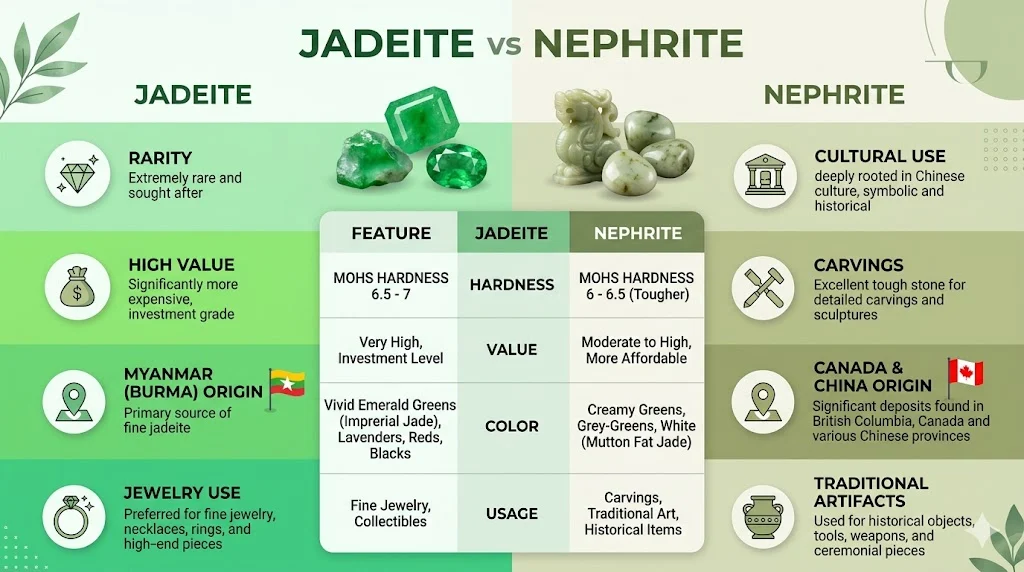
Jadeite and nephrite are two different minerals that are both known as jade, but they differ in composition, hardness, value, and appearance. Jadeite is rarer, harder, and more valuable, while nephrite is more common, softer, and traditionally used in carvings and cultural objects. Both are used in jewelry, but jadeite is often considered the premium form of jade.
Imagine walking into a jewelry store and seeing two beautiful green gemstones labeled simply as “jade.” They look almost identical—but one could be worth hundreds of dollars, while the other might be worth thousands. So, what’s the difference?
The answer surprises many people. Jade isn’t a single gemstone at all. Instead, the name jade refers to two entirely different minerals: jadeite and nephrite. Although they often look similar, they differ in rarity, value, composition, durability, and even cultural significance.
This misunderstanding leads many buyers to overpay, overlook valuable pieces, or assume all jade has the same quality. In reality, jadeite is generally rarer and more valuable, while nephrite is more widely available and has been treasured for centuries for its toughness and rich history.
Whether you’re shopping for jade jewelry, starting a gemstone collection, considering an investment, or simply curious about natural stones, understanding the differences between jadeite vs nephrite can help you make informed decisions. These gemstones also hold profound cultural importance—especially in Asia, where jade has symbolized beauty, prosperity, and protection for thousands of years.
In this comprehensive guide, you’ll discover the key differences between jadeite vs nephrite, learn how to identify each stone, compare their value, durability, colors, and uses, avoid common buying mistakes, and explore real-world examples so you can confidently recognize authentic jade and choose the right type for your needs.
Quick Answer Overview of Jadeite vs Nephrite
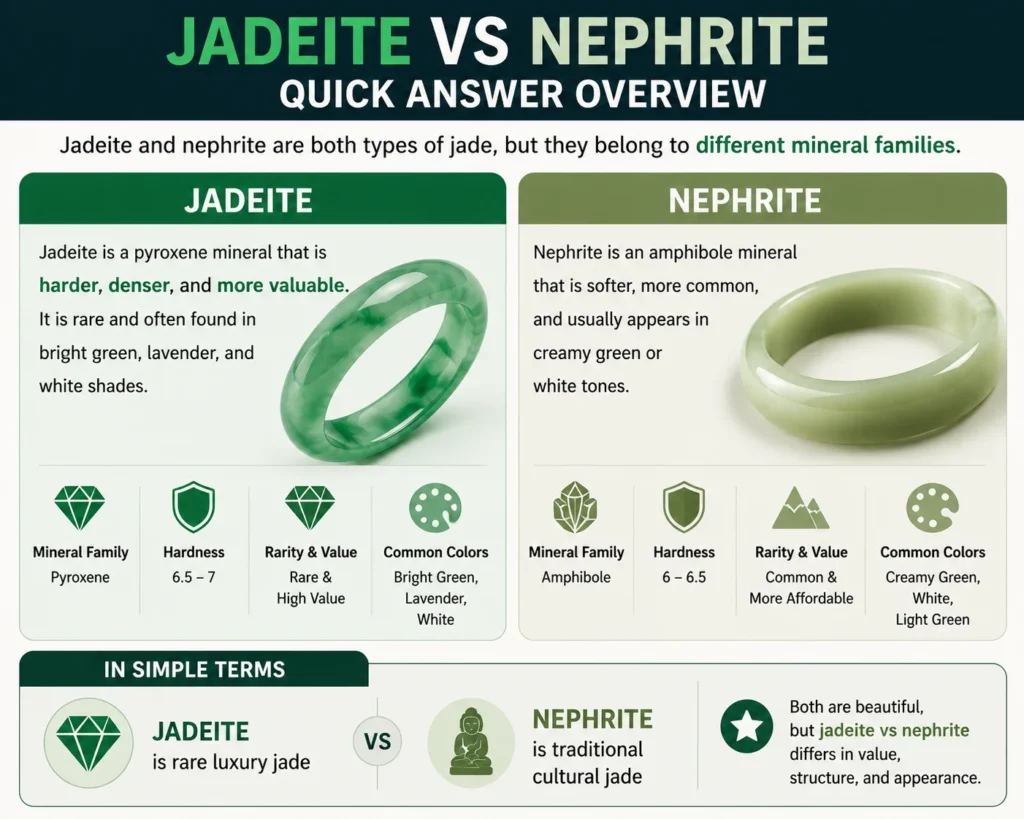
Jadeite and nephrite are both types of jade, but they belong to different mineral families.
Jadeite is a pyroxene mineral that is harder, denser, and more valuable. It is rare and often found in bright green, lavender, and white shades.
Nephrite is an amphibole mineral that is softer, more common, and usually appears in creamy green or white tones. It is widely used for carvings and traditional objects.
In simple terms:
Jadeite is rare luxury jade
Nephrite is traditional cultural jade
Both are beautiful, but jadeite vs nephrite differs in value, structure, and appearance.
Definition and Explanation of Jadeite vs Nephrite
What is Jadeite
Jadeite is a sodium aluminum silicate mineral. It belongs to the pyroxene group. It is the rarer form of jade and is highly valued in the gemstone market.
Key features of jadeite:
High hardness
Bright and vivid colors
High translucency
Found mainly in Myanmar
Jadeite is often used in high end jewelry like rings, bangles, and pendants.
What is Nephrite
Nephrite is a calcium magnesium iron silicate mineral. It belongs to the amphibole group. It is more common than jadeite and has been used for thousands of years.
Key features of nephrite:
Softer than jadeite
Smooth and waxy appearance
Usually green or white
Found in China, Canada, New Zealand, and Russia
Nephrite is famous for carvings, traditional tools, and cultural artifacts.
Jadeite vs Nephrite Core Difference
The main difference between jadeite vs nephrite lies in their mineral composition. Even though they look similar, they have completely different structures.
Jadeite is granular and compact
Nephrite is fibrous and interlocking
This difference affects hardness, shine, and value.
Jadeite vs Nephrite Comparison Table
| Feature | Jadeite | Nephrite |
| Mineral Group | Pyroxene | Amphibole |
| Hardness | Higher (6.5 to 7) | Lower (6 to 6.5) |
| Rarity | Very rare | Common |
| Value | High | Moderate |
| Color Range | Bright green, lavender, white | Creamy green, white |
| Transparency | High | Low to medium |
| Main Source | Myanmar | China, Canada, New Zealand |
| Use | Jewelry, luxury items | Carvings, tools, ornaments |
Advantages and Disadvantages of Jadeite vs Nephrite
Advantages of Jadeite
Highly valuable in the gemstone market
Beautiful vivid colors
High durability for jewelry
Strong cultural and investment value
Disadvantages of Jadeite
Very expensive
Hard to find natural high quality pieces
Often treated or fake versions in market
Advantages of Nephrite
Affordable and widely available
Easy to carve into shapes
Strong cultural and historical value
Durable for daily use objects
Disadvantages of Nephrite
Less valuable in gemstone market
Limited bright color variety
Lower transparency compared to jadeite
Real World Examples of Jadeite vs Nephrite
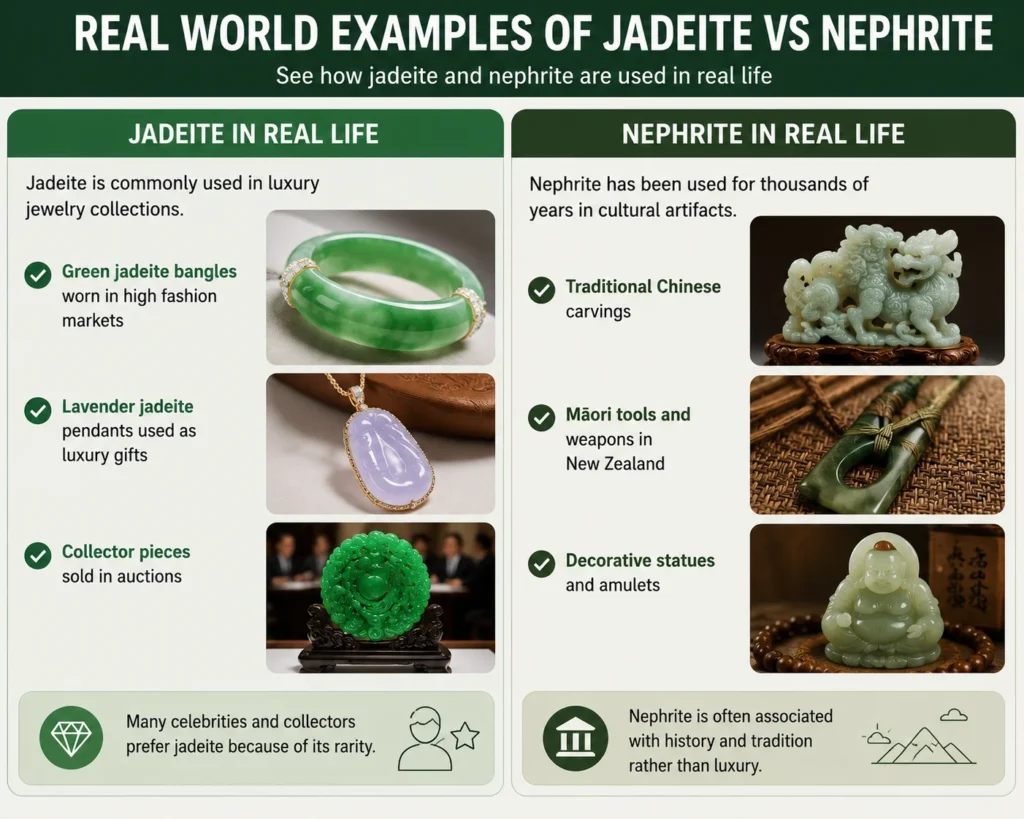
Jadeite in Real Life
Jadeite is commonly used in luxury jewelry collections. For example:
Green jadeite bangles worn in high fashion markets
Lavender jadeite pendants used as luxury gifts
Collector pieces sold in auctions
Many celebrities and collectors prefer jadeite because of its rarity.
Nephrite in Real Life
Nephrite has been used for thousands of years in cultural artifacts.
Traditional Chinese carvings
Māori tools and weapons in New Zealand
Decorative statues and amulets
Nephrite is often associated with history and tradition rather than luxury.
Regional and Global Usage of Jadeite vs Nephrite
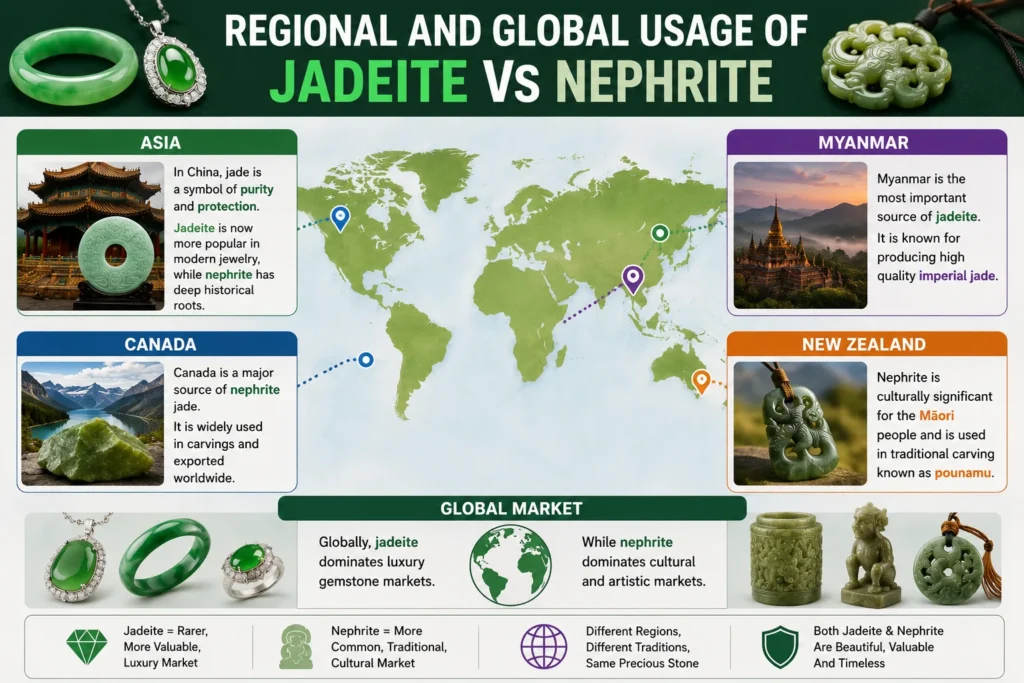
Asia
In China, jade is a symbol of purity and protection. Jadeite is now more popular in modern jewelry, while nephrite has deep historical roots.
Myanmar
Myanmar is the most important source of jadeite. It is known for producing high quality imperial jade.
Canada
Canada is a major source of nephrite jade. It is widely used in carvings and exported worldwide.
New Zealand
Nephrite is culturally significant for the Māori people and is used in traditional carving known as pounamu.
Global Market
Globally, jadeite dominates luxury gemstone markets, while nephrite dominates cultural and artistic markets.
Common Mistakes in Jadeite vs Nephrite Identification
Many buyers make mistakes when comparing jadeite vs nephrite.
Mistake 1: Thinking all jade is the same
Not all jade is equal. Jadeite is more valuable than nephrite.
Mistake 2: Confusing color with quality
Bright color does not always mean jadeite. Some dyed nephrite looks similar.
Mistake 3: Ignoring transparency
Jadeite is usually more translucent, while nephrite is more opaque.
Mistake 4: Buying without certification
Many fake jade stones exist in the market. Always check authenticity.
Mistake 5: Overpaying for nephrite
Some sellers market nephrite as jadeite to increase price.
Exercises with Answers on Jadeite vs Nephrite
Exercise 1
Which is harder jadeite or nephrite?
Answer: Jadeite is harder.
Exercise 2
Which jade type is more expensive?
Answer: Jadeite is more expensive.
Exercise 3
Name one country known for jadeite.
Answer: Myanmar.
Exercise 4
What mineral group does nephrite belong to?
Answer: Amphibole group.
Exercise 5
Which jade type is commonly used for carvings?
Answer: Nephrite.
Related Concepts and Comparisons
Understanding jadeite vs nephrite also connects to other gemstone topics.
Jade vs other gemstones
Jade is different from emerald, quartz, and serpentine.
Gemstone grading
Jadeite is graded based on color, transparency, and texture.
Mohs hardness scale
Jadeite ranks slightly higher than nephrite in hardness.
Cultural significance
Both stones are used in spiritual and symbolic practices.
Investment value
Jadeite is considered a gemstone investment, while nephrite is more cultural.
FAQs
What is the main difference between jadeite vs nephrite?
The main difference is their mineral structure. Jadeite is a pyroxene mineral, while nephrite is an amphibole mineral.
Is jadeite better than nephrite?
Jadeite is considered more valuable and rare, but nephrite has stronger historical and cultural importance.
Why is jadeite more expensive than nephrite?
Jadeite is rarer, more colorful, and harder, which increases its market value.
Can jadeite and nephrite look the same?
Yes, they can look similar, but jadeite is usually more translucent and vibrant.
Where is jadeite found?
Jadeite is mainly found in Myanmar.
Where is nephrite found?
Nephrite is found in China, Canada, Russia, and New Zealand.
Which jade is better for jewelry?
Jadeite is preferred for luxury jewelry due to its shine and rarity.
Is nephrite real jade?
Yes, nephrite is one of the two types of real jade.
How can I tell jadeite from nephrite?
You can check hardness, transparency, and certification from experts.
Which jade is better for investment?
Jadeite is better for investment because of its rarity and demand.
Conclusion
Understanding jadeite vs nephrite is important for anyone interested in gemstones, jewelry, or cultural artifacts. Although both are called jade, they are very different in structure, value, and appearance. Jadeite is rare, bright, and highly valuable, making it the preferred choice in luxury markets. Nephrite is more common, softer, and deeply connected to history and traditional carvings.
If you are buying jade, always check authenticity and understand the difference between jadeite vs nephrite. Do not rely only on appearance, as both can look similar but have very different values.
In simple terms, jadeite is modern luxury jade, while nephrite is traditional cultural jade. Knowing this difference helps you make better buying decisions, avoid scams, and appreciate the true beauty of these natural stones.

Kevin Brooks is a grammar specialist at GramBrix.com, dedicated to helping readers understand language rules with clarity and confidence. He simplifies complex grammar concepts through practical examples and easy explanations.