Last Updated on July 5, 2026
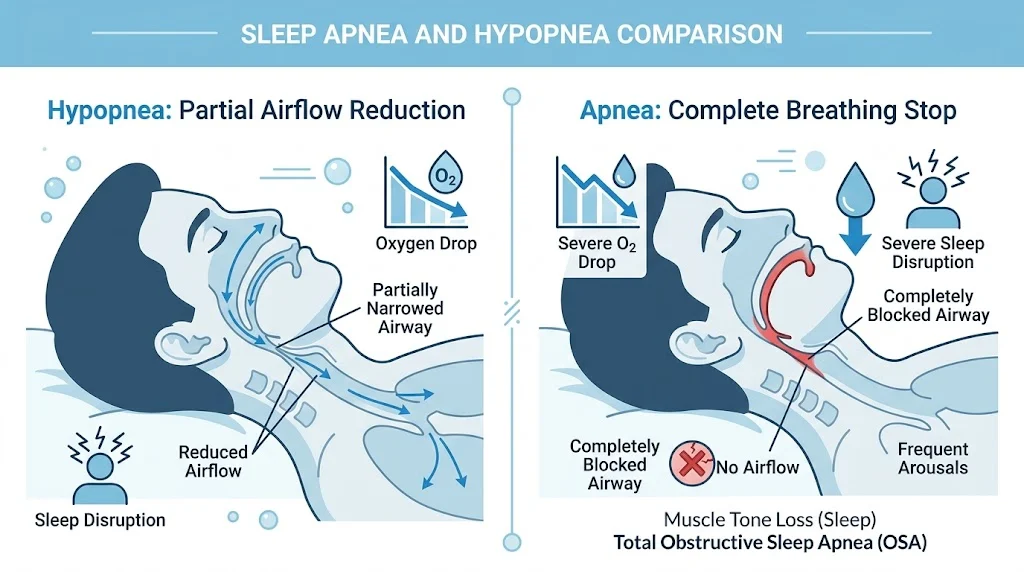
Hypopnea vs apnea refers to two different types of breathing interruptions during sleep. Apnea is a complete pause in breathing, while hypopnea is a partial reduction in airflow. Both conditions are linked to sleep apnea disorders and can affect oxygen levels, sleep quality, and overall health.
Sleep is essential for health, energy, and brain function. But not all sleep is peaceful. Many people suffer from breathing problems at night without knowing it. Two common terms used in sleep medicine are hypopnea vs apnea. These terms sound similar, but they are not the same.
Apnea means breathing fully stops for a short time during sleep. Hypopnea means breathing becomes shallow or partially blocked. Both can lower oxygen levels in the body. Both can also disturb sleep without the person realizing it.
Many people confuse these two conditions. Some think they are identical. Others do not know how serious they can be. In reality, understanding hypopnea vs apnea helps in early diagnosis and better treatment of sleep disorders like obstructive sleep apnea.
This article explains everything in simple words. You will learn definitions, differences, symptoms, causes, examples, and treatments. You will also find exercises, FAQs, and practical advice. By the end, you will clearly understand hypopnea vs apnea and how they affect health.
Quick Answer: Hypopnea vs Apnea Overview
Apnea is a complete stop in airflow for at least 10 seconds during sleep.
Hypopnea is a partial reduction in airflow, usually by 30% or more, also lasting at least 10 seconds.
Both conditions:
- Reduce oxygen levels
- Disrupt sleep cycles
- May cause snoring and fatigue
- Are common in sleep apnea disorders
Definition of Hypopnea vs Apnea
What is Apnea?
Apnea is a condition where breathing stops completely for a short time during sleep. The brain temporarily does not receive enough oxygen signals, and breathing pauses.
Types of apnea include:
- Obstructive apnea (airway blocked)
- Central apnea (brain fails to signal breathing)
- Mixed apnea (combination of both)
During an apnea event:
- Airflow stops completely
- Oxygen levels drop
- Sleep is interrupted briefly
What is Hypopnea?
Hypopnea is a partial blockage or reduction in breathing. Air still flows, but much less than normal.
During hypopnea:
- Airflow decreases by at least 30%
- Oxygen levels drop slightly
- Breathing becomes shallow
- Sleep quality is disturbed
Hypopnea is often harder to notice than apnea, but it still affects health significantly.
Hypopnea vs Apnea: Key Differences
| Feature | Apnea | Hypopnea |
| Airflow | Completely stops | Partially reduced |
| Severity | More severe | Mild to moderate |
| Oxygen drop | Significant | Moderate |
| Detection | Easier to detect | Harder to detect |
| Duration | ≥10 seconds | ≥10 seconds |
| Sound | Often loud gasping afterward | Soft snoring or shallow breathing |
Understanding these differences is important in diagnosing sleep disorders correctly.
How Hypopnea vs Apnea Affects the Body
Both hypopnea vs apnea reduce oxygen supply during sleep. This triggers the brain to wake up briefly to restore breathing.
Effects include:
- Interrupted sleep cycles
- Reduced deep sleep
- Daytime fatigue
- Morning headaches
- Poor concentration
Over time, untreated cases may increase risk of:
- High blood pressure
- Heart disease
- Stroke
- Diabetes
- Weight gain
Even mild hypopnea should not be ignored.
Causes of Hypopnea vs Apnea
Common Causes of Apnea
- Obesity
- Narrow airway
- Enlarged tonsils
- Aging
- Alcohol use
- Sleeping on the back
Common Causes of Hypopnea
- Partial airway blockage
- Relaxed throat muscles
- Nasal congestion
- Obesity
- Sleep position
- Smoking
Both conditions often share similar risk factors.
Symptoms of Hypopnea vs Apnea
Symptoms of Apnea
- Loud snoring
- Sudden gasping for air
- Pauses in breathing during sleep
- Waking up choking
- Extreme daytime sleepiness
Symptoms of Hypopnea
- Soft or mild snoring
- Restless sleep
- Fatigue during the day
- Difficulty concentrating
- Morning dry mouth
Many people have both conditions at the same time in sleep apnea syndrome.
Types of Sleep Disorders Involving Hypopnea vs Apnea
Obstructive Sleep Apnea (OSA)
Most common type. Airway collapses during sleep.
Central Sleep Apnea
Brain fails to send proper signals to breathe.
Mixed Sleep Apnea
Combination of obstructive and central types.
Both hypopnea and apnea events occur in these conditions.
Diagnosis of Hypopnea vs Apnea
Doctors use a sleep study called polysomnography.
What is measured:
- Airflow
- Oxygen levels
- Heart rate
- Brain activity
- Sleep stages
Apnea-Hypopnea Index (AHI)
This index measures severity:
| AHI Score | Condition |
| 0–5 | Normal |
| 5–15 | Mild sleep apnea |
| 15–30 | Moderate |
| 30+ | Severe |
Both apnea and hypopnea events are included in AHI calculation.
Advantages and Disadvantages (Clinical Perspective)
Understanding Apnea vs Hypopnea (Advantage)
- Helps early diagnosis
- Improves treatment accuracy
- Reduces health risks
- Guides CPAP therapy decisions
Challenges (Disadvantages)
- Hypopnea is harder to detect
- Symptoms overlap with other disorders
- Requires expensive sleep studies
- Misdiagnosis is common
Real-World Examples of Hypopnea vs Apnea
Example 1: Apnea
A person stops breathing for 15 seconds during sleep, then suddenly gasps loudly.
Example 2: Hypopnea
A person breathes very shallowly for 20 seconds, causing mild oxygen drop but no full pause.
Example 3: Mixed Case
A patient experiences both full pauses and shallow breathing throughout the night.
Regional and Global Awareness
Awareness of hypopnea vs apnea varies worldwide.
- In developed countries, sleep clinics are common
- In developing regions, many cases go undiagnosed
- Obesity rates are increasing global risk
- Urban lifestyle increases sleep disorders
Public awareness is improving due to health education and online information.
Common Mistakes About Hypopnea vs Apnea
- Thinking snoring is harmless
- Ignoring daytime fatigue
- Believing only apnea is serious
- Assuming only obese people are affected
- Self-diagnosing without sleep study
Correction:
Both hypopnea and apnea are medically important and should be evaluated properly.
Exercises with Answers
Exercise 1
What is the main difference between hypopnea and apnea?
Answer: Apnea is complete breathing stop, hypopnea is partial reduction.
Exercise 2
True or False: Hypopnea has no effect on oxygen levels.
Answer: False
Exercise 3
Which test is used to diagnose hypopnea vs apnea?
Answer: Polysomnography (sleep study)
Exercise 4
What does AHI stand for?
Answer: Apnea-Hypopnea Index
Exercise 5
Name one risk factor common to both conditions.
Answer: Obesity (also smoking, alcohol use, etc.)
Related Concepts and Comparisons
Hypopnea vs Apnea vs Normal Breathing
| Condition | Airflow | Oxygen Level |
| Normal | Full | Stable |
| Hypopnea | Reduced | Slight drop |
| Apnea | Stopped | Major drop |
Sleep Apnea vs Insomnia
- Sleep apnea: breathing problem
- Insomnia: inability to fall asleep
Both affect sleep but are different disorders.
FAQs
What is the main difference between hypopnea vs apnea?
Apnea is complete breathing stoppage, while hypopnea is partial reduction in airflow.
Is hypopnea less dangerous than apnea?
It is usually milder, but long-term effects can still be serious.
Can a person have both hypopnea and apnea?
Yes, most sleep apnea patients experience both conditions.
How is hypopnea vs apnea diagnosed?
Through a sleep study called polysomnography.
What causes hypopnea during sleep?
Partial airway blockage, obesity, and relaxed throat muscles.
Can children suffer from apnea or hypopnea?
Yes, especially due to enlarged tonsils or adenoids.
Is snoring always linked to hypopnea or apnea?
Not always, but it is a common symptom.
Can lifestyle changes improve hypopnea vs apnea?
Yes, weight loss, sleep position changes, and avoiding alcohol can help.
What is the treatment for both conditions?
CPAP therapy, lifestyle changes, oral devices, or surgery in severe cases.
When should I see a doctor?
If you have loud snoring, fatigue, or breathing pauses during sleep.
Conclusion
Understanding hypopnea vs apnea is important for protecting sleep health and overall well-being. Apnea involves a complete stop in breathing, while hypopnea involves partial blockage or reduced airflow. Both conditions can disrupt sleep and lower oxygen levels.
Although hypopnea may seem less serious, it can still contribute to long-term health problems if ignored. Both conditions are often part of sleep apnea syndrome and require proper diagnosis through a sleep study.
If you experience symptoms like loud snoring, fatigue, or breathing pauses, it is important to seek medical advice. Early diagnosis can prevent complications such as heart disease, high blood pressure, and chronic fatigue.
Healthy sleep habits, weight management, and medical treatment can significantly improve both conditions. Understanding the difference between hypopnea vs apnea is the first step toward better sleep and better health.

Victoria Lane is a grammar-focused writer at GramBrix.com, passionate about helping readers master the rules of language. She provides clear explanations and practical examples that make writing more accurate, polished and confident.