
Last Updated on June 17, 2026
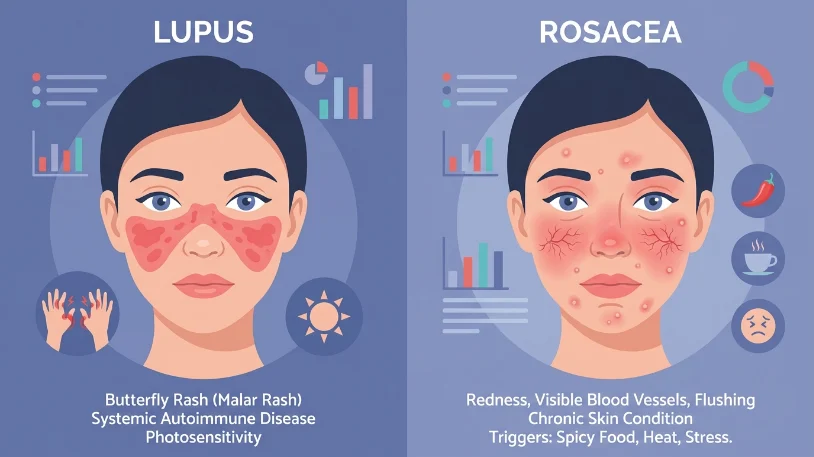
Lupus and rosacea can both cause redness on the face, which is why many people confuse them. The main difference is that lupus is an autoimmune disease that can affect the whole body, while rosacea is a chronic skin condition mainly affecting the face and skin.
Redness on the cheeks or nose may not seem serious at first. Many people think it is just sensitive skin, acne, or irritation from the weather. But sometimes, facial redness can point to a deeper medical condition.
Two conditions that are often confused are lupus and rosacea.
At first glance, they can look similar. Both may cause a red rash across the face. Both can flare up after sunlight exposure. Both are more common in women. This overlap often makes people wonder whether they have lupus or rosacea.
But these conditions are very different.
Rosacea mainly affects the skin and causes facial redness, visible blood vessels, and bumps. Lupus, on the other hand, is an autoimmune disease that may affect the skin, joints, kidneys, and other organs.
Understanding the difference matters because treatment is completely different. In this guide, we’ll explain lupus or rosacea in simple language, including symptoms, causes, diagnosis, treatments, common mistakes, and real-life examples.
Quick Answer / Overview
Here’s the simplest way to understand lupus or rosacea:
- Rosacea = mainly a skin condition
- Lupus = an autoimmune disease affecting the body
Quick Comparison Table
| Feature | Lupus | Rosacea |
|---|---|---|
| Type | Autoimmune disease | Skin condition |
| Main Area | Whole body | Face |
| Facial Rash | Butterfly rash | Red flushing |
| Pain | Joint pain common | Usually no joint pain |
| Triggers | Sunlight, stress | Heat, spicy food |
| Severity | Can become serious | Usually manageable |
| Treatment | Immune system medicines | Skin care and topical treatment |
What Is Lupus?
Lupus is a chronic autoimmune disease. This means the immune system attacks healthy tissues by mistake.
Instead of protecting the body, the immune system becomes overactive.
Lupus may affect:
- Skin
- Joints
- Kidneys
- Heart
- Lungs
- Brain
One of the most common signs is a butterfly-shaped rash across the cheeks and nose.
This rash is why lupus is often confused with rosacea.
Common Symptoms of Lupus
- Extreme tiredness
- Joint pain
- Swelling
- Butterfly facial rash
- Fever
- Hair loss
- Sensitivity to sunlight
Symptoms may come and go in periods called flare-ups.
What Is Rosacea?
Rosacea is a long-term inflammatory skin condition. It mostly affects the face.
Unlike lupus, rosacea does not attack organs inside the body.
It usually causes:
- Redness
- Flushing
- Visible blood vessels
- Small bumps or pimples
Rosacea often develops slowly and becomes worse over time if untreated.
Common Symptoms of Rosacea
- Red cheeks and nose
- Burning or stinging sensation
- Dry skin
- Visible veins
- Acne-like bumps
- Skin sensitivity
In some people, the nose may become thicker over time.
Main Differences Between Lupus or Rosacea
Although both conditions may look similar, there are important differences.
Facial Rash Appearance
Lupus Rash
- Butterfly-shaped
- Flat appearance
- Usually does not contain pimples
Rosacea Rash
- Red flushing
- Often includes bumps and visible blood vessels
- May feel hot or irritated
Symptoms Beyond the Skin
This is one of the biggest differences.
Lupus
May include:
- Joint pain
- Fatigue
- Organ problems
- Fever
Rosacea
Usually limited to:
- Facial redness
- Skin irritation
Triggers
Lupus Triggers
- Sun exposure
- Stress
- Infection
- Hormonal changes
Rosacea Triggers
- Spicy food
- Alcohol
- Hot drinks
- Heat
- Emotional stress
Real-World Examples
Example 1: Rosacea
A woman notices redness after drinking coffee or spending time in hot weather.
She also develops tiny visible veins on her cheeks.
This is more likely rosacea.
Example 2: Lupus
A patient develops facial redness along with:
- Joint pain
- Extreme fatigue
- Fever
Blood tests later confirm lupus.
Advantages and Disadvantages of Early Diagnosis
Benefits of Early Diagnosis
For Lupus
- Prevents organ damage
- Improves quality of life
- Helps control flare-ups
For Rosacea
- Reduces skin irritation
- Prevents worsening redness
- Improves appearance and confidence
Problems with Late Diagnosis
Lupus
Delayed treatment can damage organs.
Rosacea
Untreated rosacea may become more severe and harder to manage.
How Doctors Diagnose Lupus or Rosacea
Doctors use different methods because these conditions are not the same.
Diagnosing Lupus
Doctors may use:
- Blood tests
- ANA test
- Physical exam
- Symptom history
Diagnosing Rosacea
Doctors usually diagnose rosacea through:
- Skin examination
- Medical history
- Visible symptoms
There is no single blood test for rosacea.
Treatment Options
Lupus Treatment
Treatment depends on severity.
Common options include:
- Anti-inflammatory medicines
- Immune suppressants
- Steroids
- Lifestyle changes
Patients are often advised to avoid sunlight.
Rosacea Treatment
Rosacea treatment focuses on reducing redness and flare-ups.
Common treatments:
- Gentle skin care
- Topical creams
- Antibiotics
- Laser therapy
Avoiding triggers is very important.
Common Mistakes People Make
Assuming Facial Redness Is Always Rosacea
Many people ignore lupus because they think it is just skin irritation.
This can delay diagnosis.
Self-Diagnosing Through Internet Photos
Pictures online can be misleading.
Both conditions vary from person to person.
Ignoring Other Symptoms
If redness comes with fatigue or joint pain, it may not be rosacea.
Using Harsh Skin Products
Strong skincare products can worsen rosacea and irritate lupus rashes.
Related Concepts and Comparisons
Lupus vs Rosacea vs Acne
| Feature | Lupus | Rosacea | Acne |
|---|---|---|---|
| Facial Redness | Yes | Yes | Sometimes |
| Pimples | Rare | Common | Common |
| Joint Pain | Common | No | No |
| Organ Involvement | Yes | No | No |
Lupus vs Rosacea in Sunlight
Both conditions may worsen with sunlight.
However:
- Lupus reactions are often more severe
- Rosacea mainly causes flushing and irritation
Regional and Global Usage
Rosacea is very common worldwide, especially in fair-skinned adults.
Lupus is less common but more serious.
In many countries:
- Rosacea is treated mainly by dermatologists
- Lupus often requires multiple specialists
Awareness about lupus is increasing because early diagnosis can prevent complications.
Exercises With Answers
Question 1
Which condition is an autoimmune disease?
Answer: Lupus
Question 2
Which condition mainly affects facial skin?
Answer: Rosacea
Question 3
Which condition may cause joint pain?
Answer: Lupus
Question 4
Which condition is commonly triggered by spicy food?
Answer: Rosacea
Question 5
Which condition may affect internal organs?
Answer: Lupus
FAQs
What is the main difference between lupus or rosacea?
Lupus is an autoimmune disease affecting the body, while rosacea is mainly a skin condition affecting the face.
Can rosacea be mistaken for lupus?
Yes. Both can cause redness across the cheeks and nose.
Does lupus rash look like rosacea?
Sometimes. However, lupus rash is usually flatter and linked with other body symptoms.
Can rosacea cause fatigue and joint pain?
No. Those symptoms are more commonly linked to lupus.
Is lupus more serious than rosacea?
Yes. Lupus can affect organs and become life-threatening in severe cases.
Can sunlight trigger lupus or rosacea?
Yes. Sun exposure may worsen both conditions.
How do doctors confirm lupus?
Doctors usually use blood tests, symptoms, and physical examination.
Can rosacea go away permanently?
Rosacea can be managed well, but there is currently no permanent cure.
Should I see a dermatologist for lupus or rosacea?
Yes. A dermatologist can help evaluate facial rashes and guide diagnosis.
Can stress worsen lupus or rosacea?
Yes. Stress is a common trigger for flare-ups in both conditions.
Conclusion
Lupus and rosacea may look similar on the surface, but they are very different conditions.
Rosacea mainly affects the skin and causes facial redness, flushing, and irritation. Lupus is an autoimmune disease that can affect the skin, joints, and internal organs.
The biggest mistake people make is focusing only on the facial rash. Looking at the full picture is important. Symptoms like fatigue, fever, and joint pain may point toward lupus rather than rosacea.
Early diagnosis makes a huge difference. Proper treatment can help control symptoms, improve comfort, and prevent complications.
If you notice ongoing redness, especially with other unusual symptoms, do not rely only on internet photos or self-diagnosis. Speak with a healthcare professional for proper evaluation.
Understanding the difference between lupus or rosacea is the first step toward getting the right treatment and protecting your long-term health.

Justin Powell is a writer at GramBrix.com who focuses on grammar, clarity and effective communication, helping readers strengthen their language skills.