
Last Updated on June 22, 2026
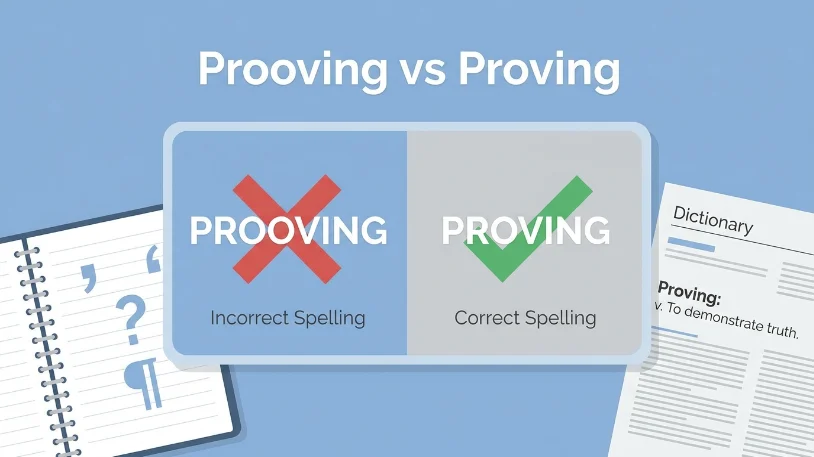
“Proving” is the correct English spelling. “Prooving” is a common spelling mistake caused by confusion about how English verbs change form. If you want proper grammar in writing, always use “proving” instead of “prooving.”
English spelling can be confusing, even for fluent speakers. Some words look correct because they sound natural, but they are actually wrong. One common example is prooving or proving.
Many people accidentally write “prooving” while typing emails, essays, blog posts, or social media captions. At first glance, it seems logical because the base word is “prove.” But English spelling rules do not always work the way people expect.
The correct spelling is proving.
This small mistake may not seem important, but it can affect professional writing, academic work, SEO content, and even job applications. Wrong spelling also makes content look less trustworthy.
In this guide, you’ll learn the difference between prooving or proving, why the mistake happens, grammar rules behind it, common examples, memory tricks, exercises, and frequently asked questions. Everything is explained in simple English so beginners can understand it easily.
Quick Answer / Overview
| Word | Correct or Incorrect | Meaning |
|---|---|---|
| Proving | Correct | Showing something is true |
| Prooving | Incorrect | Misspelling of “proving” |
Short Answer
- ✅ Proving = correct spelling
- ❌ Prooving = incorrect spelling
Example:
- She is proving her point. ✅
- She is prooving her point. ❌
What Does “Proving” Mean?
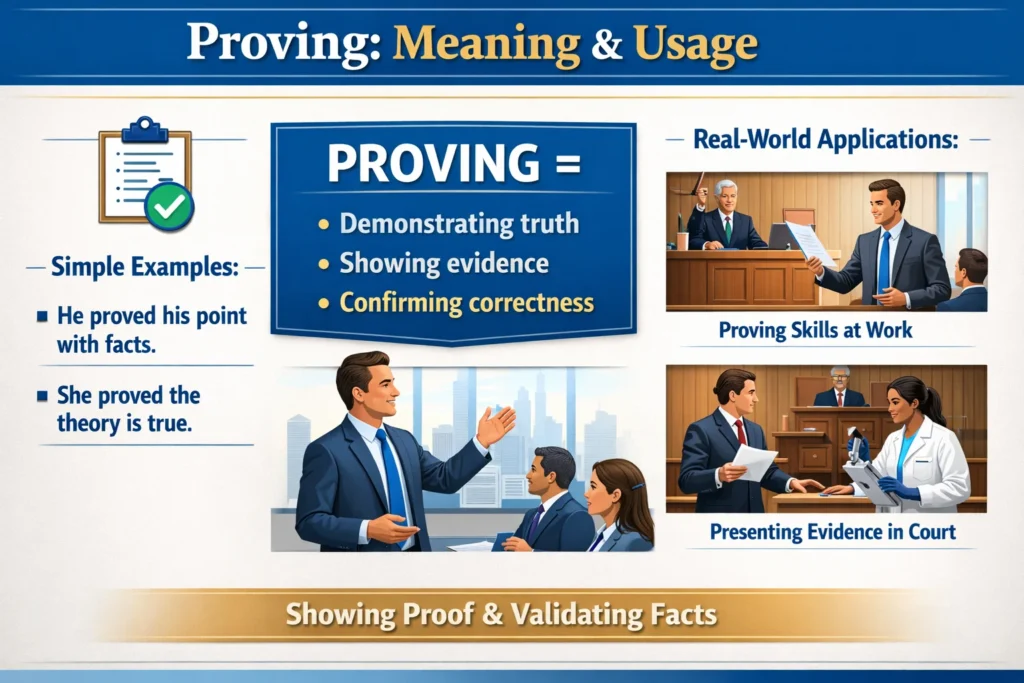
The word proving comes from the verb prove.
“Proving” means:
- Showing evidence
- Demonstrating truth
- Confirming something is correct
Simple Examples
- He is proving his skills at work.
- The lawyer is proving the case in court.
- Science is proving the theory.
In all these examples, “proving” means showing that something is true or real.
Why “Prooving” Is Wrong
Many people think “prove” should become “prooving” because of the double “o” sound.
But English grammar does not follow that rule here.
When we add -ing to the verb prove, we remove the silent “e” first:
- Prove → Proving
This is the standard spelling rule in English.
Similar Examples
| Base Word | Correct ING Form |
|---|---|
| Make | Making |
| Write | Writing |
| Drive | Driving |
| Prove | Proving |
Notice something?
The silent “e” disappears before adding “ing.”
Understanding the Grammar Rule
The Silent “E” Rule
When a verb ends with a silent “e,” the “e” is usually dropped before adding “ing.”
Formula
Verb + ing
Remove silent “e”
Example:
- Live → Living
- Use → Using
- Move → Moving
- Prove → Proving
This is why “prooving” becomes incorrect.
Real-World Examples of Proving

In Education
Teachers may say:
- “The student is proving improvement.”
This means the student is showing progress.
In Business
Managers often use sentences like:
- “The company is proving its value.”
In Sports
- “The player is proving critics wrong.”
This means the player is showing people they were mistaken.
In Relationships
- “She keeps proving her loyalty.”
This means she continuously shows trust and support.
Why People Write “Prooving”
Pronunciation Confusion
The word “prove” sounds long when spoken.
People hear:
“proooove”
So they assume:
“prooving”
But English spelling is not always based on sound alone.
Fast Typing Mistakes
Many spelling mistakes happen during:
- Fast typing
- Mobile texting
- Informal writing
Autocorrect may not always catch it.
Weak Grammar Basics
Some learners never fully study silent “e” rules, so mistakes continue.
Proving in Different Tenses
Understanding tense helps avoid spelling mistakes.
| Tense | Example |
|---|---|
| Present | I prove my point |
| Past | I proved my point |
| Continuous | I am proving my point |
| Perfect | I have proven my point |
Common Mistakes and Corrections
Mistake 1
❌ He is prooving himself.
✅ He is proving himself.
Mistake 2
❌ They are prooving the results.
✅ They are proving the results.
Mistake 3
❌ Scientists are prooving the theory.
✅ Scientists are proving the theory.
Proving vs Proven
People also confuse these words.
| Word | Usage |
|---|---|
| Proving | Action happening now |
| Proven | Something already confirmed |
Examples
- She is proving her talent.
- Her talent is proven.
Proving in Academic Writing
Correct spelling matters a lot in:
- Essays
- Research papers
- Assignments
- Exams
Even small spelling mistakes can reduce credibility.
Example
Incorrect:
The experiment is prooving the hypothesis.
Correct:
The experiment is proving the hypothesis.
Importance of Correct Spelling
Wrong spelling can hurt:
- Blog quality
- Search rankings
- User trust
Google understands spelling mistakes, but readers may lose confidence.
Professional content should always use:
✅ proving
❌ prooving
Simple Memory Trick
Here’s an easy trick:
“Drop the silent E before ING”
- Move → Moving
- Drive → Driving
- Prove → Proving
If you remember this rule, you’ll never write “prooving” again.
Related Concepts and Similar Confusing Words
Loving or Loveing
✅ Loving
❌ Loveing
Using or Useing
✅ Using
❌ Useing
Driving or Driveing
✅ Driving
❌ Driveing
These all follow the same grammar pattern.
Exercises with Answers
Exercise 1
Choose the correct spelling:
He is _____ his innocence.
A. Prooving
B. Proving
Answer:
✅ B. Proving
Exercise 2
Which sentence is correct?
A. She is prooving her skills.
B. She is proving her skills.
Answer:
✅ B. She is proving her skills.
Exercise 3
Fill in the blank:
The scientist is _____ the theory.
Answer:
✅ proving
Exercise 4
True or False:
“Prooving” is an accepted English spelling.
Answer:
❌ False
Exercise 5
What grammar rule applies to “prove → proving”?
Answer:
Remove the silent “e” before adding “ing.”
Regional and Global Usage
The spelling proving is correct in:
- American English
- British English
- Canadian English
- Australian English
There is no English dialect where “prooving” is considered standard.
When “Prooving” Might Appear Online
You may still see “prooving”:
- In social media posts
- In informal chats
- In beginner writing
- In unedited blogs
But professional writers avoid it.
Why Correct Spelling Matters
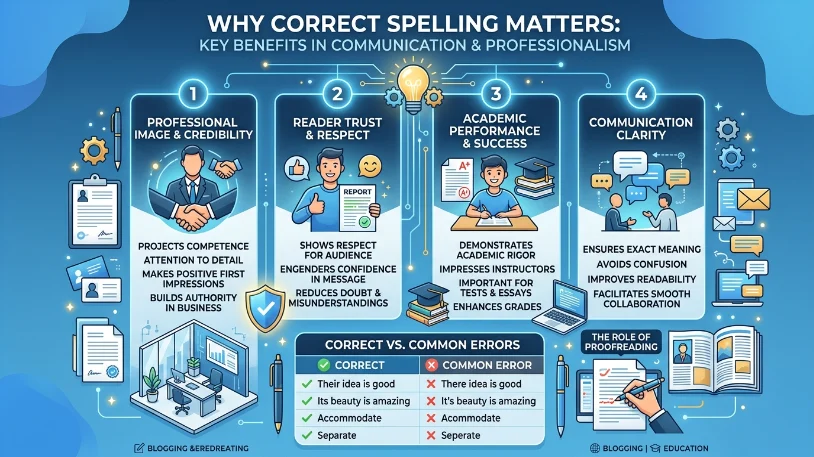
Correct spelling improves:
- Professional image
- Reader trust
- Academic performance
- Communication clarity
Even one small error can make writing look careless.
FAQs
Is proving or prooving correct?
“Proving” is correct. “Prooving” is a spelling mistake.
Why do people write prooving?
People often spell it based on pronunciation and accidentally add an extra “o.”
What is the grammar rule behind proving?
The silent “e” is removed before adding “ing.”
Can I use prooving in formal writing?
No. “Prooving” is incorrect in formal and informal English.
Is proving used in American and British English?
Yes. “Proving” is correct in both forms of English.
What does proving mean?
It means showing that something is true or correct.
How can I remember the correct spelling of proving?
Remember this rule: drop the silent “e” before adding “ing.”
Is proven different from proving?
Yes. “Proving” shows ongoing action, while “proven” means already confirmed.
Does Google recognize prooving as wrong?
Yes. Search engines usually treat “prooving” as a misspelling of “proving.”
Can spelling mistakes affect SEO content?
Yes. Too many mistakes reduce quality and reader trust.
Conclusion
The confusion between prooving or proving is very common, especially among English learners and fast typists. But the correct spelling is simple once you understand the rule.
The correct word is always:
✅ proving
The incorrect spelling is:
❌ prooving
The reason is clear. English grammar usually removes the silent “e” before adding “ing.” That’s why “prove” becomes “proving.”
Using the correct spelling improves your writing quality, professionalism, and communication. Whether you are writing an email, blog post, assignment, or social media caption, spelling matters more than people think.
A small correction can make your writing look much more polished and trustworthy.
So next time you type the word, remember:
Drop the silent “e” and write “proving.”

Kevin Brooks is a grammar specialist at GramBrix.com, dedicated to helping readers understand language rules with clarity and confidence. He simplifies complex grammar concepts through practical examples and easy explanations.