
Last Updated on July 16, 2026
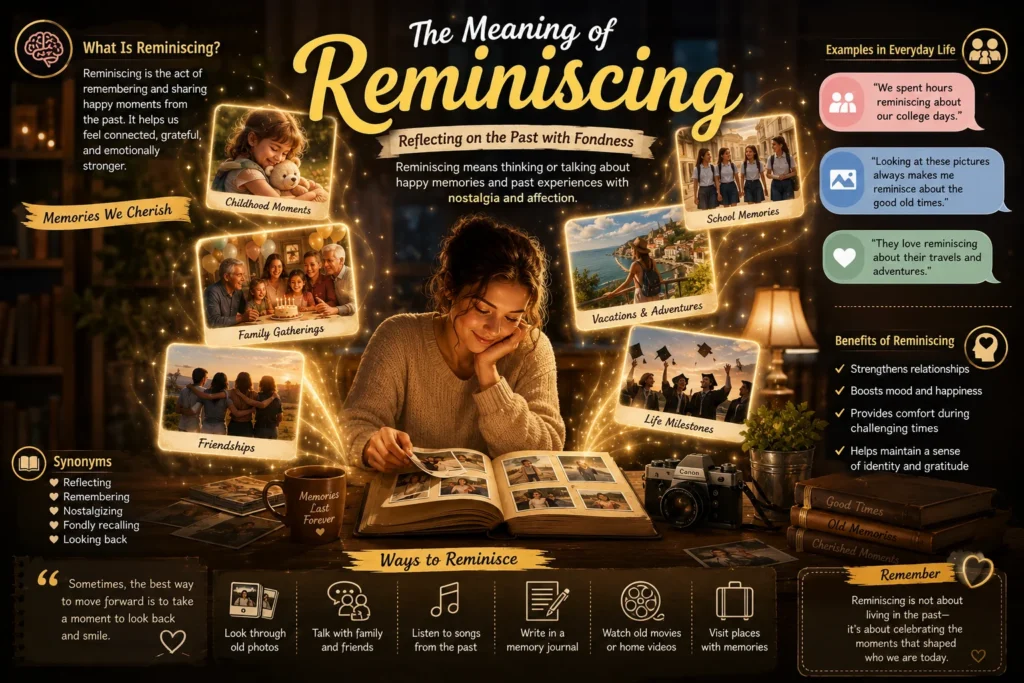
Reminiscing means thinking, talking, or reflecting fondly about past experiences, memories, people, or events. People reminisce when they recall meaningful moments from their lives, often with feelings of nostalgia, happiness, gratitude, or reflection.
Have you ever looked at an old photo, heard a song from your childhood, or met an old friend and suddenly found yourself talking about the past for hours?
That experience is called reminiscing.
The term appears frequently in conversations, books, social media posts, therapy discussions, and everyday life. Yet many people search for the reminiscing meaning because they want to understand exactly what it implies and how it differs from simply remembering something.
Reminiscing goes beyond ordinary memory. It involves revisiting meaningful experiences and reflecting on them with emotion. Sometimes those emotions are joyful. Sometimes they are bittersweet. However, they almost always involve a personal connection to the past.
In this comprehensive guide, you’ll learn the exact definition of reminiscing, its emotional significance, real-world examples, social media usage, related terms, common misunderstandings, conversation examples, and much more.
Quick Answer Box
| Element | Meaning |
|---|---|
| Word | Reminiscing |
| Part of Speech | Verb (present participle of reminisce) |
| Basic Meaning | Thinking or talking about past memories |
| Common Emotion | Nostalgia |
| Positive or Negative | Usually positive or bittersweet |
| Common Contexts | Family, friendships, childhood, relationships |
| Example | “We spent the evening reminiscing about college.” |
| Tone | Reflective, sentimental, nostalgic |
What Does Reminiscing Mean?
Reminiscing means recalling and reflecting on past experiences, often with affection, nostalgia, or emotional significance.
When people reminisce, they revisit memories that hold personal meaning. These memories may involve:
- Childhood experiences
- Family gatherings
- School years
- Friendships
- Vacations
- Relationships
- Career milestones
- Special life events
For example:
“My grandparents spent the afternoon reminiscing about their first home.”
In this sentence, the grandparents are recalling and discussing meaningful memories from their past.
Unlike simply remembering a fact, reminiscing usually involves emotion and storytelling.
Full Definition
The word reminiscing comes from the verb reminisce, which means:
To indulge in enjoyable recollection of past events, experiences, or memories.
People often reminisce when something triggers a memory.
Common triggers include:
- Old photographs
- Music
- Family reunions
- Social media memories
- Childhood locations
- Historical events
- Anniversaries
Reminiscing often includes both remembering and sharing memories with others.
For instance:
- Looking through a yearbook
- Discussing old vacations
- Talking about school days
- Revisiting childhood neighborhoods
Therefore, reminiscing serves as both a personal and social activity.
Context & Usage
The meaning of reminiscing can vary slightly depending on the situation.
Personal Reflection
People often reminisce alone.
Examples include:
- Looking through old photo albums
- Reading journals
- Revisiting favorite songs
In these situations, reminiscing becomes a form of personal reflection.
Family Conversations
Families frequently reminisce during gatherings.
Examples:
- Discussing childhood stories
- Remembering grandparents
- Sharing holiday memories
These conversations help strengthen family connections.
Friendships
Old friends often spend hours reminiscing.
For example:
- College experiences
- Road trips
- School adventures
- Shared challenges
Consequently, reminiscing helps reinforce social bonds.
Romantic Relationships
Couples often reminisce about:
- First dates
- Wedding days
- Special milestones
- Shared experiences
This type of reminiscing can increase emotional closeness.
Professional Settings
Even workplaces encourage reminiscing.
Examples include:
- Retirement celebrations
- Company anniversaries
- Team achievements
These discussions help preserve organizational history.
Real-Life Examples
Conversation Example 1
Emma: Remember our high school graduation?
Olivia: Absolutely. I was reminiscing about that yesterday.
Meaning: Looking back fondly on a meaningful memory.
Conversation Example 2
David: What are you doing?
James: Just reminiscing while looking through old family photos.
Meaning: Reflecting on past experiences.
Conversation Example 3
Sarah: Why are you smiling?
Rachel: I found videos from our childhood. I’ve been reminiscing all morning.
Meaning: Enjoying nostalgic memories.
Conversation Example 4
Mark: How was the reunion?
Chris: Amazing. Everyone spent the night reminiscing about college.
Meaning: Sharing stories from the past.
Conversation Example 5
Lisa: That song brings back memories.
Karen: Same here. It always gets me reminiscing.
Meaning: Music triggered nostalgic reflection.
Platform-Specific Meaning
Although reminiscing has the same core meaning everywhere, its usage differs across digital platforms.
Facebook often encourages reminiscing through:
- Memory features
- Anniversary posts
- Throwback photos
Examples:
- “Reminiscing about our family vacation from 2018.”
- “Can’t believe this was ten years ago.”
Facebook heavily promotes nostalgic engagement.
Instagram users frequently reminisce through:
- Throwback Thursday posts
- Story highlights
- Old photo collections
Examples:
- “Reminiscing about summer adventures.”
- “Those were unforgettable days.”
TikTok
TikTok creators often use reminiscing content for:
- Childhood trends
- Nostalgia videos
- School memories
- Millennial and Gen Z experiences
Examples include:
- “If you remember this, you’re officially reminiscing.”
- “Core childhood memory unlocked.”
X (Twitter)
On X, reminiscing appears through:
- Historical discussions
- Sports memories
- Entertainment nostalgia
Users frequently revisit significant cultural moments.
WhatsApp conversations often involve reminiscing among close friends and family.
Examples:
- Sharing old photos
- Revisiting memorable events
- Discussing past experiences
Professionals reminisce about:
- Career milestones
- Industry changes
- Early work experiences
The tone is often reflective and inspirational.
Alternative Meanings
Although reminiscing usually refers to positive memories, the emotional experience can vary.
Happy Reminiscing
Examples:
- Childhood birthdays
- Family vacations
- Wedding celebrations
This form creates feelings of joy and gratitude.
Bittersweet Reminiscing
Sometimes memories bring both happiness and sadness.
Examples:
- Remembering a loved one who passed away
- Thinking about past relationships
- Reflecting on old friendships
Reflective Reminiscing
This type focuses on personal growth.
Examples:
- Learning from mistakes
- Appreciating life changes
- Recognizing achievements
Collective Reminiscing
Groups often reminisce together.
Examples:
- Class reunions
- Family gatherings
- Team celebrations
Shared memories create social connection.
Related Terms / NLP Variations
People searching for reminiscing meaning may also search for related terms.
Common Related Searches
- Reminiscing definition
- What does reminiscing mean?
- Reminiscing meaning in text
- Reminiscing about the past
- Nostalgic meaning
- Looking back meaning
- Memory reflection meaning
- Reminisce meaning
- Sentimental meaning
- Nostalgia definition
Synonyms of Reminiscing
- Remembering
- Recalling
- Reflecting
- Looking back
- Recollecting
- Thinking back
- Revisiting memories
- Nostalgizing
- Reflecting on the past
Reminiscing vs Remembering
| Reminiscing | Remembering |
|---|---|
| Emotional | Can be emotional or factual |
| Often enjoyable | Neutral |
| Usually detailed | Can be brief |
| Involves storytelling | May not involve discussion |
For example:
Remembering:
- “I remember her name.”
Reminiscing:
- “I spent hours reminiscing about our childhood adventures.”
How to Respond / Reply
When someone says they are reminiscing, several natural responses work well.
Supportive Responses
- “Those sound like wonderful memories.”
- “I love hearing stories like that.”
- “That must have been a special time.”
Curious Responses
- “What were you reminiscing about?”
- “Tell me more.”
- “What memory came to mind?”
Shared Reminiscing
- “I remember that too.”
- “Those were great days.”
- “I miss those moments.”
Reflective Responses
- “It’s amazing how fast time passes.”
- “Looking back can be really meaningful.”
These responses help continue the conversation naturally.
Misinterpretations
Many people misunderstand the word reminiscing.
Assuming It Means Being Stuck in the Past
Reminiscing does not automatically mean someone cannot move forward.
Most people simply enjoy revisiting meaningful memories.
Thinking It Is Always Sad
Some memories may create sadness.
However, reminiscing is often positive and enjoyable.
Confusing It With Daydreaming
Daydreaming involves imagining possibilities.
Reminiscing involves recalling actual experiences.
Assuming It Only Applies to Older People
People of every age reminisce.
Teenagers reminisce about childhood.
College students reminisce about high school.
Adults reminisce about earlier life stages.
Believing It Is Always Verbal
People can reminisce silently through reflection and personal thought.
When NOT to Use It
There are situations where another word works better.
Discussing Pure Facts
If no emotional reflection exists, “remembering” may fit better.
Example:
- “I remember the address.”
This is memory recall, not reminiscing.
Future-Focused Discussions
Reminiscing concerns the past.
Therefore, it does not apply to future plans.
Imaginary Events
Reminiscing requires real experiences.
Imagined scenarios do not qualify.
Technical Contexts
In scientific or technical writing, more precise terms may be preferable.
Examples:
- Memory retrieval
- Historical review
- Data recall
Usage Tips
Use It for Meaningful Memories
Reminiscing usually involves memories with emotional value.
Pair It With Time References
Examples:
- Reminiscing about childhood
- Reminiscing about college
- Reminiscing about last summer
Use It Naturally
Common sentence structures include:
- “We spent the evening reminiscing.”
- “She enjoys reminiscing about her youth.”
- “They sat together reminiscing.”
Consider Emotional Tone
Reminiscing often sounds warm, reflective, and personal.
Therefore, it works best in human-centered conversations.
Add Context
The word becomes stronger when readers know what memory is being revisited.
Example:
- “He spent hours reminiscing about family road trips.”
FAQs
What does reminiscing mean?
Reminiscing means recalling and reflecting on past experiences, usually with nostalgia, affection, or emotional significance.
Is reminiscing positive or negative?
It is usually positive. However, it can sometimes feel bittersweet depending on the memory.
What is an example of reminiscing?
Looking through old photographs and talking about childhood experiences is a common example.
Is reminiscing the same as nostalgia?
They are related but different. Nostalgia is the emotion, while reminiscing is the act of recalling memories.
Can reminiscing make people happy?
Yes. Many studies and personal experiences suggest that reminiscing can increase feelings of happiness, connection, and gratitude.
Why do people reminisce?
People reminisce to reconnect with meaningful experiences, strengthen relationships, and reflect on personal growth.
Can young people reminisce?
Absolutely. People of any age can reminisce about earlier stages of their lives.
Is reminiscing healthy?
In moderation, reminiscing can support emotional well-being and strengthen social connections.
What triggers reminiscing?
Photos, music, places, smells, holidays, anniversaries, and conversations often trigger reminiscing.
How do you use reminiscing in a sentence?
Example: “My friends and I spent the evening reminiscing about our college years.”
Conclusion
The reminiscing meaning centers on recalling and reflecting on meaningful experiences from the past. Unlike simple remembering, reminiscing carries emotional depth and often includes nostalgia, storytelling, gratitude, and personal reflection.
People reminisce when they look through old photographs, reconnect with friends, revisit childhood places, hear familiar songs, or share memories with loved ones. Moreover, reminiscing helps strengthen relationships, preserve personal history, and create a deeper appreciation for life’s journey.
Whether it happens during a family gathering, a reunion, a social media memory post, or a quiet moment alone, reminiscing remains one of the most human ways to connect the past with the present.

Justin Powell is a writer at GramBrix.com who focuses on grammar, clarity and effective communication, helping readers strengthen their language skills.