
Last Updated on June 4, 2026
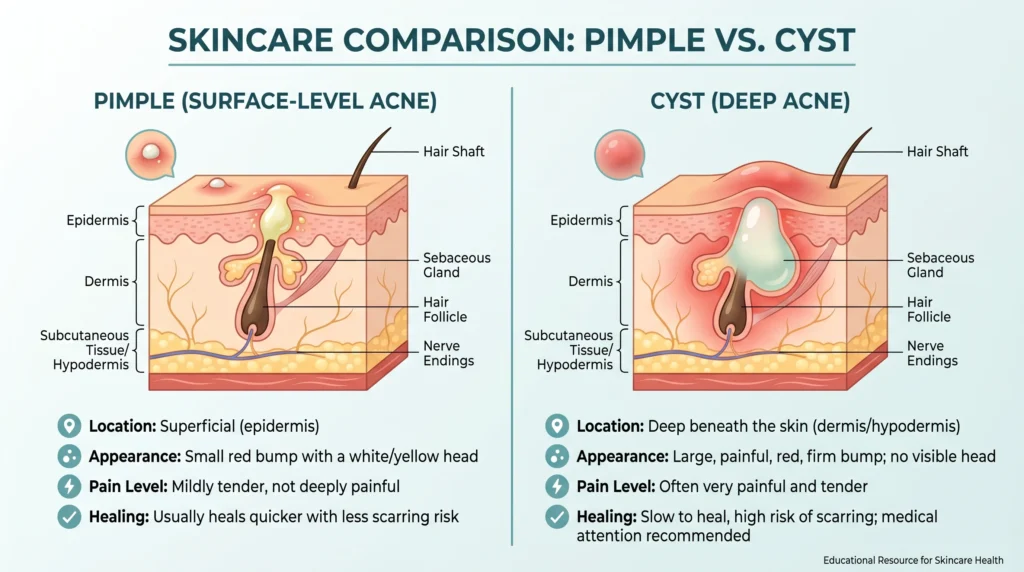
A pimple and a cyst may look similar, but they are very different skin conditions. Pimples are small acne spots caused by clogged pores, while cysts are deeper, larger, and often painful lumps under the skin. Cysts usually last longer and may require medical treatment.
Many people notice a painful bump on their skin and immediately wonder: is it a pimple or cyst?
The confusion is common because both can appear red, swollen, and irritated. But the difference matters more than most people realize. Treating a cyst like a normal pimple can actually make the problem worse.
A regular pimple usually forms near the surface of the skin. It often heals within days. A cyst, however, develops deeper under the skin and may stay for weeks or even months.
Understanding the difference helps you:
- Choose the right treatment
- Avoid skin damage
- Prevent infection
- Know when to see a doctor
In this guide, you will learn how to identify pimples and cysts, what causes them, and the safest ways to treat them. The explanations are simple, practical, and beginner-friendly.
Quick Answer
| Feature | Pimple | Cyst |
|---|---|---|
| Size | Small | Larger |
| Pain Level | Mild | Often painful |
| Depth | Surface of skin | Deep under skin |
| Healing Time | Days | Weeks or months |
| Common Cause | Clogged pores | Infection or trapped material |
| Treatment | Acne care | Sometimes medical treatment |
Simple Summary
- A pimple is a common acne spot.
- A cyst is a deeper lump beneath the skin.
Cysts are usually more painful and serious than regular pimples.
What Is a Pimple?
Definition of a Pimple
A pimple is a small skin inflammation caused by clogged pores.
Oil, dead skin cells, and bacteria can block pores, leading to acne formation.
Pimples commonly appear on:
- Face
- Forehead
- Back
- Chest
- Shoulders
Types of Pimples
Whiteheads
Closed clogged pores with white bumps.
Blackheads
Open pores that appear dark because of oxidation.
Papules
Small red inflamed bumps.
Pustules
Pimples filled with pus.
What Is a Cyst?
Definition of a Cyst
A cyst is a sac-like lump under the skin filled with:
- Fluid
- Oil
- Pus
- Dead skin cells
Cysts grow deeper beneath the skin than pimples.
Common Types of Skin Cysts
Sebaceous Cysts
Develop from blocked oil glands.
Epidermoid Cysts
Contain trapped skin cells and keratin material.
Acne Cysts
Severe acne can create painful cystic lumps.
Main Difference Between Pimple or Cyst
Surface vs Deep Skin Problem
This is the biggest difference.
A pimple:
- Forms near the surface
A cyst:
- Develops deep under the skin
Pain and Swelling
Pimples are usually:
- Mildly painful
- Smaller
- Temporary
Cysts are often:
- More painful
- Larger
- Harder to remove
Healing Time
Most pimples disappear within days.
Cysts may remain for:
- Weeks
- Months
- Longer without treatment
Causes of Pimples and Cysts
Causes of Pimples
Common causes include:
- Hormonal changes
- Excess oil production
- Stress
- Poor skincare habits
Teenagers commonly experience pimples during puberty.
Causes of Cysts
Cysts may form because of:
- Blocked glands
- Infections
- Skin injuries
- Severe acne
Some cysts develop slowly over time.
Real World Examples
Typical Pimple Example
A teenager develops small whiteheads on the forehead during hormonal changes.
The pimples improve with:
- Face washing
- Acne cream
- Better skincare
Typical Cyst Example
An adult notices a painful lump under the jawline that remains for weeks.
The cyst may need:
- Medical drainage
- Antibiotics
- Dermatology treatment
Symptoms Comparison
| Symptom | Pimple | Cyst |
|---|---|---|
| Redness | Common | Common |
| Pus | Sometimes | Often |
| Deep Lump | Rare | Common |
| Pain | Mild | Stronger |
| Warmth | Sometimes | Often |
| Scarring Risk | Moderate | Higher |
How to Treat Pimples
Gentle Cleansing
Wash skin gently twice daily.
Avoid harsh scrubbing.
Acne Treatments
Common ingredients include:
- Salicylic acid
- Benzoyl peroxide
- Retinoids
Avoid Popping Pimples
Popping pimples can:
- Spread bacteria
- Cause scars
- Increase inflammation
How to Treat Cysts
Warm Compress
A warm compress may reduce pain and swelling.
Medical Drainage
Doctors sometimes drain large cysts safely.
Antibiotics
Infected cysts may require antibiotics.
Surgical Removal
Some recurring cysts need complete removal.
When to See a Doctor
Signs You Need Medical Help
See a doctor if:
- The lump grows quickly
- Pain becomes severe
- Fever develops
- Skin becomes very red
- The cyst keeps returning
A dermatologist can identify whether the issue is acne, infection, or another skin condition.
Common Mistakes People Make
Treating Cysts Like Normal Pimples
Many people use acne creams on cysts without improvement.
Deep cysts often require professional care.
Popping Deep Lumps
Trying to squeeze a cyst can:
- Worsen infection
- Cause scarring
- Push inflammation deeper
Ignoring Painful Swelling
Persistent painful bumps should not be ignored.
Using Too Many Harsh Products
Overusing skincare products may irritate the skin further.
Prevention Tips
Keep Skin Clean
Gentle cleansing helps reduce clogged pores.
Avoid Heavy Oil Products
Oil-based products may worsen acne.
Manage Stress
Stress can increase hormone-related breakouts.
Seek Early Treatment
Treating acne early may reduce cyst formation.
Related Skin Conditions
Cystic Acne
Cystic Acne is a severe form of acne involving painful deep cysts.
Boils
Boils are bacterial skin infections that may resemble cysts.
Lipomas
Lipomas are soft fatty lumps beneath the skin and are different from cysts.
Exercises With Answers
Exercise 1
Which condition develops deeper under the skin?
Answer: Cyst
Exercise 2
Which usually heals faster?
Answer: Pimple
Exercise 3
Which condition is more likely to require medical treatment?
Answer: Cyst
Exercise 4
Can popping a cyst worsen infection?
Answer: Yes
Exercise 5
Which is commonly linked to clogged pores?
Answer: Pimple
FAQs
How do I know if it is a pimple or cyst?
A pimple is usually small and near the skin surface, while a cyst feels deeper, larger, and often more painful.
Can a pimple turn into a cyst?
Yes. Severe inflammation or infected acne can develop into cystic acne.
Are cysts dangerous?
Most cysts are not dangerous, but some may become infected or painful.
Should I pop a cyst?
No. Popping a cyst can increase infection and scarring risks.
How long do cysts last?
Some cysts last for weeks or months without treatment.
Can pimples cause scars?
Yes, especially if they are squeezed or inflamed repeatedly.
Do cysts go away naturally?
Some small cysts may shrink naturally, but others require medical care.
What is cystic acne?
Cystic acne is a severe form of acne involving painful deep cysts under the skin.
Can stress cause pimples?
Yes. Stress can affect hormones and increase acne breakouts.
When should I see a dermatologist?
See a dermatologist if bumps are painful, recurring, large, or not healing.
Conclusion
Understanding the difference between pimple or cyst is important for proper skincare and treatment.
Pimples are common acne spots caused by clogged pores and surface inflammation. They usually heal quickly with basic skincare. Cysts are deeper, larger, and often more painful. They may require medical treatment, especially if infection or swelling becomes severe.
One of the biggest mistakes people make is treating cysts like normal pimples. Squeezing or irritating deep cysts can increase scarring and worsen inflammation.
The best approach is gentle skincare, early treatment, and professional medical advice when symptoms become serious. If a lump continues growing, becomes painful, or lasts for weeks, it is always safer to consult a dermatologist.
Healthy skin care habits and early attention can prevent many long-term skin problems and reduce the risk of permanent scars.

Victoria Lane is a grammar-focused writer at GramBrix.com, passionate about helping readers master the rules of language. She provides clear explanations and practical examples that make writing more accurate, polished and confident.