
Last Updated on June 16, 2026
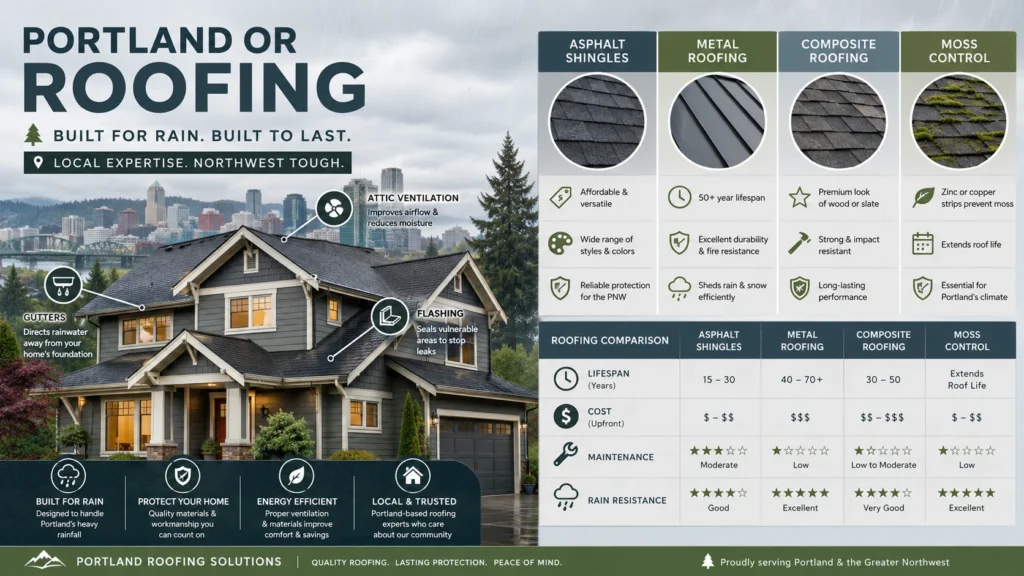
Portland OR roofing refers to roofing systems, materials, installation, and maintenance practices used in Portland, Oregon. Because Portland has frequent rain, moss growth, and mild temperatures, homeowners often prioritize durable, water resistant roofing solutions such as asphalt shingles, metal roofing, and composite materials. A successful Portland OR roofing project depends on choosing the right material, ensuring proper ventilation, and scheduling regular maintenance to protect against moisture damage and moss buildup.
If you own a home in Portland, Oregon, your roof works hard every day. Rain, damp air, moss, and changing temperatures can shorten the life of a roof if it is not built and maintained properly. That is why Portland OR roofing is not just about choosing a color or style. It is about selecting a roofing system that can handle the Pacific Northwest climate.
Many homeowners search for Portland OR roofing when they need a new roof, repairs, inspections, or maintenance. Others want to understand which roofing materials perform best in Portland’s wet environment. The choices can feel confusing. Asphalt shingles are common, metal roofs are growing in popularity, and composite products promise long life with less maintenance.
This guide explains Portland OR roofing from beginner to advanced level. You will learn about roofing materials, costs, maintenance, common mistakes, and how to choose a reliable roofing contractor. The goal is simple: help you make smart roofing decisions that protect your home and investment for years to come.
Quick Answer
For most homes in Portland, architectural asphalt shingles, metal roofing, and composite roofing products are the most practical choices.
| Need | Best Fit |
| Budget-friendly roof replacement | Architectural asphalt shingles |
| Long lifespan and low maintenance | Metal roofing |
| Premium appearance with durability | Composite roofing products |
| Heavy moss-prone areas | Metal or high-quality composite roofing |
Key factors in Portland OR roofing include:
- Rain resistancePortland receives significant annual rainfall, so water management is critical.
- Moss controlShaded roofs often develop moss that can damage roofing materials over time.
- Proper ventilationAttic ventilation helps prevent moisture buildup and extends roof life.
- Professional installationEven the best roofing material can fail if installed incorrectly.
Bottom line
The right Portland OR roofing system is one that matches your budget, your home’s design, and the Pacific Northwest climate. In most cases, paying for better installation and ventilation is just as important as paying for better roofing materials.
What Is Portland OR Roofing?
Portland OR roofing refers to the roofing systems, services, materials, and installation practices commonly used in Portland, Oregon and the surrounding metropolitan area.
The term can include:
- Roof replacementRemoving an old roof and installing a new one.
- Roof repairFixing leaks, damaged shingles, flashing, or vents.
- Roof inspectionChecking roof condition, often before buying or selling a home.
- Roof maintenanceCleaning, moss treatment, and minor repairs.
- Commercial roofingRoofing systems for businesses and industrial buildings.
- Residential roofingRoofing systems for homes, townhouses, and residential properties.
Portland’s climate strongly influences roofing choices. Unlike very hot or very cold regions, Portland has a relatively mild climate with frequent rain and moisture. This creates unique roofing challenges.
Why Portland Roofing Is Different
| Challenge | Why It Matters |
| Frequent rainfall | Roofs must shed water effectively. |
| Moss and algae growth | Organic growth can damage shingles and trap moisture. |
| Leaf debris from trees | Clogged gutters can cause water backup. |
| Mild temperatures | Freeze-thaw damage is less severe than in colder climates, but moisture remains a concern. |
Popular Roofing Materials in Portland
Asphalt Shingles
Asphalt shingles are the most common residential roofing material in Portland.
Asphalt Shingles: Pros & Cons
Advantages
- AffordableTypically less expensive than metal or slate roofing.
- Widely availableEasy to source and replace when repairs are needed.
- Many styles and colorsWorks well with most home designs.
- Good performance in Portland’s climateEspecially architectural shingles installed by experienced roofers.
Disadvantages
- Shorter lifespan than metalGenerally 20–30 years depending on product quality and maintenance.
- Can develop mossShaded roofs often need periodic cleaning and treatment.
- Granule loss over timeOlder shingles may shed protective granules and become less durable.
Metal Roofing
Metal roofs have become increasingly popular in Portland.
Metal Roofing: Pros & Cons
Advantages
- Long lifespanOften 40–70 years depending on the system.
- Excellent water sheddingSmooth surfaces help rain run off quickly.
- Resistant to mossMoss tends to grow less aggressively than on many shingle roofs.
- Energy efficientCan reflect solar heat and reduce cooling loads.
Disadvantages
- Higher upfront costInstallation is typically more expensive than asphalt shingles.
- Specialized installation requiredFewer contractors are qualified for complex metal systems.
- Can be noisierRain noise may be more noticeable without proper insulation.
Composite Roofing
Composite roofing products are designed to mimic slate, shake, or tile while offering modern durability.
Composite Roofing: Pros & Cons
Advantages
- Premium appearanceCan resemble slate or cedar without the same maintenance burden.
- DurableOften resistant to impact, moisture, and weathering.
- Lighter weight than natural materialsMay avoid structural upgrades required by heavier roofing products.
Disadvantages
- More expensive than asphaltPremium products carry a higher material cost.
- Quality varies by manufacturerResearch warranties and long-term performance carefully.
Flat and Low-Slope Roofing
Commercial buildings and some modern homes use flat or low-slope roofs.
Common systems include:
- TPO (Thermoplastic Polyolefin)Reflective, heat-welded membrane commonly used on commercial buildings.
- PVC RoofingDurable membrane with strong chemical and weather resistance.
- EPDM Rubber RoofingFlexible rubber membrane known for long service life.
- Modified BitumenLayered asphalt-based membrane often used on low-slope roofs.
Proper drainage is essential. Flat roofs should never allow standing water for long periods.
How Portland’s Climate Affects Roofing
Portland’s climate is the single most important factor in roof performance.
Rain and Moisture
Portland receives significant rainfall throughout much of the year. A roof must quickly move water away from the structure.
Important components include:
- UnderlaymentThe water-resistant layer beneath the visible roofing material.
- FlashingMetal pieces installed around chimneys, vents, skylights, and roof valleys.
- GuttersSystems that collect and direct water away from the home.
- Roof pitchSteeper roofs generally shed water more efficiently.
Moss Growth
Moss thrives in damp, shaded environments. Many Portland neighborhoods have large trees that create ideal conditions for moss.
Prevention strategies:
- Trim overhanging branchesIncrease sunlight and airflow across the roof surface.
- Keep gutters cleanPrevent water backup and excess moisture retention.
- Install zinc or copper stripsThese can help discourage moss growth over time.
- Schedule periodic cleaningProfessional roof cleaning can remove moss before it causes damage.
Important
Do not pressure wash asphalt shingles.
High-pressure washing can remove protective granules and shorten the roof’s lifespan.
Advantages of Investing in Quality Portland OR Roofing
Why a Better Roof Pays Off
- Better protection from water damageA high-quality roof reduces the risk of leaks, mold, rot, and structural damage.
- Lower maintenance costsPremium materials and proper installation often require fewer repairs over time.
- Improved home valueBuyers often view a newer roof as a major benefit.
- Better energy efficiencyModern roofing systems can improve insulation and ventilation performance.
- Longer lifespanA well-installed roof can last decades with proper care.
Disadvantages and Challenges
Common Challenges in Portland Roofing
- Higher upfront costsQuality materials and skilled labor can be expensive.
- Weather-related scheduling delaysRain can affect roofing projects and extend timelines.
- Moss managementEven good roofs may need periodic moss treatment in heavily shaded areas.
- Contractor selection risksChoosing an inexperienced roofer can lead to leaks, poor flashing, and premature failure.
Real-World Portland Roofing Scenarios
Older Home in Northeast Portland
A 1940s home with aging 3-tab shingles begins leaking around a chimney.
Best approach:
- Replace damaged flashing.
- Inspect underlayment for water damage.
- Consider full roof replacement if shingles are near end of life.
Modern Home in Southwest Portland
A homeowner wants a durable roof with minimal maintenance.
Best approach:
- Evaluate standing seam metal roofing.
- Ensure proper attic ventilation.
- Use corrosion-resistant fasteners suitable for the Pacific Northwest.
Heavily Shaded Property in Lake Oswego
Moss returns every few years.
Best approach:
- Improve tree trimming.
- Install zinc or copper strips.
- Schedule professional roof cleaning every few years.
- Consider materials less susceptible to moss retention.
Choosing a Portland Roofing Contractor
Not all roofing companies are equal. Use a structured selection process.
Contractor Checklist
- Verify licensing and insuranceAsk for proof of state licensing, liability insurance, and workers’ compensation coverage.
- Ask about local experienceContractors familiar with Portland’s climate often understand moisture, ventilation, and flashing details better.
- Get multiple written estimatesCompare materials, warranties, labor scope, and timelines—not just price.
- Check references and reviewsLook for patterns related to communication, cleanliness, and follow-up service.
- Understand the warrantyAsk whether both manufacturer and workmanship warranties are included.
Red flags
- Demanding large cash payments upfront.
- Refusing to provide a written contract.
- Unable to show insurance documentation.
- Using pressure sales tactics.
Understanding Roofing Costs in Portland
Exact pricing varies by roof size, complexity, material, and contractor. The table below shows typical relative cost ranges.
| Roofing Material | Relative Cost | Typical Lifespan |
| Asphalt shingles | Lower | 20–30 years |
| Metal roofing | Higher | 40–70 years |
| Composite roofing | Higher | 30–50+ years |
| Flat roof membranes | Varies | 15–30+ years |
Factors that increase cost include:
- Steep roof pitch
- Multiple roof valleys
- Skylights and chimneys
- Structural repairs
- Premium materials
- Complex flashing details
Budget tip
When comparing bids, ask each contractor to list the roofing material, underlayment, flashing scope, ventilation work, cleanup, and warranty terms. A lower price may not include the same level of protection.
Roof Maintenance for Portland Homes
Regular maintenance can significantly extend roof life.
Seasonal Maintenance Checklist
Spring
- Inspect for winter damage.
- Remove debris.
- Check gutters and downspouts.
Summer
- Treat moss if needed.
- Inspect flashing and vents.
- Trim nearby tree branches.
Fall
- Clean leaves from roof and gutters.
- Check attic ventilation.
- Inspect for loose shingles.
Winter
- Monitor for leaks during storms.
- Check ceilings for water stains.
- Address issues promptly.
Common Roofing Problems in Portland
Frequent Issues
| Problem | Cause | Typical Solution |
| Leaks around chimneys | Failed flashing | Replace or repair flashing |
| Moss growth | Shade and moisture | Clean and treat roof |
| Granule loss | Aging shingles | Replace damaged sections or roof |
| Clogged gutters | Leaves and debris | Clean gutters regularly |
| Ponding water on flat roofs | Poor drainage | Improve drainage and repair membrane |
Regional Differences Within the Portland Area
Roofing needs can vary across the metro area.
| Area | Common Considerations |
| Northeast Portland | Older homes, mature trees, moss concerns |
| Southwest Portland | Hilly terrain, larger homes, complex rooflines |
| Beaverton | Suburban homes, asphalt shingle popularity |
| Lake Oswego | High-end materials, heavy tree cover |
| Gresham | Mix of older and newer construction |
Local conditions such as tree density, slope, and neighborhood architecture can influence material selection and maintenance needs.
Common Mistakes Homeowners Make
Mistakes to Avoid
- Choosing solely on priceThe cheapest bid may use lower-quality materials or omit important work.
- Ignoring attic ventilationPoor ventilation can trap moisture and heat, reducing roof life.
- Waiting too long to repair leaksSmall leaks can become expensive structural repairs.
- Pressure washing shinglesThis can damage the roof surface and remove protective granules.
- Skipping regular inspectionsAnnual inspections often catch problems before they become major repairs.
Exercises: Test Your Roofing Knowledge
Questions
- Which roofing material is typically the most affordable in Portland?
- Why is moss a common concern for Portland roofs?
- What is flashing used for?
- Which roof type generally lasts longer: asphalt shingles or metal roofing?
- Should you pressure wash asphalt shingles?
Answers
- Asphalt shingles.
- Because Portland’s moist climate and shaded areas encourage moss growth.
- Flashing directs water away from roof penetrations and vulnerable joints.
- Metal roofing generally lasts longer.
- No. Pressure washing can damage shingles and shorten their lifespan.
Related Concepts and Comparisons
Asphalt vs Metal Roofing
| Feature | Asphalt | Metal |
| Upfront cost | Lower | Higher |
| Lifespan | 20–30 years | 40–70 years |
| Moss resistance | Moderate | Better |
| Maintenance | Moderate | Lower |
| Appearance | Traditional | Modern or traditional |
Roof Repair vs Roof Replacement
| Situation | Repair | Replacement |
| Small leak | Usually | Rarely |
| Missing shingles | Usually | Sometimes |
| Widespread deterioration | Rarely | Usually |
| Roof near end of life | Often not cost-effective | Usually |
FAQs
What is the best roofing material for Portland OR homes?
Architectural asphalt shingles, metal roofing, and quality composite products are among the most popular choices for Portland OR roofing because they handle rain and moisture well.
How often should a Portland roof be inspected?
Most roofing professionals recommend a roof inspection at least once a year and after major storms.
How long does an asphalt shingle roof last in Portland?
A well-installed asphalt shingle roof typically lasts 20–30 years, depending on material quality, ventilation, and maintenance.
Is metal roofing worth the cost in Portland OR?
For many homeowners, yes. Metal roofing offers a long lifespan, excellent water shedding, and reduced moss issues, though the upfront cost is higher.
What causes moss on Portland roofs?
Moss grows where moisture, shade, and organic debris accumulate. Trees and damp conditions are common contributors.
Can I install a new roof over old shingles?
Sometimes local building codes allow it, but many roofing experts prefer full tear-off so they can inspect the roof deck and install new underlayment.
How much does Portland OR roofing typically cost?
Costs vary widely based on roof size, material, complexity, and contractor. Asphalt shingles generally cost less than metal or premium composite roofing.
Do I need a permit for roof replacement in Portland?
Permit requirements can vary by project and jurisdiction. Check with the local building department or your roofing contractor before work begins.
What are signs I need a new roof?
Common signs include recurring leaks, missing or curling shingles, widespread granule loss, sagging areas, and roofs that are near the end of their expected lifespan.
How can I extend the life of my Portland roof?
Keep gutters clean, remove debris, control moss growth, trim overhanging branches, maintain attic ventilation, and schedule periodic inspections.
Conclusion
Portland OR roofing is about more than appearance. The region’s wet climate, moss growth, and tree coverage make material selection, installation quality, and maintenance especially important. Asphalt shingles remain the most common choice because they are affordable and effective. Metal roofing offers exceptional longevity and water shedding. Composite products provide a premium look with modern durability.
The best roofing decision depends on your budget, home design, maintenance expectations, and long-term plans. A lower-priced roof may cost more over time if it requires frequent repairs or early replacement. By contrast, a well-installed roof with proper ventilation and regular maintenance can protect your home for decades.
If you are considering a roof repair or replacement, get multiple written estimates, verify licensing and insurance, and ask detailed questions about materials, flashing, ventilation, and warranties. In Portland’s climate, careful planning and professional installation are the keys to a durable, leak-resistant roof that adds value and peace of mind.

Victoria Lane is a grammar-focused writer at GramBrix.com, passionate about helping readers master the rules of language. She provides clear explanations and practical examples that make writing more accurate, polished and confident.