Last Updated on July 7, 2026
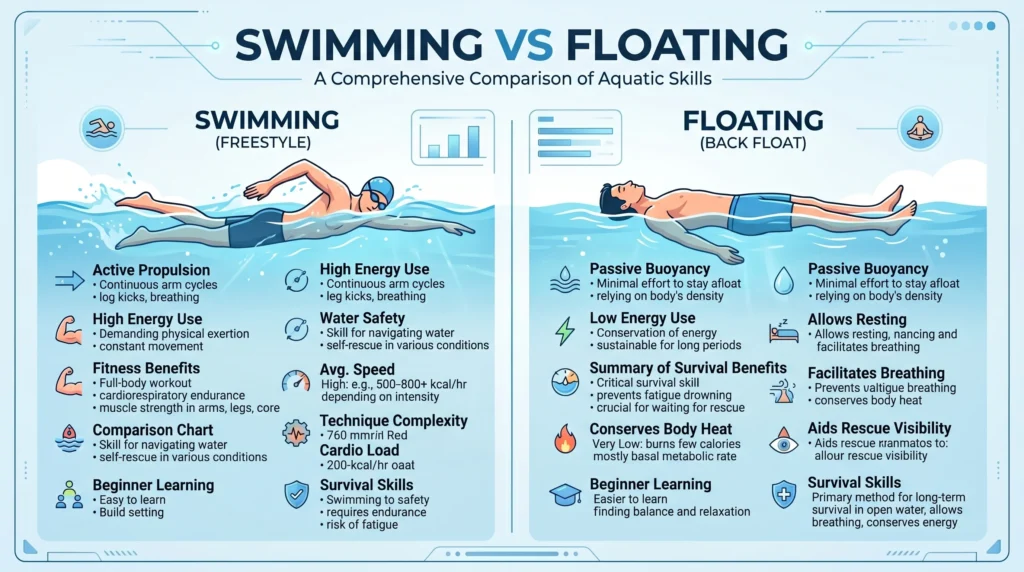
Swimming and floating are both ways of staying on the water, but they are not the same thing. Swimming involves active body movement to travel through water, while floating means remaining on the water’s surface with little or no movement. Understanding the difference between swimming or floating helps beginners learn water safety, improve confidence, and choose the right technique for recreation, fitness, or survival situations.
Many people use the terms swimming and floating interchangeably, but they describe two very different actions in water.
A person floating may remain almost motionless while staying on the water’s surface. A person swimming actively moves their arms and legs to travel from one place to another.
Both skills are important.
Swimming provides exercise, recreation, and transportation through water. Floating helps conserve energy, improve water confidence, and can even become a lifesaving skill during emergencies.
For beginners, learning to float often comes before learning to swim. For experienced swimmers, floating remains an essential technique for resting and recovery.
This guide explains:
- What swimming means
- What floating means
- Key differences
- Benefits and drawbacks
- Safety considerations
- Real-world examples
- Common mistakes
- FAQs
Quick Answer
| Feature | Swimming | Floating |
|---|---|---|
| Requires Movement | Yes | Minimal |
| Travels Through Water | Yes | Usually No |
| Burns Calories | High | Low |
| Fitness Activity | Yes | Limited |
| Survival Skill | Sometimes | Yes |
| Energy Use | Higher | Lower |
Simple Summary
Swimming involves movement and propulsion through water, while floating involves staying on the surface with little effort.
What Is Swimming?
Definition
Swimming is the act of moving through water using coordinated body movements.
Main Purpose
Swimming allows a person to:
- Travel through water
- Exercise
- Compete in sports
- Enjoy recreational activities
Common Swimming Strokes
Popular swimming styles include:
- Freestyle
- Breaststroke
- Backstroke
- Butterfly
What Is Floating?
Definition
Floating means remaining on the water’s surface without sinking.
Main Purpose
Floating helps:
- Conserve energy
- Relax
- Improve water confidence
- Enhance survival chances
Types of Floating
Common floating positions include:
- Back float
- Starfish float
- Survival float
Main Difference Between Swimming or Floating
Movement
Swimming
Requires continuous movement.
Floating
Requires little movement.
Energy Usage
Swimming
Uses significant energy.
Floating
Uses minimal energy.
Purpose
Swimming
Movement and exercise.
Floating
Rest and buoyancy.
Comparison Table
| Feature | Swimming | Floating |
|---|---|---|
| Physical Effort | High | Low |
| Skill Level | Moderate to High | Beginner Friendly |
| Travel Distance | Yes | No |
| Exercise Benefits | Excellent | Limited |
| Water Safety Value | High | High |
| Relaxation | Moderate | Excellent |
Benefits of Swimming
Full Body Exercise
Swimming works multiple muscle groups.
Cardiovascular Health
It improves heart and lung function.
Low Impact Activity
Swimming is gentle on joints.
Weight Management
Regular swimming can support fitness goals.
Recreation
Many people swim for enjoyment.
Benefits of Floating
Energy Conservation
Floating requires very little effort.
Water Confidence
Beginners often feel safer after learning to float.
Stress Relief
Floating can be relaxing.
Survival Advantage
Floating can help during emergencies.
Recovery Tool
Swimmers often float to rest between activities.
Swimming Techniques
Freestyle
The fastest and most common swimming stroke.
Breaststroke
Popular among beginners.
Backstroke
Performed while lying on the back.
Butterfly
A more advanced technique requiring strength and coordination.
Floating Techniques
Back Float
One of the easiest floating methods.
Starfish Float
Arms and legs spread wide for stability.
Survival Float
Designed to conserve energy.
Assisted Floating
Uses flotation devices for support.
Swimming or Floating for Beginners
Learning to Float First
Many instructors teach floating before swimming.
Building Confidence
Floating reduces fear of water.
Transition to Swimming
Once floating is comfortable, swimming skills become easier to learn.
Swimming or Floating for Fitness
Swimming Benefits
Excellent for:
- Endurance
- Strength
- Weight loss
- Cardiovascular fitness
Floating Benefits
Useful for:
- Recovery
- Relaxation
- Low-intensity water activities
Better Fitness Choice
Swimming provides greater fitness benefits.
Swimming or Floating for Survival
Swimming in Emergencies
Can help reach safety.
Floating in Emergencies
Helps preserve energy.
Best Strategy
Many water safety experts recommend floating when rescue may take time.
Why Some People Float More Easily
Body Composition
Fat tissue tends to float more than muscle.
Lung Capacity
Air in the lungs increases buoyancy.
Water Conditions
Saltwater often makes floating easier.
Relaxation
Tension can reduce floating efficiency.
Common Mistakes People Make
Holding Too Much Tension
Relaxation is important for floating.
Panic in Water
Fear can interfere with both swimming and floating.
Looking Down While Floating
This often causes the body to sink.
Overestimating Swimming Ability
Always respect water safety guidelines.
Real World Examples
Beach Vacation
A person may alternate between swimming and floating.
Swimming Lessons
Children often learn floating before swimming.
Open Water Activities
Floating can provide a rest break.
Emergency Situations
Floating may help conserve energy until rescue arrives.
Related Water Skills
Treading Water
A combination of floating and movement.
Diving
Entering and moving underwater.
Snorkeling
Combines floating with surface exploration.
Lifesaving Skills
Swimming and floating are both essential.
How to Learn Floating
Start in Shallow Water
Practice where you feel comfortable.
Focus on Breathing
Slow breathing improves buoyancy.
Relax the Body
Tension often causes difficulties.
Practice Regularly
Confidence improves with repetition.
Exercises With Answers
Exercise 1
Which activity requires active movement?
Answer: Swimming
Exercise 2
Which activity conserves energy?
Answer: Floating
Exercise 3
What is a common floating position?
Answer: Back float
Exercise 4
Which activity burns more calories?
Answer: Swimming
Exercise 5
Can floating be a survival skill?
Answer: Yes
FAQs
What is the difference between swimming or floating?
Swimming involves movement through water, while floating involves staying on the surface with minimal effort.
Is floating easier than swimming?
For many beginners, floating is easier to learn.
Can you float without knowing how to swim?
Yes. Many people can float before learning swimming techniques.
Which burns more calories, swimming or floating?
Swimming burns significantly more calories.
Is floating important for water safety?
Yes. Floating is considered a valuable water survival skill.
Can everyone float?
Most people can learn to float, although body composition and technique affect buoyancy.
Why do some people float more easily?
Factors include body fat percentage, lung capacity, and relaxation.
Should children learn floating first?
Many swimming instructors teach floating before swimming.
Can floating help during emergencies?
Yes. Floating can conserve energy while waiting for help.
Which is better for fitness, swimming or floating?
Swimming provides much greater fitness and cardiovascular benefits.
Conclusion
The choice between swimming or floating is not really about one being better than the other. Instead, each serves a different purpose in the water.
Swimming is ideal for:
- Exercise
- Recreation
- Travel through water
- Building endurance
Floating is valuable for:
- Relaxation
- Water confidence
- Energy conservation
- Survival situations
Key takeaways include:
- Swimming requires active movement.
- Floating requires minimal effort.
- Both skills improve water safety.
- Floating is often learned before swimming.
- Combining both skills creates greater confidence in water.
Whether you’re learning to swim, improving fitness, or enhancing water safety skills, understanding both swimming and floating can make your time in the water safer and more enjoyable.

Victoria Lane is a grammar-focused writer at GramBrix.com, passionate about helping readers master the rules of language. She provides clear explanations and practical examples that make writing more accurate, polished and confident.