
Last Updated on June 24, 2026
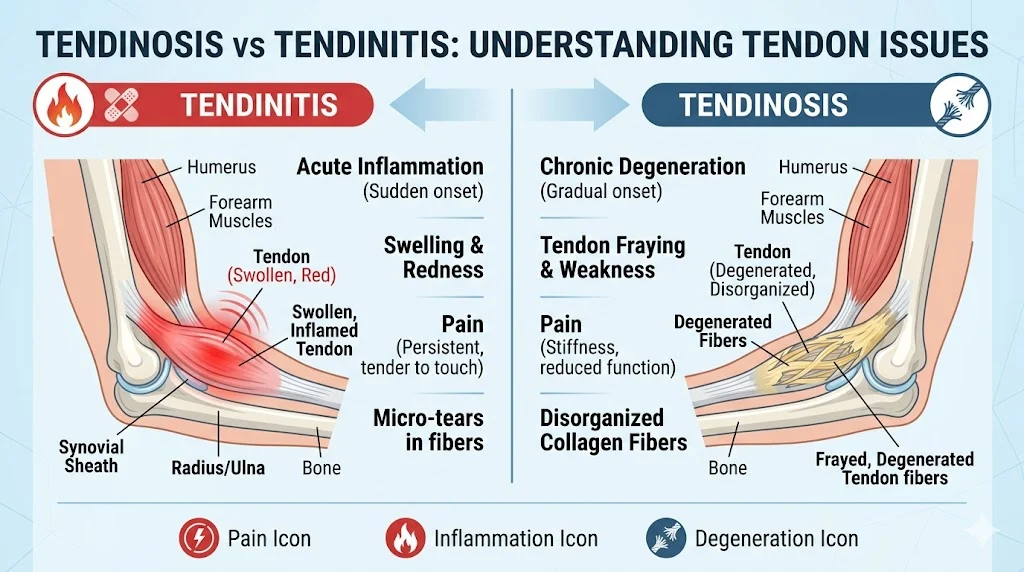
Tendinosis vs tendinitis refers to two different tendon conditions. Tendinitis is an acute inflammation of a tendon, usually caused by sudden injury or overuse. Tendinosis is a chronic degeneration of tendon fibers without active inflammation, often caused by long-term repetitive strain. Understanding the difference is important for proper diagnosis and treatment.
Tendon pain is one of the most common problems in muscles and joints. Many people search for relief but often get confused between tendinosis vs tendinitis. These two terms sound similar, but they are not the same condition.
Tendinitis is usually linked with short-term inflammation after an injury or overuse. Tendinosis, on the other hand, develops slowly over time and involves wear and tear of tendon fibers. Because of this confusion, many patients receive the wrong treatment or delay proper care.
This misunderstanding can lead to long-term pain, weakness, and reduced movement. Knowing the difference between tendinosis vs tendinitis helps you choose the right treatment, avoid mistakes, and recover faster.
In this guide, you will learn everything in simple words. We will explain causes, symptoms, diagnosis, treatments, exercises, and real-world examples. You will also find comparison tables, FAQs, and practical advice. Whether you are a student, patient, or fitness enthusiast, this guide will help you clearly understand tendinosis vs tendinitis from basic to advanced level.
Quick Answer Overview: Tendinosis vs Tendinitis
The easiest way to understand tendinosis vs tendinitis is this:
- Tendinitis = Inflammation (short-term, painful, sudden)
- Tendinosis = Degeneration (long-term, chronic, structural damage)
Think of tendinitis like a fresh injury, similar to a sprained ankle with swelling. Tendinosis is more like long-term wear and tear, where the tendon becomes weak and damaged over time.
Definition of Tendinosis vs Tendinitis
What is Tendinitis?
Tendinitis is the inflammation of a tendon. A tendon is the strong tissue that connects muscle to bone. When it becomes irritated or injured, it swells and causes pain.
Common causes include:
- Sudden increase in physical activity
- Sports injuries
- Repetitive movements
- Poor posture or technique
Common areas:
- Shoulder (rotator cuff)
- Elbow (tennis elbow)
- Knee (patellar tendon)
- Wrist and ankle
Key feature:
- Inflammation is present
What is Tendinosis?
Tendinosis is a chronic condition where the tendon breaks down over time. Unlike tendinitis, there is little or no inflammation.
Instead, the tendon fibers become:
- Weak
- Frayed
- Disorganized
Common causes:
- Long-term repetitive strain
- Untreated tendinitis
- Aging
- Poor recovery from injury
Common areas:
- Achilles tendon
- Elbow tendons
- Shoulder tendons
Key feature:
- Degeneration without inflammation
Tendinosis vs Tendinitis Comparison Table
| Feature | Tendinitis | Tendinosis |
| Nature | Inflammatory | Degenerative |
| Duration | Short-term | Long-term |
| Pain type | Sharp, sudden | Dull, chronic |
| Cause | Injury or overuse | Repeated stress over time |
| Tissue condition | Swollen tendon | Damaged tendon fibers |
| Healing time | Weeks | Months to years |
| Treatment focus | Reduce inflammation | Repair and strengthen tendon |
This table clearly shows the major differences in tendinosis vs tendinitis.
Causes of Tendinosis vs Tendinitis
Causes of Tendinitis
Tendinitis is often triggered by sudden stress on the tendon.
Common causes:
- Sudden exercise or heavy lifting
- Repetitive sports actions (tennis, cricket, running)
- Poor warm-up before activity
- Incorrect posture during work or exercise
- Direct injury
Example:
A person starts weightlifting after months of no exercise and develops shoulder pain. This is often tendinitis.
Causes of Tendinosis
Tendinosis develops slowly and silently.
Common causes:
- Long-term repetitive strain
- Untreated tendinitis
- Poor blood flow to tendons
- Aging and reduced healing ability
- Continuous stress without rest
Example:
A worker typing for 10 years may develop chronic wrist tendon degeneration. This is tendinosis.
Symptoms of Tendinosis vs Tendinitis
Symptoms of Tendinitis
- Sudden pain near joints
- Swelling
- Warmth in affected area
- Pain during movement
- Tenderness
Pain usually improves with rest in early stages.
Symptoms of Tendinosis
- Long-term dull pain
- Stiffness in the morning
- Weakness in affected area
- Pain during or after activity
- No obvious swelling
Pain may worsen over time if untreated.
Diagnosis of Tendinosis vs Tendinitis
Doctors use several methods:
Physical Examination
- Checking pain location
- Testing movement range
- Pressing tendon area
Imaging Tests
- Ultrasound (shows tendon structure)
- MRI (detects damage level)
- X-rays (to rule out bone issues)
Key difference:
- Tendinitis shows inflammation signs
- Tendinosis shows tendon fiber damage
Treatment of Tendinosis vs Tendinitis
Treatment for Tendinitis
Tendinitis is usually easier to treat.
Common treatments:
- Rest
- Ice therapy
- Anti-inflammatory medicines
- Physical therapy
- Stretching exercises
Recovery time:
Usually a few weeks
Treatment for Tendinosis
Tendinosis requires long-term care.
Common treatments:
- Physical therapy (strength training)
- Eccentric exercises
- Shockwave therapy
- Platelet-rich plasma (PRP) injections
- Lifestyle changes
Recovery time:
Several months to over a year
Advantages and Disadvantages of Early Understanding
Understanding tendinosis vs tendinitis has important benefits.
Advantages
- Correct treatment choice
- Faster recovery
- Less risk of chronic pain
- Better sports performance
- Avoids misuse of medications
Disadvantages of Misunderstanding
- Wrong self-treatment
- Delayed healing
- Chronic tendon damage
- Increased medical costs
- Reduced mobility
Real-World Examples of Tendinosis vs Tendinitis
Example 1: Athlete Injury
A tennis player suddenly feels elbow pain after a match. This is tendinitis due to sudden stress.
If untreated for months, it may turn into tendinosis.
Example 2: Office Worker
A computer user develops wrist pain after years of typing. This is tendinosis caused by repetitive strain.
Example 3: Gym Training
A beginner lifter develops shoulder pain after intense workouts. Early stage is tendinitis.
If ignored, it may progress into tendinosis.
Regional and Global Usage of Terms
The terms tendinosis vs tendinitis are used differently in medical practice.
United States and Europe
- Doctors prefer “tendinopathy” as a general term
- Tendinosis is used for chronic cases
- Tendinitis is used for acute inflammation
Asia and Developing Regions
- Tendinitis is more commonly used in general clinics
- Tendinosis is less understood by patients
Global Trend
Modern medicine focuses more on:
- “Tendinopathy” as umbrella term
- Then dividing into tendinitis or tendinosis
Common Mistakes in Tendinosis vs Tendinitis
Mistake 1: Self-Diagnosis
People assume all tendon pain is tendinitis.
Mistake 2: Ignoring Chronic Pain
Long-term pain is often treated as temporary injury.
Mistake 3: Overusing Painkillers
This reduces symptoms but not the root cause in tendinosis.
Mistake 4: Skipping Physical Therapy
Especially important in tendinosis recovery.
Mistake 5: Returning to Activity Too Early
Can worsen both conditions.
Exercises for Recovery (with Answers)
Exercise 1: Stretching Routine
Question: Which helps both conditions early on?
Answer:
Gentle stretching improves blood flow and reduces stiffness.
Exercise 2: Strength Training
Question: Why is strengthening important in tendinosis?
Answer:
It rebuilds tendon structure and improves long-term healing.
Exercise 3: Activity Modification
Question: What should you avoid in tendinitis?
Answer:
Avoid repetitive strain and heavy activity until pain reduces.
Exercise 4: Ice Therapy Use
Question: When is ice helpful?
Answer:
In early tendinitis to reduce inflammation and pain.
Related Concepts and Comparisons
Tendinosis vs Tendinitis vs Tendinopathy
- Tendinitis = inflammation
- Tendinosis = degeneration
- Tendinopathy = general tendon disorder
Other Related Conditions
- Bursitis (inflammation of fluid sacs)
- Ligament injuries
- Muscle strain
FAQs
What is the main difference between tendinosis vs tendinitis?
Tendinitis involves inflammation, while tendinosis involves tendon degeneration over time.
Can tendinitis turn into tendinosis?
Yes, if not treated properly, acute tendinitis can become chronic tendinosis.
Which is more painful, tendinosis or tendinitis?
Tendinitis is usually sharper and more painful in the short term.
How long does tendinitis take to heal?
Most cases heal within a few weeks with proper rest and treatment.
Is tendinosis reversible?
It can improve significantly with therapy, but full healing takes time.
What is the best treatment for tendinosis?
Eccentric exercises and physical therapy are most effective.
Can exercise worsen tendinosis?
Yes, wrong or excessive exercise can make it worse.
Is surgery required for tendinosis?
Only in severe cases when other treatments fail.
What is the best way to prevent both conditions?
Proper warm-up, correct technique, and gradual training increase.
Are tendinosis vs tendinitis common in athletes?
Yes, both are very common in sports and repetitive physical work.
Conclusion
Understanding tendinosis vs tendinitis is essential for anyone dealing with tendon pain. Although they sound similar, they are very different conditions. Tendinitis is short-term inflammation, while tendinosis is long-term tendon damage.
Correct identification helps you choose the right treatment, avoid complications, and recover faster. Early care for tendinitis can prevent progression into tendinosis. For chronic cases, long-term therapy and strengthening are key.
If you experience persistent tendon pain, do not ignore it. Seek medical advice, follow proper rehabilitation, and avoid overloading the affected area. With the right approach, both conditions can be managed effectively, and normal movement can be restored.

Justin Powell is a writer at GramBrix.com who focuses on grammar, clarity and effective communication, helping readers strengthen their language skills.