Last Updated on July 15, 2026
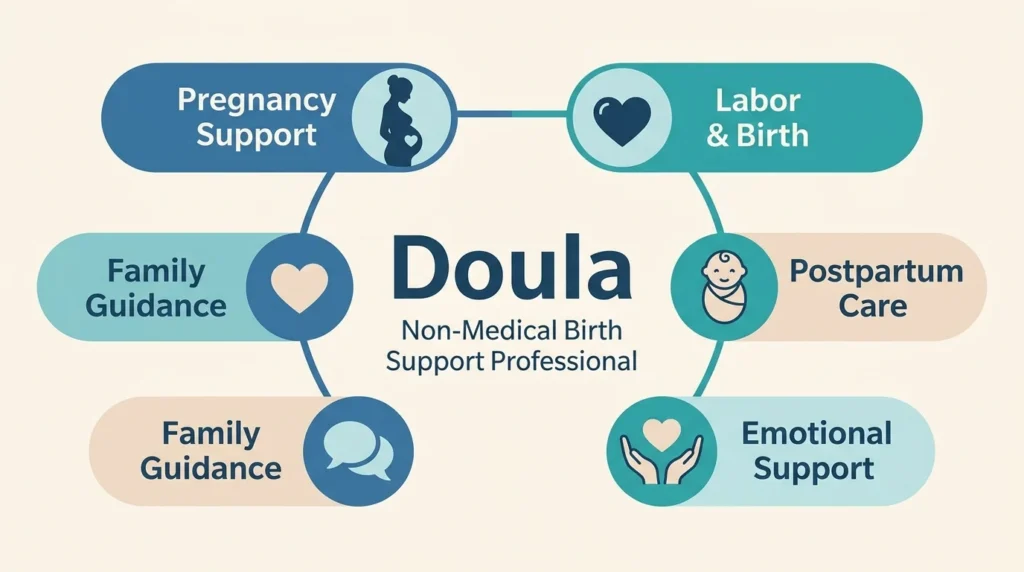
A doula is a trained professional who provides emotional, physical, and informational support before, during, and after childbirth. Unlike doctors or midwives, doulas do not perform medical procedures. Instead, they help parents feel informed, comfortable, and confident throughout pregnancy, labor, birth, and the postpartum period.
If you’ve recently heard the term doula during a pregnancy discussion, on social media, or while researching birth options, you may be wondering what it actually means. The word has become increasingly common in conversations about maternal health, childbirth, and family support in the United States.
A doula is much more than someone who simply attends a birth. They offer continuous, personalized support to expecting parents, helping them navigate one of life’s most significant experiences with confidence and reassurance. Whether it’s preparing for labor, offering comfort techniques during delivery, or assisting with the transition into parenthood, a doula focuses on the emotional and physical well-being of the family.
In this guide, you’ll learn the complete doula meaning, what doulas do, the different types of doulas, when they are involved, how they differ from medical professionals, and why many families choose to work with one.
Quick Answer Box
| Topic | Answer |
|---|---|
| Meaning | A doula is a trained professional who provides non-medical support during pregnancy, childbirth, or the postpartum period. |
| Primary Role | Emotional, physical, and informational support for parents. |
| Medical Care? | No. Doulas do not diagnose conditions, deliver babies, or perform medical procedures. |
| Who They Support | Pregnant individuals, partners, and families. |
| Common Settings | Hospitals, birth centers, and home births. |
| Example | “Our doula helped us stay calm during labor and explained each stage of the birth process.” |
| Tone of the Word | Neutral, professional, and supportive. |
What Does Doula Mean?
The word doula refers to a trained companion who provides continuous support throughout pregnancy, childbirth, and sometimes after the baby is born. While the role has become increasingly recognized in modern healthcare, its focus remains simple: helping families feel supported during a major life event.
Unlike healthcare providers who concentrate on medical care, doulas focus on the personal experience of birth. They help parents prepare for labor, encourage informed decision-making, provide comfort measures, and offer reassurance throughout the process.
The term is most commonly associated with childbirth, but today it also includes postpartum doulas, bereavement doulas, abortion doulas, and other specialized support roles.
The Origin of the Word “Doula”
The word doula comes from the Greek language, where it originally referred to a female servant or caregiver. Over time, the meaning evolved. Today, it is widely understood as someone who offers compassionate, non-medical support during pregnancy, labor, birth, and the postpartum period.
In modern healthcare, the word has a positive and respected meaning centered on guidance, advocacy, and emotional care.
Full Definition
A doula is a trained birth support professional who offers continuous emotional, physical, and educational assistance to expectant parents before, during, and after childbirth. Their goal is to improve the birth experience by helping families feel informed, empowered, and supported.
Unlike obstetricians, nurses, or midwives, doulas do not provide medical treatment or make clinical decisions. Instead, they work alongside healthcare providers while focusing entirely on the needs and comfort of the birthing person and their family.
A doula’s responsibilities often include:
- Providing evidence-based information during pregnancy.
- Helping families create birth preferences or birth plans.
- Teaching breathing, relaxation, and labor coping techniques.
- Offering continuous comfort during labor.
- Supporting communication between parents and healthcare professionals.
- Encouraging partners so they can actively participate in the birth experience.
- Assisting with emotional adjustment after birth.
Many families describe a doula as a trusted guide who stays with them throughout labor, offering reassurance and practical support from beginning to end.
Context & Usage
The word doula is commonly used in discussions about pregnancy, childbirth, parenting, and maternal health. Healthcare providers, childbirth educators, hospitals, and expectant parents frequently use the term when talking about birth support options.
Here are some of the most common contexts where you’ll hear the word.
Pregnancy Planning
Many parents hire a doula during pregnancy to receive education about labor, delivery, pain management options, and birth preparation.
Example:
“We’re interviewing a few doulas before deciding who to hire for our baby’s birth.”
During Labor and Delivery
A doula often stays with the birthing person throughout labor, providing continuous encouragement and comfort techniques.
Example:
“The doula helped me stay focused by guiding my breathing during contractions.”
After Childbirth
Postpartum doulas assist families after the baby arrives by helping with newborn care, recovery, feeding support, and emotional adjustment.
Example:
“Our postpartum doula visited us during the first few weeks after bringing the baby home.”
Birth Education
Childbirth classes and parenting resources often recommend considering a doula as part of a supportive birth team.
Example:
“Our childbirth instructor explained how a doula can complement the medical care provided by nurses and doctors.”
Everyday Conversations
The word also appears in casual conversations among family members and friends.
Example:
“My sister said hiring a doula made her labor experience much less stressful.”
Real Life Examples
Below are realistic conversations showing how the word doula is naturally used in everyday situations.
Conversation Example 1: First Pregnancy
Emma: Have you thought about hiring a doula?
Sarah: I’m still learning what a doula actually does.
Emma: She won’t replace your doctor. She’ll just support you emotionally and physically throughout labor.
Sarah: That sounds really helpful.
Conversation Example 2: Hospital Birth
Nurse: Is anyone joining you during labor besides your partner?
Patient: Yes, our doula will be here shortly.
Nurse: Great. We’ll work together to support your birth plan.
Conversation Example 3: Family Discussion
Mom: Who’s coming with you to the hospital?
Daughter: My husband and our doula.
Mom: That’s wonderful. Having extra support can make a big difference.
Conversation Example 4: Parenting Group
Parent 1: Our doula taught us breathing exercises before labor.
Parent 2: Did they really help?
Parent 1: Absolutely. I felt much calmer throughout the delivery.
Conversation Example 5: Postpartum Support
Friend: How are you adjusting to life with the baby?
New Parent: Much better now. Our postpartum doula has been helping us with feeding routines and newborn care.
Friend: That sounds like such valuable support.
Platform-Specific Meaning
Although the meaning of doula remains consistent across different platforms, the way people discuss doulas can vary depending on the audience and purpose.
Google Search
People often search for “doula meaning”, “what is a doula?”, or “what does a doula do?” because they are looking for a simple definition or considering hiring one during pregnancy.
Common searches include:
- What is a birth doula?
- What is a postpartum doula?
- Is a doula a nurse?
- Do doulas deliver babies?
Social Media (Instagram, TikTok, Facebook)
On social media, doulas often share educational videos, birth stories, pregnancy tips, and postpartum advice. Parents use these platforms to learn about birth experiences, ask questions, and find certified doulas in their area.
Example:
“Our doula made our birth experience feel so much calmer and more empowering.”
Parenting Forums
Communities on parenting forums frequently discuss the benefits and costs of hiring a doula. Topics often include personal experiences, birth plans, labor support, and postpartum recovery.
Example:
“Was hiring a doula worth it for your first baby?”
Hospital and Healthcare Websites
Medical organizations and hospitals describe doulas as non-medical professionals who provide continuous support while working alongside doctors, nurses, and midwives.
The emphasis is usually on improving the birth experience rather than replacing medical care.
Childbirth Education Classes
In prenatal classes, instructors often explain the role of a doula and how they can help families prepare for labor through education, relaxation techniques, and emotional support.
Alternative Meanings
Unlike many words or internet abbreviations, doula has a very specific meaning. However, there are several types of doulas based on the support they provide.
Birth Doula
Supports families during pregnancy, labor, and childbirth by offering emotional, physical, and informational assistance.
Postpartum Doula
Helps families after the baby is born by assisting with newborn care, recovery, feeding support, and household adjustments.
Antepartum Doula
Supports individuals experiencing high-risk pregnancies or extended bed rest before labor begins.
Bereavement Doula
Provides compassionate support to families experiencing pregnancy loss, stillbirth, or infant loss.
Abortion or Full-Spectrum Doula
Offers emotional support before, during, and after abortion or other reproductive experiences, depending on training and services offered.
Related Terms / NLP Variations
When researching doula meaning, you may also come across these closely related terms:
- Birth support professional
- Childbirth companion
- Labor support specialist
- Pregnancy support coach
- Postpartum support provider
- Birth companion
- Birth advocate
- Maternal support professional
- Pregnancy caregiver
- Family birth support
These terms are sometimes used in articles and conversations, but doula remains the most widely recognized and accurate term.
People also search for related phrases such as:
- Doula definition
- What does a doula do?
- Doula vs midwife
- Doula vs nurse
- Birth doula meaning
- Postpartum doula meaning
- Certified doula
- Labor support services
How to Respond / Reply
If someone mentions they have hired a doula or asks about doulas, here are some thoughtful responses.
If Someone Says:
“We’re hiring a doula.”
You could reply:
- “That’s exciting! I’ve heard doulas provide wonderful support during labor.”
- “I hope they help make the experience more comfortable.”
- “Wishing you a smooth and positive birth experience.”
If Someone Asks:
“What’s a doula?”
A simple response is:
“A doula is a trained professional who provides emotional, physical, and educational support during pregnancy, childbirth, and sometimes after the baby is born.”
If Someone Is Considering Hiring One
You might say:
- “It could be worth learning about your options and deciding what kind of support feels right for your family.”
- “Many parents appreciate having someone focused entirely on their comfort and emotional well-being.”
Misinterpretations
Because the term is becoming more popular, several misconceptions still exist.
A Doula Is Not a Doctor
Doulas do not diagnose illnesses, prescribe medication, or perform medical procedures.
A Doula Is Not a Midwife
Midwives are licensed healthcare providers who can deliver babies and provide medical care. Doulas offer non-medical support.
A Doula Does Not Replace Your Partner
Many people worry a doula will take over their partner’s role. In reality, doulas often help partners feel more involved by offering guidance and encouragement.
A Doula Is Not Only for Home Births
Doulas work in hospitals, birth centers, and home birth settings.
Hiring a Doula Doesn’t Mean Something Is Wrong
Many families choose a doula simply because they want additional support—not because they expect complications.
When NOT to Use It
Avoid using doula to describe anyone who provides general childcare or babysitting. A doula has specialized training and a defined support role related to pregnancy, birth, or postpartum care.
You should also avoid:
- Calling every birth coach a doula without knowing their credentials.
- Assuming all doulas provide medical advice.
- Using the word interchangeably with nurse, obstetrician, or midwife.
- Referring to a family member as a doula simply because they attended a birth.
Using the term accurately helps avoid confusion and respects the professional role doulas play in supporting families.
Usage Tips
To use the word doula correctly, keep these best practices in mind:
- Use doula when referring to a trained, non-medical birth support professional.
- Specify the type of doula—such as birth doula or postpartum doula—when discussing specialized care.
- Remember that doulas complement medical providers rather than replace them.
- In professional or educational writing, define the term the first time you use it for readers unfamiliar with childbirth support roles.
- When discussing birth experiences, focus on the doula’s role in providing emotional, physical, and informational support rather than medical care.
By understanding the true meaning of doula, you’ll be able to recognize the important role these professionals play in helping families feel informed, supported, and confident throughout pregnancy, childbirth, and the postpartum journey.
FAQs
What does a doula do?
A doula provides non-medical emotional, physical, and informational support during pregnancy, labor, childbirth, and the postpartum period. They help families prepare for birth, offer comfort techniques during labor, explain available options, and provide encouragement throughout the experience. Unlike doctors or midwives, doulas do not perform medical procedures or deliver babies.
What is the difference between a doula and a midwife?
A midwife is a licensed healthcare provider who can monitor pregnancy, deliver babies, and provide medical care. A doula focuses on emotional, physical, and educational support but does not provide medical treatment. Many families choose to have both a midwife and a doula as part of their birth team.
Is a doula only for childbirth?
No. While birth support is the most well-known role, doulas can also provide care before and after childbirth. Common types include:
- Birth doulas
- Postpartum doulas
- Antepartum doulas
- Bereavement doulas
- Full-spectrum doulas
Each specializes in supporting families during different stages of pregnancy and reproductive health.
Do doulas deliver babies?
No. Doulas do not deliver babies or perform medical procedures. Their role is to provide continuous support while doctors, nurses, or midwives manage the medical aspects of labor and delivery.
Is hiring a doula worth it?
Many families find hiring a doula valuable because of the personalized support they receive. A doula can help reduce stress, improve communication with healthcare providers, teach comfort techniques, and provide reassurance before, during, and after birth. Whether it’s worth it depends on your personal preferences, budget, and desired birth experience.
Can you have a doula in a hospital?
Yes. Many doulas regularly work in hospital settings alongside obstetricians, nurses, and midwives. They complement medical care by focusing on the emotional and physical comfort of the birthing person while respecting hospital policies and the healthcare team’s recommendations.
Does insurance cover doula services?
Insurance coverage varies depending on your health insurance provider, employer benefits, and state regulations. Some insurance plans and Medicaid programs in certain U.S. states offer partial or full coverage for doula services, while others do not. It’s best to check directly with your insurance provider before hiring a doula.
Can a doula help after the baby is born?
Yes. A postpartum doula supports families during the weeks following childbirth. They may assist with newborn care, feeding guidance, emotional support, household routines, and helping parents adjust to life with a new baby.
Do first-time parents need a doula?
Not necessarily, but many first-time parents appreciate having one. Pregnancy and childbirth can be overwhelming, and a doula can provide education, reassurance, and practical support throughout the journey. Even experienced parents may choose to work with a doula for additional comfort and guidance.
How do I choose the right doula?
When selecting a doula, consider:
- Their training and certifications
- Experience with your preferred birth setting
- Communication style
- Availability around your due date
- Services included
- Fees and payment options
- Reviews or recommendations from previous clients
Scheduling an interview before making a decision can help you determine whether the doula is a good fit for your family’s needs.
Conclusion
Understanding the doula meaning goes beyond simply knowing its definition. A doula is a trained professional dedicated to providing continuous emotional, physical, and informational support throughout pregnancy, childbirth, and the postpartum period. Their role is not to replace doctors, nurses, or midwives but to complement medical care by helping parents feel informed, confident, and supported during one of life’s most significant experiences.
Whether you’re expecting your first child, exploring different birth options, or simply curious about maternal healthcare, knowing what a doula does can help you make informed decisions about the kind of support you want. From creating a birth plan and offering comfort during labor to assisting families after the baby arrives, doulas play an important role in promoting a positive birth experience.
As awareness of birth support continues to grow in the United States, more families are recognizing the value of having someone focused entirely on their comfort, communication, and emotional well-being. If you’re considering working with a doula, take time to research your options, ask questions, and choose a professional whose approach aligns with your goals and preferences.
Ultimately, a doula’s greatest purpose is simple: to help parents navigate pregnancy and childbirth with knowledge, confidence, and compassionate support.

Victoria Lane is a grammar-focused writer at GramBrix.com, passionate about helping readers master the rules of language. She provides clear explanations and practical examples that make writing more accurate, polished and confident.