
Last Updated on July 15, 2026
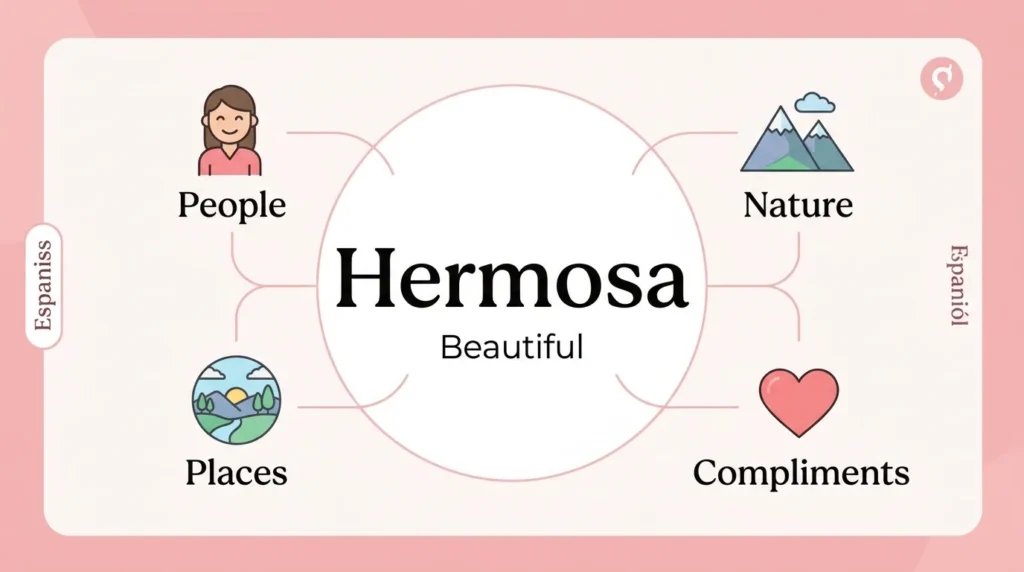
Hermosa is a Spanish adjective that means “beautiful,” “gorgeous,” or “lovely.” It is commonly used to compliment a person’s appearance, personality, or even places and objects. Depending on the context, hermosa can express admiration, affection, or appreciation and is widely used in everyday conversations across Spanish-speaking countries.
If you’ve come across the word hermosa in a text message, social media post, song, movie, or conversation, you may be wondering what it really means. While its direct English translation is “beautiful,” the word carries a deeper emotional and cultural meaning in Spanish. It can describe physical beauty, inner qualities, memorable experiences, or even breathtaking places.
Understanding the hermosa meaning goes beyond a simple dictionary definition. The way native Spanish speakers use the word depends on the relationship between the speakers, the situation, and the tone of the conversation. In some cases, it’s a heartfelt compliment, while in others, it’s simply a warm and polite expression of appreciation.
In this guide, you’ll learn the complete meaning of hermosa, when and how to use it, common examples, cultural nuances, and how it compares with similar Spanish words such as bella, bonita, and linda.
Quick Answer Box
| Topic | Answer |
|---|---|
| Meaning | Hermosa means beautiful, gorgeous, lovely, or stunning in Spanish. |
| Language | Spanish |
| Pronunciation | er-MOH-sah |
| Used For | Complimenting people, places, nature, objects, or meaningful moments |
| Tone | Warm, affectionate, respectful, and admiring |
| Common Contexts | Everyday conversations, romantic messages, family interactions, songs, literature, and social media |
| Example | Eres hermosa. (You are beautiful.) |
What Does Hermosa Mean?
The Spanish word hermosa is the feminine form of the adjective hermoso, which translates to beautiful, gorgeous, lovely, or stunning in English. It is one of the most common and heartfelt compliments in Spanish and is used to express admiration for someone’s appearance, character, or something visually impressive.
Unlike some English compliments that focus mainly on physical attractiveness, hermosa often conveys a broader sense of beauty. It can describe a person’s smile, kindness, confidence, personality, or even a memorable place or experience.
People commonly use hermosa in situations such as:
- Complimenting a woman’s appearance.
- Expressing affection toward a partner or spouse.
- Describing a beautiful landscape or city.
- Appreciating meaningful moments or memories.
- Praising artwork, flowers, or nature.
The exact meaning depends on the context, but it almost always carries a positive, sincere, and respectful tone.
Full Definition
Dictionary Meaning
In standard Spanish, hermosa means:
- Beautiful
- Gorgeous
- Lovely
- Stunning
- Attractive
- Exquisitely beautiful
It functions as an adjective and changes according to gender:
- Hermoso – masculine
- Hermosa – feminine
Emotional Meaning
Beyond its literal translation, hermosa often communicates admiration, warmth, and appreciation. Native speakers may use it to recognize not only physical beauty but also someone’s kindness, confidence, generosity, or positive energy.
For example:
- Eres una persona hermosa. (You are a beautiful person.)
- Qué vista tan hermosa. (What a beautiful view.)
- Tu sonrisa es hermosa. (Your smile is beautiful.)
Because of this emotional depth, hermosa is considered one of the most meaningful compliments in everyday Spanish.
Real Life Conversation Examples
Conversation Example 1: Romantic Text
Person A: I can’t stop thinking about you. ❤️
Person B: Aww, you’re so sweet.
Person A: Eres hermosa.
Meaning: “You are beautiful.”
Context: A romantic compliment expressing admiration and affection.
Conversation Example 2: Complimenting a Friend
Friend 1: Do you like my new dress?
Friend 2: ¡Sí! Te ves hermosa.
Translation: “Yes! You look beautiful.”
Context: A genuine compliment about someone’s appearance.
Conversation Example 3: Family Conversation
Mother: Did you enjoy the vacation?
Daughter: Yes! The beach was hermosa. We took so many pictures.
Meaning: Here, hermosa describes a beautiful place rather than a person.
Conversation Example 4: Social Media Comment
Instagram Post: Vacation photos from Hawaii.
Comment: ¡Qué hermosa vista! 🌅
Translation: “What a beautiful view!”
Context: Used to admire scenery or landscapes.
Conversation Example 5: Everyday Conversation
Coworker: How was your weekend?
You: It was amazing. We visited a hermosa little town in the mountains.
Meaning: Used to describe a charming or beautiful location.
Platform-Specific Usage
TikTok
On TikTok, hermosa frequently appears in captions, comments, and short videos celebrating beauty, confidence, fashion, or travel.
Examples:
- “Ella es hermosa. ❤️”
- “Qué hermosa energía.”
- “Mi hermosa mamá.”
The word often emphasizes both physical beauty and positive personality traits.
Instagram users commonly write hermosa under selfies, portraits, engagement photos, vacation pictures, or family posts.
Examples:
- “Hermosa como siempre.”
- “Mi chica hermosa.”
- “Simplemente hermosa.”
It’s often paired with heart or flower emojis to make compliments feel warmer.
Snapchat
On Snapchat, hermosa is usually sent as a personal compliment in chats or private snaps.
Examples include:
- “Buenos días, hermosa.”
- “Te ves hermosa hoy.”
- “Eres hermosa ❤️”
The tone is usually friendly, affectionate, or romantic.
In WhatsApp conversations, hermosa is commonly used between partners, close friends, or family members.
Examples:
- “Hola, hermosa.”
- “Que tengas un hermoso día.”
- “Mi hermosa hermana.”
It can also be used as a warm greeting or nickname.
On Facebook, people often comment hermosa on profile pictures, wedding albums, birthday posts, graduation photos, and family memories.
Examples:
- “Hermosa foto.”
- “Te ves hermosa.”
- “Una familia hermosa.”
The word expresses admiration and positivity in public interactions.
Texting (SMS & Messaging Apps)
In everyday texting, hermosa is a common way to compliment someone naturally.
Examples:
- “Good morning, hermosa.”
- “You looked hermosa today.”
- “You’re absolutely hermosa.”
Depending on the relationship, it may sound romantic, caring, or simply respectful.
Related Terms and Semantic Variations
Spanish has several words related to hermosa, each carrying a slightly different nuance.
| Term | Meaning | Typical Usage |
|---|---|---|
| Hermoso | Beautiful (masculine) | Men, objects, places |
| Bella | Beautiful, elegant | More poetic or formal |
| Bonita | Pretty, nice-looking | Casual compliment |
| Linda | Cute, lovely | Friendly and affectionate |
| Preciosa | Gorgeous, precious | Strong compliment |
| Guapa | Attractive, good-looking | Common in Spain and Latin America |
| Encantadora | Charming | Personality-focused |
| Radiante | Radiant | Beauty with happiness or confidence |
Semantic Variations
Depending on the situation, hermosa may also imply:
- Gorgeous
- Lovely
- Stunning
- Attractive
- Elegant
- Wonderful
- Amazing
- Breathtaking
- Beautiful inside and out
Its intended meaning depends on the context and relationship between speakers.
How to Respond When Someone Calls You “Hermosa”
If someone says “Hermosa” to compliment you, your response can vary depending on your relationship with them.
Friendly Responses
- Thank you!
- Aww, that’s so kind.
- You’re so sweet.
- Thanks, I appreciate it.
Romantic Responses
- Gracias, mi amor. ❤️
- Tú también.
- Qué lindo de tu parte.
- You always know what to say.
Playful Responses
- Stop, you’re making me blush.
- Haha, thank you!
- That’s so sweet of you.
Formal Responses
- Thank you very much.
- I appreciate your kind words.
- That’s very thoughtful of you.
Common Misinterpretations
Although hermosa simply means beautiful, people sometimes misunderstand its meaning.
It Doesn’t Always Mean Romantic Interest
Friends, relatives, parents, and even grandparents may use hermosa affectionately without any romantic intent.
It’s Not Limited to Physical Beauty
The word can also describe:
- Kindness
- Personality
- Nature
- Art
- Music
- Cities
- Sunsets
- Memories
Regional Differences Exist
Spanish-speaking countries may prefer different compliments such as linda, bonita, bella, or guapa, but hermosa is widely understood across the Spanish-speaking world.
Context Determines the Meaning
The relationship between speakers and the setting determine whether hermosa sounds romantic, friendly, respectful, or simply descriptive.
When Not to Use “Hermosa”
While hermosa is generally a positive word, there are situations where it may not be appropriate.
Professional or Formal Settings
Avoid using hermosa when communicating with colleagues, clients, supervisors, or strangers in formal business situations, as it may be interpreted as overly personal.
Unwanted Personal Compliments
If you don’t know someone well, calling them hermosa may make them uncomfortable. Respect personal boundaries and cultural norms.
Serious or Sensitive Conversations
Using compliments during discussions involving grief, conflict, or difficult topics can feel insensitive or out of place.
When Cultural Context Is Unclear
If you’re unsure how your compliment will be received, choose a more neutral expression such as “great job” or “you look nice.”
Usage Tips
Use It Sincerely
Hermosa is most meaningful when it sounds genuine rather than exaggerated.
Match the Context
Use it appropriately depending on whether you’re complimenting a person, a place, nature, artwork, or an experience.
Consider Your Relationship
The closer your relationship, the more natural the compliment will feel. Friends, partners, and family members commonly use hermosa affectionately.
Understand Regional Preferences
Some Spanish-speaking communities may favor words like linda, bonita, or guapa, but hermosa remains universally recognized and appreciated.
Don’t Overuse It
Repeating hermosa too often in the same conversation can make the compliment feel less genuine. Use it naturally and when it truly fits the moment.
FAQs
What does hermosa mean in English?
Hermosa means beautiful, gorgeous, lovely, or stunning in English. It is the feminine form of the Spanish adjective hermoso and is commonly used to compliment people, places, nature, or objects.
Is hermosa a romantic word?
Not always. While hermosa is often used between romantic partners, it can also be used by friends, family members, or anyone expressing sincere admiration. The meaning depends on the relationship and context.
Can you call a friend hermosa?
Yes. In many Spanish-speaking cultures, calling a close female friend hermosa is a warm and friendly compliment. It doesn’t necessarily imply romantic interest.
What’s the difference between hermosa, bonita, and bella?
All three words mean “beautiful,” but they have slightly different tones:
- Hermosa emphasizes deep or striking beauty.
- Bonita usually means pretty or nice-looking in a casual way.
- Bella sounds more elegant, poetic, or formal.
Can hermosa describe places or things?
Yes. Hermosa isn’t limited to people. You can use it to describe landscapes, cities, flowers, artwork, sunsets, music, or any object or experience you find beautiful.
Example: Qué playa tan hermosa. (“What a beautiful beach.”)
Is hermosa only used for women?
Yes, hermosa is the feminine form. The masculine equivalent is hermoso, which is used to describe men or masculine nouns.
Is hermosa commonly used on social media?
Absolutely. You’ll often see hermosa in Instagram captions, TikTok comments, Facebook posts, WhatsApp messages, and Snapchat chats as a compliment or expression of admiration.
How do you pronounce hermosa?
Hermosa is pronounced approximately as:
er-MOH-sah
The “H” is silent in Spanish, and the emphasis is placed on the second syllable.
How should I respond if someone calls me hermosa?
A simple thank you is always appropriate. You can also respond with:
- “Gracias.”
- “¡Qué amable!”
- “Tú también.”
- “Thank you, that’s so sweet.”
Choose a response that matches the tone of your relationship.
Is hermosa considered a respectful compliment?
Yes. In most situations, hermosa is viewed as a respectful, kind, and genuine compliment. However, as with any compliment, context and familiarity matter. Using it appropriately helps ensure it’s received positively.
Conclusion
The hermosa meaning extends far beyond the simple English translation of “beautiful.” It is a versatile Spanish word that expresses admiration, affection, appreciation, and respect. Whether it’s used to compliment a person’s appearance, celebrate someone’s inner qualities, or describe breathtaking scenery, hermosa carries warmth and sincerity.
Its meaning can vary slightly depending on the relationship between the speakers and the context of the conversation, making it one of the most expressive and meaningful compliments in the Spanish language. From everyday conversations and text messages to social media captions and romantic expressions, hermosa remains a timeless word that conveys genuine appreciation.
By understanding when and how to use hermosa, along with its cultural nuances and related terms like bella, bonita, and linda, you’ll be able to recognize and use the word naturally in both casual and meaningful conversations.

Justin Powell is a writer at GramBrix.com who focuses on grammar, clarity and effective communication, helping readers strengthen their language skills.