Last Updated on August 21, 2026
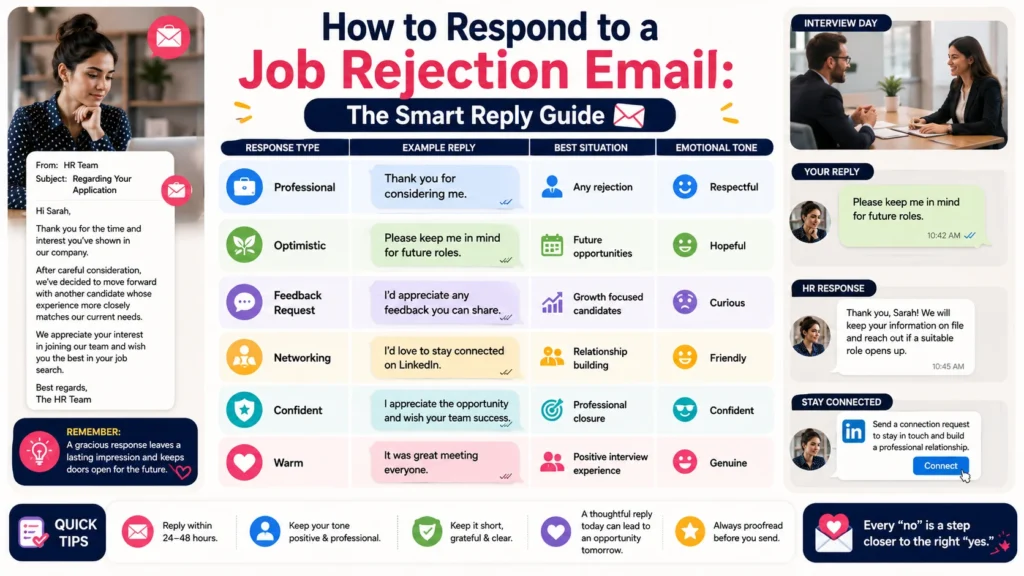
If you’re wondering how to respond to a job rejection email, the best approach is to stay professional, appreciative, and positive. Thank the employer for their time, express continued interest if appropriate, and leave the door open for future opportunities. Great short responses include: “Thank you for the update,” “I appreciate the opportunity,” “I enjoyed learning about the role,” “Please keep me in mind for future openings,” and “Wishing your team continued success.”
You open your inbox, see a message from the company you were excited about, and your heart sinks. The email starts politely, but the outcome isn’t what you hoped for. You didn’t get the job.
Whether it arrives after several interviews, a quick application, or weeks of waiting, a rejection email can be disappointing. Many people simply ignore it. Others feel tempted to reply emotionally or not respond at all.
But knowing how to respond to a job rejection email can leave a lasting positive impression. A thoughtful reply shows professionalism, maturity, and confidence. It can even help you stay on a company’s radar for future opportunities.
This guide gives you practical, real-world responses for different situations, emotions, and professional relationships so you can choose the reply that feels right.
Professional Responses
Thank You for Letting Me Know
Best used when:
You want a simple, professional response.
Meaning:
This shows respect for the hiring team’s communication and leaves a positive final impression.
I Appreciate the Opportunity to Interview
Best used when:
You completed one or more interview rounds.
Meaning:
It acknowledges the time invested by both sides and demonstrates gratitude.
Thank You for Considering My Application
Best used when:
You were rejected early in the hiring process.
Meaning:
This keeps the interaction professional and courteous.
I Enjoyed Learning More About Your Team
Best used when:
You had positive conversations during interviews.
Meaning:
It reinforces genuine interest in the company.
Wishing You and the Team Continued Success
Best used when:
You want to end the conversation gracefully.
Meaning:
This shows professionalism and goodwill.
Positive and Optimistic Responses
I Appreciate the Update and Wish You the Best
Best used when:
You want to move forward positively.
Meaning:
This signals confidence and emotional maturity.
Thank You for the Opportunity to Connect
Best used when:
You valued the networking aspect of the process.
Meaning:
It focuses on the relationship rather than the rejection.
I Remain Interested in Future Opportunities
Best used when:
You genuinely want to work there later.
Meaning:
This keeps future possibilities open.
Thanks for the Feedback and Consideration
Best used when:
The employer provided detailed feedback.
Meaning:
It shows you value professional growth.
I Learned a Lot Through the Process
Best used when:
You gained insight from interviews.
Meaning:
This demonstrates a growth mindset.
Responses When You Want Future Opportunities
Please Keep Me in Mind for Similar Roles
Best used when:
You were a strong candidate but not selected.
Meaning:
It communicates continued interest without pressure.
I’d Love to Stay Connected
Best used when:
You built a positive relationship with the recruiter.
Meaning:
This encourages future networking.
I Hope Our Paths Cross Again
Best used when:
You had a positive experience overall.
Meaning:
Friendly, professional, and memorable.
I’d Welcome Future Opportunities to Apply
Best used when:
You remain enthusiastic about the company.
Meaning:
It keeps communication open.
Thank You and Please Reach Out if a Suitable Role Opens
Best used when:
You want to stay visible for future hiring needs.
Meaning:
This subtly positions you for future consideration.
Confident Responses
I Appreciate the Update and Will Continue Pursuing Opportunities
Best used when:
You want to project resilience.
Meaning:
Shows confidence and professionalism.
While Disappointed, I’m Grateful for the Experience
Best used when:
You want to acknowledge your feelings professionally.
Meaning:
Balanced and mature.
Thank You for Your Time and Consideration
Best used when:
You want a polished response.
Meaning:
A classic professional reply.
I Wish the Selected Candidate Success
Best used when:
You want to demonstrate grace.
Meaning:
Shows strong professional character.
Thank You for the Opportunity to Share My Experience
Best used when:
You had multiple interviews.
Meaning:
Highlights confidence in your qualifications.
Responses Asking for Feedback
Would You Be Open to Sharing Any Feedback?
Best used when:
You want to improve future applications.
Meaning:
Shows initiative and self-development.
Any Insights Would Be Greatly Appreciated
Best used when:
You want constructive advice.
Meaning:
Respectful and professional.
I’d Value Any Suggestions for Future Growth
Best used when:
You are serious about improvement.
Meaning:
Signals humility and ambition.
If Possible, I’d Appreciate Feedback on My Interview
Best used when:
You reached advanced interview stages.
Meaning:
Specific and professional.
Thank You Again and I’d Welcome Any Advice
Best used when:
You want a warm, growth-oriented response.
Meaning:
Keeps the conversation positive.
Short Email Responses
Thank You for the Update
Best used when:
You want a quick reply.
Meaning:
Simple and professional.
I Appreciate Your Time
Best used when:
You prefer concise communication.
Meaning:
Polite and respectful.
Thanks for Letting Me Know
Best used when:
You want a casual-professional tone.
Meaning:
Friendly and direct.
Thank You for Considering Me
Best used when:
You need a brief response.
Meaning:
Professional and appreciative.
Best Wishes to the Team
Best used when:
You want a graceful closing.
Meaning:
Positive and courteous.
Warm and Friendly Responses
It Was Great Meeting Everyone
Best used when:
You connected well with the team.
Meaning:
Personal and memorable.
Thank You for Making the Process Enjoyable
Best used when:
You had a positive interview experience.
Meaning:
Shows appreciation beyond the outcome.
I Truly Appreciated the Conversations
Best used when:
You had meaningful discussions.
Meaning:
Highlights human connection.
Thanks for Your Kind Communication Throughout
Best used when:
The recruiter was especially helpful.
Meaning:
Recognizes professionalism.
I Hope the New Hire Thrives in the Role
Best used when:
You want to leave on a positive note.
Meaning:
Generous and professional.
Responses After Multiple Interview Rounds
Thank You for the Time Invested Throughout the Process
Best used when:
You reached final interviews.
Meaning:
Acknowledges everyone’s effort.
While the Outcome Is Disappointing, I Appreciate the Experience
Best used when:
You spent significant time interviewing.
Meaning:
Honest yet professional.
I Enjoyed Learning About the Company Culture
Best used when:
You met multiple team members.
Meaning:
Shows genuine engagement.
Thank You for the Detailed Evaluation Process
Best used when:
The company invested heavily in candidate assessment.
Meaning:
Professional and appreciative.
I Appreciate the Opportunity to Meet the Team
Best used when:
You interacted with several stakeholders.
Meaning:
Keeps the relationship positive.
Responses for Networking Purposes
I’d Love to Stay Connected on LinkedIn
Best used when:
You want to maintain a professional relationship.
Meaning:
Expands future opportunities.
Thank You for the Insight Into Your Industry
Best used when:
You learned valuable information.
Meaning:
Shows appreciation beyond the job itself.
I Hope We Have an Opportunity to Work Together Someday
Best used when:
You genuinely connected with the company.
Meaning:
Professional and forward-looking.
Your Team Made a Strong Impression
Best used when:
You admired the organization.
Meaning:
Leaves a memorable final note.
I Appreciate the Professionalism Throughout the Process
Best used when:
The experience was positive overall.
Meaning:
Builds goodwill.
Responses When You Feel Disappointed
Thank You for the Update, Though I Am Naturally Disappointed
Best used when:
You want to be honest.
Meaning:
Authentic without being negative.
I Was Excited About the Opportunity but Appreciate Your Decision
Best used when:
You were highly interested in the role.
Meaning:
Balances emotion and professionalism.
While This Isn’t the Outcome I Hoped For, Thank You
Best used when:
You want to acknowledge disappointment gracefully.
Meaning:
Mature and respectful.
I Appreciate Your Transparency
Best used when:
The employer communicated clearly.
Meaning:
Recognizes honesty.
Thank You for the Consideration and Feedback
Best used when:
Feedback accompanied the rejection.
Meaning:
Professional and growth-oriented.
Responses for Internal Company Roles
Thank You for Considering Me for the Position
Best used when:
You applied internally.
Meaning:
Maintains workplace relationships.
I Appreciate the Opportunity to Explore My Growth Within the Company
Best used when:
You sought advancement.
Meaning:
Shows commitment.
I’m Looking Forward to Continuing My Contributions
Best used when:
You remain in the organization.
Meaning:
Professional and positive.
Thank You for the Feedback and Encouragement
Best used when:
Managers provided guidance.
Meaning:
Supports career development.
I Remain Excited About Future Opportunities Here
Best used when:
You plan to pursue future openings.
Meaning:
Shows long-term commitment.
Responses for Recruiter Rejections
Thank You for Keeping Me Informed
Best used when:
A recruiter shared the decision.
Meaning:
Recognizes professionalism.
I Appreciate Your Support Throughout the Process
Best used when:
The recruiter was helpful.
Meaning:
Builds rapport.
Please Feel Free to Reach Out About Future Roles
Best used when:
You want future opportunities.
Meaning:
Keeps the relationship active.
Thank You for Advocating on My Behalf
Best used when:
The recruiter invested effort.
Meaning:
Shows gratitude.
I Look Forward to Staying Connected
Best used when:
You want to maintain a professional network.
Meaning:
Relationship-focused.
Common Mistakes to Avoid
Responding Emotionally
Best used when:
Avoiding this mistake.
Meaning:
A rejection email is not the place to vent frustration. Strong emotions can damage future opportunities.
Demanding Explanations
Best used when:
Requesting feedback.
Meaning:
Asking respectfully works better than demanding answers.
Ignoring the Email Completely
Best used when:
You want to maintain connections.
Meaning:
A brief reply can strengthen your professional reputation.
Being Passive Aggressive
Best used when:
Managing disappointment.
Meaning:
Sarcastic comments rarely help and can harm future prospects.
Burning Bridges
Best used when:
Thinking long term.
Meaning:
Many professionals are hired later by companies that initially rejected them.
Communication Psychology Behind Rejection Responses
Gratitude Creates Positive Recall
Best used when:
Leaving a lasting impression.
Meaning:
People remember candidates who remain respectful under disappointment.
Professionalism Signals Emotional Intelligence
Best used when:
Building your reputation.
Meaning:
Employers value maturity and composure.
Future-Oriented Language Keeps Doors Open
Best used when:
Seeking future opportunities.
Meaning:
It reminds employers that you’re still interested.
Confidence Is More Effective Than Frustration
Best used when:
Handling setbacks.
Meaning:
Confidence suggests resilience and adaptability.
Relationships Often Outlast Hiring Decisions
Best used when:
Networking.
Meaning:
Today’s rejection can become tomorrow’s opportunity.
People Also Ask
Should I respond to a job rejection email?
Yes. Responding to a job rejection email is considered professional and courteous. A brief thank-you message can strengthen your reputation, maintain relationships, and keep future opportunities open with the company.
What is the best response to a job rejection email?
The best response is polite, appreciative, and professional. Thank the employer for their time, acknowledge the decision respectfully, and express interest in future opportunities if you remain interested.
Can I ask for feedback after a job rejection?
Yes. Most hiring managers appreciate respectful requests for feedback. Keep your request brief, professional, and focused on learning rather than challenging the decision.
Is it okay to express disappointment in a rejection reply?
Yes, if done professionally. A simple statement such as “While I’m disappointed, I appreciate the opportunity” acknowledges your feelings while maintaining professionalism.
How long should a rejection email response be?
A rejection response should typically be short. Two to five sentences are usually enough to thank the employer, acknowledge the outcome, and close the conversation positively.
Can responding to a rejection lead to future job opportunities?
Absolutely. Recruiters and hiring managers often remember candidates who handled rejection professionally. A positive response can help you stay on their radar for future openings.
Conclusion
Getting rejected from a job never feels great, but your response can say a lot about your professionalism and character. The best way to respond to a job rejection email depends on your relationship with the employer, your career goals, and the tone you want to leave behind. Whether you choose a simple thank-you, ask for feedback, or express interest in future opportunities, a thoughtful reply can help you maintain valuable professional connections. Sometimes the job you don’t get today leads to an even better opportunity tomorrow. Stay positive, stay professional, and keep moving forward.

Victoria Lane is a grammar-focused writer at GramBrix.com, passionate about helping readers master the rules of language. She provides clear explanations and practical examples that make writing more accurate, polished and confident.