
Last Updated on July 10, 2026
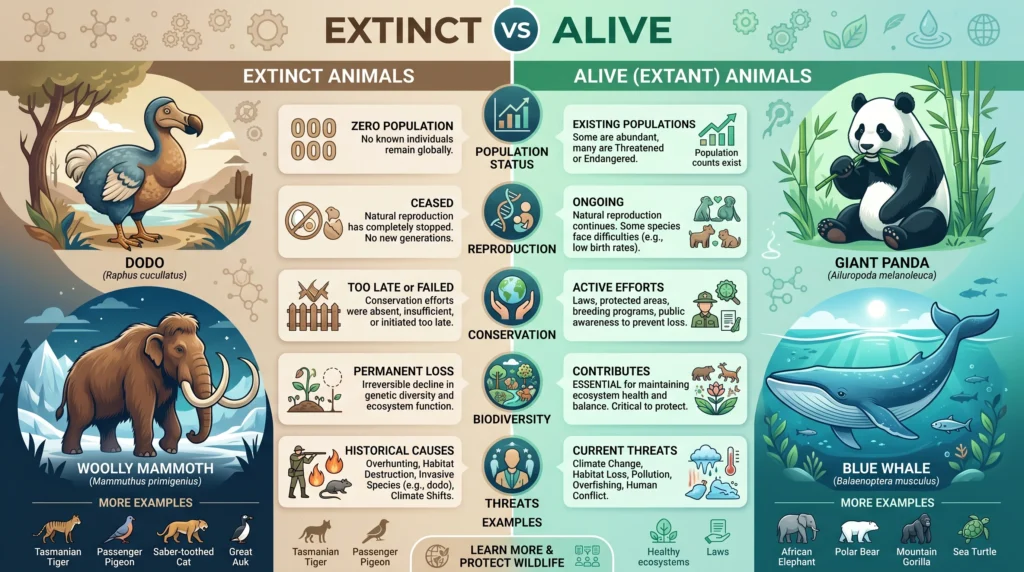
Extinct means a species no longer has any living members anywhere on Earth, while alive means individuals of a species currently exist. The comparison of extinct or alive is commonly used in biology, wildlife conservation, paleontology, and education. Understanding the difference helps explain how species survive, disappear, or become endangered over time.
One of the most fascinating questions in nature is whether a species is extinct or alive.
People often search this topic when learning about dinosaurs, rare animals, ancient plants, or endangered wildlife. In some cases, scientists once believed a species was extinct, only to discover living populations decades later.
The difference between extinct and alive may seem simple, but the topic involves biology, conservation, evolution, and environmental science.
Every year, researchers study thousands of species to determine their conservation status. Some are thriving, some are endangered, and others have unfortunately disappeared forever.
Understanding what extinct and alive mean can help us better appreciate biodiversity and the importance of protecting wildlife.
This guide covers:
- Definitions
- Key differences
- Causes of extinction
- Conservation efforts
- Real-world examples
- Common misconceptions
- Frequently asked questions
Quick Answer
| Term | Meaning |
|---|---|
| Extinct | No living members remain |
| Alive | Living individuals currently exist |
Simple Summary
A species is extinct when every member has died and none remain on Earth. A species is alive when living individuals still exist somewhere in the world.
What Does Extinct Mean?
Definition
Extinct means a species no longer exists because all individuals have died.
Scientific Meaning
Biologists classify a species as extinct when there is no reasonable doubt that the last individual has died.
Permanent Status
Once a species becomes extinct, it cannot naturally return.
Examples
Well-known extinct species include:
- Dodo
- Passenger pigeon
- Woolly mammoth
- Tasmanian tiger
What Does Alive Mean?
Definition
Alive means living organisms currently exist.
Biological Characteristics
Living organisms can:
- Grow
- Reproduce
- Consume energy
- Respond to their environment
Species Status
A species is considered alive if at least some individuals survive.
Examples
Species currently alive include:
- Elephants
- Tigers
- Blue whales
- Giant pandas
Main Difference Between Extinct or Alive
Population
Extinct
Population equals zero.
Alive
Population remains above zero.
Reproduction
Extinct
No reproduction possible.
Alive
Species can continue reproducing.
Conservation Efforts
Extinct
Protection is no longer possible.
Alive
Conservation may help ensure survival.
Comparison Table
| Feature | Extinct | Alive |
|---|---|---|
| Living Members | None | Present |
| Reproduction | Impossible | Possible |
| Population Growth | None | Possible |
| Conservation Needed | No Longer Possible | Often Needed |
| Found in Nature | No | Yes |
| Scientific Status | Final | Active |
Why Species Become Extinct
Habitat Loss
One of the leading causes of extinction.
Examples include:
- Deforestation
- Urban expansion
- Agricultural development
Climate Change
Environmental shifts can affect survival.
Overhunting
Excessive hunting has contributed to many extinctions.
Pollution
Contaminated environments may threaten wildlife populations.
Invasive Species
Non-native species can disrupt ecosystems.
How Scientists Determine Extinction
Field Surveys
Researchers search for surviving individuals.
Historical Records
Past observations help guide investigations.
Habitat Analysis
Scientists study whether suitable habitat remains.
Long-Term Monitoring
Years of research may be required before declaring extinction.
Species Once Thought Extinct but Still Alive
Coelacanth
A famous example rediscovered after being believed extinct for millions of years.
Laotian Rock Rat
Unexpectedly found after scientists thought it had disappeared.
Fernandina Giant Tortoise
Rediscovered after long periods without confirmed sightings.
Importance
These discoveries encourage continued conservation efforts.
Extinct Animals That Fascinate People
Dodo
One of the most famous extinct birds.
Woolly Mammoth
A prehistoric relative of modern elephants.
Passenger Pigeon
Once among the most abundant birds in North America.
Tasmanian Tiger
A unique carnivorous marsupial.
Alive Species Facing Risk
Endangered Animals
Many living species face significant threats.
Examples include:
- Rhinos
- Orangutans
- Sea turtles
- Snow leopards
Conservation Priority
Protecting living species helps prevent extinction.
Extinct vs Endangered
Extinct
No living members remain.
Endangered
Species still exists but faces high extinction risk.
Critically Endangered
One step closer to extinction.
Important Difference
Endangered species can still be saved.
Conservation Efforts
Protected Areas
National parks help preserve habitats.
Breeding Programs
Captive breeding can increase populations.
Anti-Poaching Measures
Protection reduces illegal hunting.
Public Awareness
Education supports conservation efforts.
Extinct or Alive in Popular Culture
Movies
Many films feature extinct animals.
Documentaries
Wildlife documentaries often explore extinction stories.
Museums
Fossils help educate visitors about extinct species.
Social Media
Rare wildlife discoveries frequently attract attention.
Common Mistakes People Make
Assuming Rare Means Extinct
A species can be extremely rare and still alive.
Confusing Endangered With Extinct
Endangered species still have living populations.
Trusting Unverified Sightings
Scientific evidence is necessary.
Ignoring Habitat Loss
Habitat destruction remains a major threat.
Why Biodiversity Matters
Ecosystem Stability
Healthy ecosystems depend on diverse species.
Food Chains
Each species plays a role.
Scientific Value
Living species contribute to research and medicine.
Environmental Health
Biodiversity supports ecological balance.
Real World Examples
Giant Panda
Once highly threatened but still alive.
Blue Whale
The largest living animal on Earth.
Dodo
A classic example of extinction.
Coelacanth
A species unexpectedly rediscovered.
Related Concepts
Endangered Species
Species at risk of extinction.
Evolution
The process by which species change over time.
Fossils
Evidence of ancient life.
Biodiversity
The variety of living organisms on Earth.
Exercises With Answers
Exercise 1
What does extinct mean?
Answer: No living members remain.
Exercise 2
Can extinct species reproduce?
Answer: No.
Exercise 3
What is an endangered species?
Answer: A species at risk of extinction.
Exercise 4
Is a rare species automatically extinct?
Answer: No.
Exercise 5
What is a famous extinct bird?
Answer: The dodo.
FAQs
What is the difference between extinct or alive?
Extinct means no living members remain, while alive means the species still exists.
Can an extinct species come back naturally?
No. Once a species is truly extinct, natural recovery is impossible.
What is the most famous extinct animal?
The dodo is among the most famous examples.
Are dinosaurs extinct or alive?
Most dinosaur species are extinct, although birds evolved from dinosaur ancestors.
What does endangered mean?
Endangered means a species faces a significant risk of extinction.
Can scientists mistakenly declare a species extinct?
Yes. Rare rediscoveries have occurred.
Why do species become extinct?
Common causes include habitat loss, climate change, hunting, pollution, and invasive species.
How do scientists know if a species is extinct?
Through extensive surveys, research, and long-term monitoring.
What is biodiversity?
Biodiversity refers to the variety of living organisms within ecosystems.
Can conservation prevent extinction?
Yes. Effective conservation efforts have helped many species survive.
Conclusion
Understanding the difference between extinct or alive is essential for learning about wildlife, conservation, and the natural world.
A species is considered alive when living individuals still exist and reproduction remains possible. A species becomes extinct when every member has disappeared permanently.
Key takeaways include:
- Extinct means no living members remain.
- Alive means individuals continue to exist.
- Habitat loss is a major cause of extinction.
- Endangered species can still be protected.
- Conservation efforts help preserve biodiversity.
As scientists continue studying wildlife around the world, understanding extinction and survival helps us appreciate the importance of protecting Earth’s incredible diversity of life.

Victoria Lane is a grammar-focused writer at GramBrix.com, passionate about helping readers master the rules of language. She provides clear explanations and practical examples that make writing more accurate, polished and confident.