
Last Updated on July 12, 2026
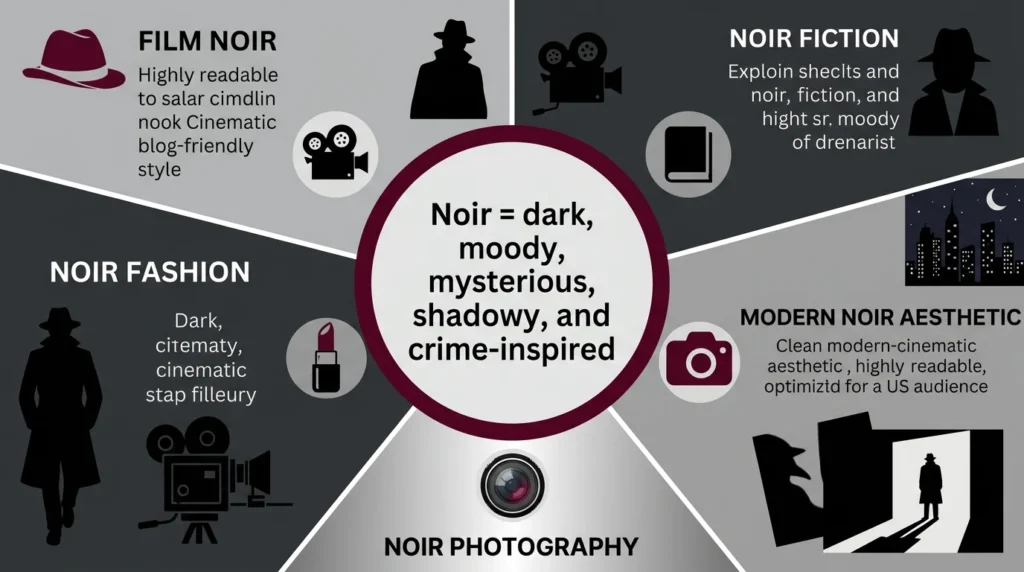
Noir generally means dark, mysterious, moody, or crimerelated, especially in art, film, fashion, and storytelling. The word comes from French for “black” and is most commonly used in phrases like film noir, noir fiction, and noir aesthetic to describe something shadowy, dramatic, morally complex, or emotionally intense.
If you’ve seen someone describe a movie, outfit, photo edit, or story as noir, you might be wondering what that actually means. Is it just another word for black? Does it refer to old detective films? Or is it more of a vibe—dark, cinematic, mysterious, and a little dangerous?
The short answer is that noir meaning depends on context, but it usually points to something dark in mood, visually shadowy, emotionally intense, morally complicated, or inspired by crime and mystery storytelling. In pop culture, “noir” often evokes smoky city streets, trench coats, femme fatales, rainy nights, detective monologues, neon reflections, and a sense that something is off beneath the surface.
In this guide, you’ll get the full picture of what noir means in plain English. We’ll break down the literal definition, its use in movies and books, what a noir aesthetic looks like, how people use it in everyday conversation, common misunderstandings, related terms, and real examples across platforms and media. If you’ve searched “noir meaning” because you saw it in a caption, a movie review, a fashion post, or a book description, this article will give you a complete answer.
Quick Answer Box
| Topic | Answer |
| Word | Noir |
| Basic meaning | Dark, moody, mysterious, shadowy, or crimerelated |
| Literal origin | French for “black” |
| Common contexts | Film, books, photography, fashion, design, gaming, mood boards, aesthetics |
| Most famous use | Film noir and noir fiction |
| Typical vibe | Gritty, dramatic, stylish, suspenseful, morally complex |
| Can it just mean black? | Yes, in French or in some naming contexts, but in English it often carries a darker artistic mood |
| Tone | Sophisticated, atmospheric, cinematic, edgy, sometimes tragic |
| Example | “The movie has a noir feel—lots of shadows, crime, and morally gray characters.” |
What Does Noir Mean?
At its core, noir is a word used to describe something dark in color, tone, style, or emotional atmosphere. In modern English, it most often refers to a specific kind of moody, shadowy, crimetinged aesthetic rather than just the color black.
Simple definition of noir
Noir means dark, shadowy, mysterious, and often connected to crime, danger, moral ambiguity, or emotional tension.
Depending on the context, noir can describe:
- a movie with a dark crimedriven atmosphere
- a novel centered on corruption, danger, or psychological tension
- a visual style with heavy shadows and dramatic contrast
- a fashion or photo aesthetic that feels sleek, moody, and cinematic
- a general vibe that feels ominous, sophisticated, intense, or morally complicated
The literal meaning of noir
The word noir comes from French, where it literally means black. In French, it can simply refer to the color black. But in English usage, especially in media, art, and culture, noir has expanded far beyond color.
So while the literal root is “black,” the cultural meaning of noir is closer to:
- dark and atmospheric
- crimefocused
- psychologically intense
- stylish but bleak
- morally gray rather than cleancut
- cinematic and shadowheavy
Why people search for “noir meaning”
People usually search noir meaning for one of these reasons:
- They saw film noir in a movie review.
- A book or TV show was described as noir.
- Someone used noir aesthetic in fashion, photography, or design.
- A product name included “noir,” and they wanted to know the tone behind it.
- They heard it in a cultural or artistic context and wanted the deeper meaning, not just the translation.
Full Definition of Noir
To really understand noir, it helps to think of it as a layered word with several meanings depending on the setting.
Noir as a literal word
In French, noir = black.
Examples:
- chat noir = black cat
- robe noire = black dress
- café noir = black coffee
In those cases, the meaning is straightforward and colorbased.
Noir as an artistic style
In English, noir often means a dark, moody, dramatic artistic style associated with shadow, danger, tension, and emotional complexity.
This version of noir often includes:
- low lighting or high contrast visuals
- urban night settings
- detectives, criminals, antiheroes, or troubled protagonists
- secrets, betrayal, corruption, obsession, or fatal attraction
- a feeling of dread, suspense, or emotional heaviness
Noir as a storytelling category
Noir is also a storytelling mode. A noir story usually has some mix of:
- crime or investigation
- moral ambiguity
- flawed characters
- emotional damage or obsession
- danger that feels inevitable
- a world where justice is messy or incomplete
Unlike a clean heroic story where good and evil are obvious, noir tends to live in the gray areas. Characters are often compromised, lonely, manipulated, desperate, or trying to survive in a corrupt system.
Noir as a mood or vibe
In everyday language, people also use noir to describe a mood or visual vibe:
- “That photoshoot is very noir.”
- “The apartment decor has a noir feel.”
- “This game has a cybernoir atmosphere.”
- “Her outfit gives modern noir.”
Here, noir doesn’t necessarily mean there’s a crime plot. It means the thing feels dark, elegant, cinematic, mysterious, and emotionally loaded.
The History Behind Noir
To understand why the word feels so specific, it helps to know where its modern cultural meaning comes from.
The rise of film noir
The term film noir is strongly tied to a style of American crime films that became especially influential in the 1940s and 1950s. These films often featured:
- hardboiled detectives
- femme fatales
- criminals and drifters
- smoky bars and nighttime city streets
- cynical narration
- sharp shadows and dramatic lighting
- plots involving betrayal, greed, murder, and corruption
Even though the films were American, the label film noir was popularized by French critics, who noticed the dark visual style and pessimistic worldview of these crime dramas.
Why noir became more than a movie term
Over time, noir stopped being just a label for a specific era of blackandwhite crime films. It expanded into a broader term for any story or style that captures that same atmosphere:
- bleak but stylish
- shadowy and dangerous
- emotionally tense
- morally complex
- crimeadjacent or psychologically dark
That’s why today you’ll see noir used for:
- novels
- TV series
- graphic novels
- photography
- fashion editorials
- video games
- interior design inspiration
- music videos
- social media aesthetics
Context and Usage of Noir
The meaning of noir changes slightly depending on what it’s describing. Here’s how to read it correctly in context.
Noir in Movies and TV
When a movie or show is called noir, it usually means the story or visual style draws from classic noir traditions.
What “noir” means in film
A noir film or noirinspired show often includes:
- a dark or fatalistic tone
- crime, deception, or investigation
- a protagonist with flaws or a troubled past
- dramatic shadows, nighttime scenes, and moody visuals
- a world where people are not fully innocent
- tension between desire, guilt, and survival
Example
If someone says:
“It’s a noir thriller.”
They usually mean the film is not just suspenseful. It likely has a shadowy, morally tense, crimecentered atmosphere with a strong visual mood.
Common filmnoir traits
- voiceover narration
- rainsoaked streets
- smoky rooms and neon signs
- femme fatales or seductive danger
- antiheroes instead of pure heroes
- corruption, blackmail, or murder
- endings that feel tragic, ironic, or unresolved
Noir in Books and Fiction
In literature, noir usually refers to a darker branch of crime fiction.
What noir fiction means
Noir fiction often focuses on:
- morally compromised characters
- crime from the inside rather than just detective work from the outside
- desperation, violence, or emotional collapse
- a world where choices are limited and consequences are harsh
- psychological tension and social decay
A detective novel might solve a crime neatly. A noir novel is more likely to show how people get trapped by greed, trauma, obsession, poverty, corruption, or desire.
Noir vs detective fiction
These genres overlap, but they’re not identical.
| Genre | Main Focus | Typical Feel |
| Detective fiction | Solving a mystery | Analytical, procedural, cluebased |
| Crime thriller | Tension, danger, pursuit | Fast, suspenseful, high stakes |
| Noir fiction | Moral darkness, flawed people, crime and doom | Bleak, intimate, gritty, psychologically heavy |
So if a book is called noir, expect more darkness and moral complexity than a standard whodunit.
Noir in Fashion and Aesthetics
In fashion, photography, and visual culture, noir often means dark, sleek, dramatic, mysterious, and cinematic.
What a noir aesthetic looks like
A noir aesthetic may include:
- black, charcoal, silver, deep burgundy, dark emerald, or muted tones
- dramatic shadows and low light
- trench coats, leather, satin, lace, gloves, tailored silhouettes
- smoky eye makeup, bold lipstick, polished hair
- oldHollywood glamour mixed with danger
- moody city backgrounds, mirrors, rain, blinds, neon, cigarettes as visual motifs in editorial art
Example uses
- “This editorial has a noir vibe.”
- “I want a modern noir bedroom aesthetic.”
- “Her photos are all blackandwhite noir portraits.”
- “The campaign leans into romantic noir.”
In these cases, noir means more than black clothing. It implies a whole mood: elegance, secrecy, drama, and tension.
Noir in Photography and Design
When designers or photographers say a project is noir, they often mean:
- high contrast lighting
- deep shadows
- cinematic framing
- emotional ambiguity
- minimal but dramatic color use
- mystery or suspense in the composition
A noir portrait might show a face halfhidden in shadow. A noir poster might use sharp light, dark alleys, and vintage typography. A noir social campaign might mix glamour with danger.
Noir in Gaming and Pop Culture
Modern entertainment has stretched noir into new subgenres and hybrid aesthetics.
Examples include:
- neonoir crime dramas
- cybernoir games with futuristic corruption and neon darkness
- technoir worlds mixing surveillance, AI, and moral collapse
- romantic noir visuals blending glamour with melancholy
- smalltown noir stories where ordinary places hide ugly secrets
So when a game review says, “It’s a neonoir detective game,” that usually means it combines investigation with a moody, dark, stylish, morally gray atmosphere.
RealLife Examples of Noir Meaning
Here are realistic examples showing how noir is used in everyday English.
Example 1: Movie review
Person A: “What kind of movie is it?”
Person B: “A noir crime thriller—very moody, lots of shadows, and nobody’s completely innocent.”
Meaning: Noir here means a dark crime story with a dramatic atmosphere and morally complicated characters.
Example 2: Fashion conversation
Person A: “How would you describe her style?”
Person B: “Kind of modern noir—mostly black, tailored pieces, dark lipstick, very sleek and mysterious.”
Meaning: Noir describes a visual aesthetic that feels elegant, dark, and cinematic.
Example 3: Book recommendation
Person A: “Is it a detective novel?”
Person B: “More noir than detective fiction. It’s less about solving the case and more about the character spiraling into a dangerous mess.”
Meaning: Noir here suggests psychological darkness and moral tension rather than just puzzlesolving.
Example 4: Photography feedback
Person A: “What do you think of this edit?”
Person B: “The lighting makes it feel noir—super dramatic and a little ominous.”
Meaning: Noir refers to the shadowy visual tone and emotional atmosphere.
Example 5: Social media caption
Caption: “Latenight espresso, rain on the windows, and a full noir mood.”
Meaning: Noir is being used as a vibe word to mean moody, stylish, dark, reflective, and cinematic.
Five Conversation Examples Using Noir Naturally
Below are longer examples to show how the word works in realistic conversation.
Conversation Example 1: Talking about a TV series
Friend 1: “Should I watch it?”
Friend 2: “Yeah, if you like noir stuff.”
Friend 1: “What do you mean by noir?”
Friend 2: “It’s got detectives, corruption, a lot of nighttime scenes, and that dark, morally messy vibe where everyone’s hiding something.”
Why it works: The speaker uses noir as shorthand for a dark crimecentered atmosphere.
Conversation Example 2: Describing a photoshoot
Photographer: “Do you want bright and airy, or something moodier?”
Client: “Moodier for sure.”
Photographer: “Then we can go a little noir—sharp shadows, black styling, dramatic poses, maybe a rainy city backdrop.”
Why it works: Noir here is a visual style direction, not a genre label.
Conversation Example 3: Book club discussion
Reader 1: “I thought it would be a normal mystery.”
Reader 2: “Same, but it’s definitely noir.”
Reader 1: “Yeah, the main character isn’t really a hero at all.”
Reader 2: “Exactly. It’s all guilt, bad decisions, corruption, and consequences.”
Why it works: Noir emphasizes moral ambiguity and emotional darkness.
Conversation Example 4: Fashion content creation
Creator 1: “What should I call this outfit reel?”
Creator 2: “Maybe ‘soft noir’ or ‘midnight noir.’”
Creator 1: “Because of the black dress?”
Creator 2: “Not just the black. The lighting, the gloves, the jazz soundtrack—it all feels cinematic.”
Why it works: Noir is about mood and styling, not just color.
Conversation Example 5: Gaming recommendation
Player 1: “What’s the game like?”
Player 2: “Think cyberpunk but more noir.”
Player 1: “So darker?”
Player 2: “Yeah—dark city, detective plot, corruption, voice logs, and that doomed feeling like the system is bigger than you.”
Why it works: Noir is being used to define the emotional and narrative style of the game world.
PlatformSpecific Meaning of Noir
People don’t use noir exactly the same way on every platform. Here’s how the word tends to show up online.
On Instagram, noir is often aestheticfirst. It’s commonly used in:
- fashion captions
- moody photo dumps
- editorial makeup looks
- luxury or dark romance mood boards
- blackandwhite portrait photography
- cinematic reels
What noir usually implies on Instagram
- dark elegance
- polished mystery
- artistic mood
- blackheavy styling
- filminspired visuals
- latenight city energy
Example Instagram captions
- “A little velvet, a little danger, full noir energy.”
- “Midnight noir.”
- “Soft glam with a noir twist.”
- “City lights and a noir state of mind.”
In these cases, noir is being used as a style descriptor and vibe marker.
TikTok
On TikTok, noir can show up in aesthetic, movie, fashion, writing, and fandom content.
Common TikTok uses of noir
- “noir makeup”
- “dark feminine noir aesthetic”
- “neonoir movies you need to watch”
- “how to edit your photos with a noir vibe”
- “books with a noir atmosphere”
Meaning on TikTok
It usually means dark, cinematic, stylish, dramatic, and emotionally charged. Sometimes it overlaps with trends like dark academia, old money, femme fatale styling, gothic glamour, or moody urban edits.
Pinterest uses noir heavily as a visual search term.
Common Pinterest searches
- noir bedroom aesthetic
- noir fashion mood board
- noir makeup inspiration
- noir wedding theme
- film noir photography
- modern noir living room
On Pinterest, noir usually signals a visual concept built around drama, shadow, elegance, and depth.
YouTube
On YouTube, noir appears in:
- movie essays
- genre breakdowns
- writing advice
- video editing tutorials
- fashion and styling content
- gaming retrospectives
Common usage
A creator might say:
- “Why neonoir still works”
- “How to light a noir portrait”
- “Top 10 noir detective games”
- “What makes a film feel noir?”
Here the word often carries both genre meaning and visual meaning.
Reddit and forums
On discussion platforms, noir often appears in recommendation threads:
- “Looking for noir novels with a female lead”
- “Best neonoir films from the last decade?”
- “Games with a noir detective atmosphere”
- “How noir is this show, really?”
In forumstyle use, people tend to use noir more precisely, often distinguishing between classic noir, neonoir, crime fiction, hardboiled, and psychological thriller.
Alternative Meanings of Noir
Although the dark cinematic meaning is the most common in English pop culture, noir can still have other meanings depending on the context.
Noir as simply “black”
Because noir literally means black in French, you’ll see it in product names, menu items, fashion labels, cosmetics, and branding.
Examples:
- café noir = black coffee
- chocolat noir = dark chocolate
- noir handbag = black handbag
- noir edition = black version of a product
In these cases, noir may not imply mystery or film style at all. It might simply indicate the color.
Noir in wine, fragrance, and branding
Brands often use “noir” to suggest more than black. It can signal:
- sophistication
- sensuality
- luxury
- evening wear
- mystery
- richness or intensity
That’s why you’ll see names like:
- “velvet noir”
- “rose noir”
- “midnight noir”
- “noir oud”
- “noir reserve”
Here, noir functions as a mood word as much as a color word.
Noir as shorthand for “darkthemed”
In casual speech, people sometimes use noir loosely to mean:
- darker than usual
- stylishly grim
- emotionally heavy
- cinematic and shadowy
- glamorous but dangerous
That use is broader than strict genre noir, but it’s common and understandable.
Related Terms and NLP Variations of Noir
If you’re researching noir meaning, you’ll likely come across related words that overlap with it. They are similar, but not identical.
Film noir
This is the classic term. It refers to a dark style of crime cinema associated with shadowheavy visuals, moral ambiguity, and fatalistic storytelling.
Neonoir
Neonoir means a modern version of noir. It keeps the dark mood and moral tension of classic noir but updates the setting, visuals, themes, or technology.
Examples of neonoir elements:
- neon cityscapes
- modern corruption
- surveillance and tech anxiety
- nonlinear storytelling
- psychological trauma
- antiheroes in contemporary settings
Hardboiled
Hardboiled usually refers to a tough, unsentimental style of crime writing, often featuring cynical detectives. It overlaps with noir, but hardboiled is more about voice and character attitude, while noir is more about atmosphere, moral darkness, and tragic tension.
Gothic
Gothic and noir can both be dark, but gothic often leans toward:
- haunted spaces
- decay
- romance and dread
- the uncanny or supernatural
- old mansions, family secrets, and doom
Noir is more urban, crimecentered, and psychologically modern.
Dark academia
Dark academia shares noir’s moody aesthetic, but it’s centered more on:
- books and scholarship
- old libraries and campuses
- intellectual obsession
- tweed, candles, poetry, Latin, classics
- melancholy and beauty in learning
Noir is more likely to involve crime, danger, city shadows, and moral compromise.
Thriller
A thriller focuses on suspense and stakes. Noir can be a thriller, but noir adds a particular atmosphere: cynicism, shadow, emotional ruin, temptation, and moral ambiguity.
Common semantic variations and phrases
People may search or say:
- noir vibe
- noir aesthetic
- noir style
- noir movie meaning
- noir fiction meaning
- noir fashion meaning
- noirinspired
- noir detective
- romantic noir
- dark noir visuals
- cinematic noir mood
All of these usually point back to the same core cluster of meanings: dark, stylish, mysterious, and emotionally loaded.
How to Respond if Someone Uses “Noir”
If someone uses noir in conversation, your response depends on how they’re using it.
If they’re talking about a movie or show
You can respond with:
- “So it’s more dark crime drama than a straightforward mystery?”
- “Do you mean classic detective noir or more modern neonoir?”
- “Is it moody noir or more actionheavy?”
If they’re describing fashion or photography
You can say:
- “I get it—dark, cinematic, dramatic lighting?”
- “So more sleek mystery than goth?”
- “Like oldHollywood shadowy glam?”
If they’re describing a book
You can ask:
- “Is it detective noir or more psychological?”
- “Does noir here mean crimefocused, or just emotionally dark?”
- “Is the main character morally gray?”
If you want to use the word yourself
You can use noir when something feels:
- dark and elegant
- cinematic and mysterious
- crimeadjacent or detectiveinspired
- emotionally heavy and visually dramatic
Example:
- “The campaign has a modern noir feel.”
- “It’s basically a noir romance with a detective plot.”
- “I love the noir lighting in these portraits.”
Misinterpretations of Noir
Noir is a useful word, but it’s easy to misuse if you flatten it into just one meaning.
Misinterpretation 1: “Noir just means black”
Not always. While the literal French meaning is black, English usage often carries stylistic and emotional meaning, especially in art and entertainment.
Better understanding
Noir can mean black in some contexts, but in many others it means dark in mood, style, and storytelling.
Misinterpretation 2: “Noir and horror are the same”
They overlap sometimes, but noir is not the same as horror.
- Horror aims to scare, disturb, or unsettle through fear, dread, or the monstrous.
- Noir focuses more on crime, corruption, fatalism, seduction, guilt, and moral darkness.
A noir story can be creepy, but it doesn’t have to be horror.
Misinterpretation 3: “Noir means old blackandwhite detective movies only”
That’s too narrow. Classic film noir is the origin of the modern vibe, but noir now includes:
- neonoir movies
- noir novels
- noir games
- noir photography
- noir fashion
- noirinspired interior design
- noir branding and editorial styling
Misinterpretation 4: “Anything dark is noir”
Also not quite. Not every dark thing is noir.
A design can be black and minimal without being noir. A story can be sad without being noir. A horror movie can be dimly lit but not noir at all.
What makes something feel noir specifically?
Usually a combination of:
- darkness in tone or visuals
- mystery or tension
- moral complexity
- stylish dramatic presentation
- crime, secrecy, obsession, or emotional danger
When Not to Use the Word Noir
There are times when noir isn’t the best label.
Don’t use noir when you only mean “black”
If you’re describing a plain black notebook, Tshirt, or phone case, calling it noir may sound overly stylized unless the brand or context is intentionally French or aesthetic.
Don’t use noir for cheerful dark colors
A black outfit at a beach party isn’t automatically noir. Noir implies mood, not just color.
Don’t use noir when the tone is clean and optimistic
If a story is light, wholesome, and emotionally straightforward, noir probably doesn’t fit—even if it has nighttime scenes or black visuals.
Don’t force noir onto every mystery
Some mysteries are cozy, witty, procedural, or purely puzzlebased. Noir is best when the work has moral messiness, emotional tension, and a dark atmosphere.
Usage Tips: How to Use Noir Correctly
If you want to use noir naturally in speech or writing, these tips help.
Tip 1: Pair it with a clear noun
The word is easiest to understand when attached to something concrete:
- noir film
- noir novel
- noir aesthetic
- noir lighting
- noir thriller
- noir photography
- noir fashion editorial
Tip 2: Use it for mood, not just color
If you mean black, say black. If you mean black plus mystery, drama, and cinematic darkness, noir is a better fit.
Tip 3: Think in atmosphere
Ask yourself whether the thing feels:
- shadowy
- emotionally tense
- stylishly dangerous
- morally gray
- crimeadjacent
- cinematic and moody
If yes, noir may be the right word.
Tip 4: Distinguish classic noir from modern noir
If you’re discussing media in detail, it can help to specify:
- classic noir
- neonoir
- romantic noir
- cybernoir
- southern noir
- domestic noir
That gives your meaning more precision.
Tip 5: Don’t overuse it as a buzzword
Because noir sounds stylish, people sometimes slap it onto anything dark. Use it when the mood truly fits, not just to make something sound expensive or edgy.
Common Types of Noir You Might See
Noir has branched into many substyles. Here are some of the most common.
Classic noir
Oldschool crime storytelling with detectives, shadows, femme fatales, smoky bars, and moral decay.
Neonoir
Modern noir with contemporary settings, updated cinematography, and current anxieties like surveillance, corruption, or identity collapse.
Domestic noir
Psychological, intimate, often centered on secrets within marriages, families, or homes. Think less trench coat detective, more private emotional danger.
Southern noir
Crime or psychological darkness rooted in the American South, often blending heat, poverty, family history, violence, and regional atmosphere.
Nordic noir
Dark Scandinavian crime storytelling known for bleak settings, slow tension, social critique, and emotionally burdened investigators.
Cybernoir
Futuristic noir with neon cities, AI, tech corruption, surveillance, and alienation.
Romantic noir
A dark, seductive, emotionally dangerous style where glamour, obsession, and mystery mix together.
FAQs
What does noir mean in simple words?
In simple terms, noir means dark, moody, mysterious, and often crimerelated. It can describe movies, books, fashion, photos, or an overall atmosphere.
Does noir just mean black?
Not always. Noir literally means “black” in French, but in English it often means much more than color. It can describe a dark, cinematic, dramatic, or crimefocused style.
What is film noir?
Film noir is a style of crime film known for shadowy visuals, morally complicated characters, and dark themes like corruption, obsession, betrayal, and fatalism.
What is the difference between noir and neonoir?
Noir often refers to the classic style associated with mid20thcentury crime films and fiction, while neonoir is the modern evolution of that style in newer movies, books, games, and TV shows.
What does noir mean in fashion?
In fashion, noir usually means dark, sleek, dramatic, elegant, and mysterious. It often suggests a cinematic or editorial mood rather than just black clothing.
What does noir mean in books?
In books, noir usually refers to dark crime fiction or psychologically heavy storytelling with flawed characters, danger, and moral ambiguity.
Is noir the same as gothic?
No. They can overlap, but gothic often leans into haunted romance, decay, and eerie settings, while noir is more tied to crime, corruption, urban shadows, and morally gray characters.
Can a photo or room be called noir?
Yes. People often use noir to describe photography, interior design, or visual styling that feels dark, dramatic, elegant, mysterious, and cinematic.
What does “noir aesthetic” mean?
A noir aesthetic usually includes shadowy lighting, dark colors, sleek styling, emotional tension, oldHollywood glamour, crimedrama vibes, or cinematic mystery.
Is noir a compliment?
Usually, yes—especially in art, fashion, photography, and storytelling. Calling something noir often suggests it feels stylish, atmospheric, sophisticated, and emotionally rich, though sometimes also bleak or unsettling.
Conclusion
The full noir meaning goes far beyond “black.” While the word comes from French and literally means black, in English it has evolved into a rich cultural term that signals darkness in mood, style, storytelling, and atmosphere. Whether you see it in film noir, noir fiction, noir photography, fashion captions, or interior design inspiration, the core idea stays pretty consistent: shadow, mystery, emotional depth, danger, elegance, and moral complexity.
If someone describes a movie as noir, expect a darker crimeinflected world with flawed characters and tension under the surface. If they describe a photoshoot or outfit as noir, think sleek shadows, cinematic drama, and a polished but mysterious edge. And if you’re using the word yourself, the best rule is simple: use noir when something feels not just black, but dark in a way that tells a story.

Victoria Lane is a grammar-focused writer at GramBrix.com, passionate about helping readers master the rules of language. She provides clear explanations and practical examples that make writing more accurate, polished and confident.