Last Updated on August 12, 2026
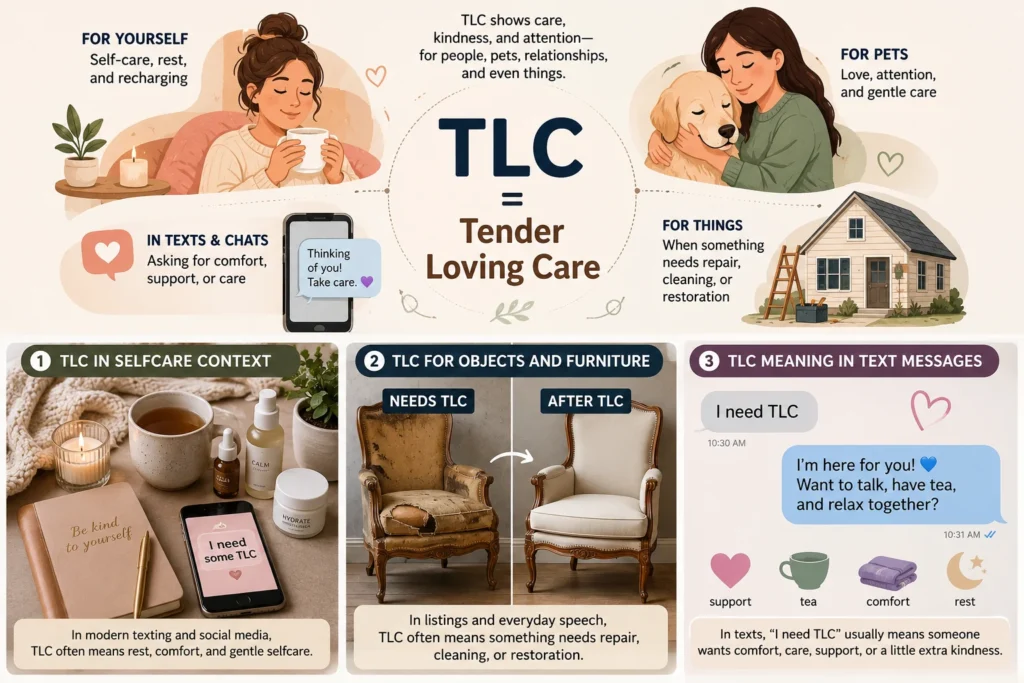
TLC most commonly stands for “tender loving care.” People use it to describe extra attention, kindness, comfort, or gentle care given to a person, pet, relationship, object, or even a home. In texting and online conversations, TLC usually has a warm, caring tone and often means someone or something needs affection, support, rest, or repair.
Have you ever seen “TLC” in a text and wondered what it really means? You are not alone. The TLC meaning can change depending on the context. Most commonly, TLC stands for “tender loving care.” It is used when someone needs extra kindness, attention, support, or care. You may see it in texts, social media posts, relationships, parenting conversations, or even when talking about a damaged object that needs some attention. But that is not the only meaning. TLC can also refer to television, medicine, business, or other specific terms. So, what does TLC mean in a text? And how can you tell which meaning someone intends? In this guide, we will break down the most common TLC meaning, examples, related uses, and simple ways to understand it correctly.
Quick Answer Box
| Topic | Answer |
| Meaning | TLC = Tender Loving Care |
| Main idea | Extra care, comfort, attention, affection, or maintenance |
| Used for | People, pets, relationships, health, homes, cars, skin, mental wellbeing, and more |
| Common contexts | Texting, social media captions, casual conversation, selfcare posts, home listings, relationship talk |
| Tone | Warm, caring, supportive, affectionate, sometimes playful |
| Example | “I’ve had a rough week and need some TLC.” |
| Another example | “This old bike still works, but it needs a little TLC.” |
| Platform usage | Seen on TikTok, Instagram, Snapchat, Facebook, X, WhatsApp, and in real estate or resale listings |
What Does TLC Mean?
TLC stands for “tender loving care.” It refers to the kind of attention that is gentle, nurturing, thoughtful, and supportive. It can be physical care, emotional care, maintenance, affection, or restorative effort.
At its core, TLC means giving something or someone extra care so it feels better, works better, looks better, or becomes healthier.
That “something” could be:
- a person who is stressed, sick, sad, tired, or overwhelmed
- a relationship that needs more time and attention
- a pet recovering from illness or adjusting to a new home
- a house, car, or piece of furniture that needs repairs or refreshing
- your own body or mind when you need rest, comfort, or selfcare
So when someone says “I need TLC,” they usually mean:
- “I need comfort.”
- “I need rest and kindness.”
- “I need attention and support.”
- “I need someone to care for me a little.”
And when someone says “This place needs TLC,” they usually mean:
- “It needs work.”
- “It needs repairs or improvement.”
- “It’s not in perfect condition, but it can be fixed up.”
Full Definition of TLC
The best way to understand TLC meaning is to think of it as care with warmth. Not just doing a task, but doing it with patience, kindness, and attention.
The literal meaning
Tender = gentle, soft, compassionate
Loving = affectionate, caring, kind
Care = support, attention, maintenance, treatment, protection
Put together, tender loving care means gentle and affectionate care given to someone or something that needs help, healing, comfort, or improvement.
The emotional meaning of TLC
Emotionally, TLC often implies:
- kindness
- reassurance
- comfort
- patience
- affection
- emotional support
- healing energy
- softness instead of pressure
That’s why people often use TLC during difficult moments:
- after a breakup
- during burnout
- when someone is sick
- after a long week
- when a friendship needs repair
- when someone feels lonely or emotionally drained
The practical meaning of TLC
TLC isn’t always emotional. Sometimes it’s practical.
For example:
- “My laptop needs TLC” = it needs cleaning, repair, or attention
- “This garden needs TLC” = it needs watering, trimming, and care
- “The apartment has potential but needs TLC” = it needs renovation or upkeep
In these cases, TLC means maintenance plus care, not just love in the romantic sense.
Context and Usage of TLC
One reason TLC meaning is searched so often is that the phrase works in many different situations. The exact meaning depends on what is being discussed.
TLC Used for People
When TLC is about a person, it usually means comfort, support, rest, and affection.
Examples:
- “You sound exhausted. Go home and give yourself some TLC.”
- “After surgery, she needed a lot of TLC.”
- “He’s been stressed lately and could use some TLC.”
In this context, TLC can include:
- rest
- emotional support
- food or comfort
- checking in on someone
- helping them recover
- making them feel cared for
TLC Used for Yourself
This is one of the most common modern uses of TLC, especially in selfcare culture.
Examples:
- “Sunday is for skincare, tea, and TLC.”
- “I’m turning my phone off and giving myself some muchneeded TLC.”
- “Postexam TLC is mandatory.”
Here TLC usually means:
- relaxing
- sleeping
- journaling
- taking a bath
- eating comfort food
- doing skincare
- spending quiet time
- taking a break from stress
TLC Used for Relationships
TLC can also mean a relationship needs more emotional attention, communication, or effort.
Examples:
- “We’ve both been busy, and our relationship needs some TLC.”
- “Friendships need TLC too.”
- “Their marriage survived because they gave it time, patience, and TLC.”
Here TLC suggests:
- care
- communication
- quality time
- understanding
- emotional repair
- nurturing the connection
TLC Used for Objects, Homes, and Cars
This is another extremely common use, especially in property listings, secondhand sales, and everyday conversation.
Examples:
- “The house is charming but needs TLC.”
- “My car still runs, but it definitely needs some TLC.”
- “Found a vintage dresser that needs TLC.”
In this sense, TLC means:
- repairs
- cleaning
- restoration
- maintenance
- attention
- improvement
It often implies that the item is not in perfect condition but still has potential.
TLC Used for Pets and Animals
People often use TLC when talking about rescuing or caring for animals.
Examples:
- “The puppy was nervous at first, but a little TLC helped.”
- “This rescue cat needs patience and TLC.”
- “Older dogs sometimes need extra TLC.”
This version of TLC includes:
- feeding
- grooming
- medical care
- calm attention
- affection
- helping the animal feel safe
RealLife Examples of TLC Meaning
Below are realistic ways people use TLC in conversation. These examples help show how the meaning changes slightly depending on context.
Conversation Example 1: Feeling emotionally drained
A: I’m so over this week.
B: Same. I’m ordering food, putting on a movie, and giving myself some TLC tonight.
Meaning: B needs rest, comfort, and selfcare.
Conversation Example 2: Caring for a sick friend
A: Is Maya okay?
B: She’s home sick. She just needs a little TLC and some sleep.
Meaning: Maya needs care, comfort, and recovery time.
Conversation Example 3: Relationship context
A: You and Jake okay?
B: Yeah, we’re okay. We’ve just been busy, so the relationship needs a bit of TLC.
Meaning: The relationship needs attention, time, and emotional effort.
Conversation Example 4: Home or furniture context
A: Did you buy that old bookshelf?
B: Yes, it needs some TLC, but it’s solid wood and worth fixing up.
Meaning: The bookshelf needs repair, cleaning, or restoration.
Conversation Example 5: Pet care context
A: How’s the rescue dog doing?
B: Much better. He was scared at first, but with patience and TLC he’s opening up.
Meaning: The dog needed gentle care, affection, and a safe environment.
PlatformSpecific Meaning of TLC
TLC generally means the same thing across platforms, but the tone and context can change depending on where you see it.
TLC Meaning on Text Messages and iMessage
In texting, TLC usually means comfort, care, affection, or emotional support. It often appears when someone is tired, sick, sad, overwhelmed, or talking about selfcare.
Common text examples
- “I need some TLC after today.”
- “Go home and get some TLC.”
- “That plant needs TLC lol.”
- “You deserve a weekend full of TLC.”
Tone in texting
The tone is usually:
- sweet
- supportive
- soft
- caring
- affectionate
- sometimes flirtatious, depending on who is texting
If your partner texts, “Come over, I need TLC,” it may imply emotional comfort, cuddling, attention, or simply wanting to feel cared for.
If a friend texts it, it usually means they’re worn out and want support, rest, or comfort.
TLC Meaning on Snapchat
On Snapchat, TLC often appears in casual captions, snaps, or chats about mood, selfcare, or lowenergy days.
Common Snapchat uses
- “Staying in tonight. Need TLC.”
- “My hair needs TLC after this heat.”
- “Mentally off today. TLC mode.”
- “This room needs TLC ASAP.”
Snapchat usage is often short and vibebased. People may use TLC without explaining much because the emotional tone is already understood.
TLC Meaning on Instagram
On Instagram, TLC commonly shows up in:
- selfcare captions
- beauty and skincare posts
- home makeover content
- pet content
- relationship posts
- wellness reels
Typical Instagram captions
- “Muchneeded Sunday TLC.”
- “Skin has been stressed lately, so today is all about TLC.”
- “This little corner of the house got the TLC it deserved.”
- “Healing season = rest, boundaries, and TLC.”
On Instagram, TLC is often linked to:
- skincare routines
- spa days
- hair care
- home organization
- emotional healing
- cozy routines
- wellness aesthetics
TLC Meaning on TikTok
On TikTok, TLC often has a selfcare, healing, cozy, reset, or makeover vibe. You’ll see it in videos about:
- glowup routines
- cleaning and organizing
- “reset” days
- mental health checkins
- pet rescue transformations
- room makeovers
- relationship reflections
Common TikTok caption styles
- “My hair needed serious TLC after bleaching it.”
- “Spend the day with me while I give my apartment some TLC.”
- “Postbreakup TLC weekend.”
- “The plant revival arc is just TLC and patience fr.”
TikTok tends to frame TLC as both emotional and aesthetic:
- caring for yourself
- restoring your environment
- fixing something gently
- creating a soft, healing vibe
TLC Meaning on Facebook
On Facebook, TLC is often used in a broader life context and by a wider age range than on TikTok or Snapchat.
You might see:
- “Our family dog is home from surgery and needs TLC.”
- “Selling antique table—beautiful piece, just needs TLC.”
- “Sometimes moms need TLC too.”
- “This garden was neglected for years but is finally getting some TLC.”
Facebook usage often leans toward:
- family updates
- health updates
- pet care
- community support
- home and furniture resale posts
TLC Meaning on X or casual internet posts
On X and similar shortform platforms, TLC is often used in quick, expressive posts:
- “Need TLC and a nap.”
- “My laptop survived finals but barely. TLC immediately.”
- “Long week. Brain needs TLC.”
Because space is limited, TLC becomes a compact way to say:
- I’m drained
- I need care
- something needs fixing
- this deserves attention
TLC Meaning in Real Estate and Selling Listings
This is one of the most important nontexting uses of TLC.
When a house, apartment, car, or used item is described as “needs TLC,” it usually means it’s not in perfect condition and may need:
- repairs
- cleaning
- updates
- maintenance
- restoration
Example in a home listing
“This charming 1950s home has great bones and lots of character, but it needs TLC.”
What that often really means:
- cosmetic work is needed
- appliances may be outdated
- paint/flooring may need replacing
- the property may need repairs or renovation
Example in resale
“Vintage leather chair. Needs TLC.”
This likely means:
- worn leather
- scratches or fading
- possible repairs needed
- still usable or valuable with effort
So in listings, TLC is often a softer, friendlier way of saying “not perfect, but fixable.”
Alternative Meanings of TLC
Although tender loving care is by far the most common meaning, TLC can stand for other things depending on context. This matters because sometimes the acronym appears in a nonchat setting.
TLC as the TV network
One wellknown alternative meaning is TLC, the television network originally associated with The Learning Channel.
Examples:
- “I was watching TLC last night.”
- “That show is on TLC.”
- “TLC has a lot of reality TV content.”
If someone is talking about shows, channels, streaming, cable, or reality TV, they probably mean the network—not “tender loving care.”
TLC as The Learning Channel
Historically, TLC stood for The Learning Channel. Over time, many people simply refer to the network as TLC.
In media context:
- “TLC renewed the show for another season.”
- “It airs on TLC.”
TLC in business, health, or technical contexts
In specialized settings, TLC can have other meanings, such as internal business shorthand, healthcare abbreviations, or industryspecific terms. However, these are much less common in general internet conversation.
For everyday searches like “tlc meaning in text” or “what does tlc mean”, the intended answer is almost always tender loving care.
Related Terms, Synonyms, and NLP Variations
If someone is searching for TLC meaning, they may also be looking for related phrases or similar expressions. These variations help explain the full semantic field around TLC.
Similar phrases to TLC
These aren’t exact replacements in every situation, but they’re closely related:
- care and attention
- extra care
- loving care
- gentle care
- support and comfort
- nurturing attention
- pampering
- maintenance and repair
- emotional support
- selfcare
- looking after someone
- restoring something
- fixing up
- giving attention to
Related internet or conversational phrases
Depending on context, TLC overlaps with phrases like:
- “take care of yourself”
- “be kind to yourself”
- “rest and recover”
- “soft life day”
- “selfcare mode”
- “healing era”
- “reset day”
- “needs some love”
- “fixerupper”
- “needs work”
Example comparison
- TLC = broad, warm, caring phrase that works for people and things
- Selfcare = more focused on personal wellness habits
- Pampering = more indulgent and comfortfocused
- Maintenance = more practical, less emotional
- Repair = specific physical fixing
- Emotional support = more direct mental or emotional care
TLC vs Similar Terms
Understanding what TLC is not can be just as helpful.
TLC vs selfcare
Selfcare is usually about habits you do for your own physical, emotional, or mental health.
TLC can include selfcare, but it’s broader.
Example:
- “I’m doing selfcare tonight” = I’m intentionally taking care of myself
- “I need TLC tonight” = I need comfort, softness, support, rest, or care
TLC vs pampering
Pampering often suggests treats, luxury, or indulgence:
- spa day
- face mask
- massage
- fancy bath products
TLC can include pampering, but it can also mean:
- emotional reassurance
- helping someone recover
- cleaning up a neglected room
- restoring a damaged object
TLC vs maintenance
Maintenance is practical upkeep. TLC often includes an emotional or affectionate tone.
Example:
- “The car needs maintenance” = technical service
- “The car needs TLC” = service, cleaning, attention, and maybe some restoration
TLC vs love
Love is a feeling or relationship. TLC is an actionoriented expression of care.
You can love someone and still not give them TLC.
You can also give TLC to a pet, a garden, or a chair—things you don’t “love” in the same way you love a person.
How to Respond When Someone Says “I Need TLC”
If someone tells you they need TLC, your response should match the context. Are they joking? Tired? Sick? Upset? Talking about a pet? Referring to a room makeover? The best response depends on what kind of care they mean.
If they mean emotional support
Good replies:
- “I’m sorry you’re having a rough time. Want to talk?”
- “Take it easy tonight—you deserve a little TLC.”
- “I’m here if you need me.”
- “Go rest, eat something good, and be kind to yourself.”
- “What would help right now?”
If they mean physical rest or selfcare
Good replies:
- “You need a reset day, honestly.”
- “Tea, shower, blanket, and no stress tonight.”
- “Please log off and get some sleep.”
- “Take the night off and do whatever feels comforting.”
If they mean something needs fixing
Good replies:
- “Yeah, it has potential—just needs a little TLC.”
- “A deep clean and some repairs should do it.”
- “Nothing major, just some attention and effort.”
If it’s flirtatious or romantic
Sometimes “I need TLC” can be affectionate or subtly romantic, especially between partners. In that case, replies might be:
- “Come here, I’ve got you.”
- “What kind of TLC are we talking about?”
- “Say less—I’ll bring snacks and cuddles.”
- “You deserve all the TLC tonight.”
The tone matters. Use playful language only if that matches your relationship.
Misinterpretations of TLC
TLC is simple, but it still gets misunderstood in a few ways.
Misinterpretation 1: Thinking TLC always means romance
It doesn’t. TLC is often affectionate, but it is not automatically romantic. Friends, family members, coworkers, and even brands use TLC in a nonromantic way.
Examples:
- “My dog needs TLC.”
- “I need some TLC after finals.”
- “This apartment needs TLC.”
None of those are romantic by default.
Misinterpretation 2: Thinking TLC only applies to people
Not true. TLC is used constantly for:
- houses
- furniture
- cars
- gardens
- electronics
- clothing
- pets
- relationships
If something needs attention, restoration, comfort, or nurturing, TLC can fit.
Misinterpretation 3: Assuming TLC means expensive care
TLC does not have to mean luxury. Sometimes TLC is as simple as:
- sleeping early
- drinking water
- cleaning a room
- checking in on a friend
- feeding a rescue pet
- tightening a loose screw on a chair
- taking a break from stress
TLC is about the quality of care, not the price tag.
Misinterpretation 4: Confusing TLC with the TV channel in text
If the conversation is about reality shows, cable, streaming, or TV schedules, TLC may refer to the channel. But if the conversation is about feelings, wellness, stress, relationships, or repairs, it almost certainly means tender loving care.
When Not to Use TLC
TLC is common and useful, but there are times when it may not be the best choice.
In formal academic or professional writing
If you’re writing a formal report, business memo, legal document, or technical explanation, “TLC” may sound too casual or vague.
Instead, use more precise wording like:
- maintenance
- support
- rehabilitation
- restoration
- care services
- emotional support
- repair work
- upkeep
Less suitable
“The equipment requires TLC.”
Better for formal writing
“The equipment requires maintenance and servicing.”
When you need medical precision
If someone has a serious health issue, saying they need TLC may sound warm, but it may not be specific enough.
For example:
- “He needs medical treatment and monitoring” is clearer than
- “He needs TLC”
TLC can still be part of the emotional side of recovery, but it shouldn’t replace important medical details.
When the tone could be misunderstood
If you barely know someone and they say they need TLC, replying in a very intimate way could come off wrong. Read the room first. A safe response is usually:
- “Hope you get some rest.”
- “Sorry you’re dealing with that.”
- “Take care of yourself.”
Usage Tips for TLC
If you want to use TLC naturally, these tips help.
Use TLC when the focus is gentle care, not just action
TLC works best when there’s a feeling of warmth or nurturing behind it.
Natural:
- “My skin needs TLC after that sunburn.”
- “This friendship deserves more TLC.”
- “I need a TLC weekend.”
Less natural:
- “I need TLC to finish my math homework.”
That last sentence doesn’t really fit unless you’re joking.
Match the tone to the context
- For stress or sadness: TLC sounds comforting
- For home projects: TLC sounds optimistic and repairfocused
- For relationships: TLC sounds nurturing
- For social captions: TLC sounds soft, aesthetic, and cozy
- For resale listings: TLC sounds polite and marketfriendly
Don’t overcomplicate it
You don’t need to force a deep meaning into TLC every time. Most of the time it simply means:
- care
- attention
- comfort
- restoration
That’s why it works so well in everyday English.
TLC in Different RealWorld Scenarios
To fully understand tlc meaning, it helps to see how flexible the phrase is in real life.
After a breakup
“Taking the weekend for some muchneeded TLC.”
Meaning:
- emotional recovery
- comfort
- rest
- gentle selfcare
- avoiding stress
During burnout
“My brain needs TLC after this week.”
Meaning:
- mental rest
- reduced pressure
- sleep
- decompression
- emotional reset
For beauty and wellness
“My curls need TLC after all that heat styling.”
Meaning:
- treatment
- hydration
- repair
- patience
- restorative care
For a home renovation project
“This kitchen has good bones, but it needs TLC.”
Meaning:
- repairs
- updating
- painting
- cleaning
- investment of time and effort
For a pet rescue story
“He was shy and underweight, but TLC changed everything.”
Meaning:
- safety
- feeding
- affection
- medical attention
- emotional trustbuilding
For friendship repair
“We stopped checking in on each other. The friendship needed TLC.”
Meaning:
- effort
- communication
- emotional attention
- reconnection
- care
FAQs
What does TLC stand for in text?
In text, TLC usually stands for “tender loving care.” It means comfort, care, support, affection, or extra attention. Someone may use it when talking about themselves, another person, a pet, a relationship, or even an object that needs repair.
What does TLC mean from a girl or guy?
It usually means the same thing regardless of who says it: care, comfort, affection, or attention. The tone can be friendly, emotional, romantic, or playful depending on your relationship and the conversation.
Is TLC romantic?
Sometimes, but not always. TLC can be romantic between partners, especially if someone says they want comfort, cuddles, or affectionate attention. But it’s also commonly used between friends, family members, and in nonromantic situations.
What does “I need TLC” mean?
It usually means “I need comfort, care, support, rest, or kindness.” The speaker may be tired, emotionally drained, sick, overwhelmed, or simply in need of a reset.
What does TLC mean in a house listing?
In a house listing, TLC means the property needs repairs, updates, maintenance, or renovation. It often suggests that the home has potential but is not movein perfect.
What does TLC mean on TikTok?
On TikTok, TLC usually refers to selfcare, healing, comfort, cozy routines, beauty recovery, or giving attention to something that needs improvement. It often appears in captions about reset days, room makeovers, pets, hair care, and mental wellness.
What does TLC mean on Snapchat?
On Snapchat, TLC usually means care, rest, affection, or repair in a casual, shortform way. It might refer to someone’s mood, appearance, room, pet, or emotional state.
Is TLC slang?
Not exactly in the same way as newer internet slang, but it is a common acronym used casually in conversation, texting, and online culture. It’s widely understood and has a warm, conversational feel.
Can TLC refer to objects and not people?
Yes. People often say a house, car, garden, phone, furniture item, or room needs TLC. In that case, it means the item needs attention, repair, restoration, cleaning, or upkeep.
What’s the difference between TLC and selfcare?
Selfcare usually refers specifically to actions you take for your own wellbeing. TLC is broader. It can include selfcare, but it can also refer to caring for other people, pets, relationships, or physical things that need attention.
Common Search Variations of TLC Meaning
People search for TLC in a lot of slightly different ways. If your question sounds like one of these, the answer is usually still tender loving care:
- tlc meaning in text
- what does tlc mean in a text
- what does tlc stand for
- tlc meaning slang
- tlc meaning on Snapchat
- tlc meaning on TikTok
- tlc meaning in chat
- what does i need tlc mean
- tlc meaning in relationship
- tlc meaning in real estate
The context changes, but the core meaning stays consistent: gentle, affectionate, restorative care.
Five More Natural Usage Examples
To make the phrase feel even more intuitive, here are five additional realistic examples across different settings.
Example 1: Selfcare after work
Text: “Today was chaos. I’m getting takeout, turning on a comfort show, and entering full TLC mode.”
Meaning: The person needs rest, comfort, and emotional decompression.
Example 2: Beauty and hair care
Caption: “Bleached my hair one too many times. She needs TLC, protein masks, and patience.”
Meaning: The hair is damaged and needs treatment and restoration.
Example 3: Used car post
Listing: “2011 SUV, runs well, clean title, needs a little TLC on the interior.”
Meaning: The car works but needs cosmetic cleanup, repair, or upkeep.
Example 4: Friendship repair
Chat: “I miss us. Our friendship needs some TLC and an actual catchup.”
Meaning: The relationship needs attention, communication, and care.
Example 5: Pet recovery
Post: “Our senior cat is doing okay, just needs meds, naps, and lots of TLC.”
Meaning: The pet needs support, comfort, and attentive care during recovery.
Why TLC Stays Popular in Modern English
TLC has lasted for decades because it’s short, flexible, and emotionally clear. It works in places where a longer explanation would feel clunky.
Instead of saying:
- “I need emotional and physical rest with comforting attention,”
people can simply say: - “I need TLC.”
Instead of saying:
- “This old cabinet requires restoration, cleaning, and patient repair,”
people can say: - “It needs TLC.”
That efficiency is part of why TLC works so well in:
- texts
- captions
- listing descriptions
- family conversations
- wellness posts
- relationship talk
It sounds warm without being overly dramatic, and it gives enough context for most people to understand the general need immediately.
Conclusion
The simplest way to remember TLC meaning is this:
TLC = tender loving care = extra gentle attention, comfort, affection, support, or restorative care.
People use it for:
- themselves when they’re tired, stressed, or healing
- other people who need comfort or support
- relationships that need more time and care
- pets that need patience and nurturing
- objects, homes, and cars that need maintenance or repair
So if someone says “I need TLC,” they probably mean they need some mix of comfort, kindness, rest, and attention. If they say “this place needs TLC,” they mean it needs work, care, and improvement.
That’s the heart of the phrase: something isn’t at its best right now, and TLC is the gentle care that helps bring it back.
Discover More Article
- Obsequious Meaning | Definition, Examples, Usage, and Context
- ASL Meaning Slang | What It Means in Text, Chat, and Social Media

Justin Powell is a writer at GramBrix.com who focuses on grammar, clarity and effective communication, helping readers strengthen their language skills.